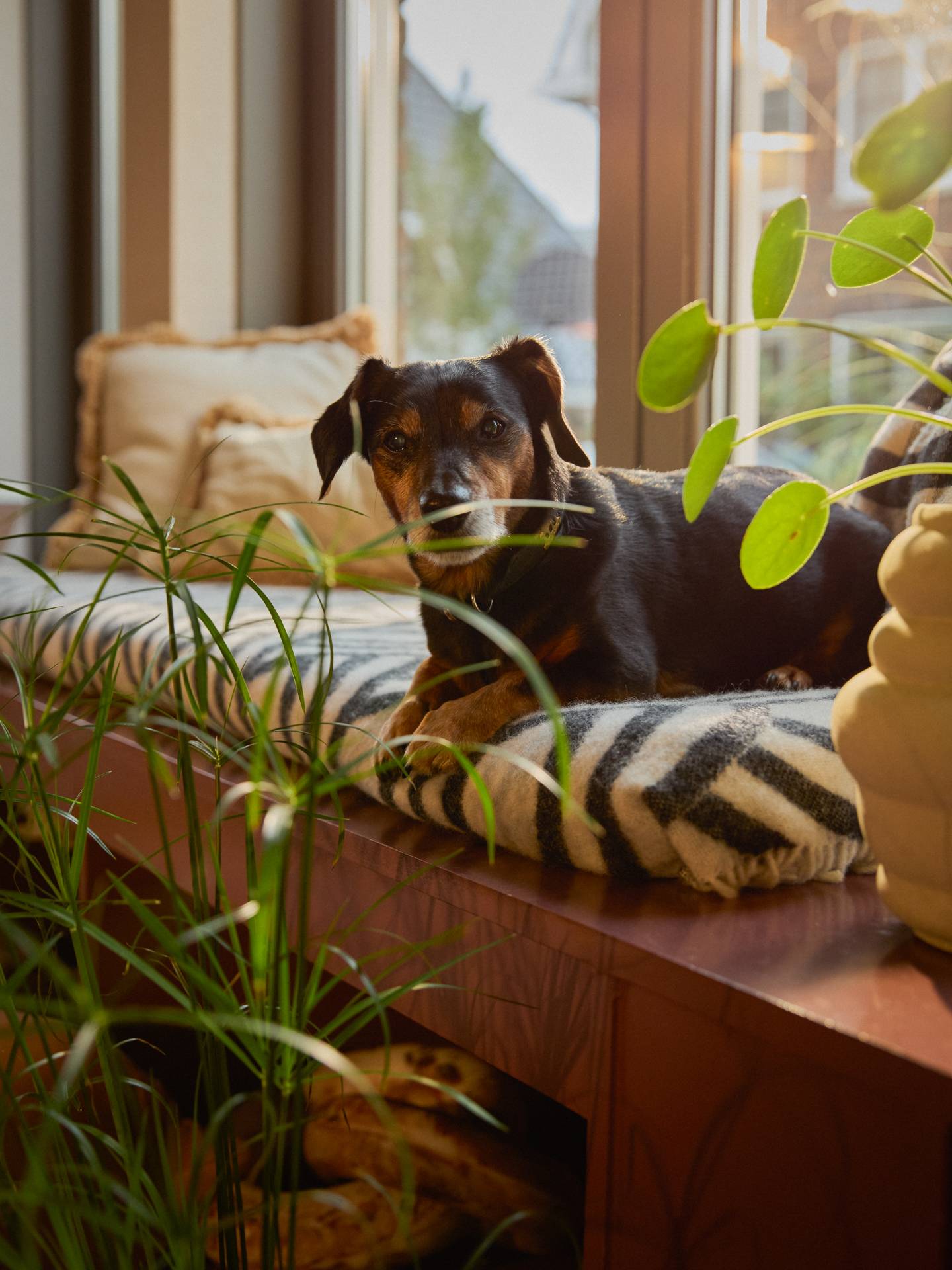

Do you have a happy four-legged friend at home who loves sniffing everything and occasionally nibbling too? Many houseplants are perfectly safe to have around dogs. Still, there are plants that require a bit of extra attention, especially if your dog enjoys chewing on greenery or playing with it. With these practical tips, you can make your interior both greener and dog-friendly!
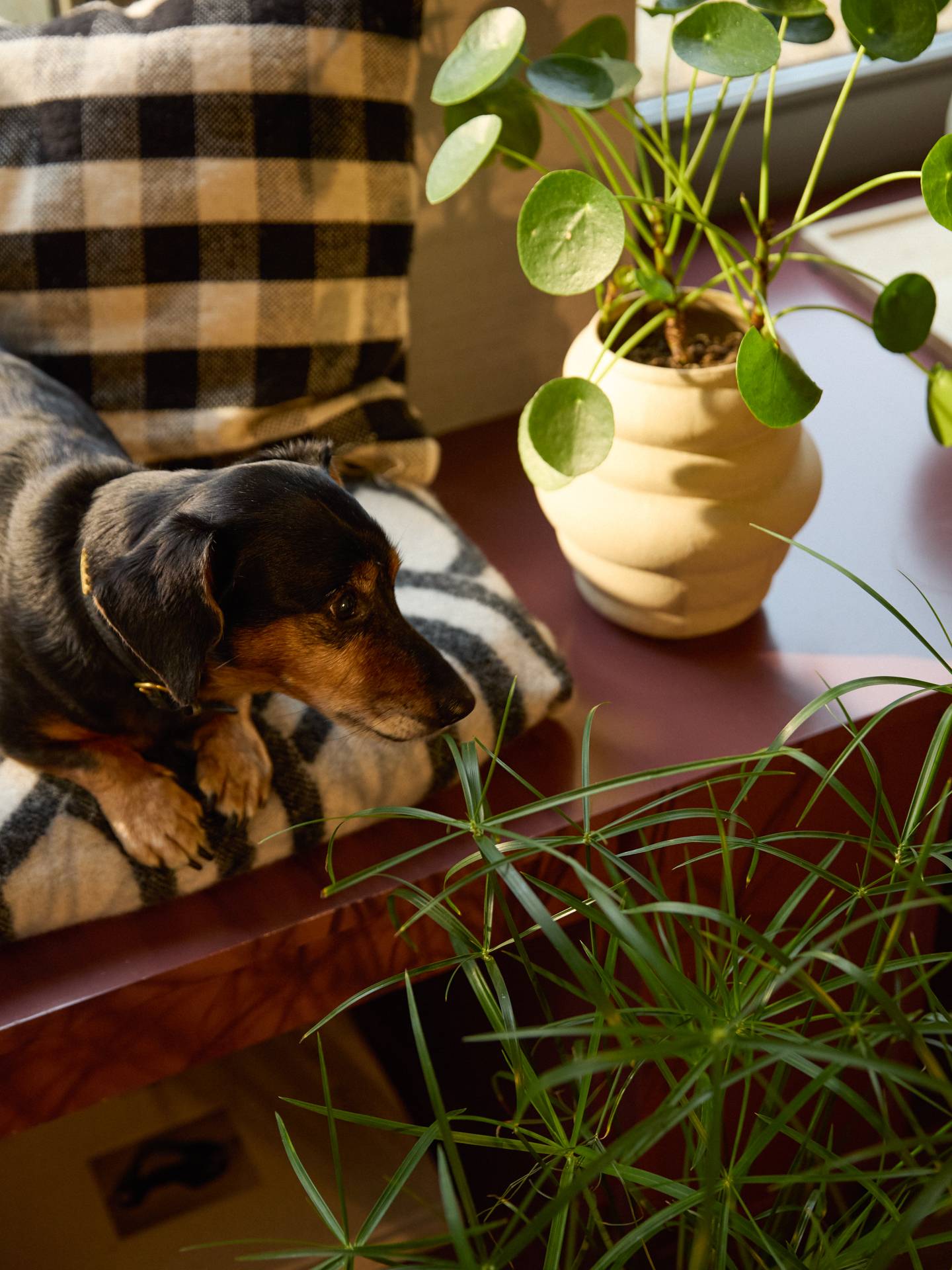
Why are dogs attracted to plants?
Dogs are naturally curious. Especially young dogs (and puppies) explore the world with their noses and mouths. A moving leaf or an interesting scent? That definitely deserves some investigation. Most houseplants are not a problem, but some plants can cause issues if a dog chews on them or ingests larger amounts. As a dog owner, it’s therefore important to make safe plant choices. We’re here to help you get started!
Plants dogs tend to love
There are plants that dogs usually ignore, but we’re willing to bet that these houseplants are favourites with your loyal four-legged friend!**
Chamomile
Dogs may be attracted to the scent of Chamomile, and it can have a calming effect. Many dogs find the smell soothing, which is why this plant is often mentioned as a dog-friendly choice for the home.
Parsley
Most dogs enjoy the scent and taste of Parsley. The herb can even act as a natural breath freshener. Parsley is rich in vitamins and minerals and may support a dog’s digestion.
Grasses
Nibbling on grass is natural behaviour for dogs. They may eat grasses such as Wheatgrass and Barley Grass because they enjoy the taste, but it can also support digestion, soothe the stomach and help clean their teeth.
More safe plants for dogs*
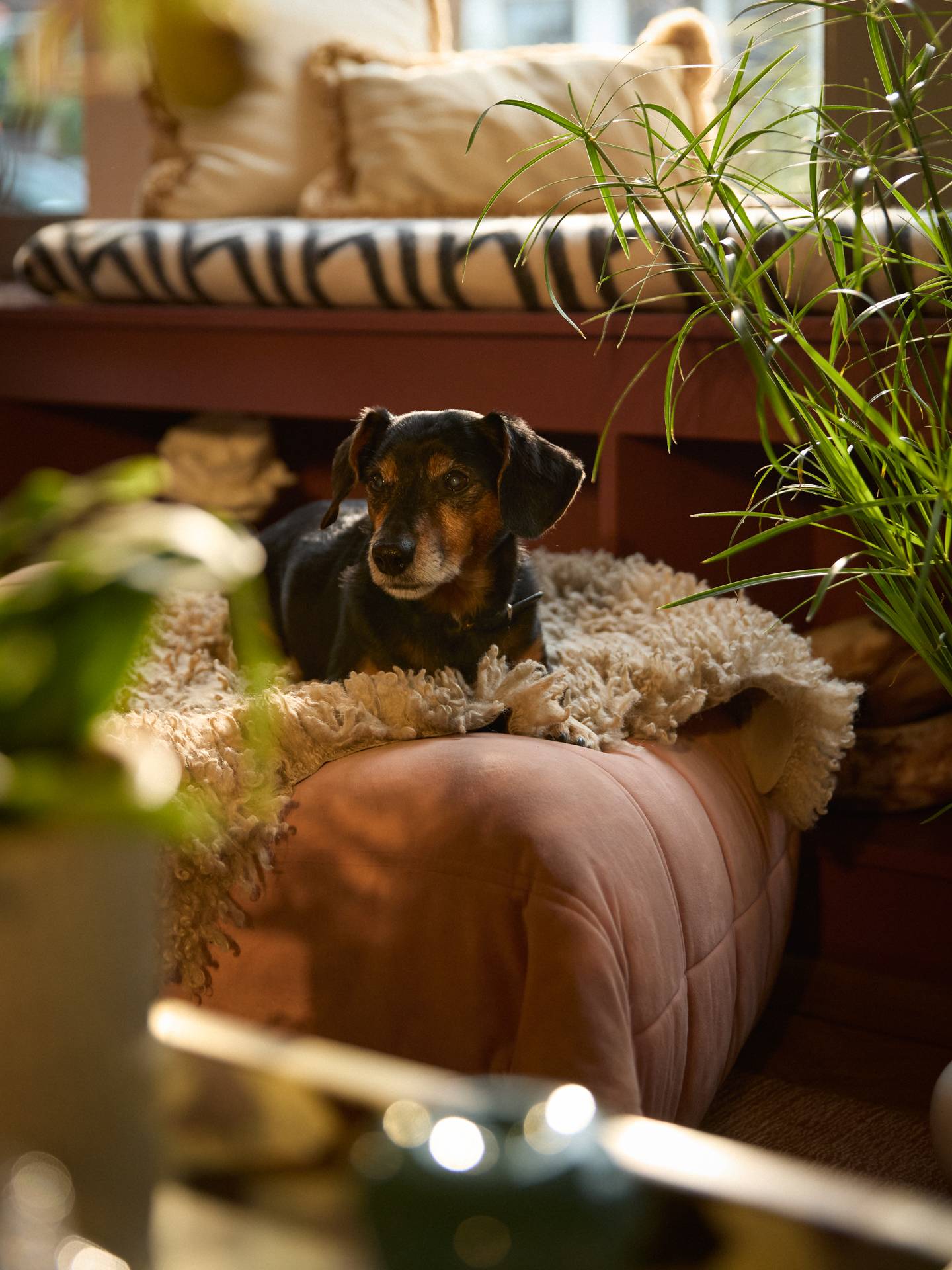
In addition to the dog favourites above, there are more plants that are non-toxic to dogs, such as:
Which houseplants are toxic to dogs?
Extra caution is advised with the houseplants below, especially if you have a curious dog or puppy.
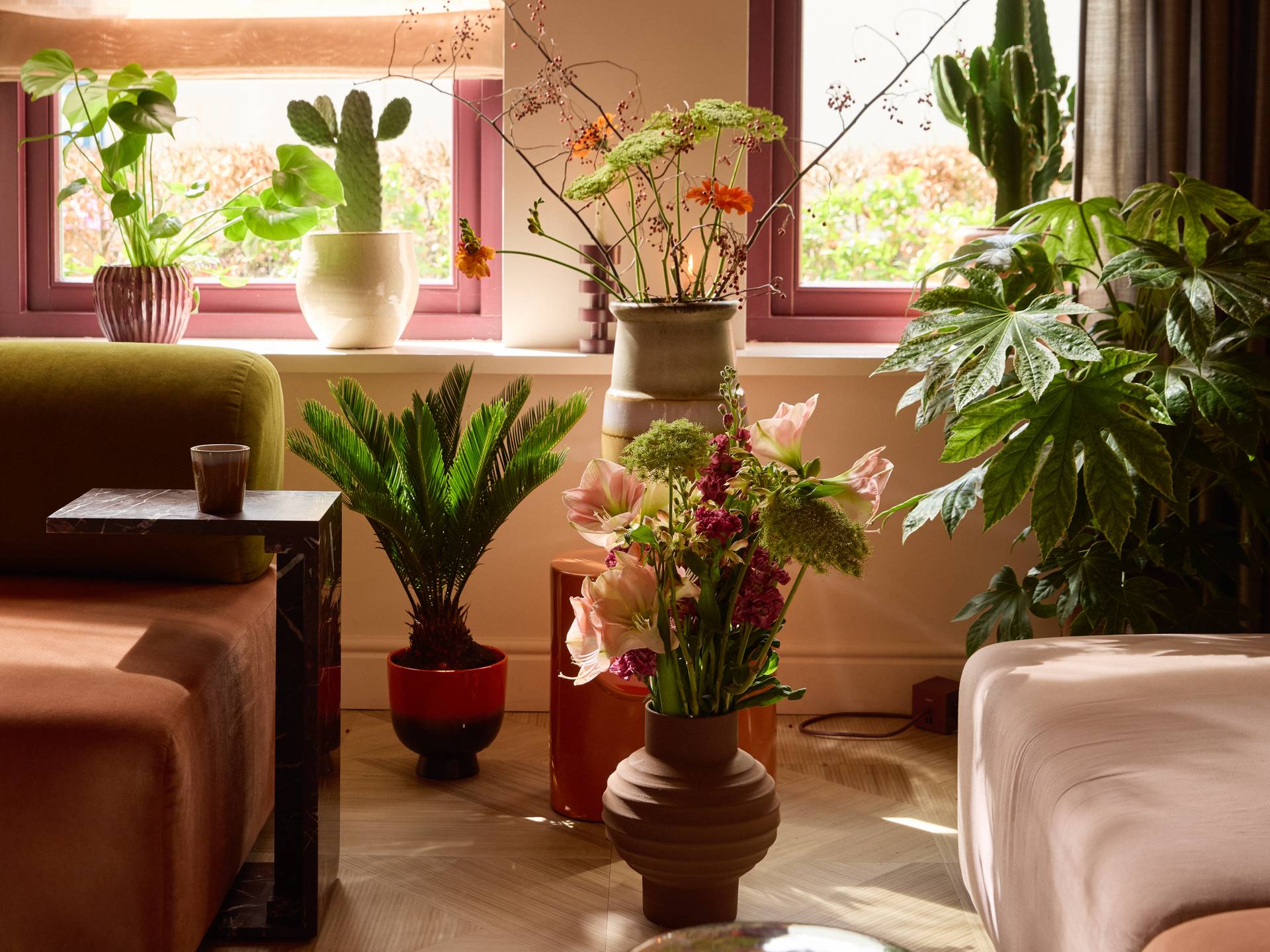
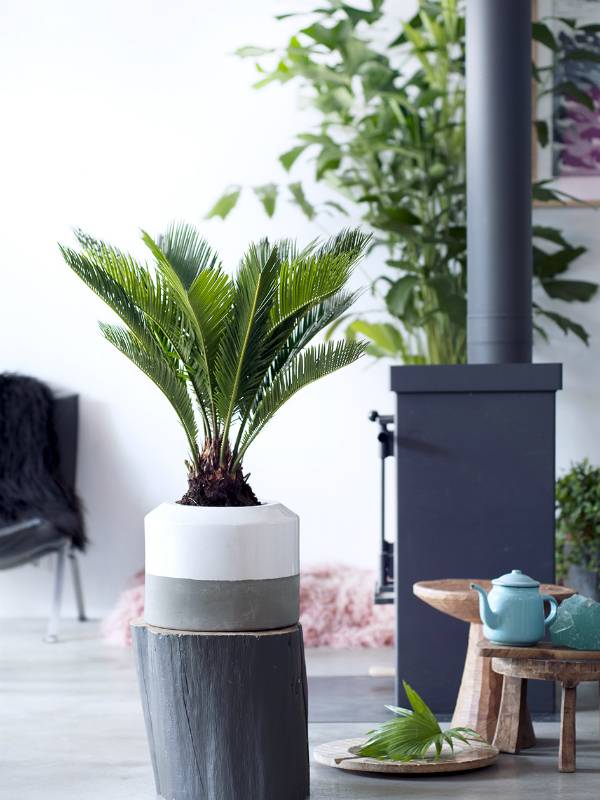
- Sago Palm: this palm, also known as Cycas revoluta, is one of the most toxic plants for dogs. Cycas contains cycasin, a toxin that causes liver failure and can be fatal, even in small amounts. All parts of the plant are highly toxic, especially the seeds.
- Dieffenbachia: this striking houseplant contains calcium oxalate crystals. Ingestion can cause swelling of the mouth and throat, pain and difficulty swallowing.
- Philodendron: ingesting this houseplant can lead to mouth irritation, vomiting and lethargy.
- Peace Lily: this stylish plant, also known as Spathiphyllum, contains oxalate crystals, which can cause irritation, pain, drooling and vomiting in dogs.
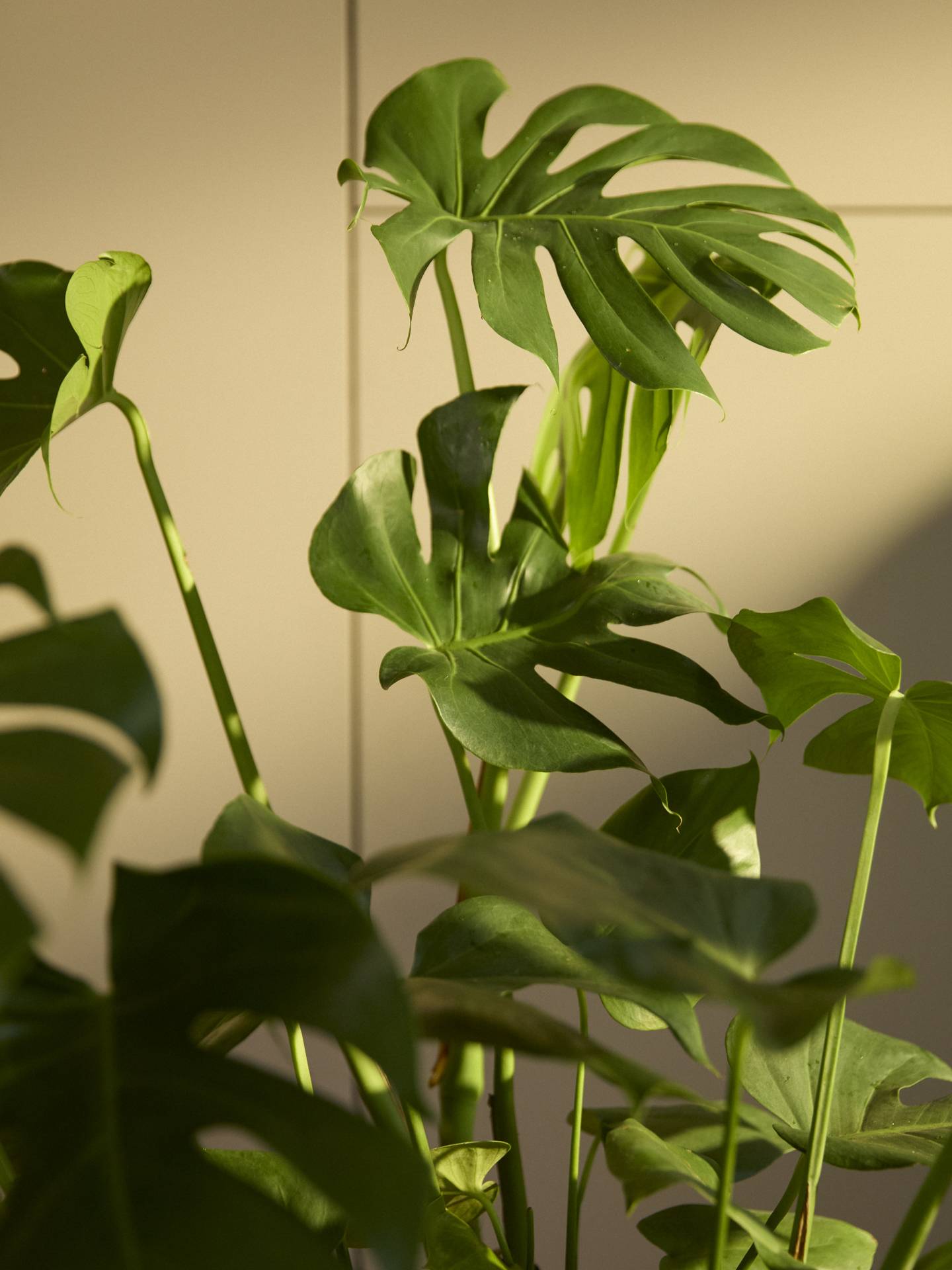
- Monstera: this popular interior icon is unfortunately not dog-friendly. The plant can cause irritation, vomiting and pain in a dog’s mouth.
Serious poisoning is fortunately rare. Problems usually arise when a dog repeatedly ingests and/or consumes larger amounts of a plant.
Houseplants that are mildly toxic to dogs
Some popular houseplants may cause mild symptoms in dogs. These usually involve temporary complaints such as stomach upset or mouth irritation. Many dogs tend to leave these plants alone. This applies to plants such as Dracaena, Aloe Vera, Ivy (Hedera), Scindapsus, Snake plant (Sansevieria) and Yucca.
Prevention is better than cure. That’s why plants that can cause mild symptoms are still classified as toxic. This helps minimise discomfort for pets as much as possible.
Dogs and houseplants: points of attention and tips
In addition to choosing safe houseplants, there are a few extra things to keep in mind as a dog owner:
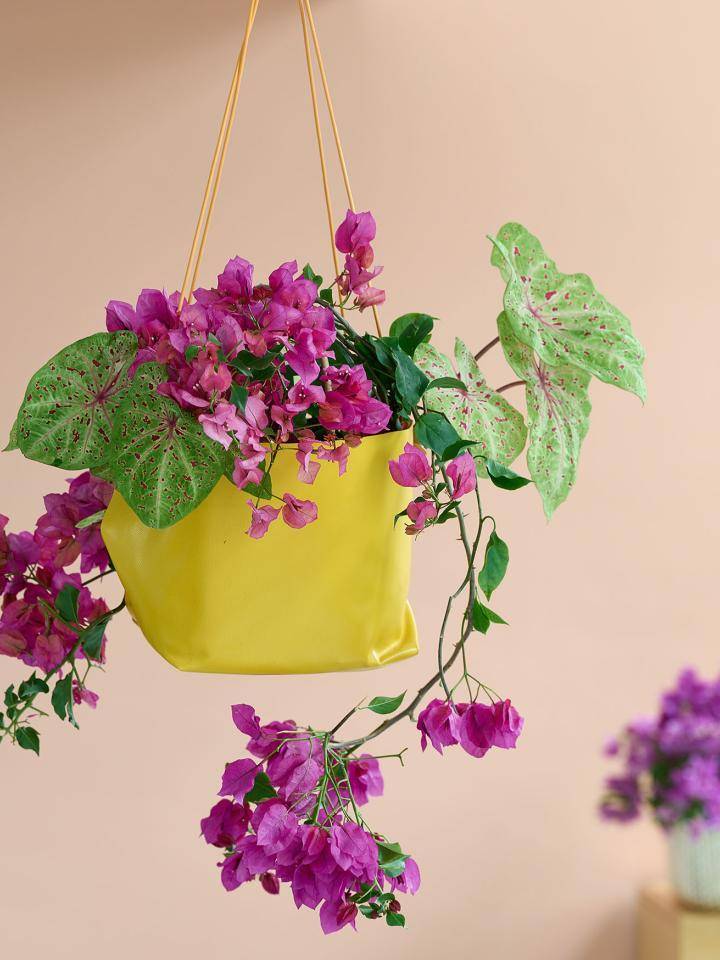
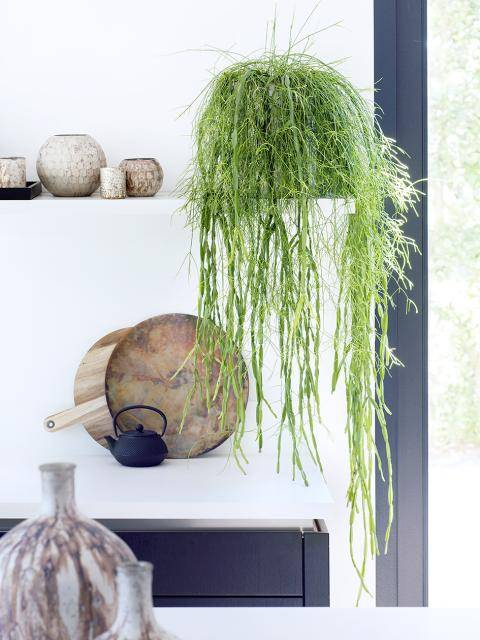
- Pay attention to placement: in most cases, it’s not just about the plant itself, but also about how and where it is placed in your home. Place plants in a stable spot and/or choose hanging plants in attractive hanging pots, positioned out of paw’s reach.
- Prevent licking: overconsumption is never a good idea, regardless of the plant. Dogs, especially young ones, may lick plants out of curiosity or boredom. Make sure there is enough distraction, such as toys or a dedicated plant corner with dog-friendly plants.
- Choose the right potting soil and plant feed: it’s not only leaves or flowers that can cause problems if your dog eats them. Potting soil, fertilisers and additives, such as pellets or nutrient concentrates, can also cause issues. Keep them out of reach and preferably choose a mild, pet-friendly potting soil and plant feed.
Dogs and cut flowers
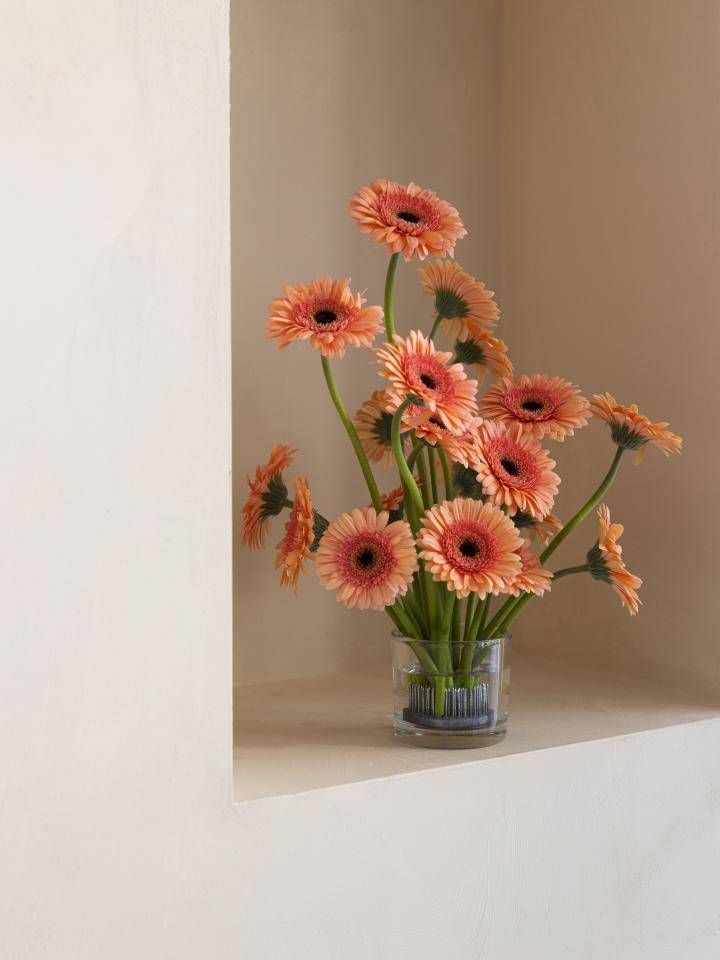
Most cut flowers are safe for dogs. Popular dog-friendly cut flowers include Roses, Gerberas, Sunflowers, Snapdragons, Alstroemerias and Freesias.
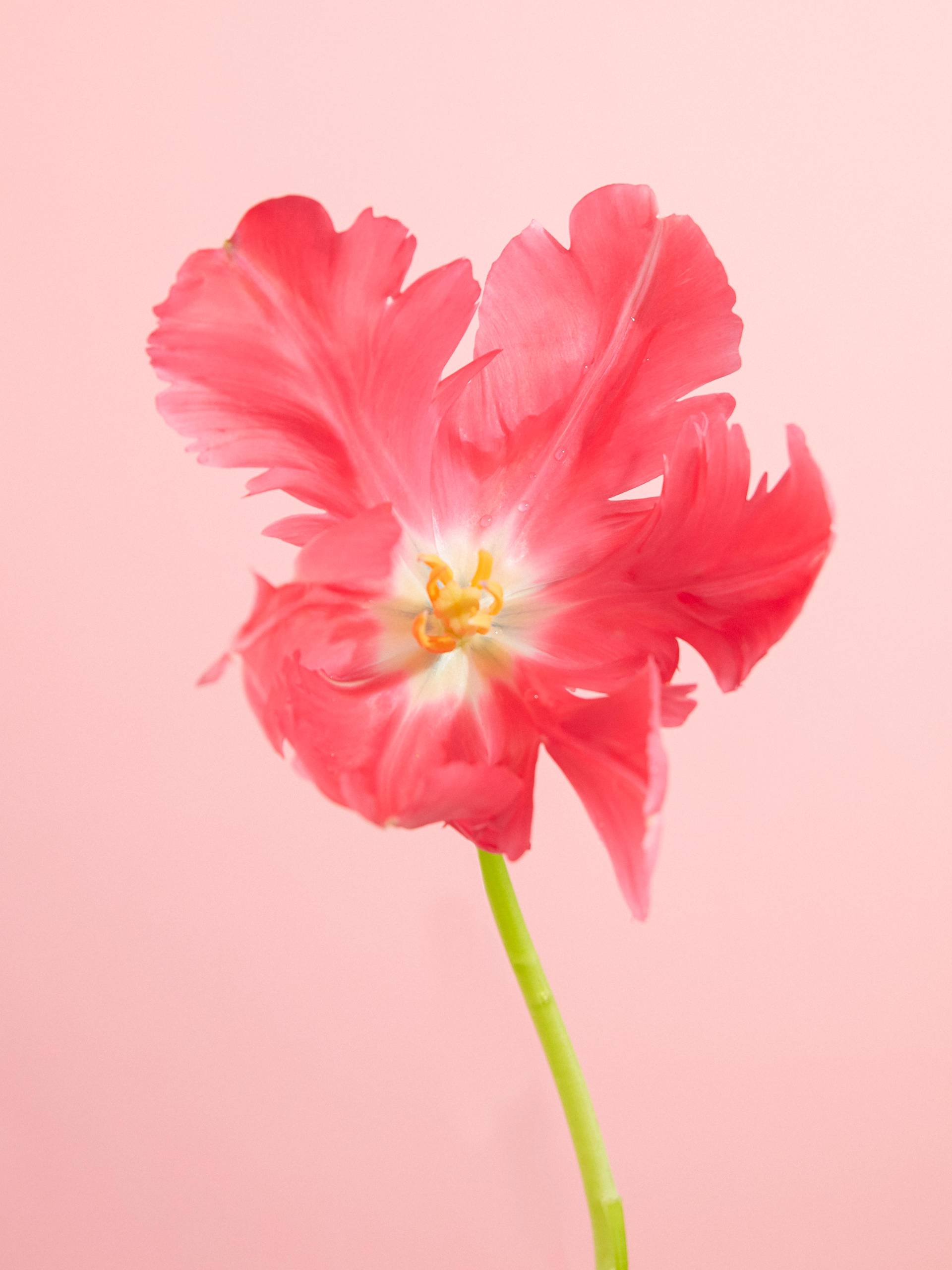
As with houseplants, some cut flowers can cause complaints to a greater or lesser extent. Lily of the Valley, Larkspur (Delphinium) and Daffodils are the most toxic flowers for dogs. Ingesting large amounts can cause neurological issues and heart rhythm disorders. Also be cautious with flowers such as Lilies, Tulips, Chrysanthemums and Hyacinths. Especially when ingested, they may lead to symptoms such as nausea and vomiting.
**Disclaimer: these lists are not complete and only provide an overview of commonly occurring toxic and non-toxic houseplants for pets and/or people. If a plant does not appear on these lists, this does not mean it cannot be toxic.
**Important: even if a plant or grass is known to be dog-friendly, moderation still applies. Let your dog eat it in small amounts. Too much nibbling can still lead to stomach or intestinal issues. Also take into account everything else that may be in the pot alongside the plant, such as potting soil and plant feed.