Written by
Sherelle Schmidt
Despite its rather fierce name, the Snapdragon (Antirrhinum) is wonderfully gentle. With its long stems, abundant flower clusters and soft colours, it adds character to a bouquet without even trying. In this guide, you’ll discover everything about the Snapdragon: from its features and care to its varieties, symbolism and origins.
Snapdragon characteristics and flowering season
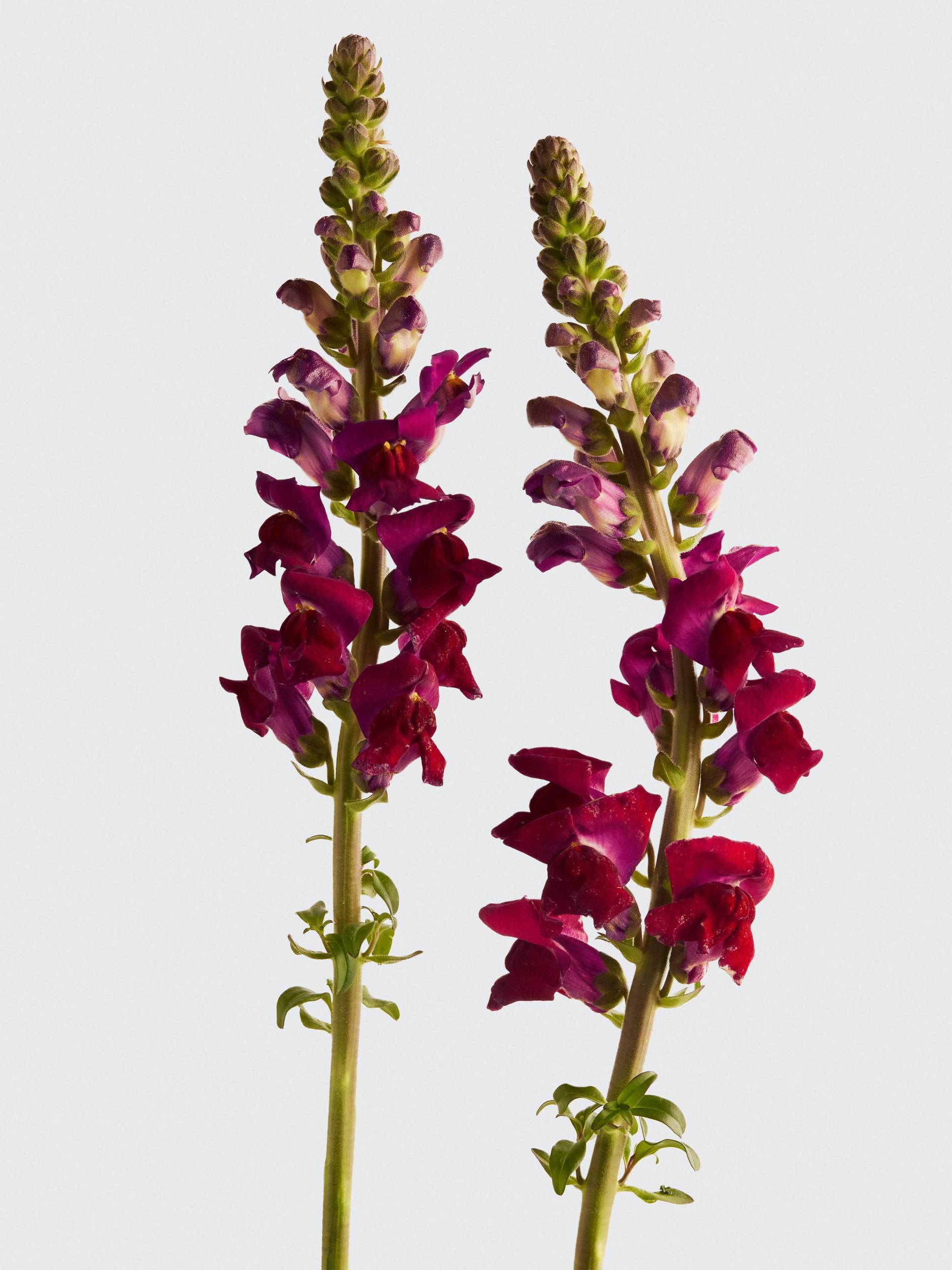
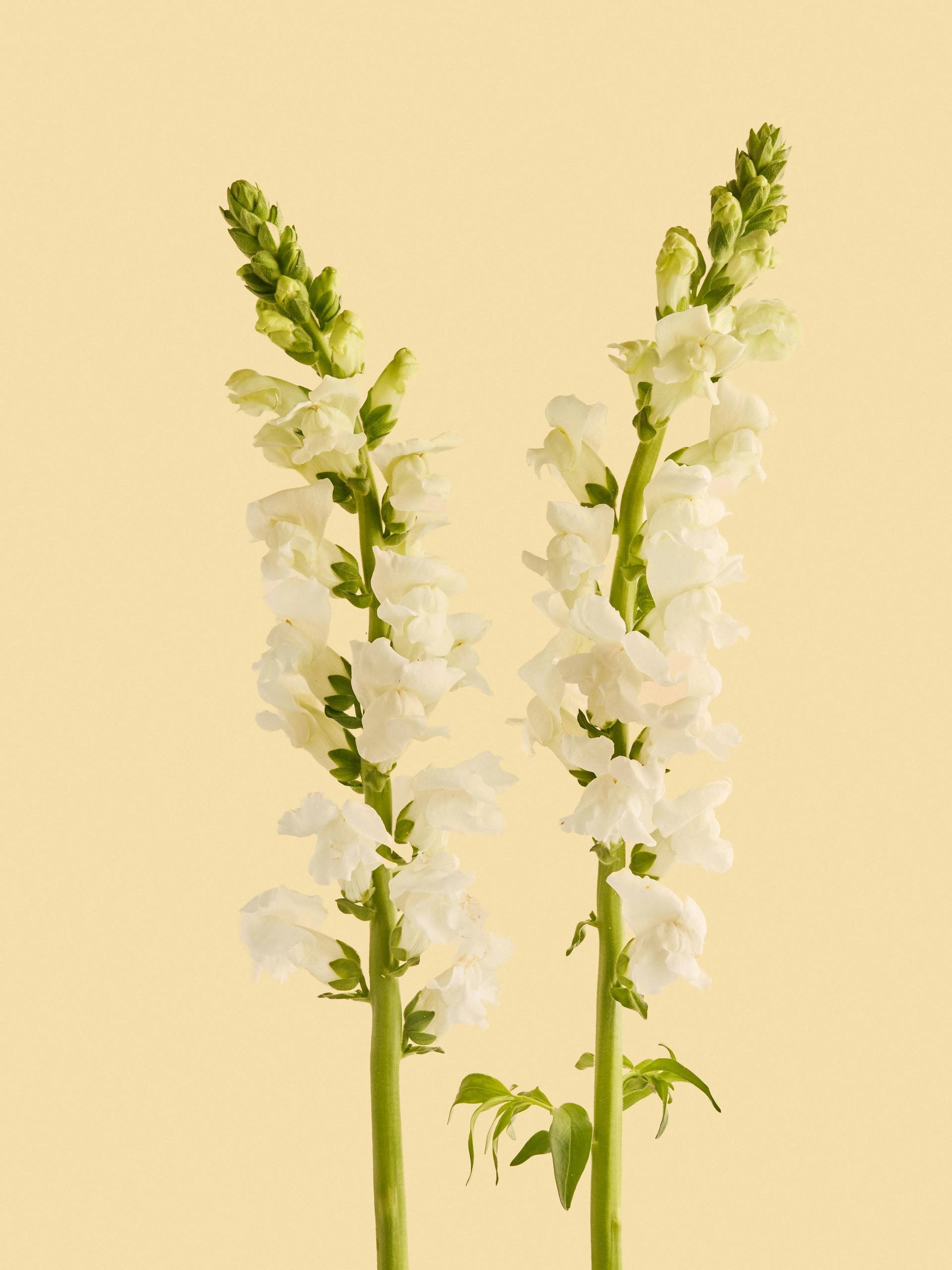
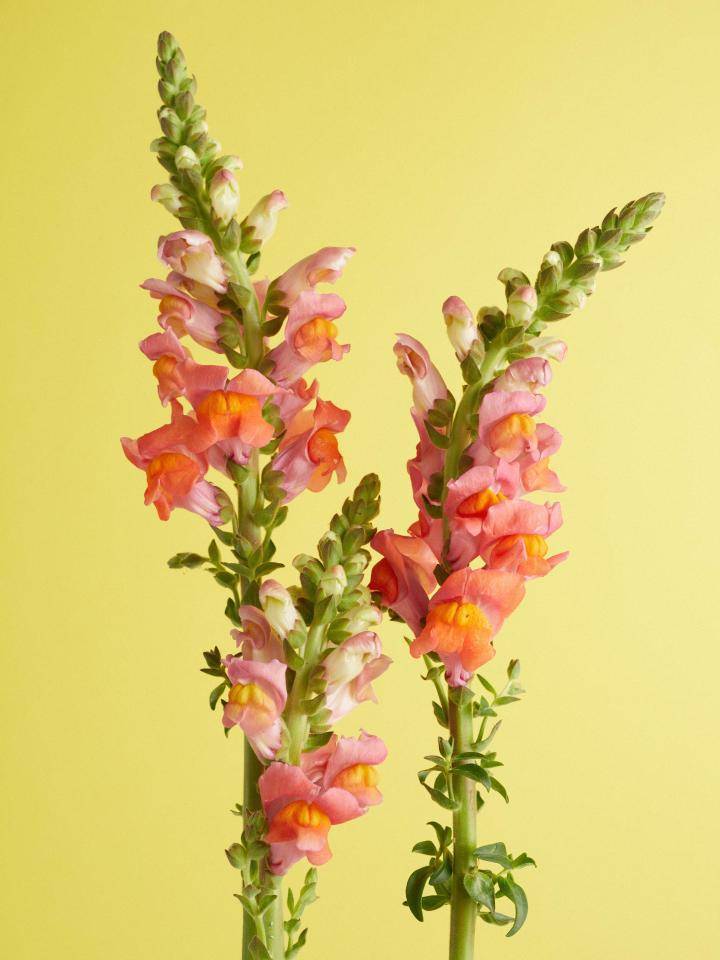
You can recognise a Snapdragon by its long, sturdy stems and densely packed clusters of flowers in white, yellow, orange, red, lilac and countless shades of pink. Its name comes from the shape of the petals: look closely at a flower and you’ll spot a lion’s snout. Snapdragons flower from spring into early summer and belong to the plantain family (Plantaginaceae), along with familiar garden and cut flowers such as Foxgloves and Toadflax.
Why is it called a Snapdragon?
Take a close look at an individual flower and the name soon makes sense. It has two lips that together look like a mouth. Gently squeeze the sides and the little “mouth” opens and closes, just like a talking lion. The flowers do this on their own, too: they close in bright sunshine and open again on cooler, cloudy days.
Bright sunshine? Mouth shut. Cloudy skies? Mouth open again.
Caring for Snapdragons
A few simple steps will help your bouquet of Snapdragons stay beautiful in the vase for longer.
- Cut the stems at an angle with a sharp knife to give them a larger surface area for absorbing water.
- Remove the lower leaves so they don’t sit in the water and make it dirty.
- Fill the vase with lukewarm tap water and change it every few days.
- Keep the vase out of direct sunlight, draughts and away from radiators, as these will make Snapdragons wilt faster.
Interesting facts about Snapdragons
- Tiny seeds: Snapdragon seeds are so fine they almost look like ground pepper, making sowing them in the garden a delicate job.
- Sneaky bumblebees: the narrow flowers can be tricky for pollinators. Bumblebees have a clever workaround: they bite a small hole in the flower tube to reach the nectar.
Are Snapdragons poisonous?
No, Snapdragons aren’t poisonous. You can happily include them in a beautiful bouquet, even if children regularly visit your home. The same goes for pets: Snapdragons are harmless to them too.
Snapdragon symbolism
Many flowers have a symbolic meaning, which makes giving them even more special. For Snapdragons, that meaning is keeping secrets. They’re the perfect gift for the person you can tell your deepest secrets to, knowing they’ll keep them safely under lock and key.
Where do Snapdragons come from?
Snapdragons originally come from the Mediterranean region, particularly south-western Europe, North Africa and western Asia. They grew naturally in sunny, rocky places, often between stones and in walls. Snapdragons have been grown in European gardens since the sixteenth century, and they now feel quite at home in the Netherlands and Belgium too. You might even spot one growing wild in the cracks of an old wall.