
Written by
Sabina
Description
Indirect light
Moderate
Green
Air purifying
Directly to
- Characteristics and flowering
- What types of Dieffenbachia are there?
- Where should a Dieffenbachia be placed?
- Caring for Dieffenbachia: water, feeding and humidity
- Common problems when caring for Dieffenbachia
- Propagating Dieffenbachia: how to do it
- Is Dieffenbachia toxic?
- Meaning and symbolism of the Dieffenbachia
- Where does the Dieffenbachia originally come from?
The Dieffenbachia, also known as the Thief of Baghdad and in English as the Dumb Cane, is a tropical houseplant loved for its large, striking leaves with unique patterns. In this guide, you will discover everything about Dieffenbachia, from the different varieties and ideal positioning to care, propagation, common problems such as yellow or brown leaves, toxicity and symbolism. This guide is designed for both beginner and experienced plant lovers.
Characteristics and flowering
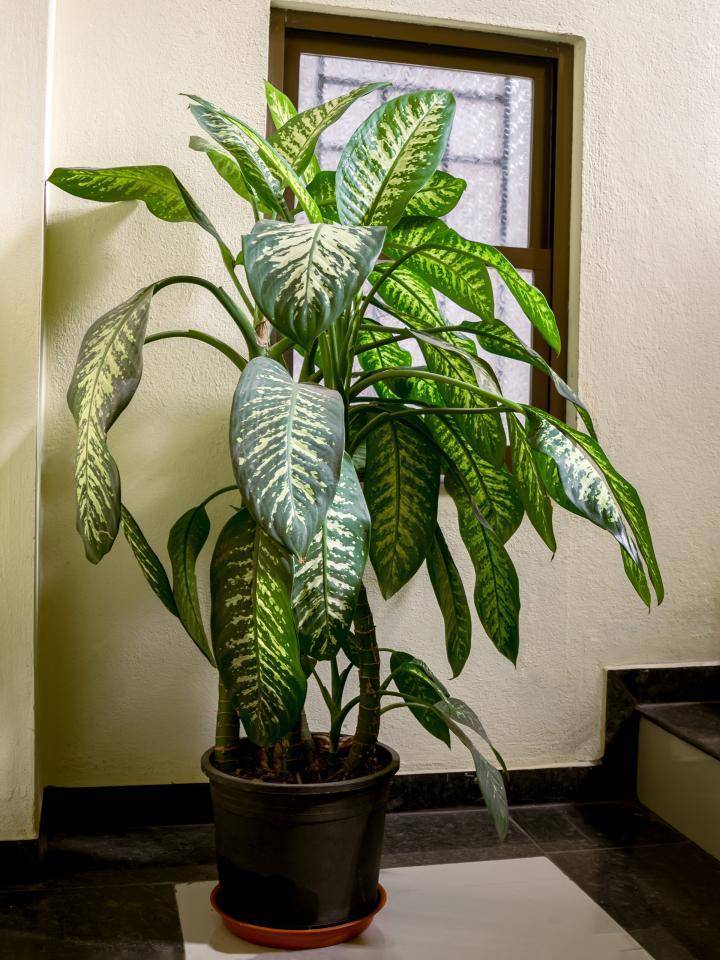
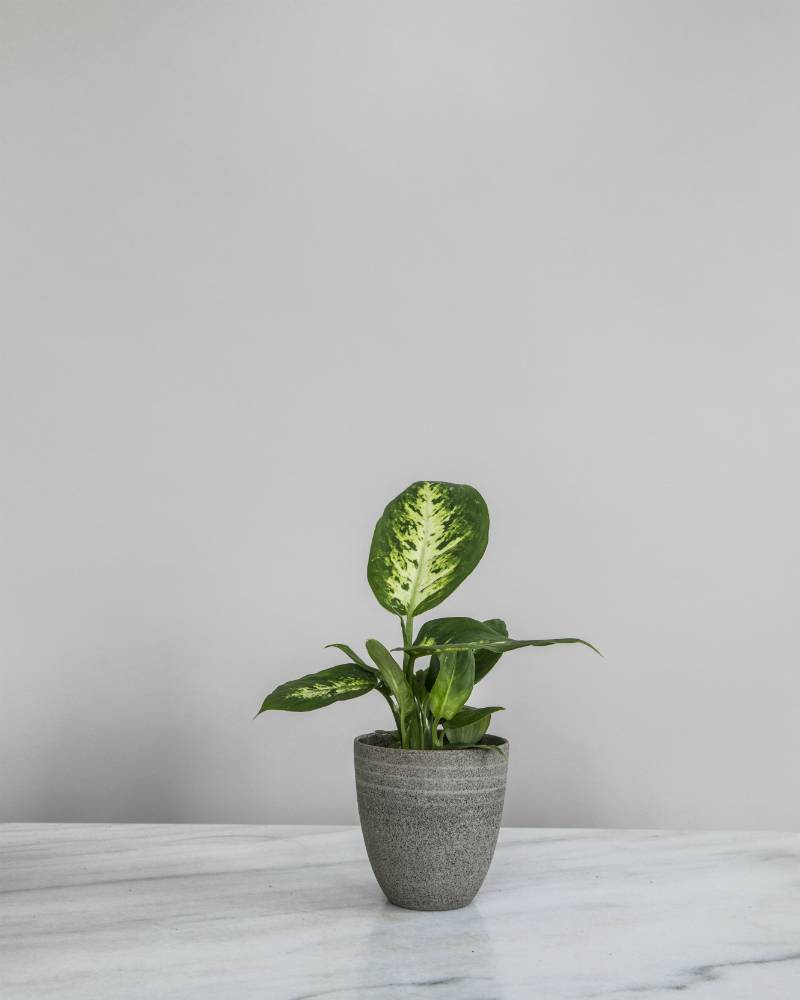
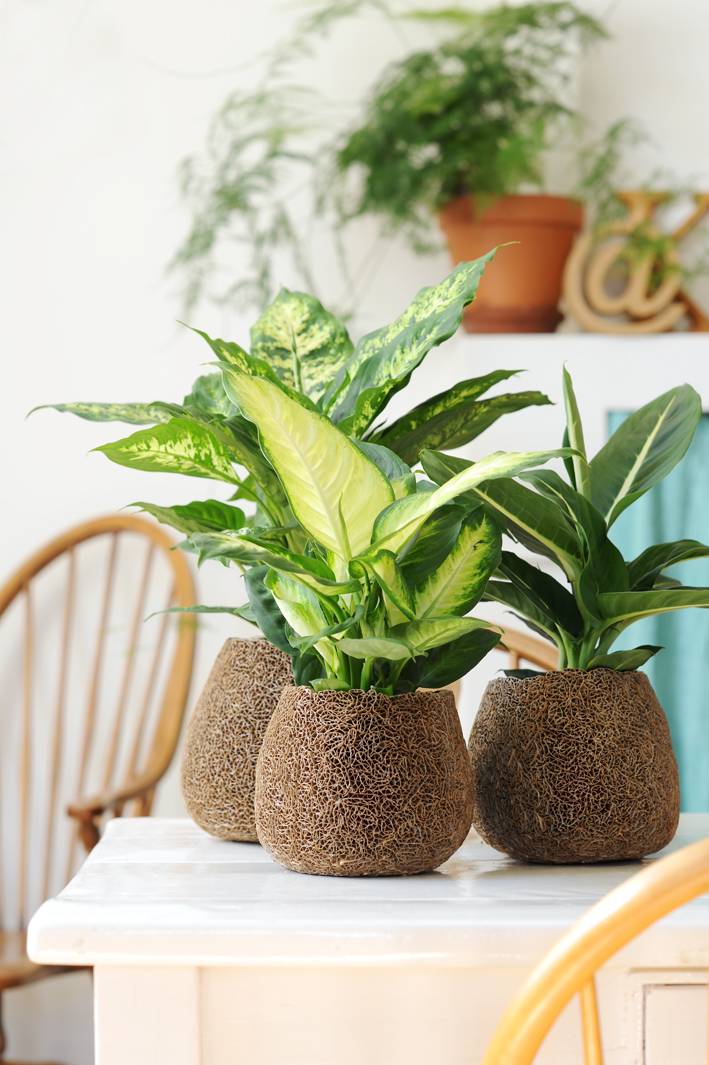
Dieffenbachia belongs to the Araceae family, just like Philodendron and Anthurium. The plant is known for its large, oval leaves with eye-catching veins, often patterned in white, cream or light green.
These are the key visual characteristics of Dieffenbachia:
- Leaves: Up to 40 cm long, oval-shaped with distinctive leaf patterns
- Flowering: Rare indoors, white flowers possible in tropical climates
- Unique feature: The leaf pattern makes the plant a true statement piece
What varieties of Dieffenbachia are there?
Botanically speaking, Dieffenbachia seguine is the main species within the Dieffenbachia genus. Almost all Dieffenbachia houseplants you see in garden centres and living rooms are varieties of this species.
Many names used commercially as separate Dieffenbachia species are in fact old species names or synonyms that are now classified under Dieffenbachia seguine.
There are also many Dieffenbachia cultivars, such as Tropic Snow, Camille, Reflector, Reeva and Maroba. These are cultivated forms within the same species, not separate botanical species.
Dieffenbachia seguine (main species)
Commonly used names that botanically fall under Dieffenbachia seguine include:
- Dieffenbachia amoena – refers to large, robust plants with very large leaves
- Dieffenbachia maculata – used for speckled or spotted foliage
- Dieffenbachia picta – an older name found in books and collections
Within Dieffenbachia seguine, you can roughly distinguish two growth types:
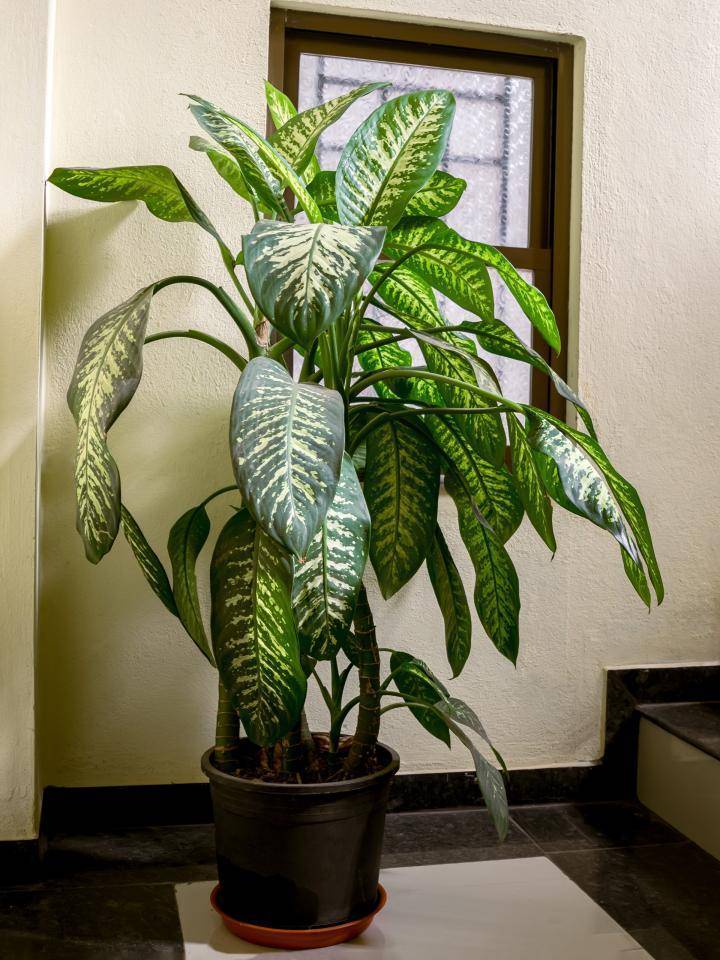
- Large amoena types – which can grow up to 1.5–2 metres tall indoors
- Compact types – which remain shorter and bushier

Where should a Dieffenbachia be placed?
The right position is crucial for a healthy plant. For general tips on plant placement, see our article on houseplant care. Below you will find specific advice on the best position for Dieffenbachia:
- Light: Bright, indirect sunlight. Avoid direct sunlight, which can scorch the leaves
- Temperature: Between 15–25°C. Keep away from draughts
Placement: An east or west-facing window is ideal, but it also thrives in a bright corner of the room
Caring for Dieffenbachia: water, feeding and humidity
Proper watering and humidity are key for Dieffenbachia:
- Water: keep the soil lightly moist. Allow the top layer to dry slightly between waterings
- Feeding: apply plant fertiliser every two weeks in spring and summer
- Humidity: mist the leaves occasionally with lukewarm water to help prevent brown leaf edges
- Pruning: remove damaged or old leaves
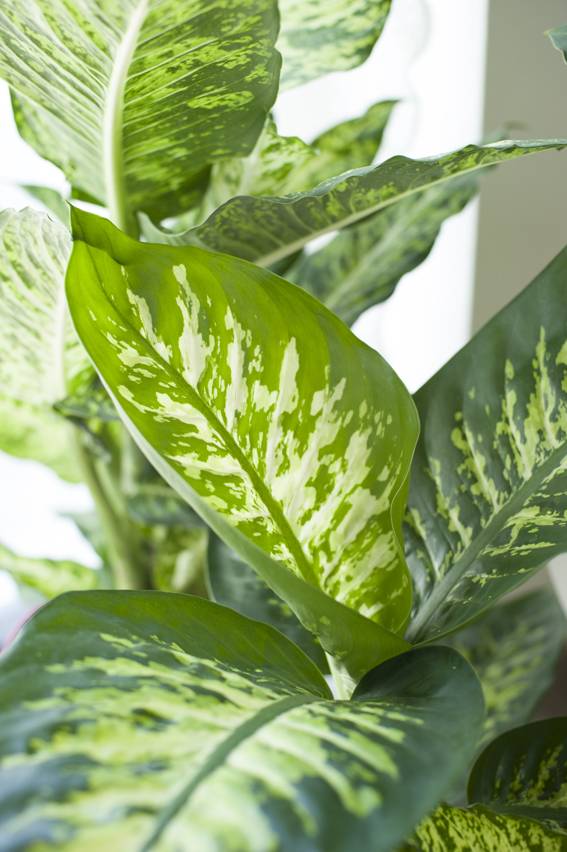
Misting the leaves occasionally with lukewarm water helps to prevent brown leaf edges.
Common problems when caring for Dieffenbachia
- Yellow leaves: often caused by overwatering or too little light, so adjust the plant’s position
- Brown spots: too much direct sunlight or dry air. Increase humidity and move the plant
- “Crying” leaves: usually due to overly wet soil. Allow the soil to dry out slightly
- Mealybugs: Dieffenbachia can be prone to mealybugs. Regular misting works preventatively, preferably using natural or organic pest control

Propagating Dieffenbachia: how to do it
Propagation is an easy way to grow new Dieffenbachia plants.
Want more tips? See our article on propagating houseplants.
- Choose a healthy stem with at least one internode, the section of stem between two nodes where leaves or branches attach. It can be a long stem, but divide it into multiple cuttings. Each cutting should have around 2–3 leaves.
- Found a suitable stem? You can now take your cuttings. Cut between two growth points, recognisable as slightly thickened sections on the stem. You will often see small aerial roots around these points.
- Use a clean knife to make the cut and allow the wound to dry briefly. Some people prefer scissors. If so, make sure they are clean.
- Place the cutting in a glass of water or in well-moistened potting compost until roots develop.
- Once your cutting has roots, place it in a small pot with soil and let it grow.
- Always wear gloves when propagating. Dieffenbachia is toxic.
Is Dieffenbachia toxic?
Yes, Dieffenbachia is toxic. The plant can cause irritation to the skin, mouth and throat.
- Always keep it out of reach of children and pets
- Always wear gloves and long sleeves when repotting or propagating
Meaning and symbolism of the Dieffenbachia
Dieffenbachia symbolises strength, protection and patience. Thanks to its sturdy stems and large, resilient leaves, Dieffenbachia represents resilience and endurance. The broad leaves and calm colour patterns create a soothing presence. For that reason, the plant also stands for peace and balance.
Where does the Dieffenbachia originally come from?
This beauty originally comes from tropical South America. There, it grows under the canopy of the rainforest, efficiently absorbing light with its large leaves. The name Dieffenbachia comes from the Austrian gardener Joseph Dieffenbach, who introduced the plant in the 19th century. The nickname Dumb Cane refers to the toxic sap, which can temporarily impair speech if ingested. The Dutch nickname Thief of Baghdad sounds far more dramatic, although its exact origin remains unclear. It is most likely nothing more than a playful name.