
Written by
Tommie
Description
Indirect light
Little
Air purifying
Easy to care for
Directly to
- Characteristics and flowering
- Which Dracaena varieties are there?
- Where should a Dracaena be placed?
- Caring for Dracaena: water, feeding and humidity
- Propagating Dracaena: how to do it
- Is a Dracaena toxic?
- Common problems with Dracaena
- Meaning and symbolism of the Dracaena
- Where does the Dracaena originally come from?
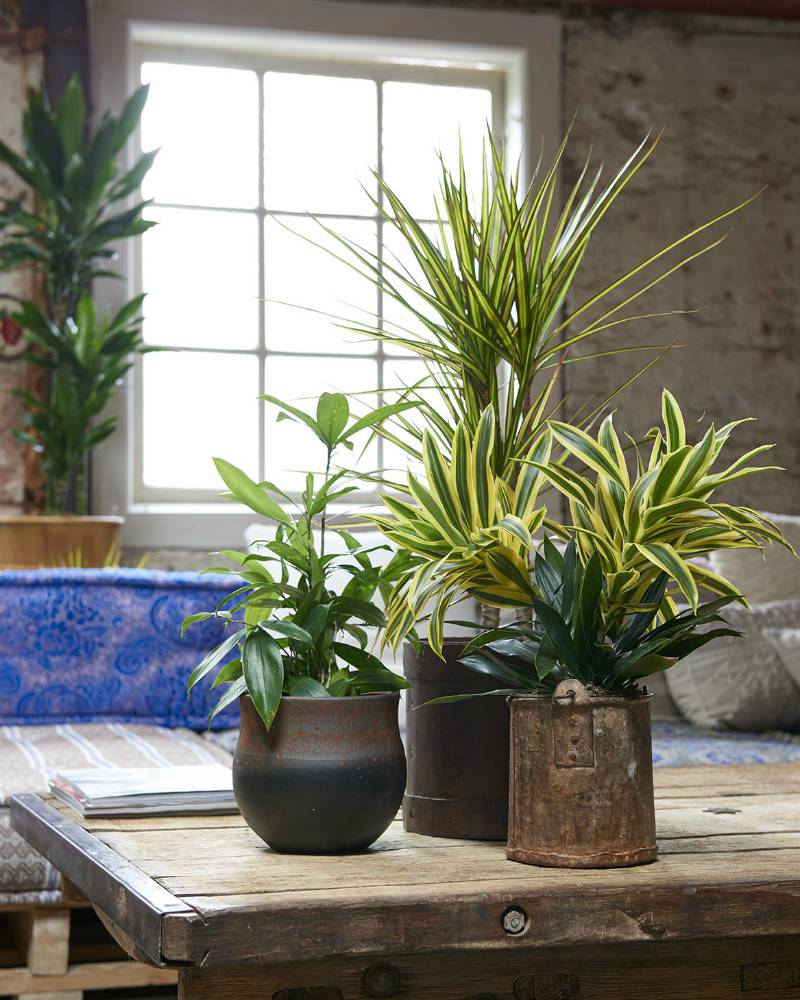
Sturdy stems and playful leaves in green, yellow, red and sometimes even pink. The Dracaena is a real houseplant favourite that works in almost any interior style. Strong, tropical and surprisingly easy to care for.
In this complete Dracaena plant guide, you will read everything about care, positioning, brown leaves or tips, the different varieties, light requirements, toxicity, symbolism and the origins of this versatile houseplant.
Characteristics and flowering
Also known as the dragon tree or dragon blood tree, Dracaena is a strong and easy houseplant with a tropical look. Firm stems and playful leaves that grow upright create a calm, modern feel. Leaf colours range from fresh green to green with yellow or red accents. This makes the plant an effortless fit for almost any home.
Because Dracaena stores moisture in its stem, it copes well with irregular watering. This makes it a suitable houseplant for many living environments, even when watering is occasionally forgotten.
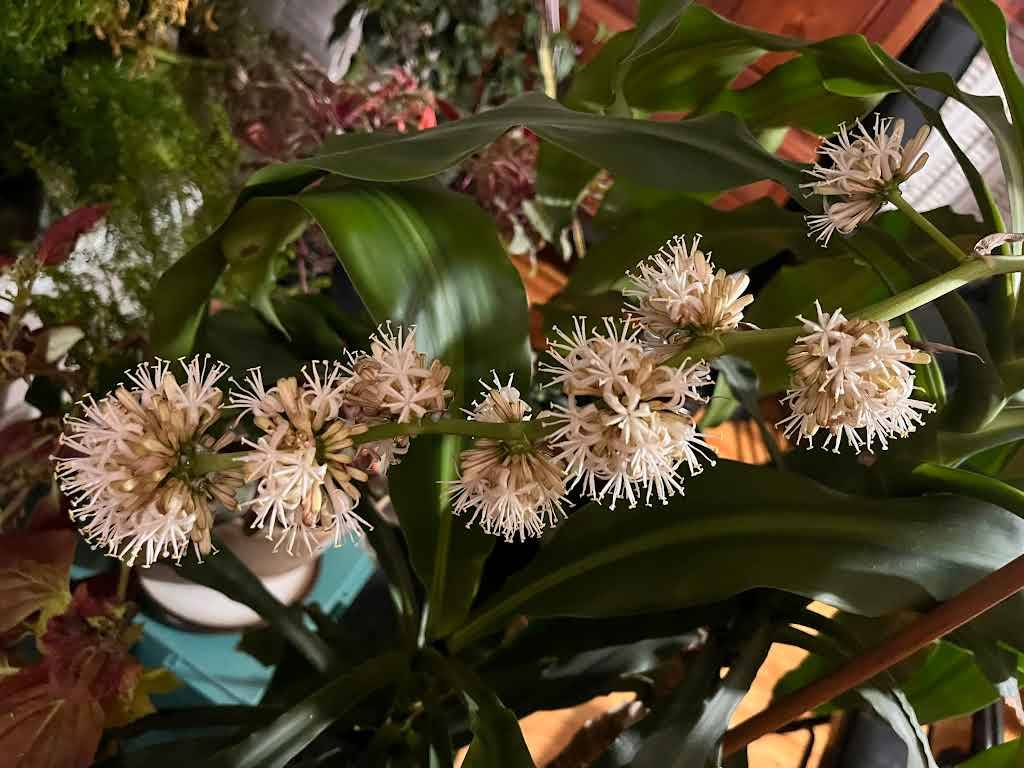
Dracaena originates from tropical regions of Africa, Asia and Central America and belongs to the Asparagaceae family. In nature, the plant can flower, producing small, fragrant blooms. Indoors, this rarely happens. Its ornamental value lies mainly in the foliage and growth habit.
Dracaena is sometimes mentioned in connection with air purification, partly based on the well-known NASA study. In a normal living environment, this effect is limited. The real strength of this plant lies in its decorative appearance and its low-maintenance nature.
Which Dracaena varieties are there?
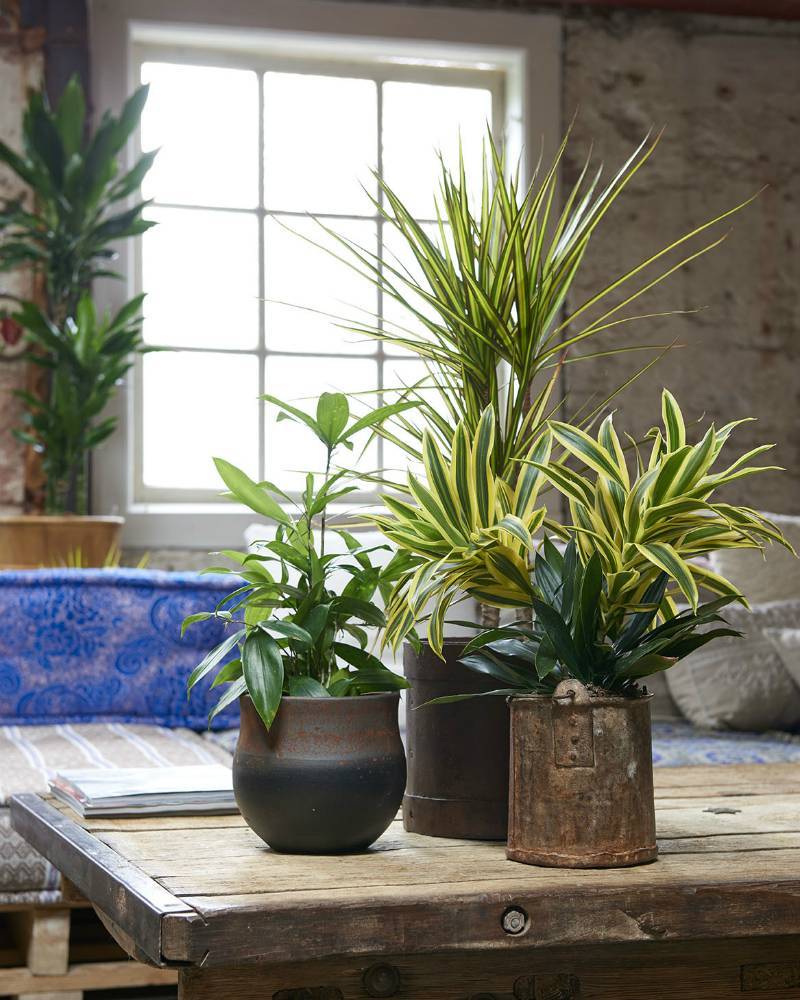
The Dracaena genus includes several botanical species. Indoors, selected cultivars are most commonly grown. These have been bred for leaf colour, growth habit and compactness and form the basis of the familiar houseplants.
Where should a Dracaena be placed?
The Dracaena is an easy plant when it comes to positioning. It copes well with moderate light and even partial shade, and will generally remain healthy in lower-light areas too. In shadier conditions, the leaf colour may become slightly less vibrant, but this does not affect the overall health of the plant.
If you would like the Dracaena to grow a little more compact and retain its colour better, a bright spot with indirect daylight works best. Direct sunlight is not necessary and is best avoided, as it can damage the leaves and cause discolouration or scorch marks.
Place the Dracaena in a draught-free spot and avoid strong temperature fluctuations, such as near an open window, door or directly above a radiator. The ideal temperature is between 18 and 24°C. This makes the Dracaena suitable for almost any room in the house.

Caring for Dracaena: water, feeding and humidity
Dracaena is a strong, easy-care houseplant that stays attractive for a long time with the right care. Pay particular attention to watering and maintaining adequate humidity.
- Watering
Only water once the compost has dried out by around two thirds. The roots do not like wet soil. Overwatering is by far the most common cause of problems. It is better to water too little once than too often. - Feeding
In spring and summer, when the plant is actively growing, feeding once every four to six weeks is sufficient. Use a standard houseplant feed at the recommended dose. In autumn and winter, growth slows down and feeding can be stopped. - Humidity
Dracaena copes well with normal indoor air. In winter, heating can make the air very dry, which may lead to brown leaf tips. - Misting
If you like, the leaves can be lightly misted from time to time with a plant spray. This slightly increases humidity around the plant and helps reduce the risk of brown tips. Daily misting is not necessary.
The name Dracaena comes from the Greek word drákaina, meaning female dragon.
Propagating Dracaena: how to do it
Dracaena is a strong houseplant that is easy to propagate. If you want to propagate a Dracaena, this section explains how to do it and provides a clear step-by-step guide.
Good to know beforehand:
- You can propagate a Dracaena indoors almost all year round. The best time is during the growing season, in spring and summer. The plant recovers faster and roots form more easily.
- Dracaena is usually propagated using stem cuttings. This is more reliable than leaf cuttings, which are rarely successful with this plant.
- Both the cutting and the parent plant will produce new growth. You often end up with two plants instead of one.
Is a Dracaena toxic?
Yes, Dracaena is toxic to pets such as cats and dogs. Ingestion can cause stomach upset. For humans, the plant is not dangerous when handled normally.
Common problems with Dracaena
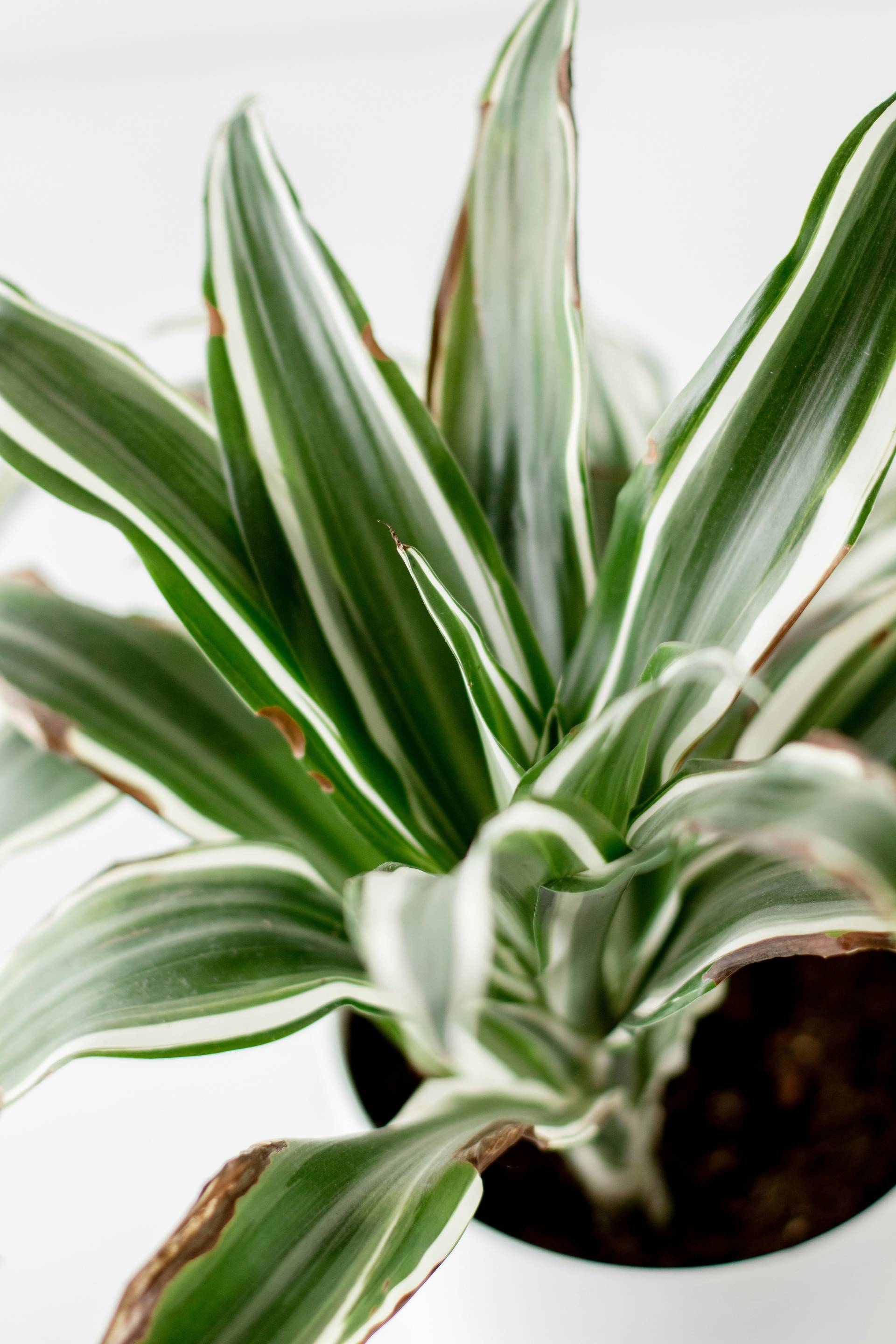
Brown leaves on a Dracaena are usually caused by dry air, too much direct sunlight, cold draughts or excess feeding. The plant is sensitive to these factors and shows this through leaf discolouration.
Brown tips are often caused by dry air or salts present in tap water. Regular misting and occasionally watering with rainwater can help reduce this problem.
If a Dracaena starts to droop, there is usually an issue with the water balance or temperature. Too little water can be the cause, but so can overwatering that leads to early root rot. A position that is too cold can also cause the plant to lose its firmness.
Meaning and symbolism of the Dracaena
The name Dracaena comes from the Greek word drákaina, meaning female dragon. This refers to the striking red resin produced by some species, often called dragon’s blood. Hence the nickname dragon blood tree. Symbolically, the Dracaena stands for strength, protection, perseverance and life energy. This symbolism is reinforced by one of the most famous specimens in the world. In Tenerife stands El Drago Milenario, a monumental dragon tree estimated to be between 250 and 350 years old, which has become a symbol of resilience and continuity.
Where does the Dracaena originally come from?
Dracaena originates from warm and subtropical regions across Africa, the Canary Islands, Madeira and the Cape Verde Islands. There are also species native to parts of Asia, and even one species that naturally occurs in Central America. In the wild, the plant can grow into impressive forms, ranging from robust shrubs to true trees with thick trunks. In Europe, Dracaena became popular as a houseplant around 1880. Since then, it has become a familiar presence in interiors, thanks to its strong character and decorative appearance.