


Written by
Carmen
Description
Indirect light
Moderate
Green
Air purifying
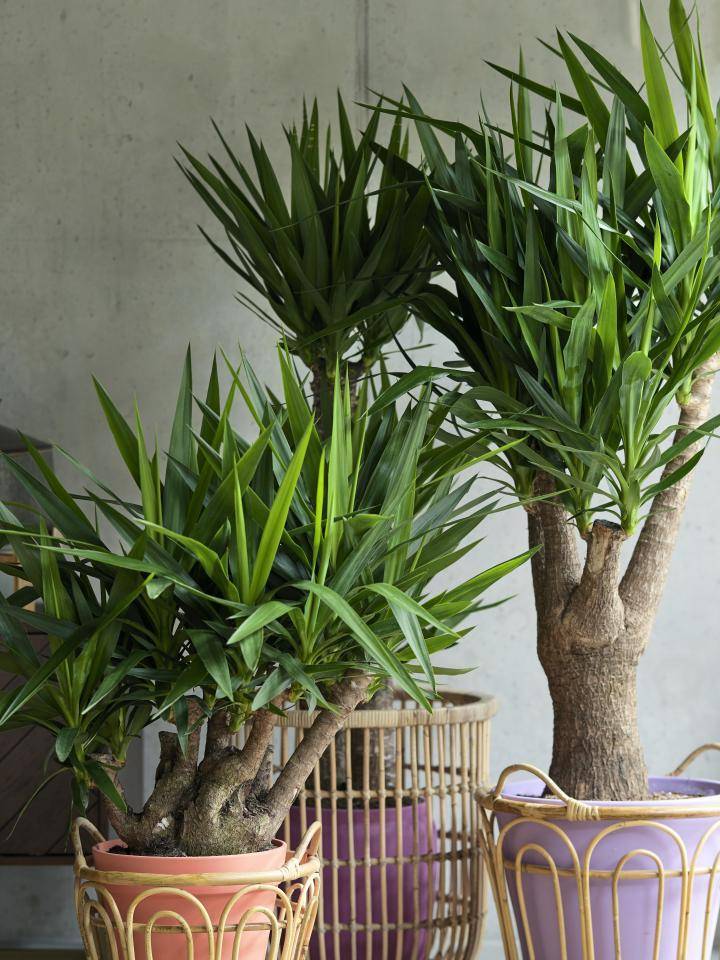
A tough character who always has your back. That is the Yucca, also known as the Spanish bayonet or palm lily. With its irresistible mix of strength and humility, it is the kind of plant you can become genuinely good friends with.
Caring for Yucca
- Place your Yucca somewhere bright, yet never in direct, scorching sunlight.
- Water it regularly, though not too often. The soil may dry out lightly between waterings.
- Treat your Yucca to plant food every now and then. It will make the plant genuinely happy.
- If you spot brown leaves, simply remove them. This helps the plant direct all its energy to the healthy foliage that is thriving.
Colours and forms of the Yucca
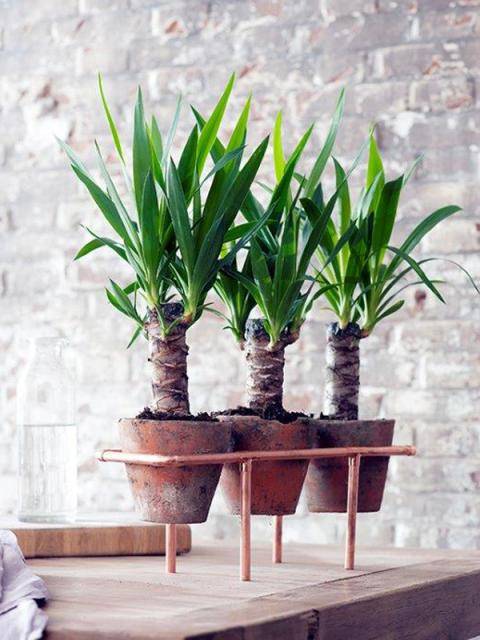
Yucca plants come in a wonderfully broad range of shapes and shades. Their leaves vary from stiff, sword-like blades to broader, softer or slim ribbon-shaped leaves, sometimes edged with those distinctive curly fibres. Colours run from fresh deep green to blue-green or silvery blue in desert species, and there are variegated varieties too with creamy or yellow stripes.
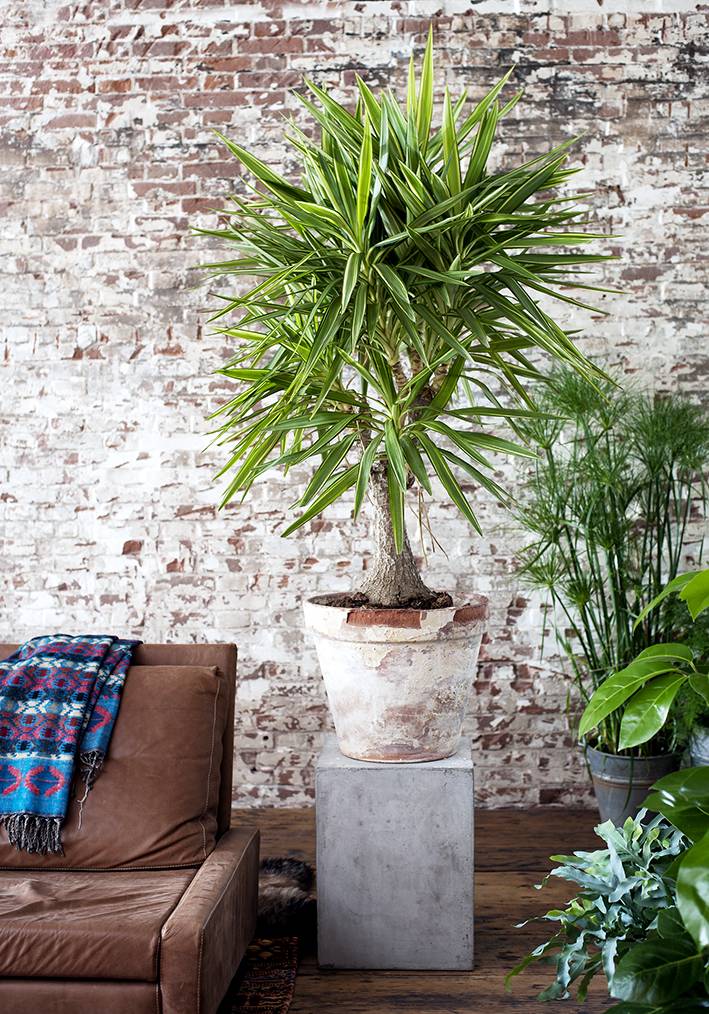
In terms of growth, some Yuccas develop a sturdy trunk, giving them that palm-like look, while others stay trunkless and grow in a rosette. Certain types form a light, airy, almost spherical crown, whereas others remain more compact. The result is an unexpected amount of variety in both appearance and structure. And the same goes for its personality. Despite all those variations, it is an easy-going plant that can flourish effortlessly with just a little bit of love. So be warned. Before you know it, you might have a full-on Yucca tree in your living room.
Symbolism of the Yucca
For a no-nonsense plant, the Yucca carries some impressive meaning. It symbolises resilience and perseverance, thanks to its ability to survive in dry, challenging landscapes. Its sharp leaves often represent protection, while the traditional use of its roots to make soap links it to purity. Beyond that, the Yucca stands for hope, survival and a deep connection to nature, shaped in part by the way Indigenous communities have long used the plant.
Origin of the Yucca
The Yucca originally grew wild in the southern United States, South America and the Caribbean. It thrives in desert-like regions, enjoying sunshine and relative dryness. Some wild species bloom too, although you should not expect that from your houseplant version.
Botanical species of Yucca
There are many Yucca species, around 50 in total. These are some of the most common ones:
- Yucca elephantipes (syn. Y. gigantea) – the most popular houseplant
- Yucca aloifolia – the “Spanish bayonet”, known for its sharp leaves
- Yucca filamentosa – a winter-hardy garden species
- Yucca flaccida – similar to filamentosa, also very hardy
- Yucca gloriosa – a robust garden type, sometimes with variegated forms
- Yucca rostrata – elegant blue Yucca with a trunk
- Yucca brevifolia – the iconic “Joshua tree” from the Mojave Desert
- Yucca schidigera – a desert species used for extracts
- Yucca whipplei (now Hesperoyucca whipplei) – sharp, rigid leaves
- Yucca thompsoniana – similar to rostrata, but more compact
- Yucca baccata – “Banana Yucca”, with thick, fleshy leaves
And a few cultivated varieties:
- Yucca filamentosa ‘Color Guard’
- Yucca filamentosa ‘Bright Edge’
- Yucca gloriosa ‘Variegata’
Fun facts about the Yucca
- Did you know the Yucca absolutely cannot live without the yucca moth? Many Yucca species in the wild are pollinated only by this tiny moth. The plant and the moth rely completely on each other. The moth pollinates the flower and her larvae later eat a portion of the seeds. Without one, the other simply cannot survive.
- The Yucca is unbelievably strong. Its leaves contain tough fibres once used by Indigenous peoples to make rope, baskets, sandals and brushes. Even today, Yucca fibres still appear in certain brushes and cloths.
- Despite the name, Yucca elephantipes is not a palm but a relative of the forest lily. Its trunk and leafy crown give a palm-like impression, but botanically it belongs to the Asparagaceae family.
- Some Yucca plants can live for up to a hundred years.
- Several Yucca species have edible parts, including their flowers and flower stalks. And Yuccas love extreme drought. They manage this clever trick by storing water in their trunk.