
Do you think repotting is only necessary when a plant is almost literally bursting out of its pot? Think again! Repotting at the right time helps your plant stay healthy and strong. Below, we explain exactly why, when and how to repot a plant. Get comfortable and read on!
Why should you repot a plant?
A houseplant gets water and nutrients from its potting soil. Over time, the nutrients in the soil become depleted, while the roots take up more and more space as the plant grows. By repotting your plant regularly, you:
- Encourage healthy growth, beautiful leaves and the development of new leaves
- Give the roots more room to grow
- Refresh the potting soil and replenish nutrients
- Prevent the roots from becoming tangled
- Improve drainage and aeration around the roots
Repotting is one of the easiest ways to keep your houseplant healthy and looking beautiful for years to come.
When should you repot a plant?
The ideal time to repot houseplants is in spring (March to May). This is when the plant enters its growing season, allowing it to recover more quickly and develop new roots. Early summer is also a perfectly good time to repot. Ideally, avoid repotting during the winter months, immediately after buying your plant or while a plant is flowering.
How often should you repot a plant?
Luckily, not every houseplant needs a new pot every year! How often a plant needs repotting mainly depends on how quickly it grows. Below, you'll find some useful guidelines for fast-growing, moderately growing and slow-growing houseplants.
General rule of thumb: give your plant a pot that's 20% larger every 2-3 years.
Fast-growing houseplants
Plants that grow quickly will naturally need a larger pot sooner. Plants such as Banana Plant, Epipremnum, Alocasia, Monstera and Philodendron grow relatively quickly and generally need a larger pot every 1-2 years. Check fast-growing plants every spring. Is your plant running out of space, can you see lots of roots at the bottom of the pot and/or does the potting soil dry out quickly? Then it's time for a larger pot.
Moderate growers
Many popular houseplants grow at a moderate rate and need a new pot less often. Think of Ficus, Calathea, Dracaena, Kentia and Schefflera. The rule of thumb for these plants is to repot them into a pot that's 20% larger every 2-3 years. Check your plant every spring to see whether repotting is necessary. Is your plant healthy and growing well? Then simply replacing the top layer of potting soil is often enough.
Slow-growing houseplants
Some plants naturally grow slowly and/or even prefer being slightly snug in their pot. Think of plants such as Zamioculcas, Sansevieria, Cactus and Succulents. Only repot these plants when their roots have run out of space.
How do you know if a plant needs a larger pot?
Your houseplant will often show you when it's time to repot. Look out for signs such as:
- Roots growing out of the drainage holes
- The roots pushing the plant upwards out of the pot
- The potting soil drying out more quickly than before
- The plant barely growing, even though it's growing season (spring/summer)
- The pot becoming misshapen from the pressure of the roots and/or roots growing upwards out of the pot
Repotting a plant: how do you do it?
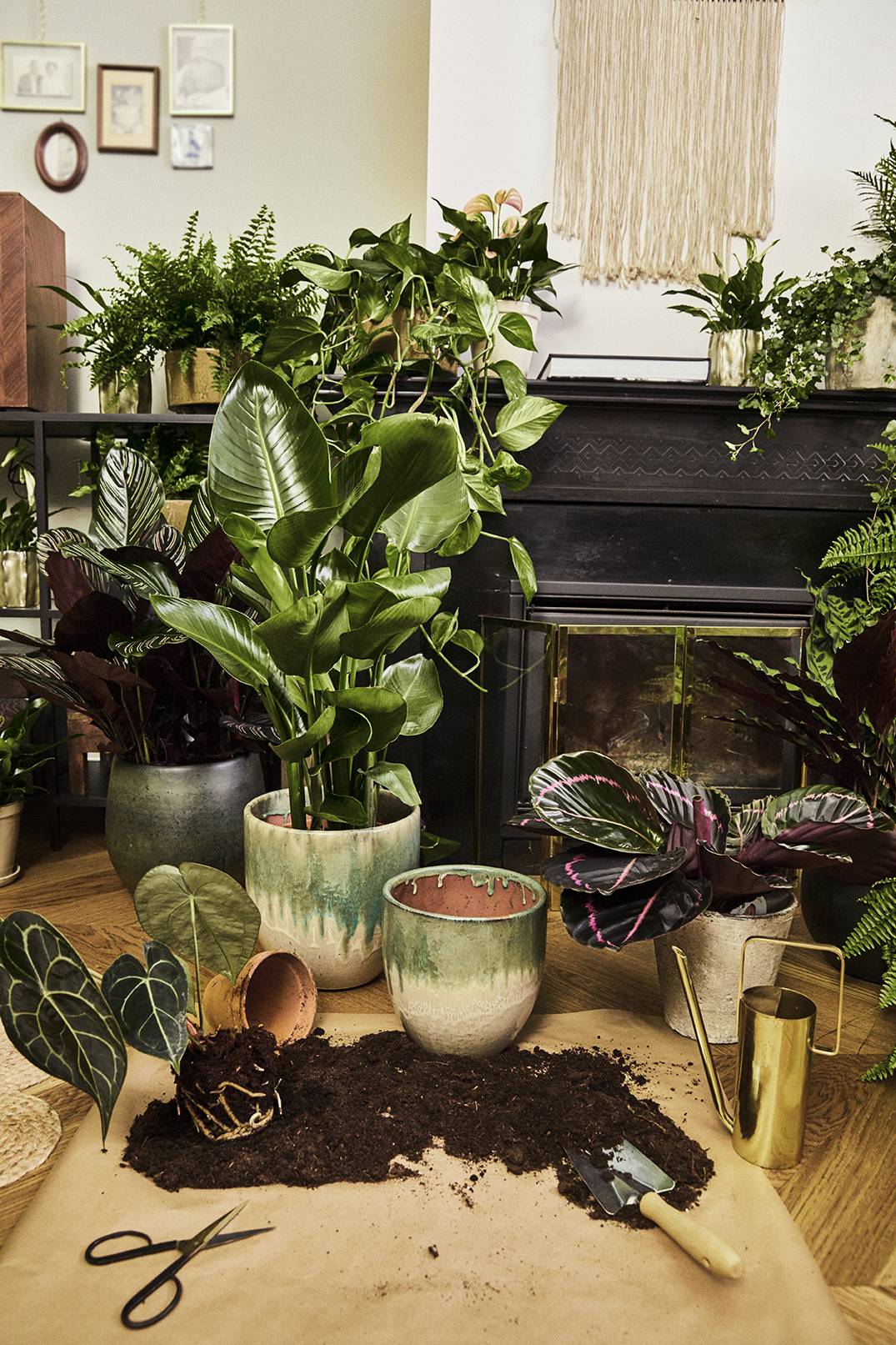
Luckily, repotting isn't difficult at all! Follow these steps:
- Choose a 20% larger pot. A much larger pot (>30% bigger) may seem practical because you might think you won't need to repot as often, but it means excess water stays in the potting soil for longer, increasing the risk of root rot.
- Use fresh potting soil. Fill the pot with fresh potting soil that's suitable for the type of plant. For example, choose potting soil for Mediterranean plants, special Orchid potting mix for your flowering Orchid, or multipurpose potting soil for other houseplants.
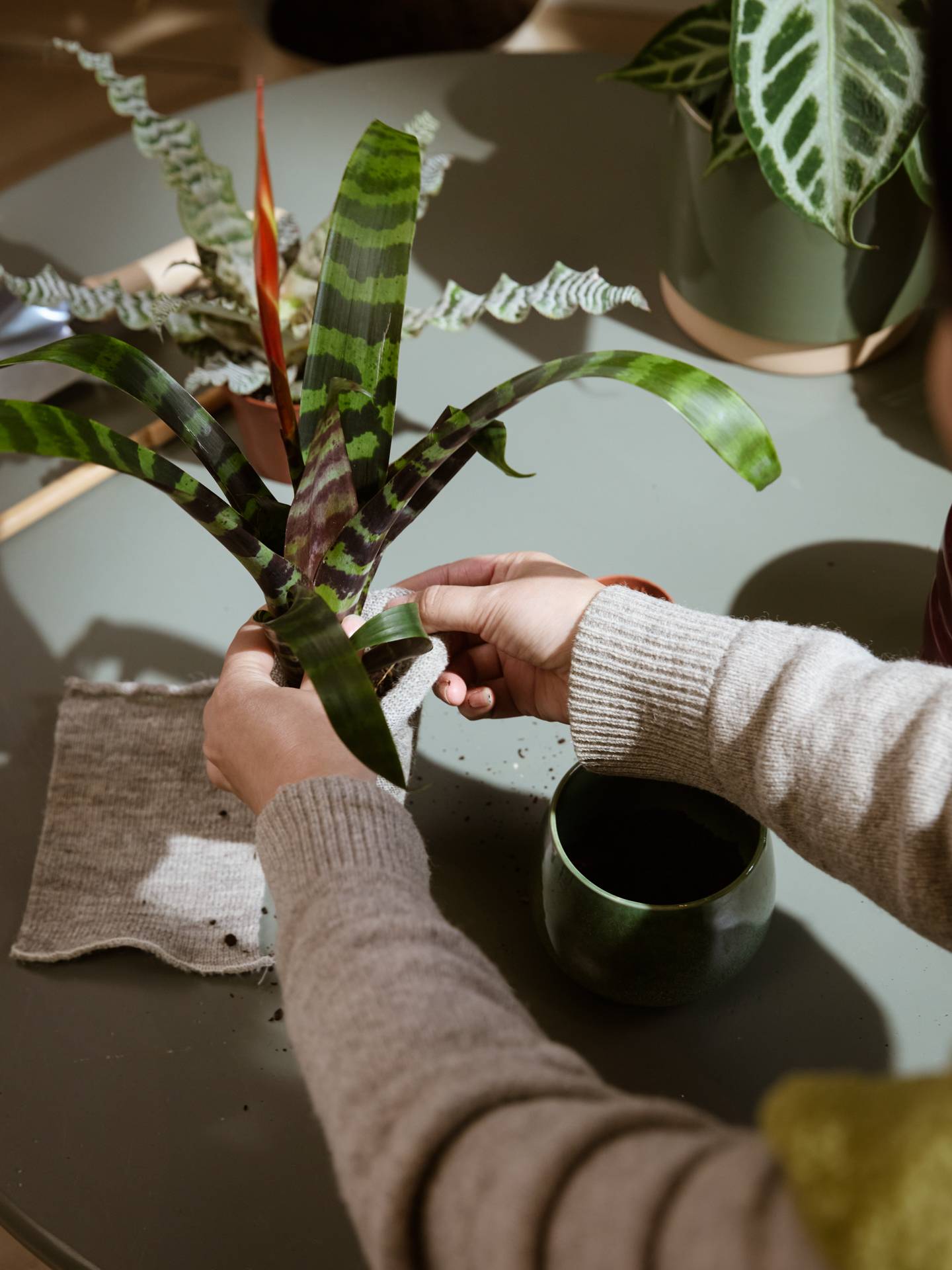
- Carefully remove the plant from its current pot. Gently loosen the plant and remove it from the pot. Check the roots. Healthy roots are firm and usually white or light brown. Soft, dark or unpleasant-smelling roots can be carefully removed.
- Place the plant in the new pot with fresh potting soil. Place the plant in the new pot and fill the space around the root ball with fresh potting soil. Gently press the soil down. Don't press too firmly, as the roots need air too.
- Water the plant. Water the plant immediately after repotting so the fresh potting soil settles neatly around the roots.
Repotting or just fresh potting soil?
Does your plant still have plenty of room, but has it been sitting in the same potting soil for years? Then a complete repot isn't always necessary. By occasionally removing the top few centimetres of old potting soil and replacing it with fresh soil, you can give your plant a fresh supply of nutrients without moving it to a new pot.
More information
A larger pot is, of course, a great way to help keep your plants healthy, but plants need more than that to truly thrive! Discover our basic rules and tips for caring for houseplants. You can also find out which plants need lots or very little light. Also useful: take a look at our frequently asked questions about houseplants.