Written by
Sabina
Description
Indirect light
Little
Green
Easy to care for
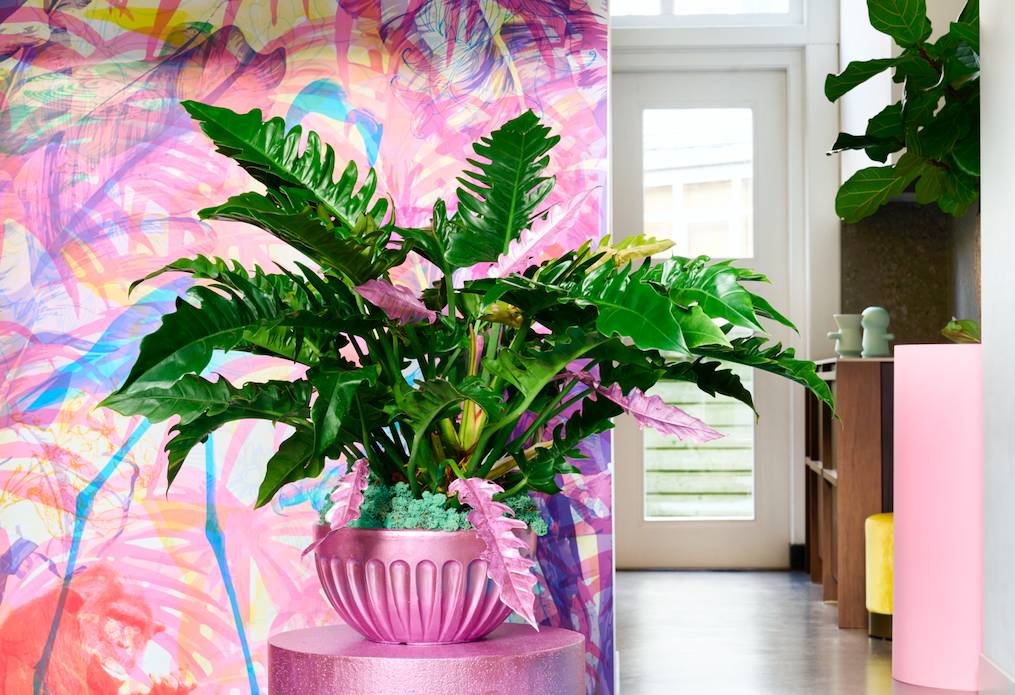
Big green leaves that instantly bring a touch of tropical jungle into your home. That is the magic of Philodendron. This strikingly easy-going houseplant is known for its impressive foliage that not only adds atmosphere, but also helps keep your indoor climate fresh and oxygen-rich. Whether you want a compact plant for a small space or a leafy giant that takes over the room, Philodendron settles in quickly. Are you convinced yet?
Characteristics of Philodendron
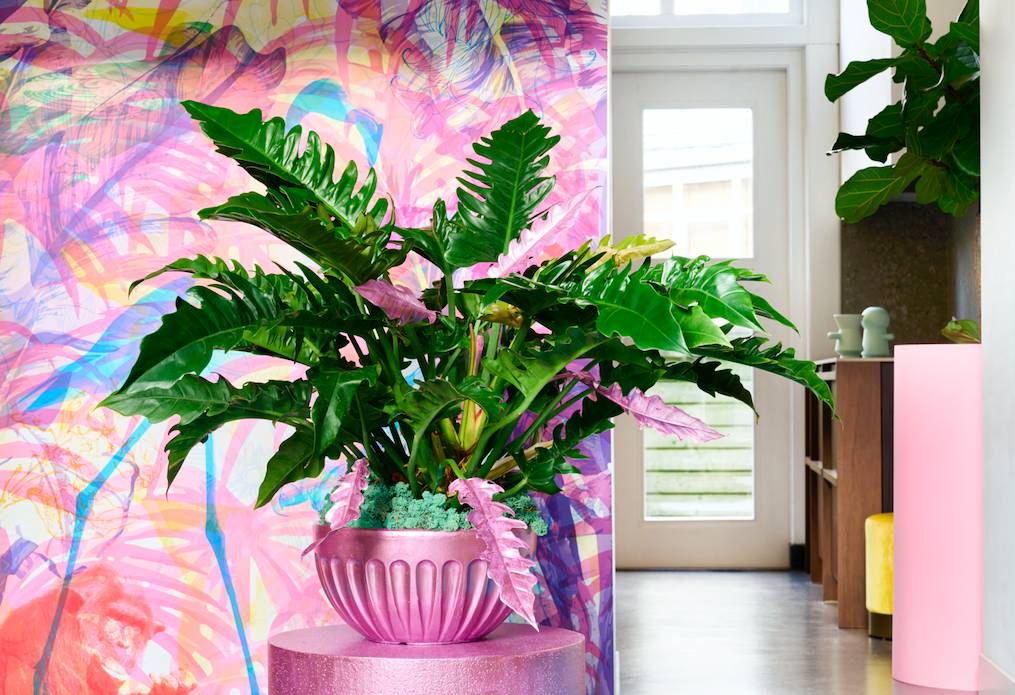
What catches your eye right away are the large, characterful leaves. They may be oval or pointed. Some are heart-shaped and others beautifully split. Certain varieties have unusually thick veins. Most leaves are green, yet some cultivars offer creamy green tones or soft pinkish red colours.
The leaves are often thick and slightly leathery. This means the plant evaporates very little moisture. The result is surprisingly low-maintenance care. Philodendron needs relatively little water and is quite forgiving if you occasionally forget to water it. Sizes range from small plants of around 40 centimetres to impressive XXL varieties that can dominate an entire corner.
Philodendron belongs to the Araceae family, the same plant family that includes Arum, Monstera and Anthurium.
When does Philodendron flower?
Indoors, a Philodendron almost never blooms. If it does, it will produce small, inconspicuous flower spikes that cost the plant a lot of energy. Remove them as soon as you spot them. The flowers also have a fairly strong scent. By cutting them off, the plant stays fuller and stronger.
Philodendron care and placement
● Philodendron is an easy houseplant that stays beautiful for years with minimal care.
● Place it in a bright spot with indirect daylight and avoid harsh sun.
● Lightly shaded areas are fine, although too much shade makes the plant weak and floppy.
● Keep the temperature between 18 and 25 degrees Celsius and avoid draughts or dry radiator air.
● Water moderately. The soil should be slightly moist, but allow the top layer to dry out between waterings.
● Avoid standing water in the pot to prevent root rot.
● Feed once every two weeks during the growing season. Once a month is enough in winter.
● Keep the leaves free of dust for a healthy shine.
● Yellow leaves usually indicate overwatering.
● Climbing varieties benefit from a moss pole or other support.
Philodendron is an easy houseplant that stays beautiful for years with minimal care

Which Philodendron varieties are there?
Hundreds of Philodendron species exist in the wild. Around ten of them are commonly sold as houseplants. These are some of the most popular.
- Philodendron Scandens (Heartleaf Philodendron): a climbing plant with soft, heart-shaped leaves. Ideal for hanging pots or shelves.
- Philodendron Imperial Green and Imperial Red: powerful and compact varieties with large oval leaves in fresh green or deep red-green.
- Philodendron Selloum (Philodendron Bipinnatifidum): known for its deeply cut leaves and almost sculptural appearance.
- Philodendron Pink Princess: a variegated variety with dark foliage and pink markings.
- Philodendron Birkin: recognised by its dark green leaves with fine white pinstripes.
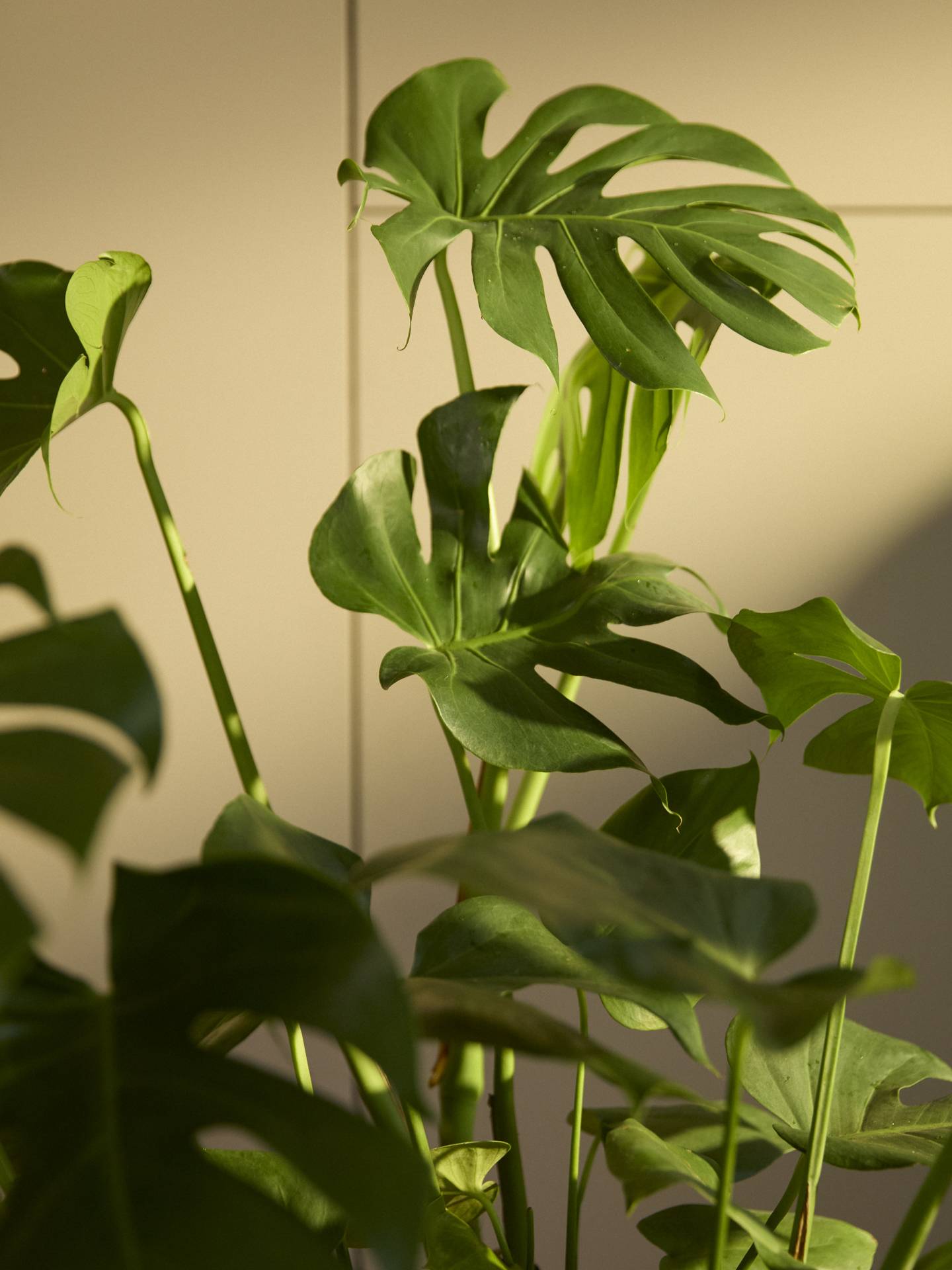
- Philodendron Minima: reminiscent of Monstera thanks to its split leaves.
*Good to know: many popular varieties are not separate botanical species but cultivars. They are specifically bred for their colour or leaf shape.
Is Philodendron poisonous?
Yes. Like many plants in the Araceae family, Philodendron is mildly toxic if ingested, both for pets and humans. The leaves and sap can cause irritation when chewed or swallowed, so keep the plant out of reach of curious children and animals.
Contact with the sap can sometimes cause mild skin irritation. Wash your hands after pruning leaves or stems.
Symbolism of Philodendron
Philodendron symbolises health and abundance. Its lush leaves are often associated with softness and a sense of homeliness. The plant has also inspired artists around the world. Pablo Picasso incorporated its iconic leaf shapes into his sculpture Woman in the Garden. Modern artists such as Mimi Little and Peggy Eyth also enjoy working with its expressive forms.
Philodendron is known for winding itself around trees in its natural habitat. For that reason, it is sometimes seen as a symbol of connection and strength.
Origin of Philodendron
Philodendron originates from the tropical rainforests of the Caribbean, Colombia and Venezuela. Today, it also grows in parts of Asia. In the wild, it climbs up trees in search of light. The plant was first described in 1644 and officially named in 1829. Its name comes from Greek. Philo means love or affection. Dendron means tree. Loosely translated, Philodendron is a lover of trees. The plant is quite literally a cuddler of the rainforest.