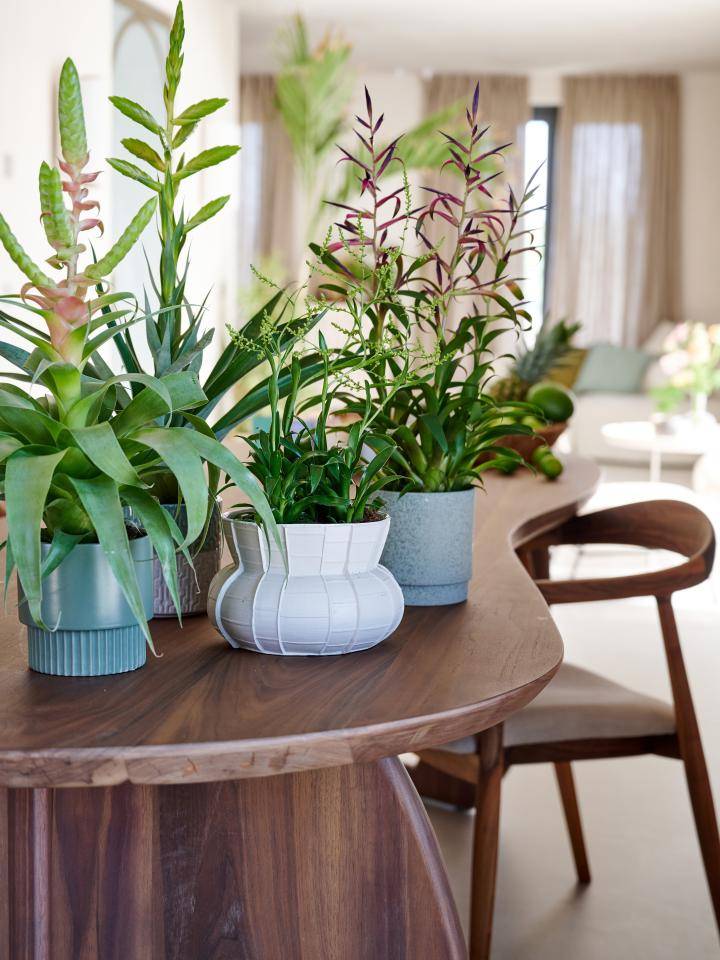
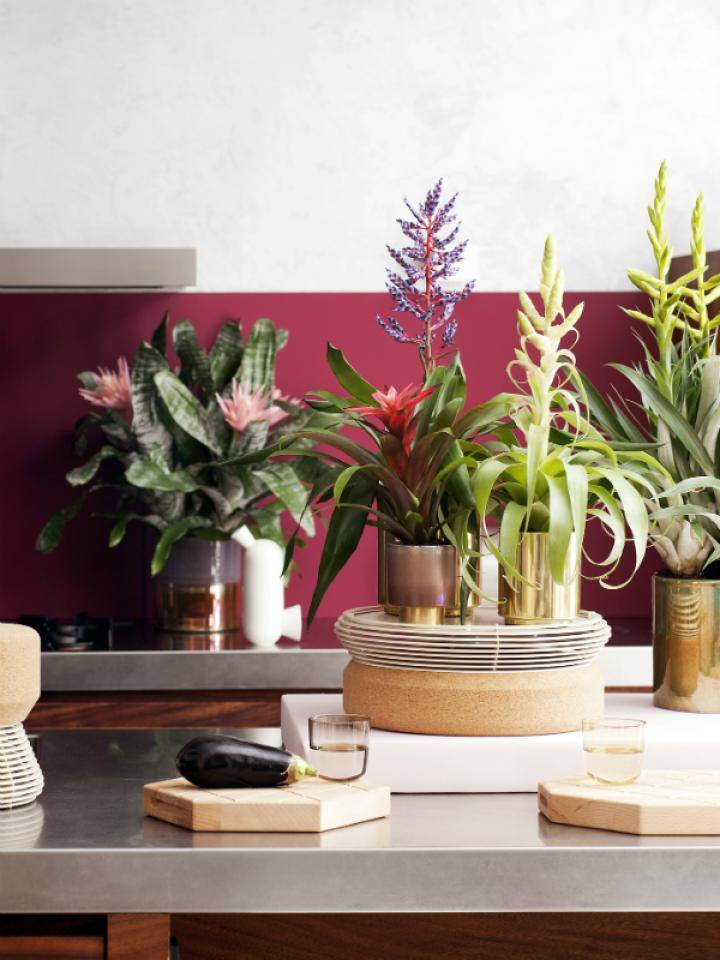
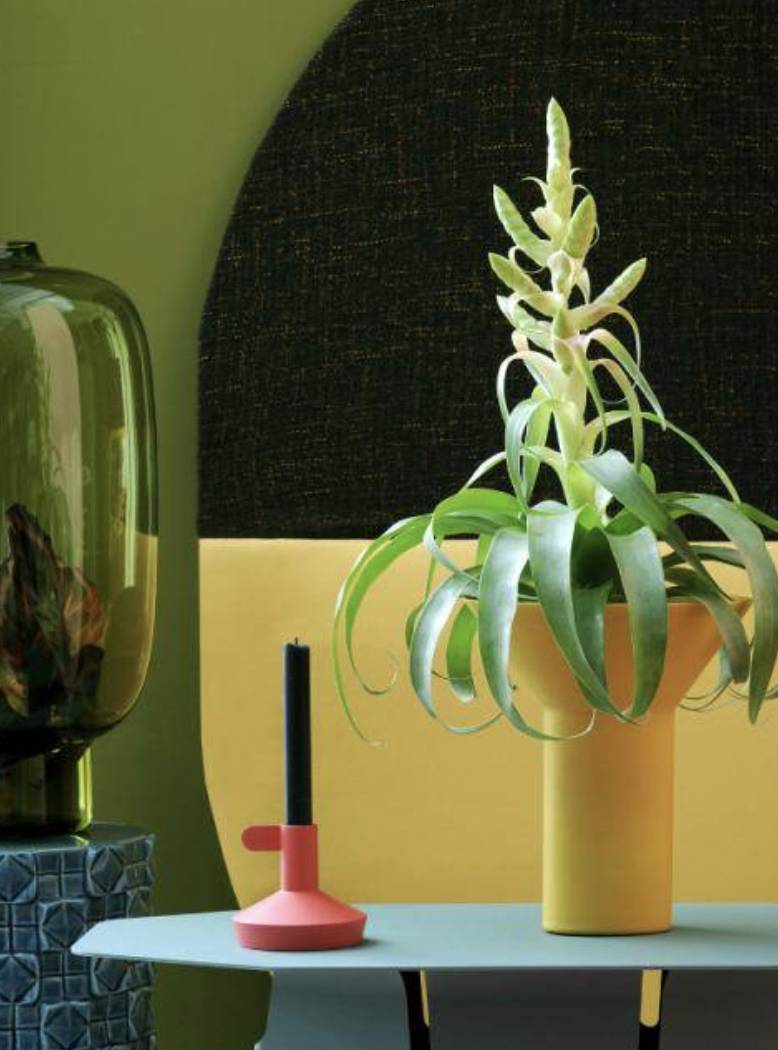
Like a cheerful flame, the Bromeliad rises up from a green heart. It is almost unbelievable that nature could create something so beautiful. Read on and discover everything about Bromeliads. From characteristics to varieties, care, symbolism and much more.
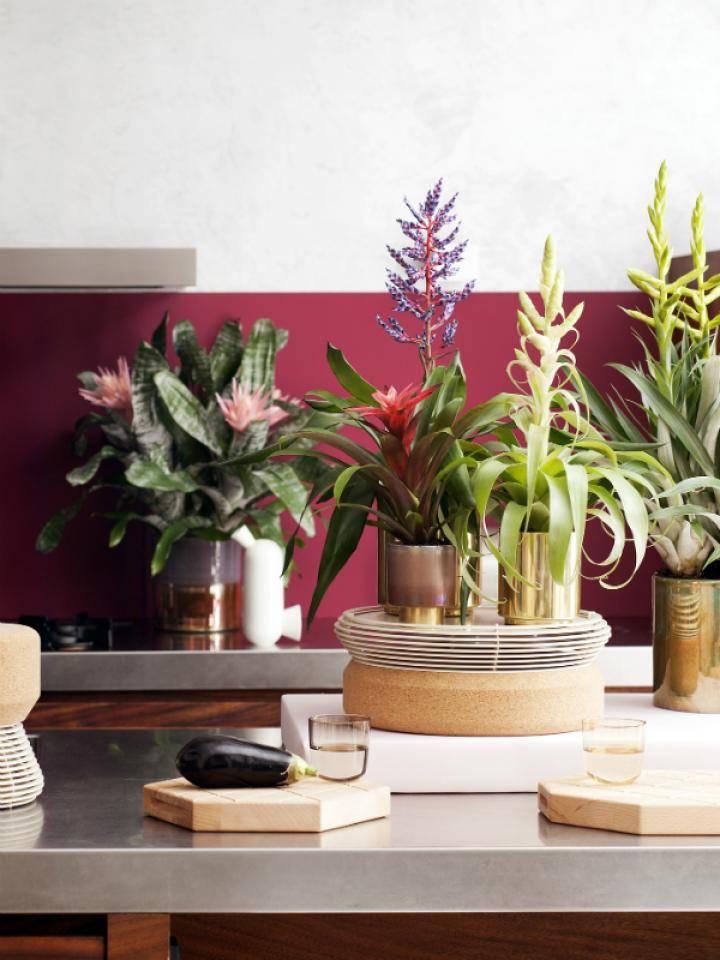
Characteristics and flowering of Bromeliad
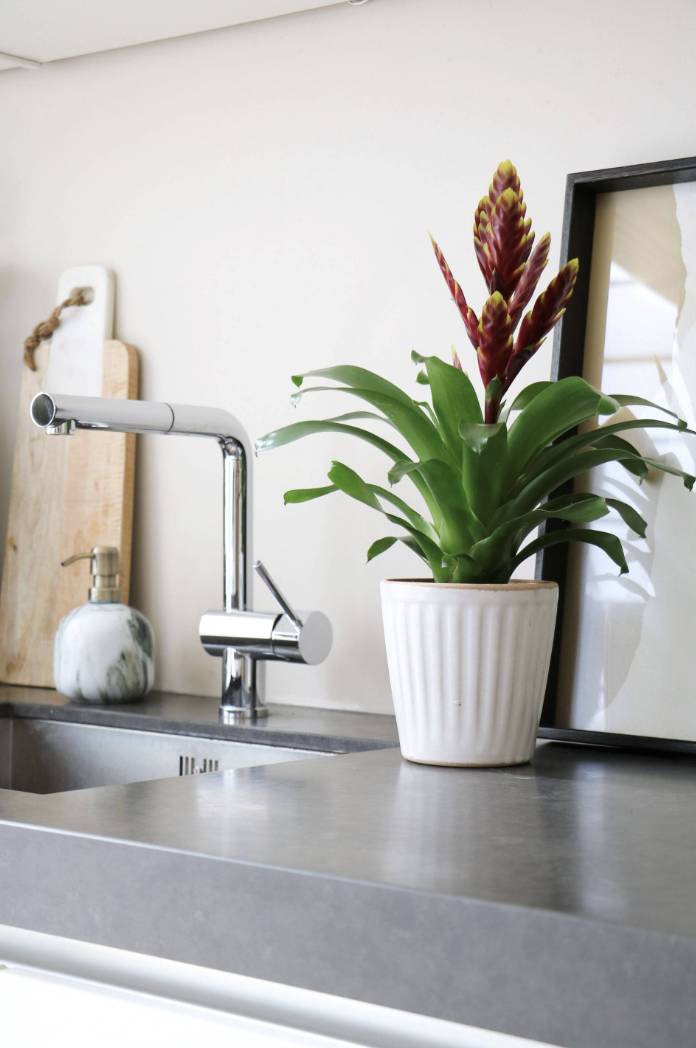
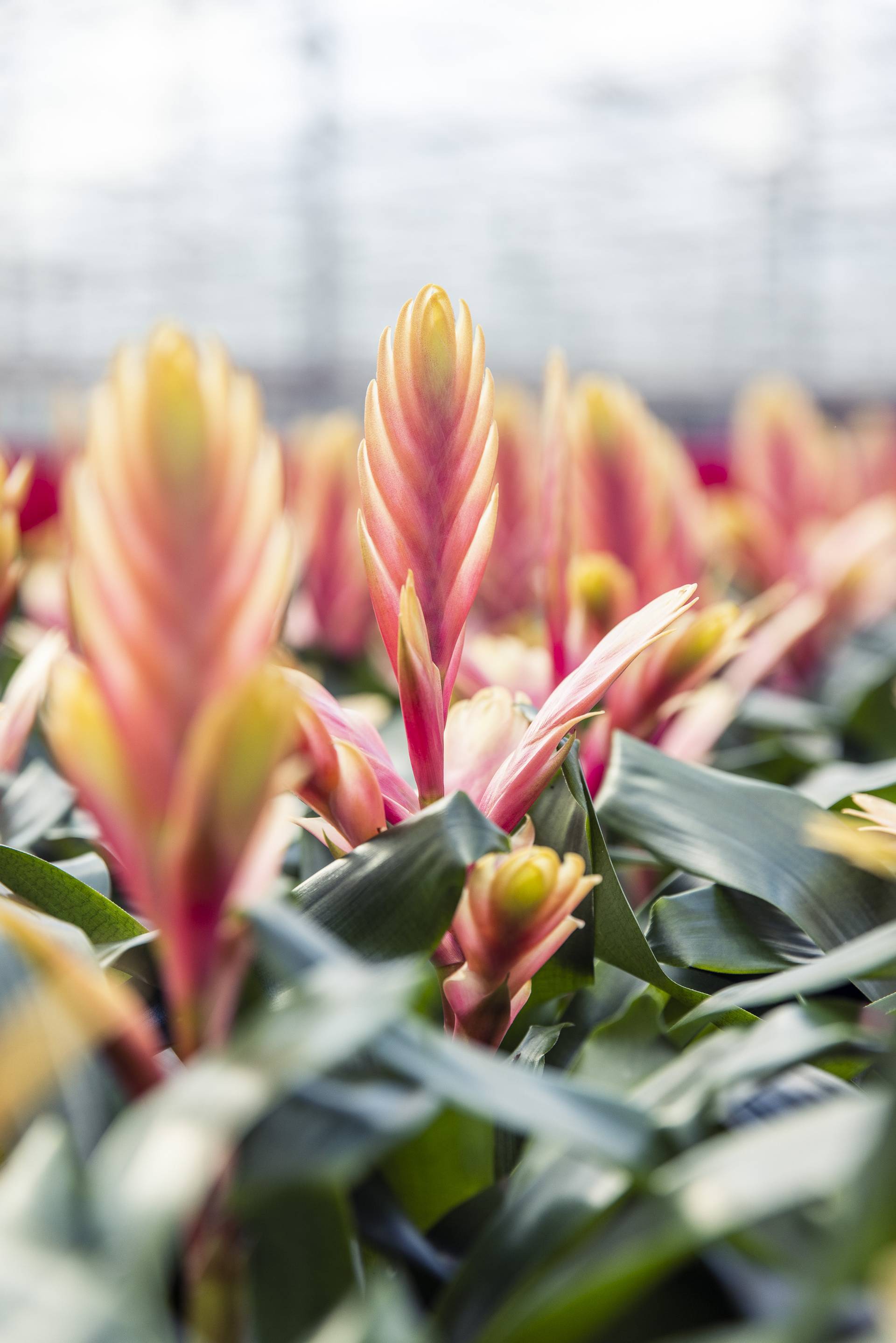
The Bromeliad is a flowering houseplant, recognisable by its sturdy, narrow leaves that grow in a rosette shape. The leaves form a funnel-shaped centre where water collects. Bromeliads are long bloomers with beautiful, brightly coloured bracts, which are often mistaken for flower petals.
The Bromeliad belongs to the Bromeliad family, Bromeliaceae. This is a large plant family that mainly occurs in the subtropical and tropical regions of Central and South America.
What are often mistaken for flowers on a Bromeliad are actually colourful bracts. The real flowers of the plant are very small.
Caring for Bromeliad: placement, water, feeding, and humidity
- Placement: Bromeliads prefer a bright spot but not direct sunlight. Too little light can result in dull colours, while too much light may damage the leaves.
- Water: give the Bromeliad water in the funnel, which is the heart of the plant, and a small amount on the potting soil. Keep the soil slightly moist but never wet.
- Feeding: during the growing season in spring and summer, give the Bromeliad a small amount of liquid houseplant fertiliser once a month mixed with water.
- Humidity: Bromeliads love high humidity. Regularly misting the plant will keep it happy! Do not place the plant too close to heating or air conditioning.
Bromeliads thrive in humid environments and are therefore ideal for bathrooms where plenty of daylight enters!
What varieties of Bromeliad are there?
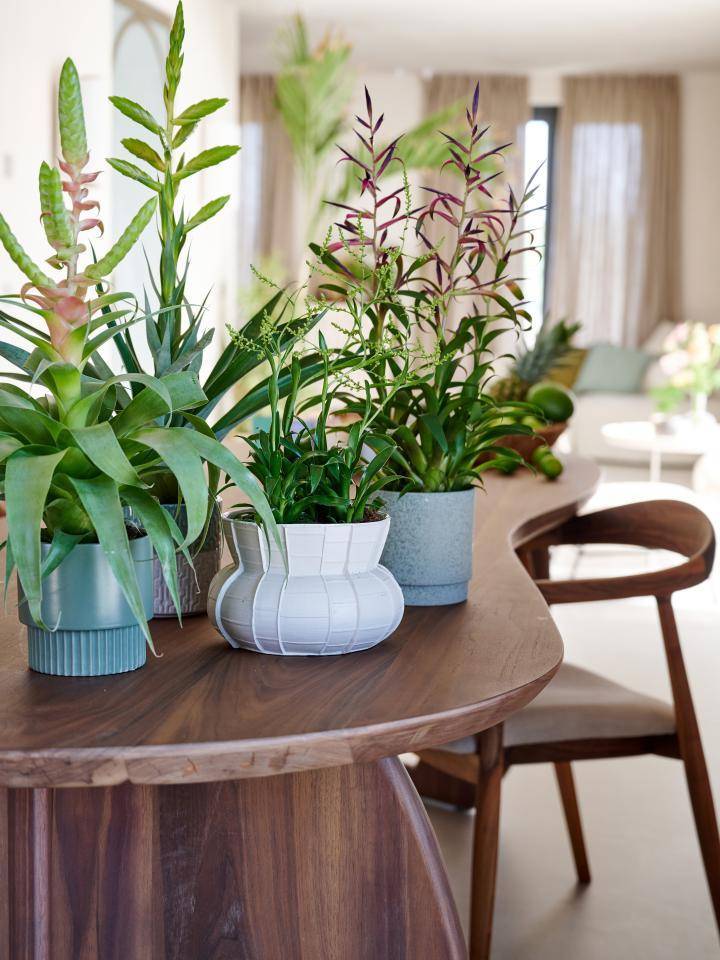
There are more than 2,800 species of Bromeliads worldwide, although only a small number are kept as houseplants. Most indoor Bromeliads belong to the genera Guzmania, Vriesea, Aechmea, Tillandsia and Ananas.
These are some of the best known species grown as houseplants:
- Guzmania lingulata: one of the most popular Bromeliads. This species can be recognised by its trumpet or star-shaped bracts in bright colours such as red, yellow, orange or pink. The leaves are narrow, smooth and fresh green.
- Vriesea splendens: this species is recognisable by its flat, feather or sword-shaped flower spike. Some varieties also have decorative patterned leaves.
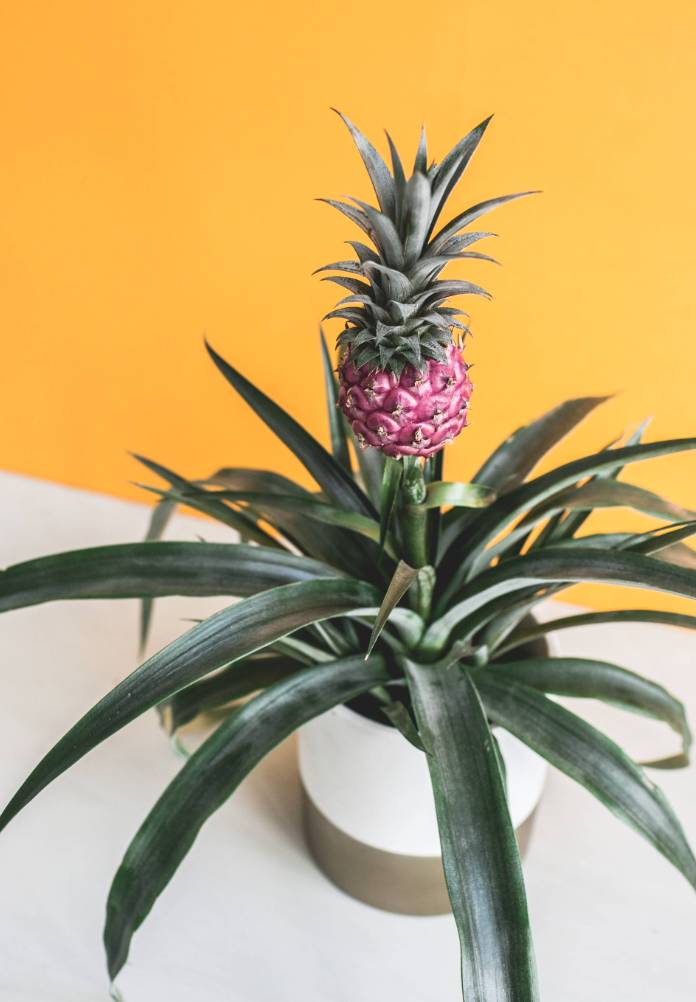
- Ananas comosus: also known as the pineapple plant. This Bromeliad is decorative and can even produce a real pineapple. The plant has sturdy spiky leaves and grows in a compact rosette.
- Aechmea fasciata: recognisable by a sturdy rosette of silver-grey or grey-green leaves, often with small spines along the edges. The plant usually has pink bracts and small blue flowers.
- Tillandsia ionantha: Tillandsias are often called air plants because they absorb water and nutrients from the air. These plants have narrow grey-green leaves and can grow without potting soil.
My Bromeliad has finished flowering. What now?
Bromeliads bloom only once. When your Bromeliad has finished flowering, it is best to cut the flower stem with bracts as short as possible because it no longer has much ornamental value.
By removing the stem, the plant can focus on producing pups, which are young shoots. You can then propagate your Bromeliad using these pups once they reach about one third of the size of the mother plant.
A Bromeliad typically blooms for three to six months. Once flowering has finished, the original plant will not bloom again. However, the pups may eventually flower, although this can take months or even years.
Is Bromeliad toxic?
Bromeliads are generally considered non-toxic to people and pets, including dogs and cats, making them a safe choice for most households.
Bromeliad: meaning and symbolism
Civilisations such as the Inca civilization, Aztec civilization and Maya civilization used many parts of Bromeliads for food, protection, fibres and ceremonies. Because of this, the plant is sometimes seen as a gift from the gods in its native regions.
As a houseplant, the Bromeliad symbolises protection and safety, referring to the protective rosette of leaves that surrounds the colourful centre.
In some cultures the Bromeliad also symbolises hospitality and joy, thanks to its lush greenery and exotic appearance.
Where do Bromeliads come from?
Bromeliads are thought to have originated around 65 million years ago. Fossil specimens have been dated to approximately 30 million years ago, which makes them ancient inhabitants of the earth.
Bromeliads originate from the Andes Mountains and tropical regions of South America. Today they occur naturally throughout Central and South America in a wide range of environments, from humid rainforests to mountainous regions and dry habitats.
Some Bromeliads grow in the soil, while others are epiphytes. This means they grow on trees without taking nutrients from them. Instead they absorb water and nutrients from the air through specialised leaves and roots.
In the eighteenth century, European plant collectors brought Bromeliads to Europe. These plants formed the basis for the many decorative varieties that are available today.
How are Bromeliads grown?
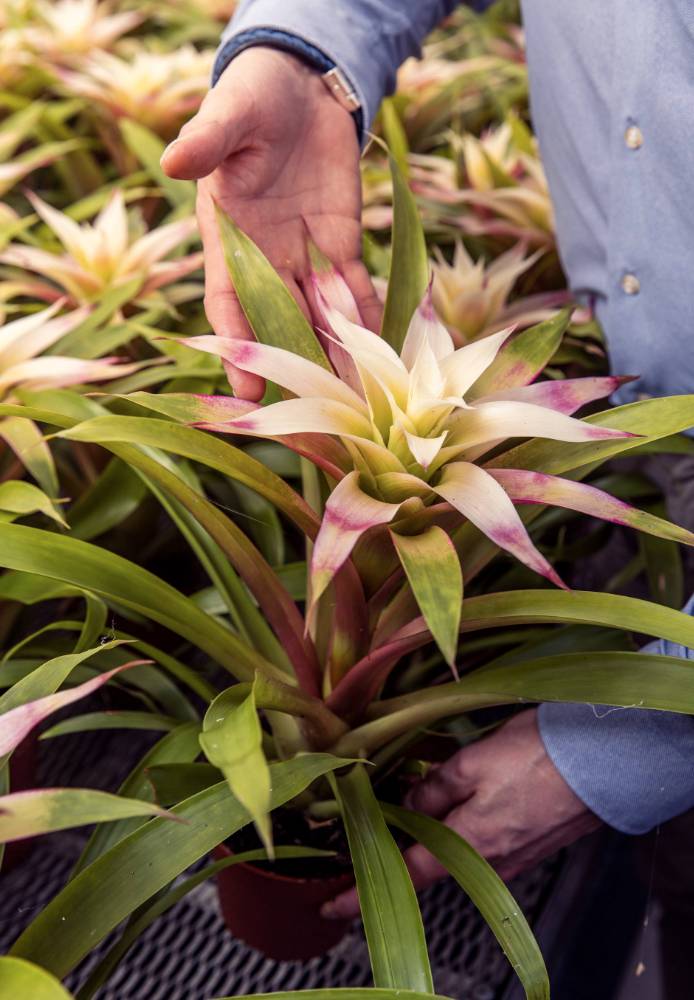
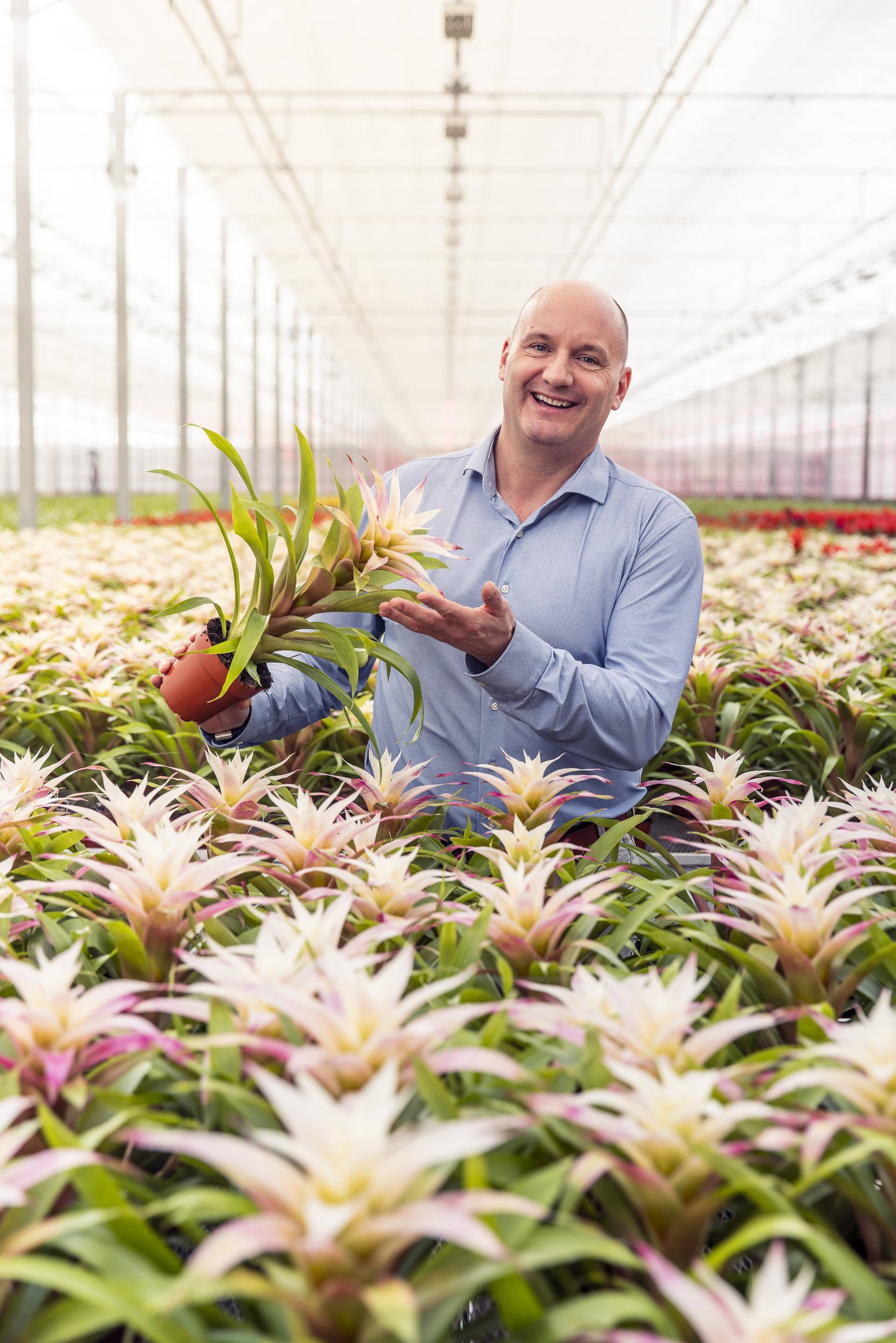
Curious about how Bromeliads are grown? Take a colourful look inside the greenhouse of Bromeliad specialist and discover the fascinating world of flowering Bromeliads.
Did you know that geckos are sometimes used in greenhouses to control pests in a natural way? Grower Siegfried also shares useful care tips to help keep your Bromeliad healthy.