
Good humidity levels at home contribute to a healthy and comfortable indoor climate. This is important not only for people, but for houseplants too. Fortunately, there are several ways to increase the humidity in your home. Houseplants can play a modest but natural role: they release water vapour into the air through their leaves. How exactly does that work, which plants release relatively large amounts of moisture, and how can you create a favourable microclimate for your plants? You’ll discover it all in this article.
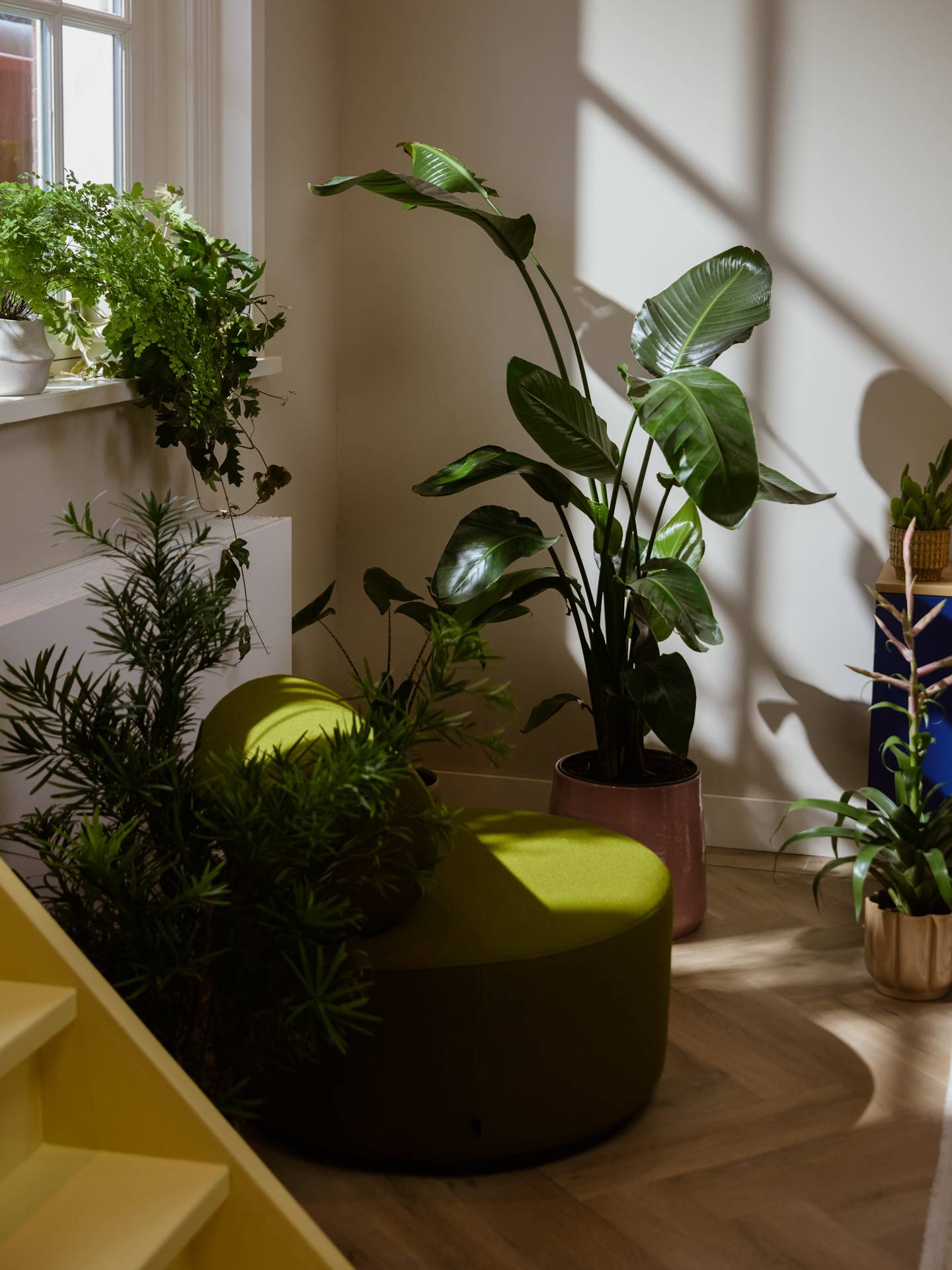
Why is good humidity at home important?
Humidity refers to the amount of water vapour in the air. For homes, a humidity level of between 40-60% is considered ideal. Is the air in your home too dry for a prolonged period? Both you and your plants may start to notice the effects. You might experience dry eyes, dry skin and/or a dry throat, for example. Many houseplants don’t like air that is too dry either. Tropical varieties in particular are used to humid environments and may develop brown leaf edges, curling leaves, slower growth or become more susceptible to spider mites when humidity is low.
Tropical houseplants in particular are used to humid environments and may develop brown leaf edges or struggle to grow when the air at home is too dry.
Do plants help increase humidity at home?
Plants can certainly contribute to higher humidity levels, but don’t expect miracles. Think of plants as a natural addition to a healthy indoor climate, rather than a replacement for a humidifier when the air in your home is genuinely too dry.
The effect of a single plant in your living room on the overall humidity is very limited. It’s only when you group several plants together that you’ll notice a difference in the humidity around them.
Think of plants as a natural addition to a healthy indoor climate, but not as a replacement for a humidifier when the air in your home is genuinely too dry.
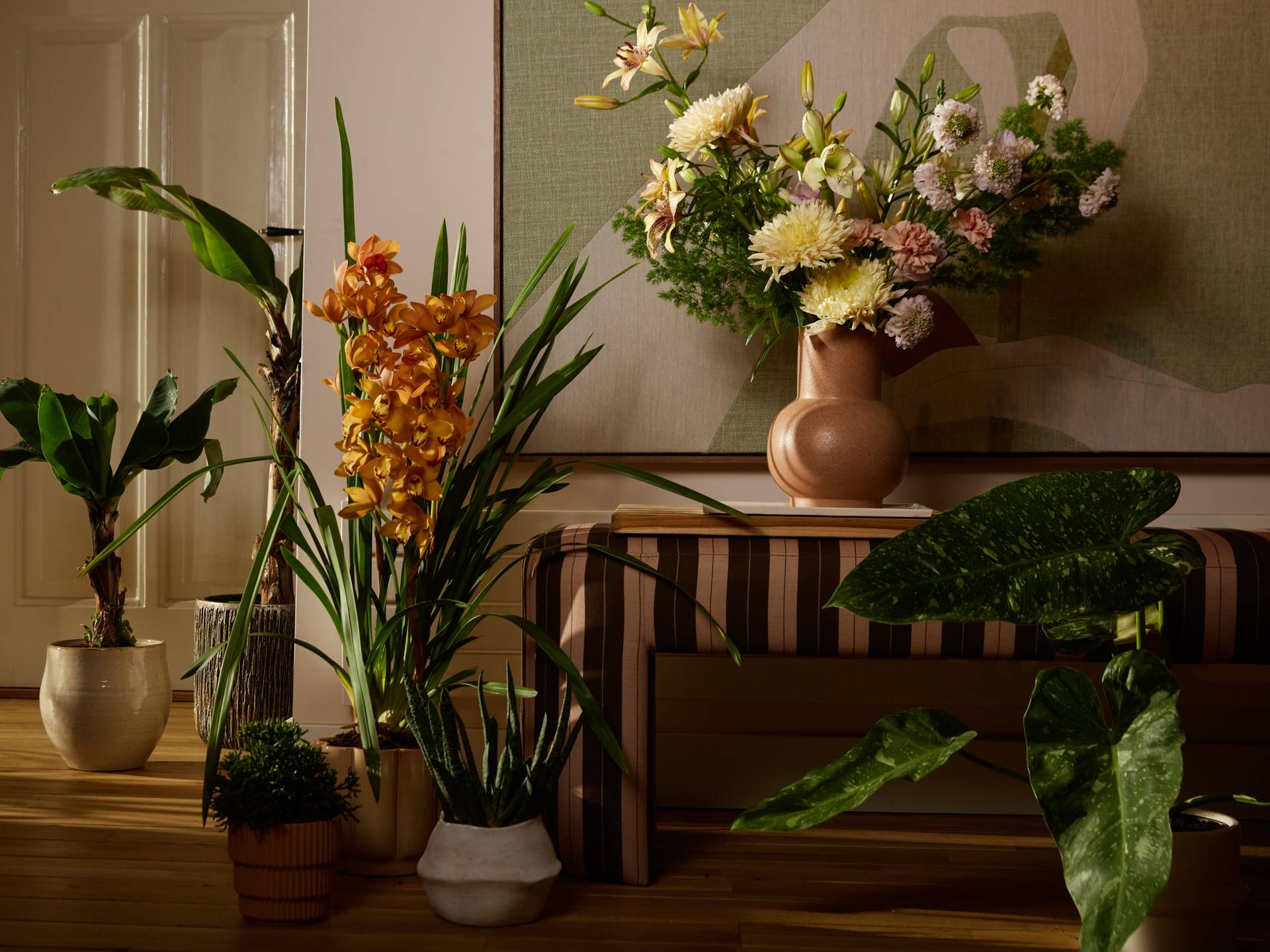
Which plants increase humidity the most?
All houseplants release moisture, but not in equal amounts. Generally speaking, large plants with lots of large leaves release the most water. That’s why plants such as Strelitzia, Banana Plant, Monstera, Philodendron, Alocasia, Calathea, Areca (Golden Cane Palm), Kentia Palm, Papyrus and Ferns are often said to increase humidity the most.
Large plants with big, thin leaves, fast growth and tropical origins increase humidity the most.
Which plants increase humidity the least?
Plants with thick or leathery leaves (such as Sansevieria, Zamioculcas and Ficus elastica) and plants that store water in their stems or trunks (such as Succulents and Cacti) generally release the least water and therefore increase humidity the least.
Easy to remember: plants with thick leaves hold on to water for as long as possible and release the least moisture. Plants with thin leaves can’t do this and release more moisture.
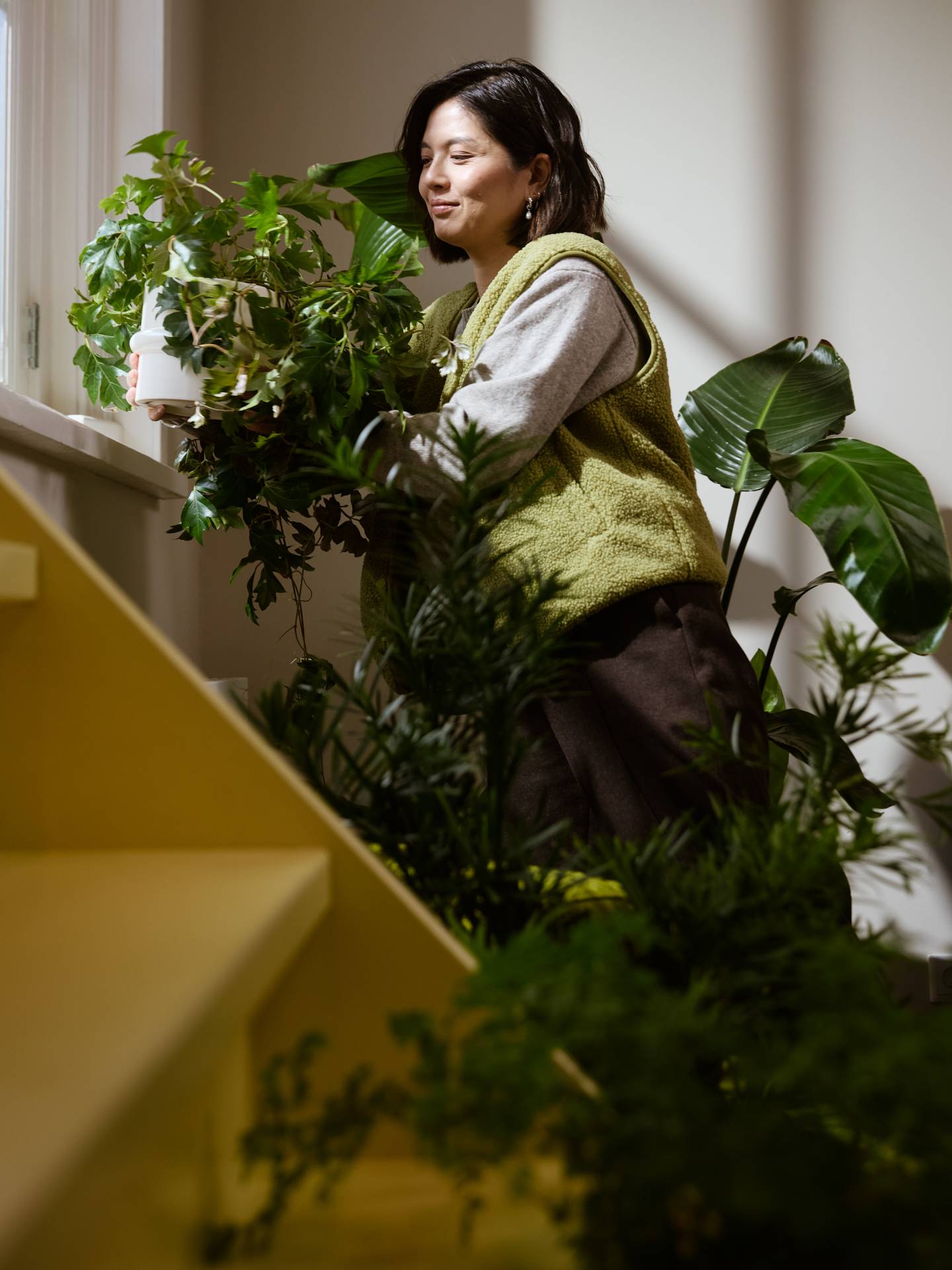
How can you increase humidity at home?
If you want to increase the humidity in your home quickly, these are the most effective solutions:
- Use a humidifier: this is the quickest and most effective way to increase humidity at home. A humidifier releases water vapour, steam or a fine mist, which raises the humidity level.
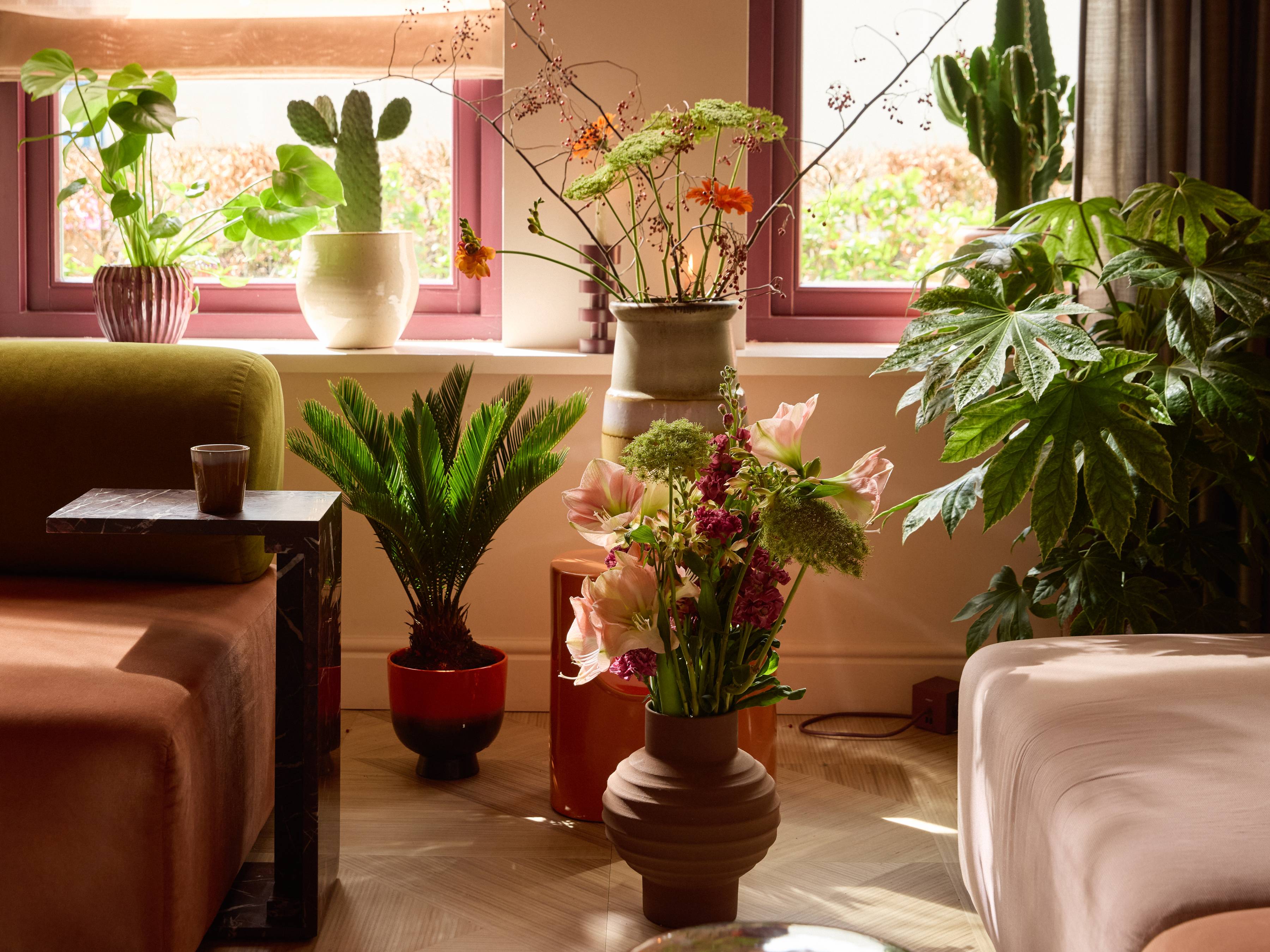
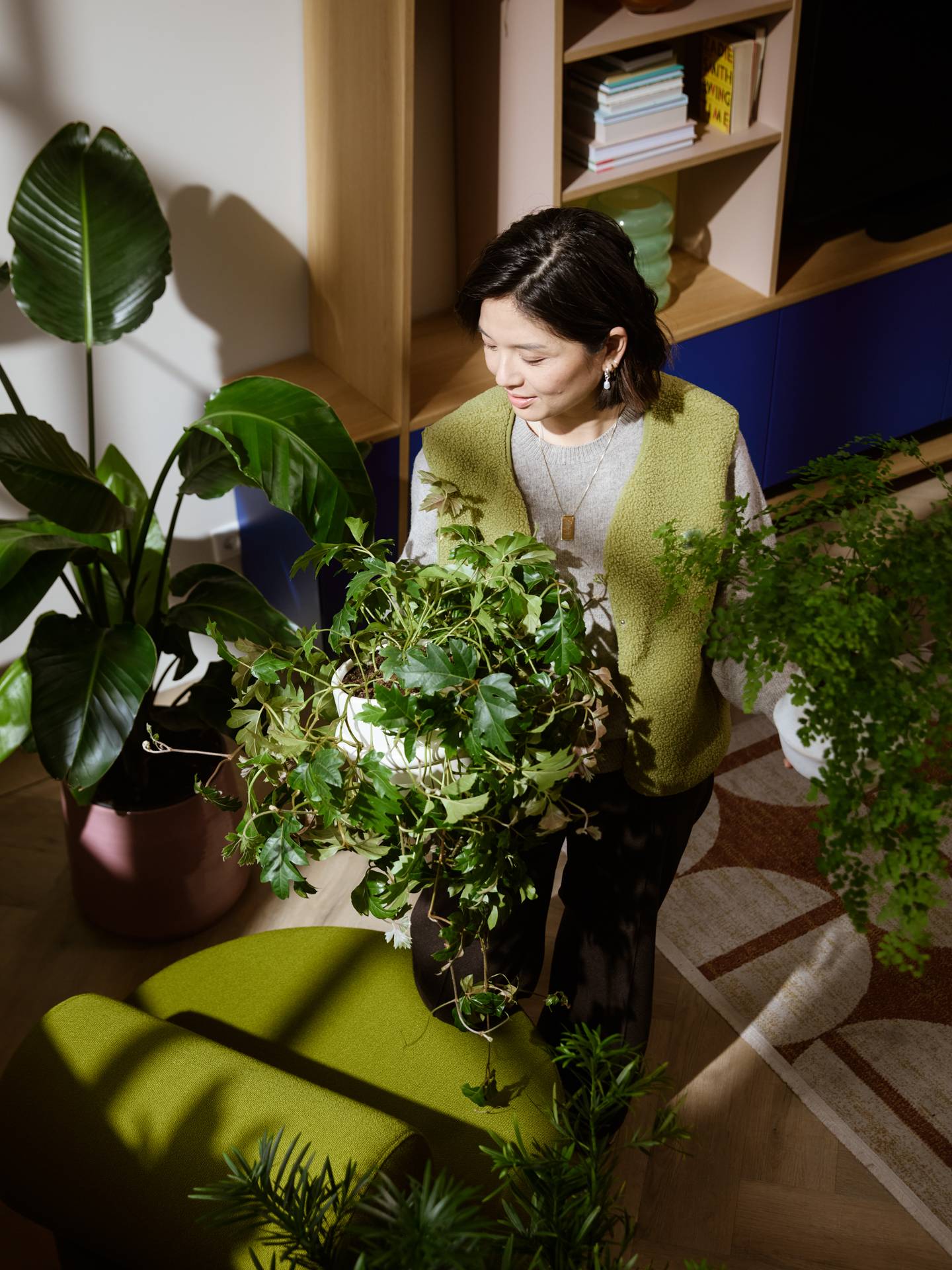
- Group plants together: this creates a slightly more humid microclimate around the plants. Tropical houseplants in particular love this! An added bonus: a lush group of plants looks beautiful and can help you relax!
- Give your plants enough water: a plant can only release moisture if it gets enough water. Don’t give it more water than it needs, as this can cause root rot.
- Don’t place plants next to radiators: the potting soil will dry out more quickly, causing extra stress for plants and making it harder for them to grow well and stay healthy.
- Use water containers: place small bowls of water near radiators or hang water containers from them when the heating is on. The effect is limited, however, and much less powerful than using a humidifier.
- Dry your laundry indoors (provided you can ventilate the room): as your laundry dries, water evaporates from it, temporarily increasing the humidity.
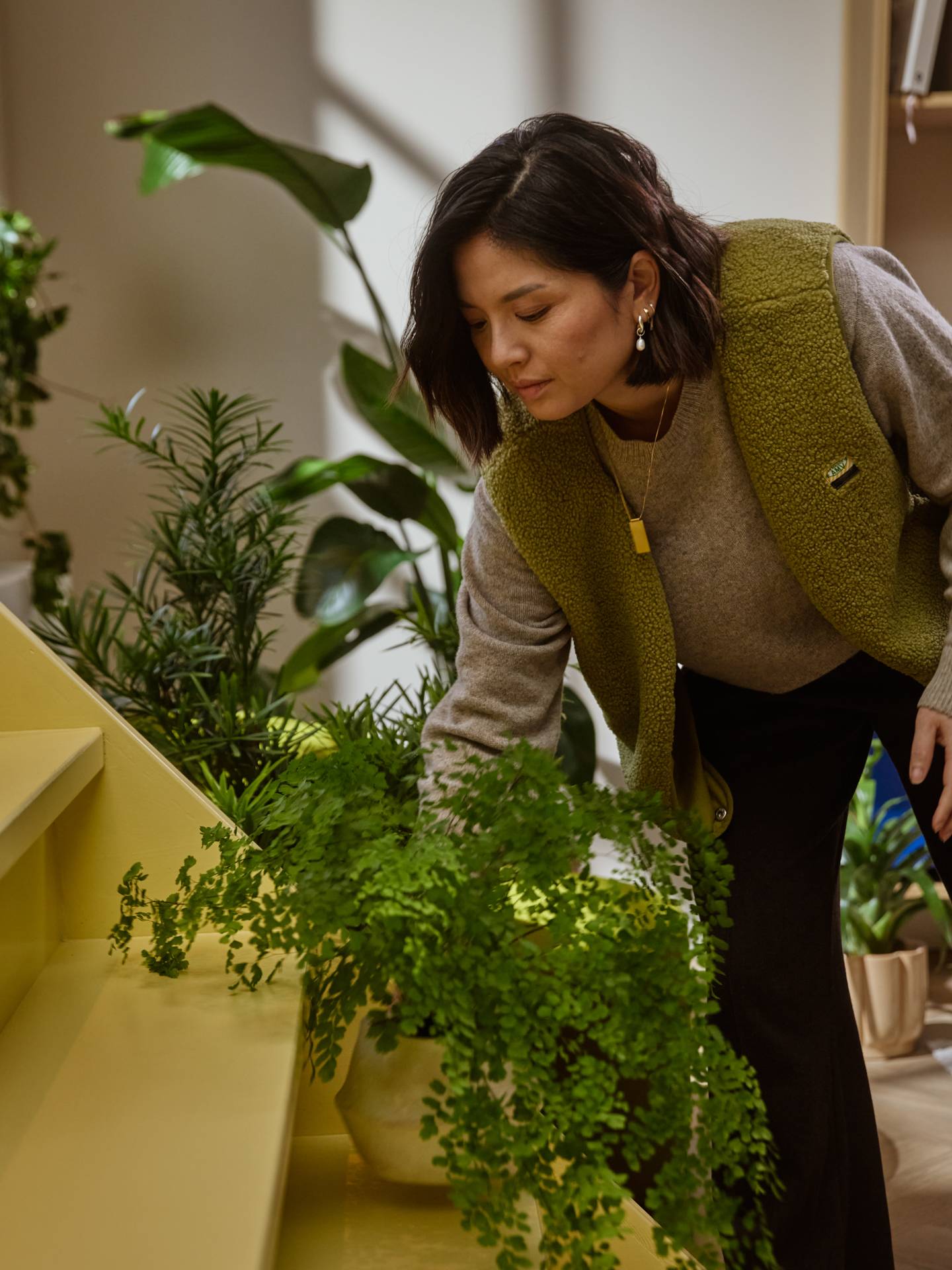
More inspiration and tips
Want to know more about the effects of plants and how to care for them? Discover the positive effects of flowers and plants at home and find the best tips and tricks for caring for your houseplants in this article. Also useful: find out when it’s time to repot your plant and discover the answers to 10 frequently asked questions about caring for houseplants.