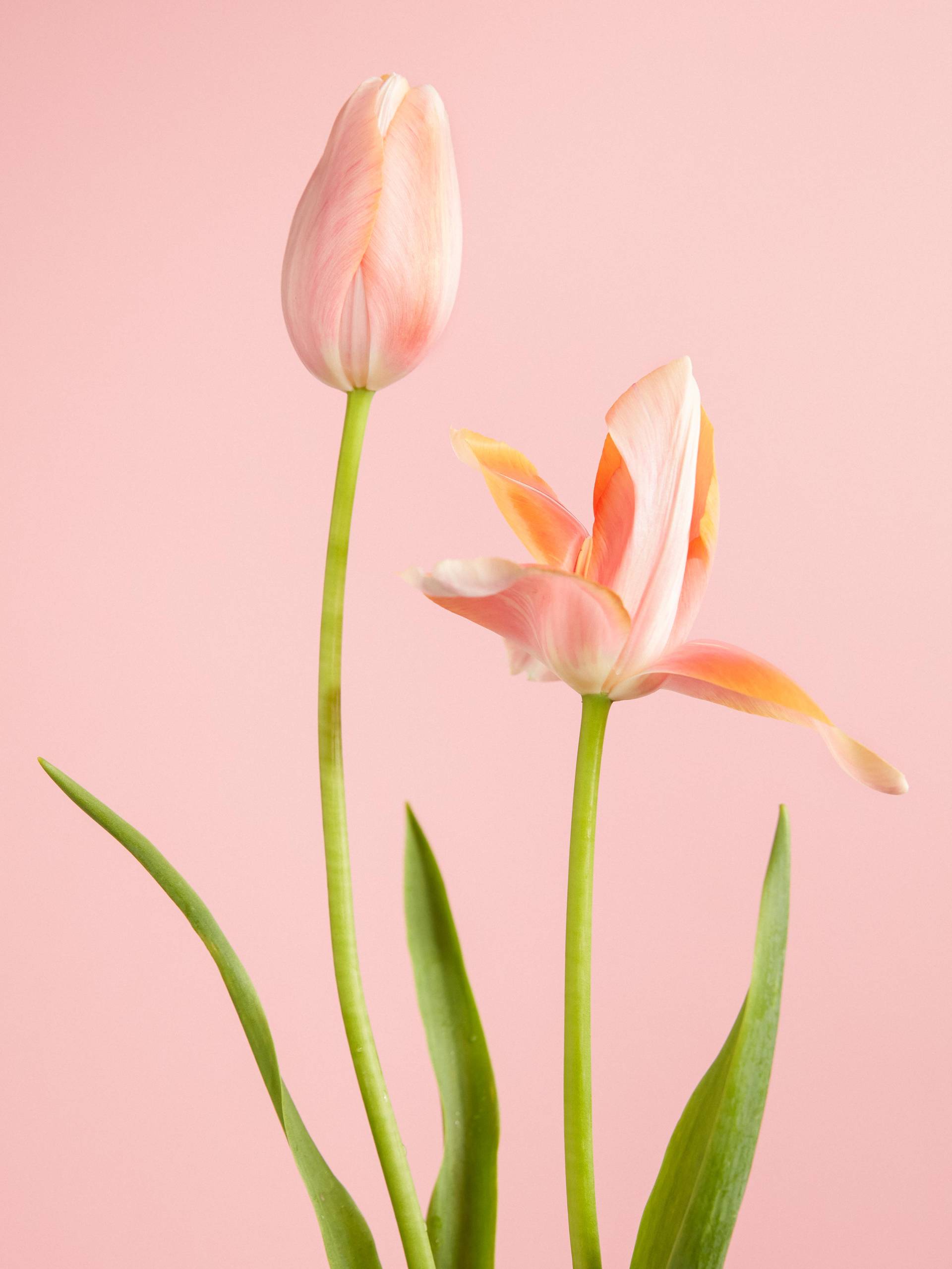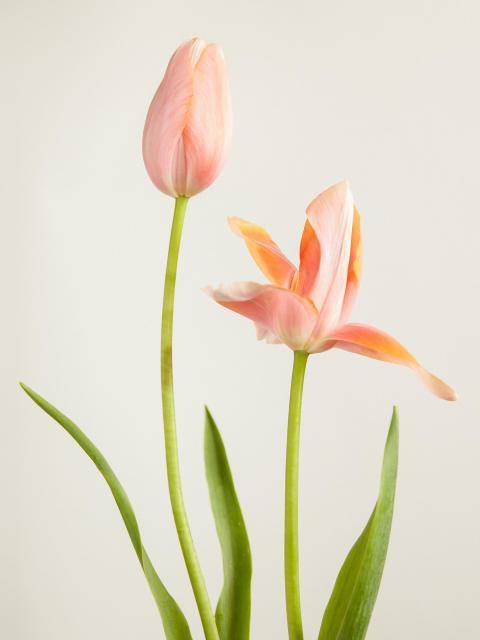

Ah, the Tulip! You could hardly get more Dutch, or so you might think. Yet the Tulip didn’t originate in the Netherlands. Its roots lie in Iran, Afghanistan and Kazakhstan. Nomads brought the colourful flowers to Turkey, where sultans began wearing them in their turbans. That’s how the flower got its name: ‘tulipan’ means turban. Want to know more about the Tulip? This article covers varieties, colours, meanings, care and much more!
Characteristics and flowering season of Tulips
The Tulip, or Tulipa, grows from a bulb. It generally flowers in late winter and spring. Tulips belong to the Lily family (Liliaceae), which also includes flowers such as Lilies and Fritillaria.
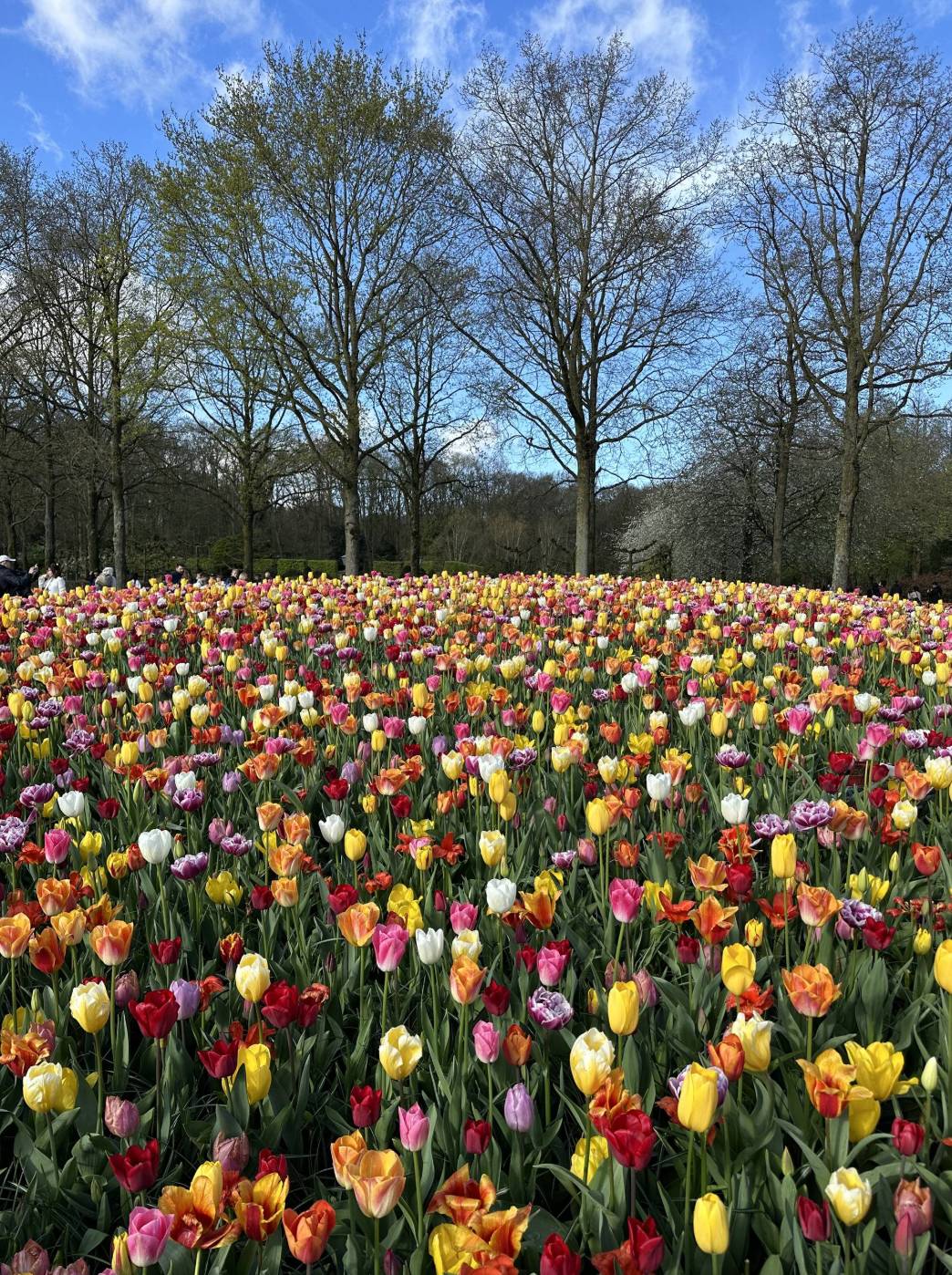
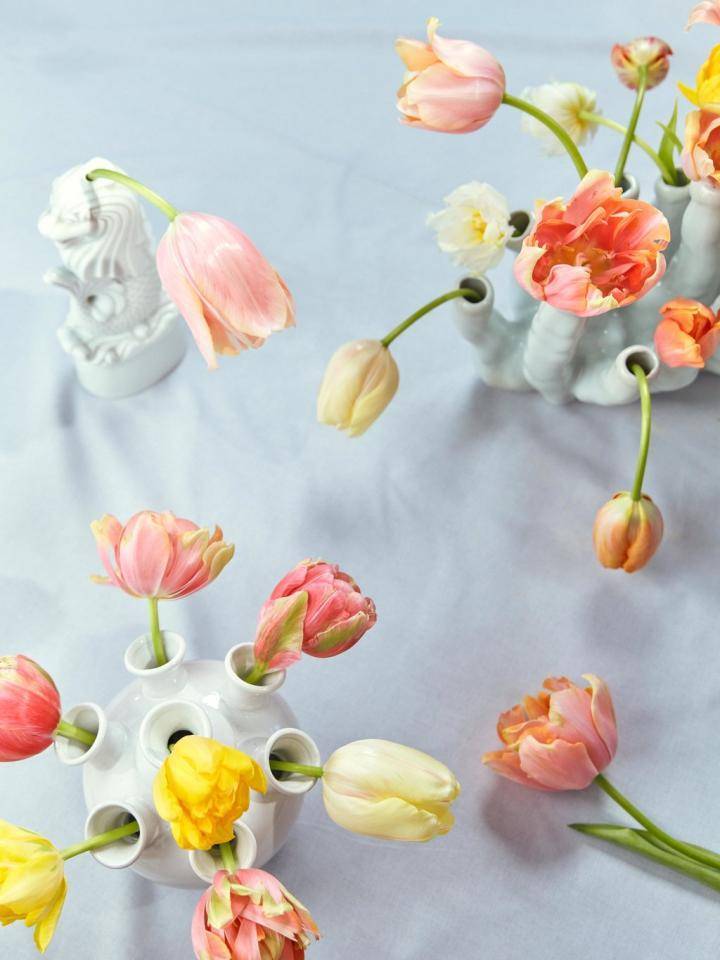
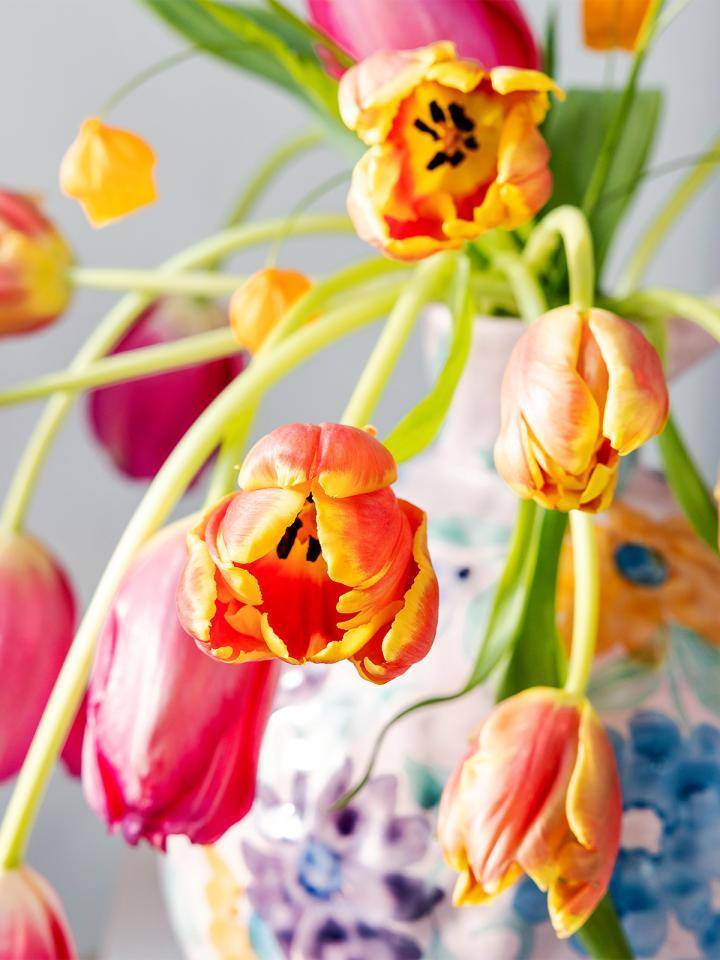
You can recognise Tulips by their long, fresh green stems and broad, elongated green leaves. The classic Tulip has a simple, cup-shaped flower. Centuries of breeding have given us Tulips in all sorts of shapes. Think fringed Tulips, double Tulips that resemble Peonies, and Parrot Tulips with feather-like petals. Tulips come in almost every colour imaginable: white, yellow, orange, pink, purple, red and even nearly black. There are also two-tone and flame-patterned Tulips.
Caring for Tulips in a vase
Brought some Tulips home? Of course you’ll want to enjoy them for as long as possible. First, make sure you have a clean (Tulip) vase and add a little cold water. Avoid lukewarm or warm water, as it speeds up flowering and makes your Tulips wilt sooner. Want to keep your Tulips looking their best and stop them from drooping? Take a look at these 10 clever tips for caring for Tulips in a vase.
Add a little cold water to the vase to keep your Tulips looking lovely for as long as possible.
When can you buy Tulips?
As cut flowers, Tulips are often available from late January. The official start of Tulip season, National Tulip Day, is celebrated in the Netherlands on the third Saturday of January. Thanks to modern growing techniques, Tulips are now available outside their natural flowering season too.
Why do Tulips droop?
Chances are you haven’t yet heard these 10 clever tips for keeping Tulips upright in a vase. For example, it’s best not to cut Tulip stems at an angle or give them too much water. Do refresh the vase regularly with cold water, though.
How ‘green’ is the Dutch Tulip?
The Dutch Tulip is becoming an increasingly sustainable icon. Growers are continuously working on improvements: more efficient energy use, water reuse, minimal crop protection, and cultivation under controlled conditions. Almost all tulips are certified according to the standards of the Environmental Programme for Ornamental Horticulture (MPS). Thanks to local production, innovative techniques, and collaboration across the supply chain, the impact keeps shrinking, and the Tulip’s future is getting greener.
What types of Tulip are there?
The genus Tulipa includes many different botanical species. There are also thousands of cultivars (bred varieties), differing in shape, flowering time, colour and height.
For gardens and cut flowers, Tulips are often grouped by the shape of their flowers. These are the best-known types:
- Single Tulip: these Tulips have the classic, cup-shaped flower. This is the most familiar type.
- Double Tulip: these Tulips have more petals than the classic Tulip, giving them full flowers that resemble Peonies.
- Lily-flowered Tulip: Lily-flowered Tulips have pointed petals that curve outwards, like a Lily’s. These elegant Tulips are often multicoloured.
- Parrot Tulip: this Tulip has ruffled petals and relatively large flowers. Parrot Tulips are often multicoloured.
- Fringed Tulip: you can recognise these Tulips by the fine, needle-like fringes along the edges of their petals. They give the flowers a distinctive look.
Tulip symbolism
Give someone Tulips and you’re giving them a generous dose of cheer and positivity. Tulips also symbolise new beginnings and freshness, as they flower in winter and early spring. Each colour has its own particular meaning.
Just as a red Rose means something different from a yellow one, different Tulip colours carry different meanings:
- Red Tulips: red Tulips symbolise true love and passion, making them a perfect gift for someone you love.
- White Tulips: white Tulips symbolise purity, new beginnings and forgiveness. They’re an ideal gift if you want to apologise to someone or show that your intentions are sincere.
- Yellow Tulips: yellow Tulips symbolise cheerfulness and appreciation. A perfect gift to brighten someone’s day or show how much you appreciate them.
- Orange Tulips: orange Tulips stand for enthusiasm. Give them when you’re happy for someone, perhaps when they’ve reached a milestone.
- Pink Tulips: pink Tulips stand for beauty, happiness and tender love. A perfect gift for your mum, grandmother or another caregiver you love.
- Purple Tulips: purple Tulips stand for dignity, spirituality and the balance between life and death. They’re also often used in times of mourning.
Good to know
In the sixteenth century, giving someone a Tulip was like giving them a fortune. The flower was wildly popular at the time, and a speculative market in Tulip bulbs took hold. Back then, a single Tulip bulb could cost as much as an entire canal house in Amsterdam. Today, a bunch of Tulips costs just a few euros, but its rich symbolism lives on.
Can you eat Tulips (or their bulbs)?
No. Tulips (and their bulbs) are for looking at, not eating. The flowers, and especially the bulbs, contain substances that can cause stomach problems in people and pets if swallowed. During the Dutch famine winter of 1944–1945, people sometimes ate Tulip bulbs out of sheer necessity, amid severe shortages. They aren’t intended as food: the bulbs are carefully treated to protect them from pests and help them grow healthily.
Where do Tulips come from?
Although Tulips are associated with the Netherlands around the world, the flower didn’t originally come from here. The natural range of the genus Tulipa stretches from parts of southern Europe and the Mediterranean through western and central Asia to Mongolia and parts of China. The mountains of central Asia are home to an especially wide variety of wild Tulips.
The climate in these areas tells us a lot about how Tulips live: cold winters, relatively cool springs and hot, dry summers. The bulb stores nutrients underground, allowing it to survive difficult conditions.
The Tulip became a much-loved ornamental plant through Persia and the Ottoman Empire, among other places. The flower reached western Europe in the sixteenth century. The Dutch love affair with the Tulip began soon after.
The Tulip as a national symbol
The Tulip was brought to Europe, particularly the Netherlands, in the sixteenth century. There, it became an important symbol and a much-loved part of Dutch culture in the seventeenth century. The Netherlands is known as one of the world’s largest producers and exporters of Tulips. It’s an ideal place to grow them, thanks to several factors:
- Its temperate maritime climate (mild weather without extreme temperatures) is well suited to Tulips.
- The Netherlands has fertile, well-drained soils in which Tulip bulbs thrive.
- Its long history of growing Tulips (since the sixteenth century) has given the Netherlands a wealth of knowledge and experience in selecting, cultivating and breeding them.
- The Netherlands is known for advanced breeding techniques, which have enabled us to develop new Tulip varieties time and again.
- The Dutch flower bulb sector is highly professional and an important player in the global market. That contributes to the high quality of Dutch Tulips.
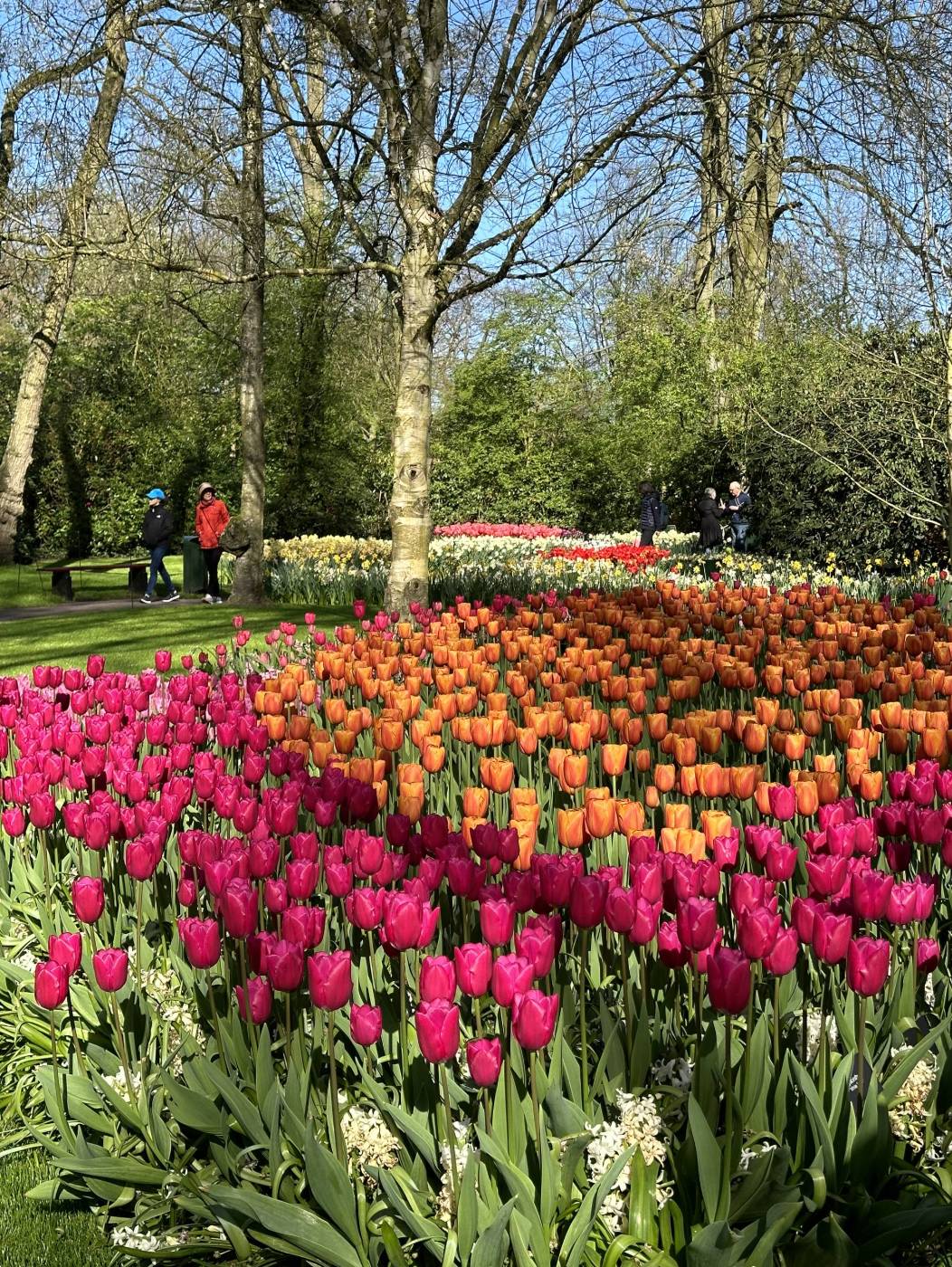
- Tourism around Keukenhof, one of the world’s largest flower gardens, and the many Tulip fields helps make Dutch Tulips famous worldwide.