
Written by
Sabina
Description
Low light
Moderate
Green
Directly to
Polyscias is an elegant houseplant with the silhouette of a small tree. With its slender trunk, branching stems and decorative leaves, this indoor tree brings a calm, green feel into your home. One of the great things about Polyscias is that it grows well in spots with lower light. In this complete guide, you’ll find everything about Polyscias: from characteristics and varieties to care, origin and symbolism.
Characteristics of Polyscias
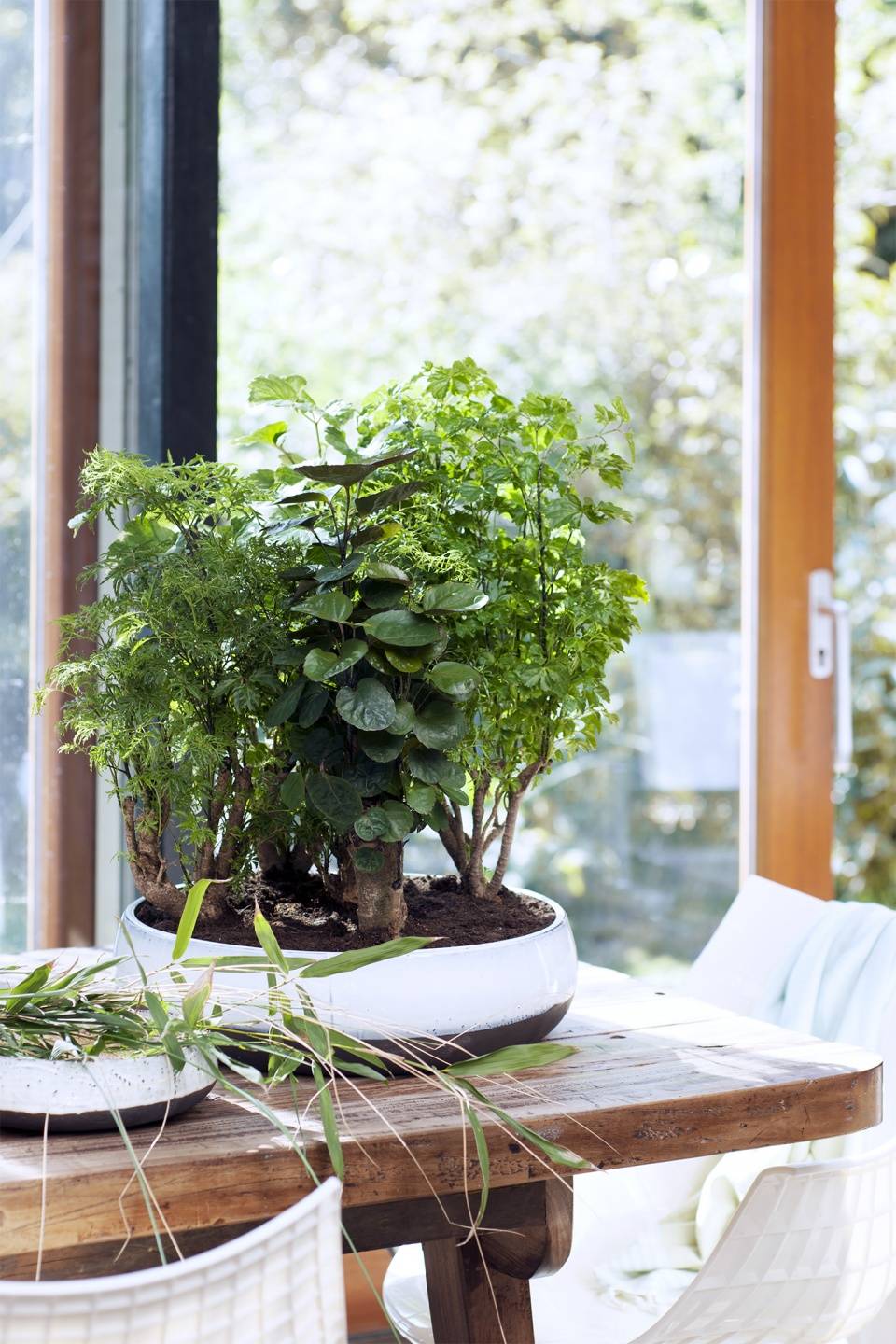
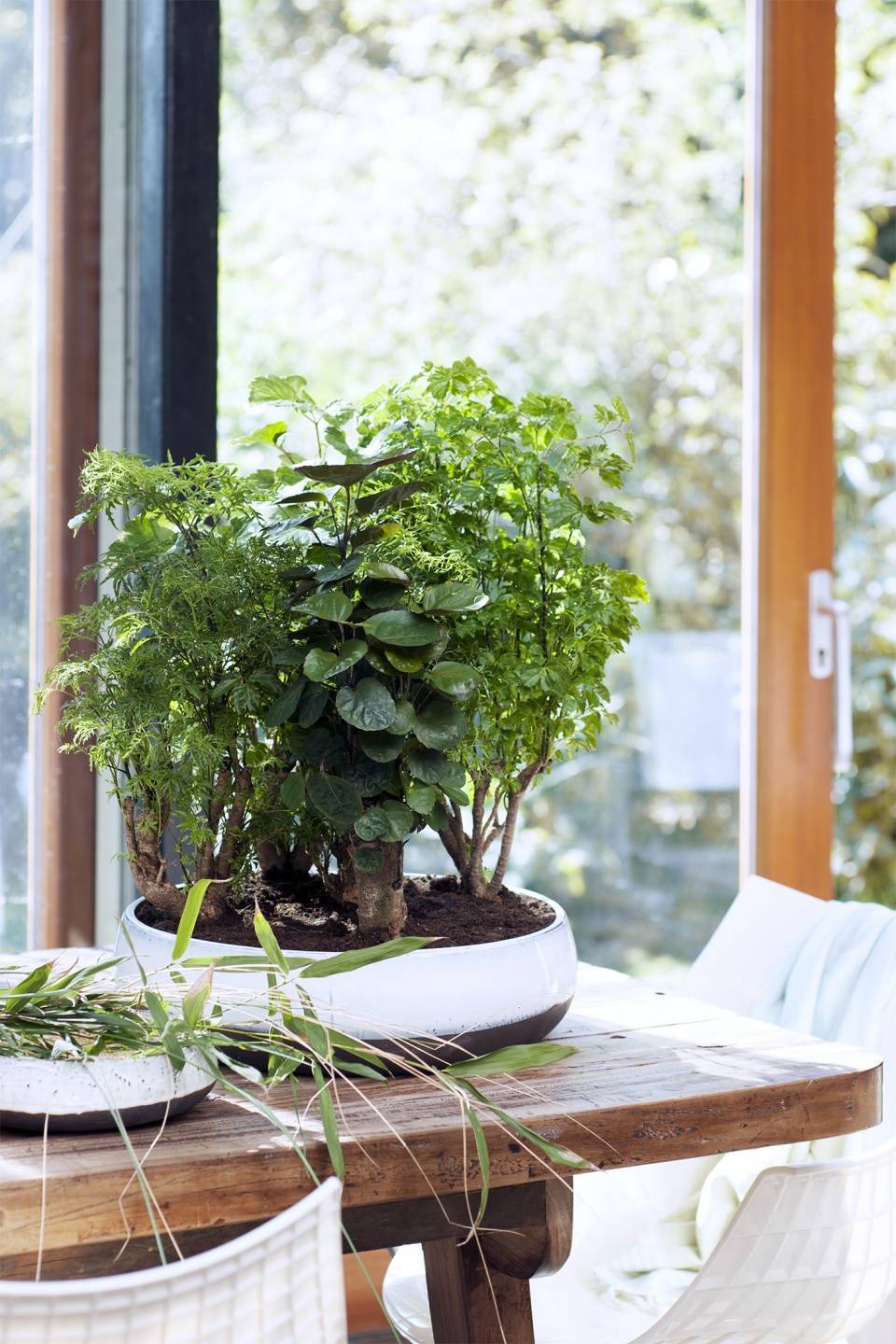
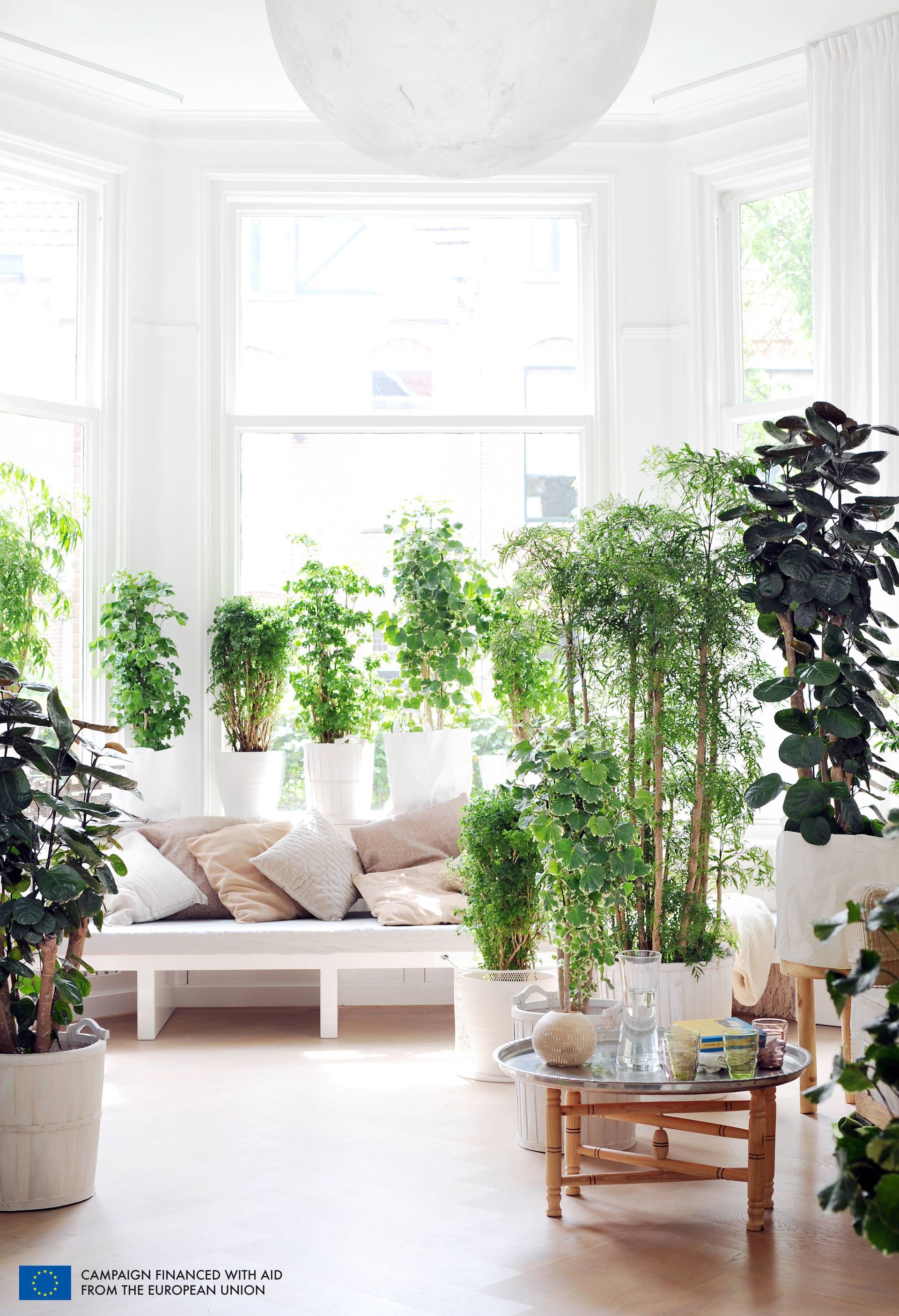
Polyscias is a houseplant with a tree-like growth habit. The plant develops a slender trunk with branches on which leaves grow, together forming an airy crown. This gives the plant the look of a miniature tree, adding character to your interior.
The leaves of Polyscias vary by variety, but are usually round, lobed or slightly heart-shaped. The foliage can be solid green, though there are also variegated types with yellow or white tones. The leaves grow spaced along the branches, giving the plant an open, airy appearance.
Polyscias grows upright and therefore remains relatively compact. Indoors, the plant can usually reach a height of around one and a half metres.
The plant belongs to the Araliaceae family. This family also includes well-known plants such as Ivy (Hedera) and Schefflera.
Care for Polyscias
Polyscias is a relatively easy houseplant, as long as care remains consistent and balanced.
- Watering. The potting soil of Polyscias should not dry out completely. It’s better to give smaller amounts of water more frequently than a large amount all at once. This keeps the soil lightly moist without leaving the roots sitting in wet compost.
- Feeding. During the growing season, from spring through to summer, you can occasionally give the plant some houseplant feed. In autumn and winter, extra feeding is usually not necessary.
- Pruning. If Polyscias becomes too large or loses its shape, it can be pruned without any issues. Pruning often also encourages branching, making the plant fuller.
- Repotting. If roots start growing out of the bottom of the pot or the plant seems to be growing less well, it may be time to repot. Choose a slightly larger pot with fresh compost.
- Common problems. Leaf drop can occur when the plant is moved or when its position changes significantly. Because Polyscias prefers stability, it often recovers better when left in one fixed spot. Soil that is too wet or too dry can also lead to leaf loss.
Varieties of Polyscias
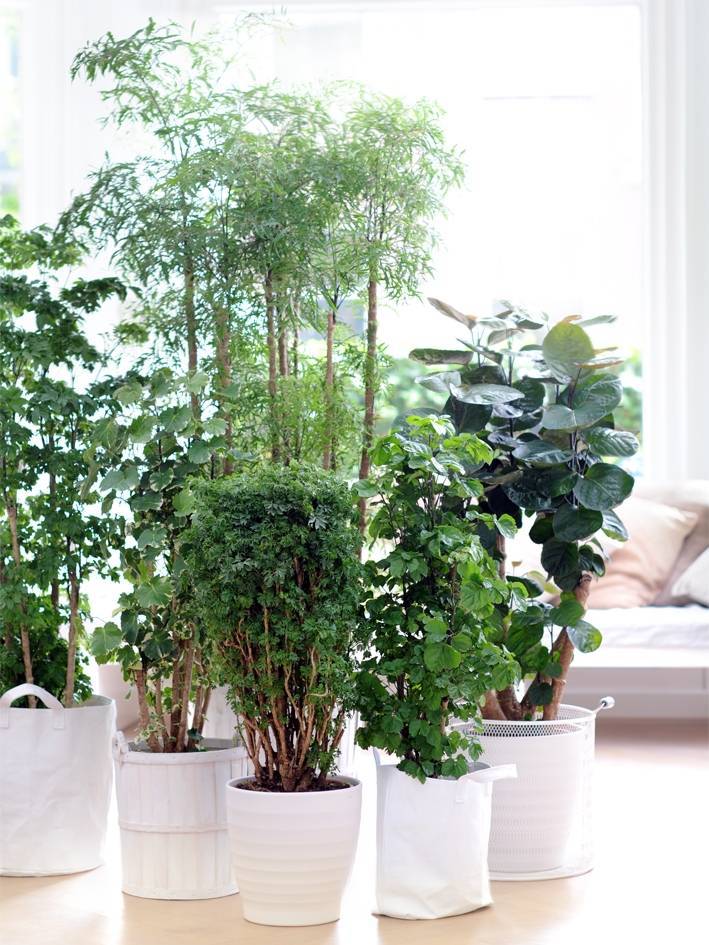
The genus Polyscias consists of around one hundred species. As a houseplant, mainly a number of elegant varieties are cultivated that suit indoor conditions. The most well-known are:
Polyscias fruticosa
This variety is also known as Ming Aralia. The plant has finely divided leaves and an elegant, airy growth habit. The foliage is usually dark green, giving the plant a refined look.
Polyscias scutellaria
This variety has larger, round leaves that are often glossy green. Some forms have a lighter edge along the leaf.
Polyscias balfouriana
This variety is recognised by its round, fairly thick leaves, sometimes with a pale or white edge. This gives the plant a striking decorative leaf pattern.
Position for Polyscias
Polyscias prefers a spot with indirect light or light shade. The plant copes well with lower light levels, making it suitable for places where many other houseplants struggle to grow.
Avoid direct sunlight, as this can damage the leaves. In addition, Polyscias does not like draughts or large temperature fluctuations.
The plant also prefers stability and does best when kept in the same place for a longer period. Try not to move it too often.
Polyscias is popular for its calm appearance, compact growth and its ability to thrive even in low-light spots.
Propagating Polyscias
Polyscias can be propagated by cuttings. This is usually done using stem cuttings taken from a healthy plant. For a detailed step-by-step guide and general tips, you can consult the article on propagating houseplants.
Is Polyscias toxic?
Polyscias is generally considered mildly toxic if ingested. It is therefore wise to keep the plant out of reach of pets and small children.
Symbolism of Polyscias
The name Polyscias is derived from Greek. “Poly” means “many” and “scias” means “shade”. The name refers to the dense foliage of some Polyscias varieties, which can provide plenty of shade in nature.
There is no specific symbolism associated with the plant, but due to its calm appearance and tree-like form, Polyscias is often linked to balance, tranquillity and natural harmony.
Origin of Polyscias
Polyscias originally comes from the tropical regions around the Pacific Ocean. Many different species are found on islands such as Vanuatu in particular. In these tropical regions, the plants grow as shrubs or small trees in warm, humid conditions.
In some areas, certain species are traditionally used as natural dividers or hedges. The leaves of some varieties are even eaten locally, although this does not apply to the cultivated houseplants sold in Europe.