

Written by
Sabina
Description
Partial sun
Moderate
Green
Easy to care for
Directly to
- Characteristics of Epipremnum
- Caring for Epipremnum: placement, water, feeding and humidity
- Common problems when caring for Epipremnum
- Epipremnum versus Scindapsus: what is the difference?
- Is Epipremnum the same as Devil’s ivy?
- Trailing plant and climbing plant
- What varieties of Epipremnum are there?
- Pruning Epipremnum
- Propagating Epipremnum
- Is Epipremnum toxic?
- Meaning and symbolism of the Epipremnum
- Origin
Epipremnum, also known as Devil’s ivy, is a popular houseplant known for its hardy nature and decorative leaves. This tropical plant can grow both as a trailing and climbing plant, which means it fits into almost any interior. Read on to discover everything about Epipremnum.
Characteristics of Epipremnum
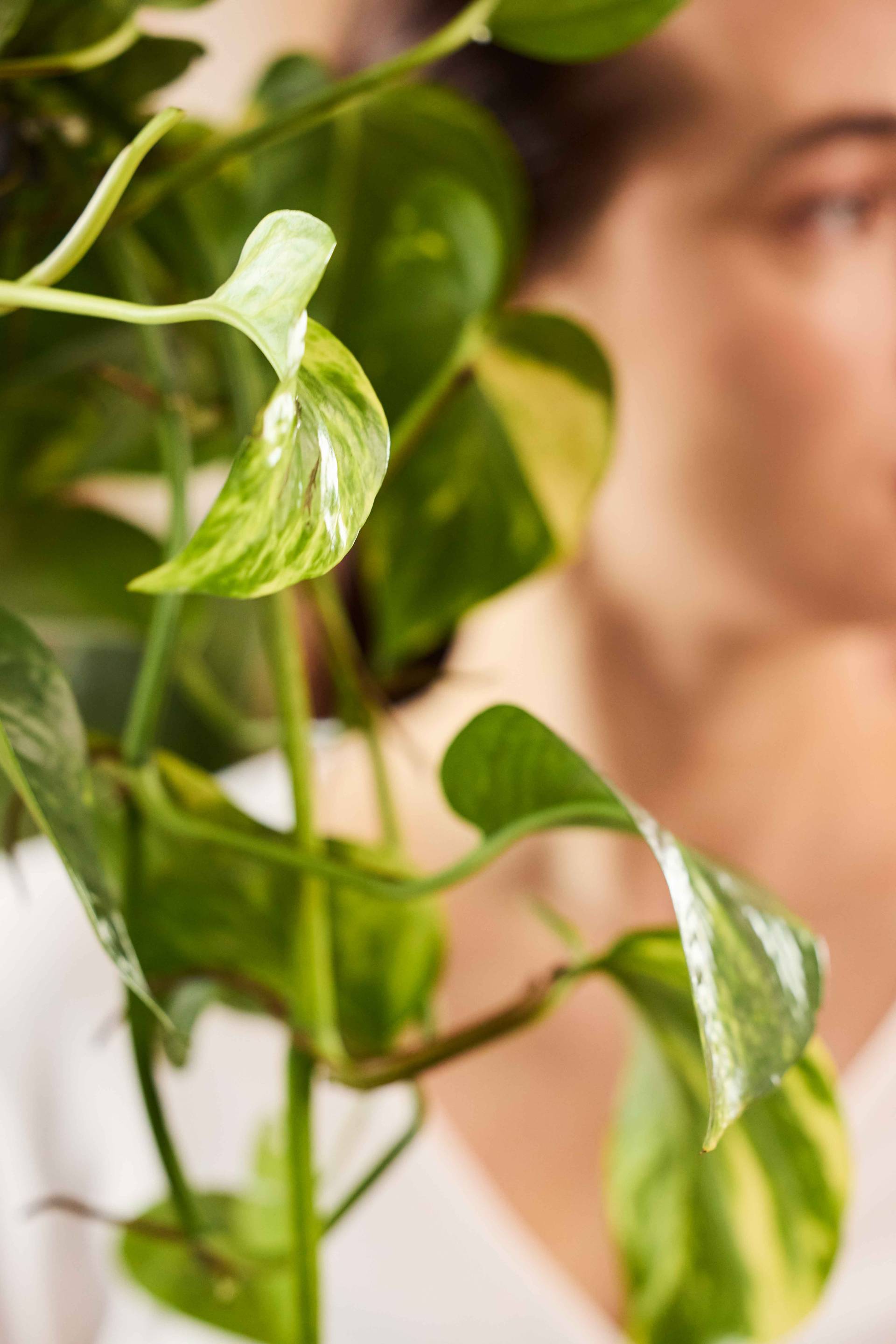
Epipremnum can be recognised by its heart-shaped to elongated leaves. The leaves are smooth, thin and have a subtle sheen. The plant grows quickly when it receives enough light and can develop either a climbing or trailing growth habit. This depends on how you choose to grow it, climbing up a moss pole or trailing from a hanging pot. In nature Epipremnum can produce flowers, but indoors the focus is entirely on its attractive foliage.
Epipremnum belongs to the ancient and diverse Araceae family. This family also includes plants such as Monstera, Anthurium, Scindapsus, Calla and Philodendron. Plants in this family often originate from tropical regions and are known for their striking leaf structures. They are popular because of their distinctive flowering and growth habits.
Epipremnum is often confused with Scindapsus, but they are different genera within the Araceae family.
Caring for Epipremnum: placement, water, feeding and humidity
Epipremnum is an easy houseplant that does not require much attention. Ideally place the plant in a spot with indirect sunlight or partial shade. Avoid direct sunlight, as this can cause leaf scorch, especially in cultivars with variegated leaves.
- Water: keep the potting soil slightly moist, allowing the top layer of soil to dry out between waterings. In winter the plant needs less water than in summer.
- Feeding: give Epipremnum houseplant fertiliser once every two weeks during the growing season (spring and summer). In autumn and winter feeding is not necessary.
- Humidity: Epipremnum grows best in average to high humidity. Occasionally misting the plant with a spray bottle is fine, but it is not essential.
The more light Epipremnum receives, the lighter the colour of its leaves becomes.
Epipremnum versus Scindapsus: what is the difference?
Epipremnum and Scindapsus are often confused in practice, but they are two separate genera within the Araceae family.
- Scindapsus can be recognised by its slightly thicker and sturdier leaves. The leaves often have a dark green base with silver or grey speckles and a more velvety texture.
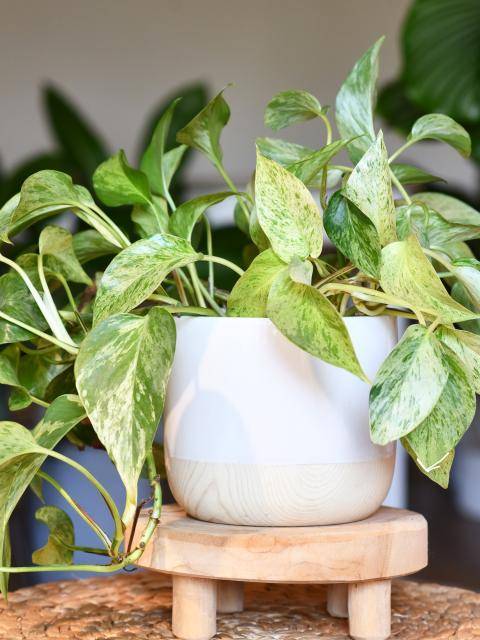
- Epipremnum can be recognised by its thinner, smooth leaves. They are often variegated in yellow, light green or cream, and the plant generally climbs and grows faster.
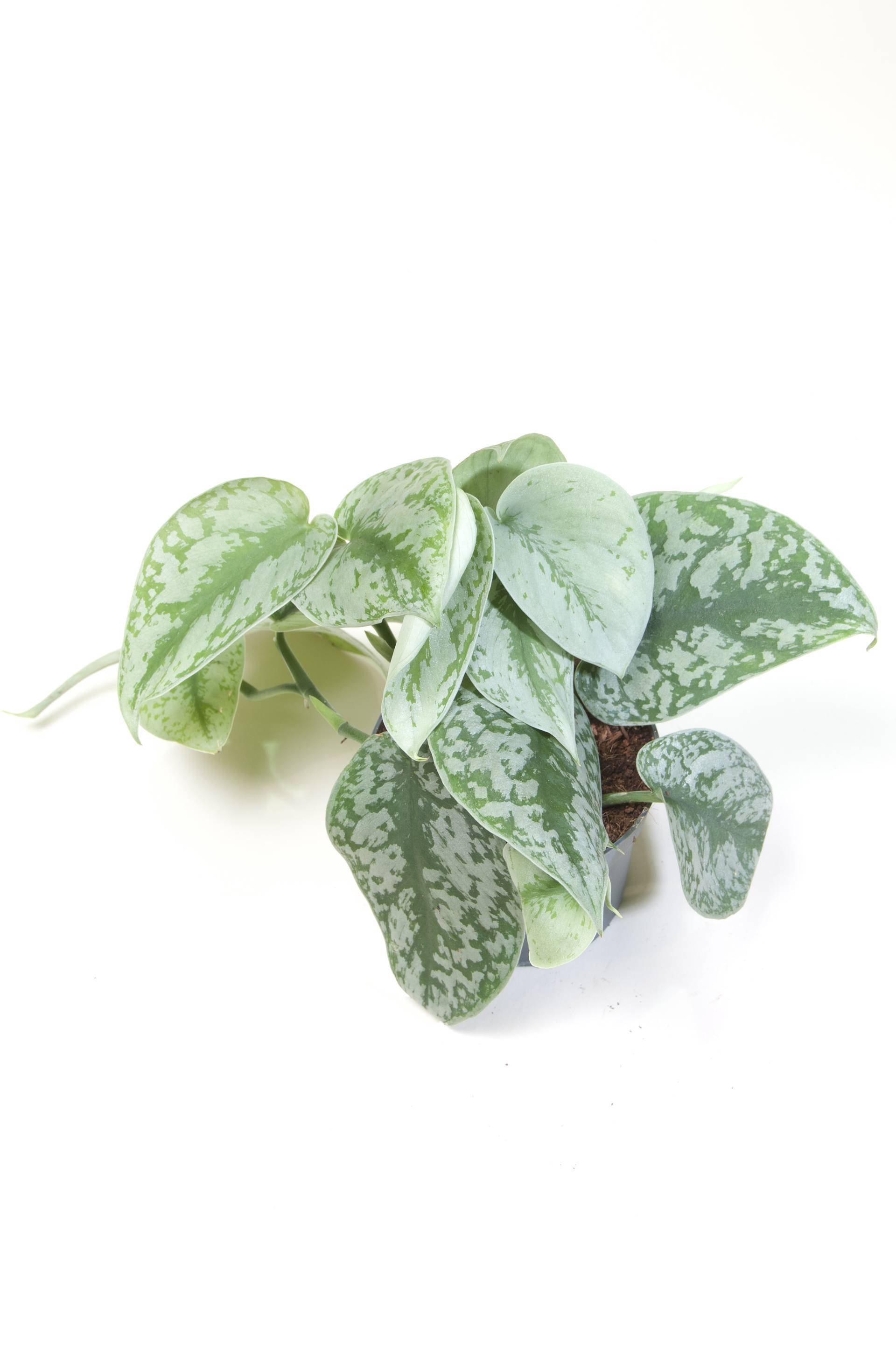
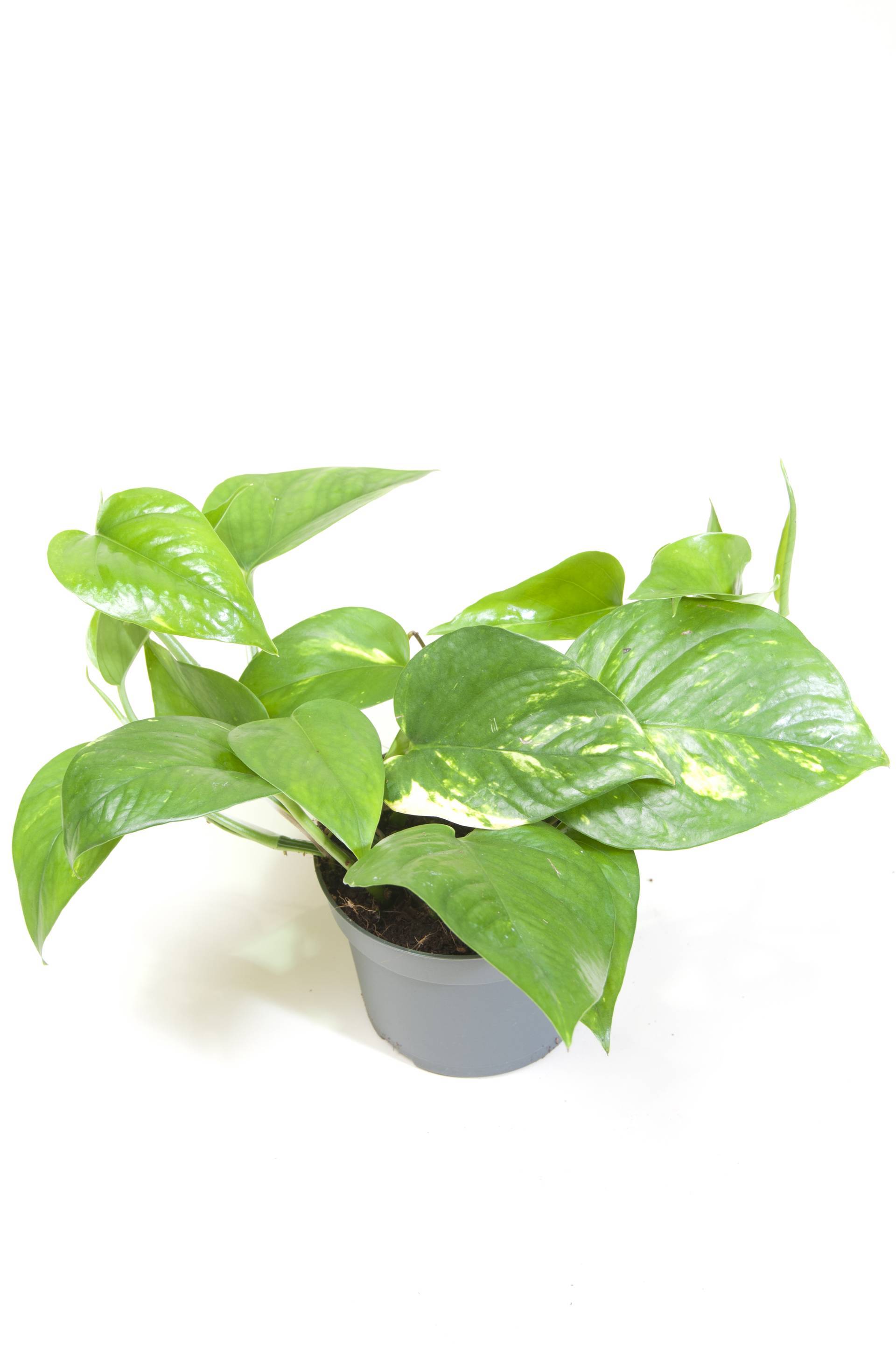
Scindapsus (L) Epipremnum (R)
Is Epipremnum the same as Devil’s ivy?
Botanically speaking, no. In practice, yes. Devil’s ivy is the common name for Epipremnum pinnatum ‘Aureum’, the best-known yellow variegated cultivar of Epipremnum. If you see “Devil’s ivy” in a garden centre it almost certainly refers to Epipremnum pinnatum ‘Aureum’, often simply described as Epipremnum aureum.
Epipremnum: trailing plant and climbing plant
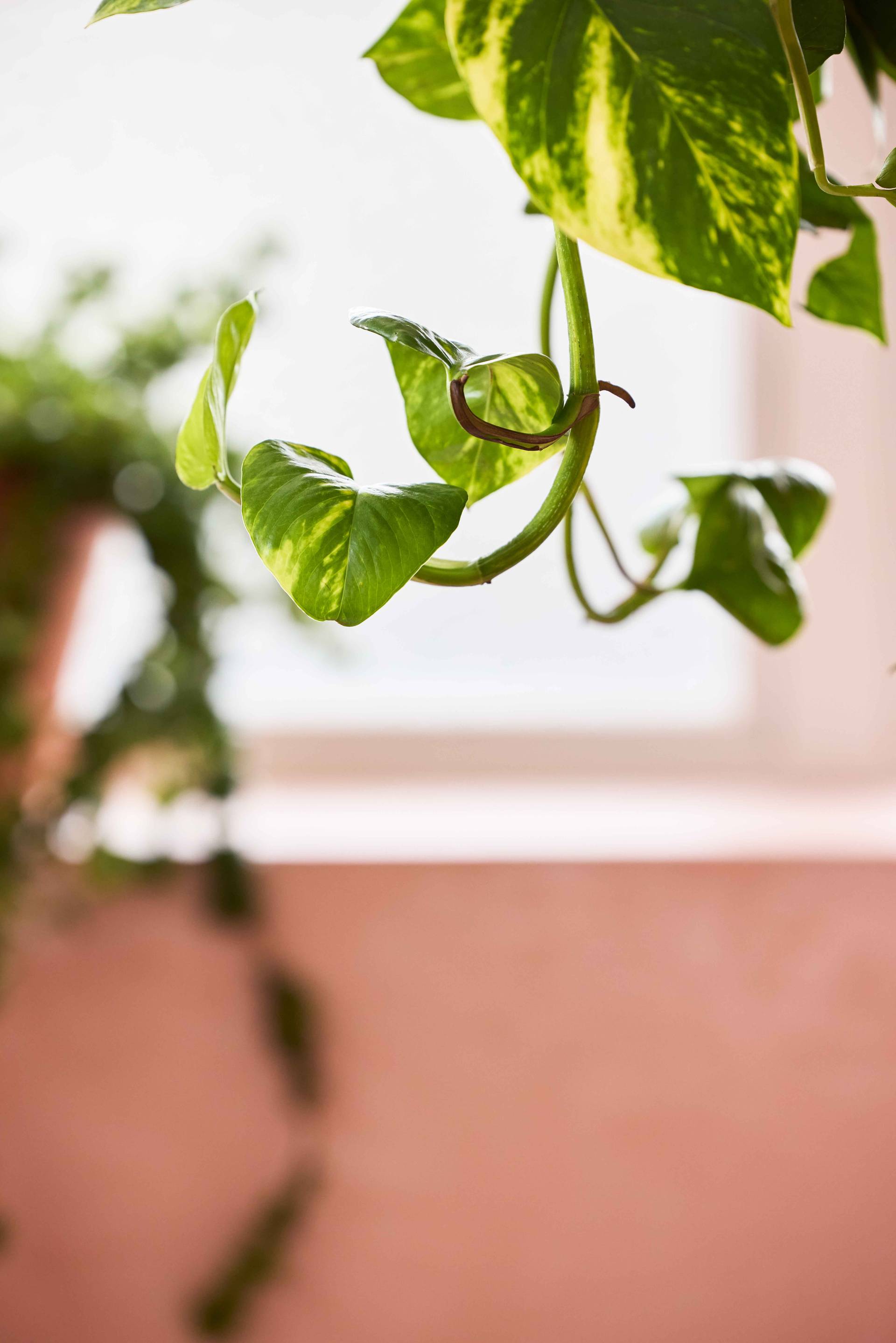
Epipremnum develops long, elegant vines and is naturally a climbing plant. Indoors you can train the plant to climb up a moss pole. You can also let it trail downwards, for example from a tall cabinet or from a hanging pot.
What varieties of Epipremnum are there?
There are several species within the Epipremnum genus. However Epipremnum pinnatum is by far the most important botanical species grown as a houseplant. This species includes dozens of cultivars (cultivated varieties) that differ in leaf colour, leaf pattern and growth vigour.
Below you will find the best-known cultivars of Epipremnum pinnatum:
- Epipremnum pinnatum ‘Aureum’. This cultivar is by far the best known and is often referred to as Epipremnum Aureum, Pothos or Devil’s ivy. ‘Aureum’ can be recognised by its green leaves with yellow to golden markings. The plant is extremely hardy, can develop large leaves and is a vigorous climbing plant.
- Epipremnum pinnatum ‘Marble Queen’. This cultivar has striking marbled white and green leaves. Because of its light colouring it contains less chlorophyll than ‘Aureum’, which means it grows more slowly and needs more light to maintain its beautiful appearance.
- Epipremnum pinnatum ‘Neon’. This cultivar has striking bright green to lime-coloured leaves. The colour stays at its best in a bright position with plenty of indirect sunlight.

Pruning Epipremnum: when and how?
Because of its fast growth it is sometimes necessary to prune the long vines of Epipremnum. This encourages fuller, more compact growth. The best time to prune Epipremnum thoroughly is during the growing season (spring or summer). Light pruning can be done all year round.
Use sharp, clean pruning shears to cut back the longest vines of the plant. Cut the vine just above a leaf node, not halfway along a bare stem. Also remove any damaged or discoloured leaves.
Propagating Epipremnum: how to do it?
Would you like to propagate your Epipremnum (aureum). In other words, grow new plants from it. That is certainly possible. Preferably do this during the growing season, spring and summer.
There are several ways to propagate this plant, but the stem cutting method works best for Epipremnum. Discover everything about stem cuttings here, including a step-by-step guide to successful propagation.
Is Epipremnum toxic?
Yes, Epipremnum is mildly toxic to humans and pets such as dogs and cats. The plant contains calcium oxalate crystals, which can cause symptoms if ingested. These include irritation of the mouth and throat, nausea and excessive drooling.
Meaning and symbolism of the Epipremnum
Epipremnum symbolises perseverance, vitality and growth. This symbolism mainly comes from the fact that the plant grows quickly and is exceptionally resilient.
Where does the Epipremnum originally come from?
Epipremnum originally comes from the tropical rainforests of Southeast Asia and the Pacific islands. There the plant grows both as a ground cover and as a climbing plant on trees, usually in warm and humid conditions.