
Written by
Carmen
Description
Indirect light
Moderate
Green
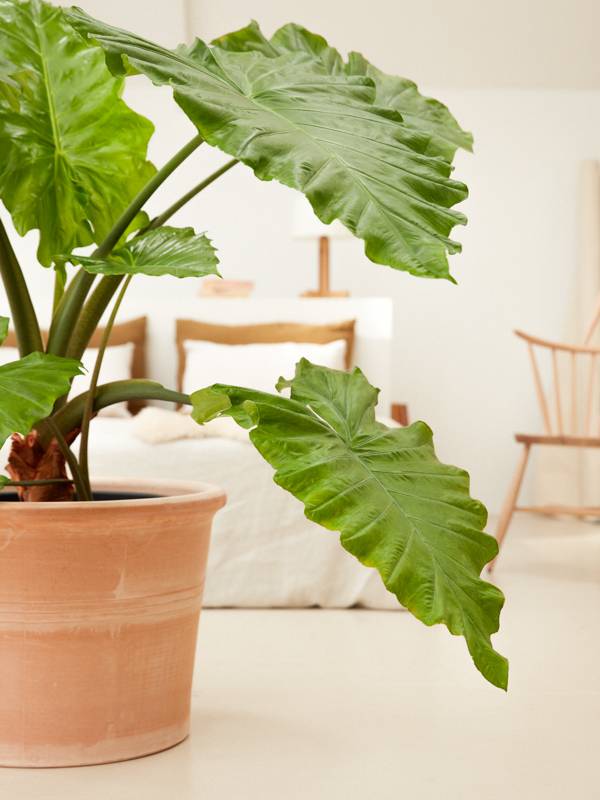
The Alocasia, also known as elephant ear, is a tropical houseplant that immediately draws attention with its impressive, oversized leaves. This striking plant does require specific Alocasia care to stay healthy and grow beautifully. In this guide, you’ll discover everything you need to know about watering your Alocasia, the ideal position, whether extra feeding is needed, how to propagate it, what to do if you run into problems such as yellow leaves, and plenty of useful tips for turning this plant into a true tropical eye-catcher at home.
Characteristics of alocasia
Alocasia is known for its stunning appearance but rarely flowers indoors. Its ornamental value lies almost entirely in its large, decorative leaves. If flowers do appear, it’s best to remove them, as flowering takes a lot of energy from the plant. The leaves can be patterned or rippled and may feature tiger stripes or skeletal shapes. The stems grow from tubers and give the plant an airy, tropical feel.
Alocasia belongs to the arum family, just like Monstera, Philodendron and Zamioculcas. The plant originates from the tropical rainforests of Asia.
Alocasia varieties
Worldwide, 79 Alocasia species are known, ranging from compact houseplants to giants with enormous leaves.
These are the most well-known Alocasia varieties:
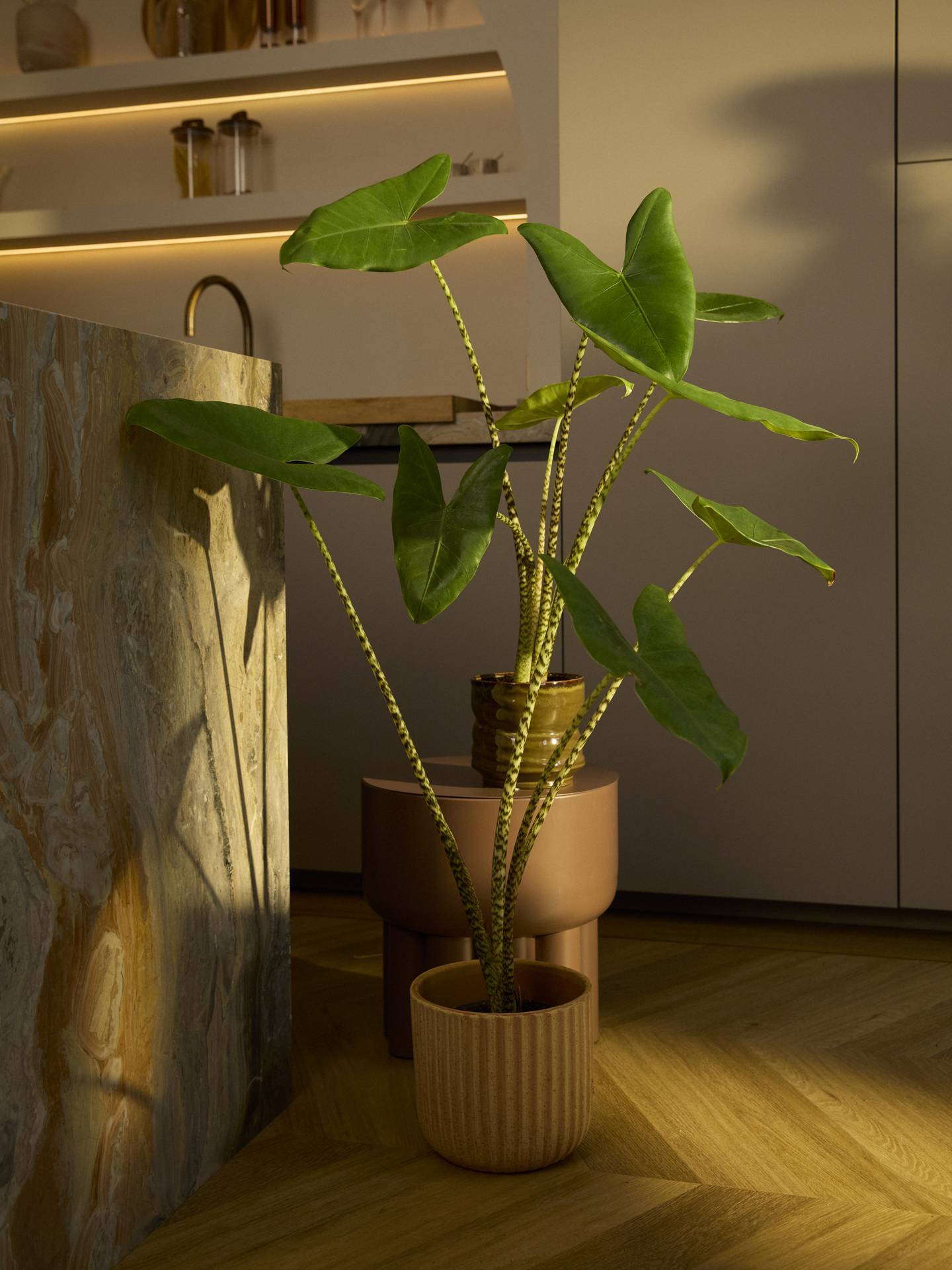
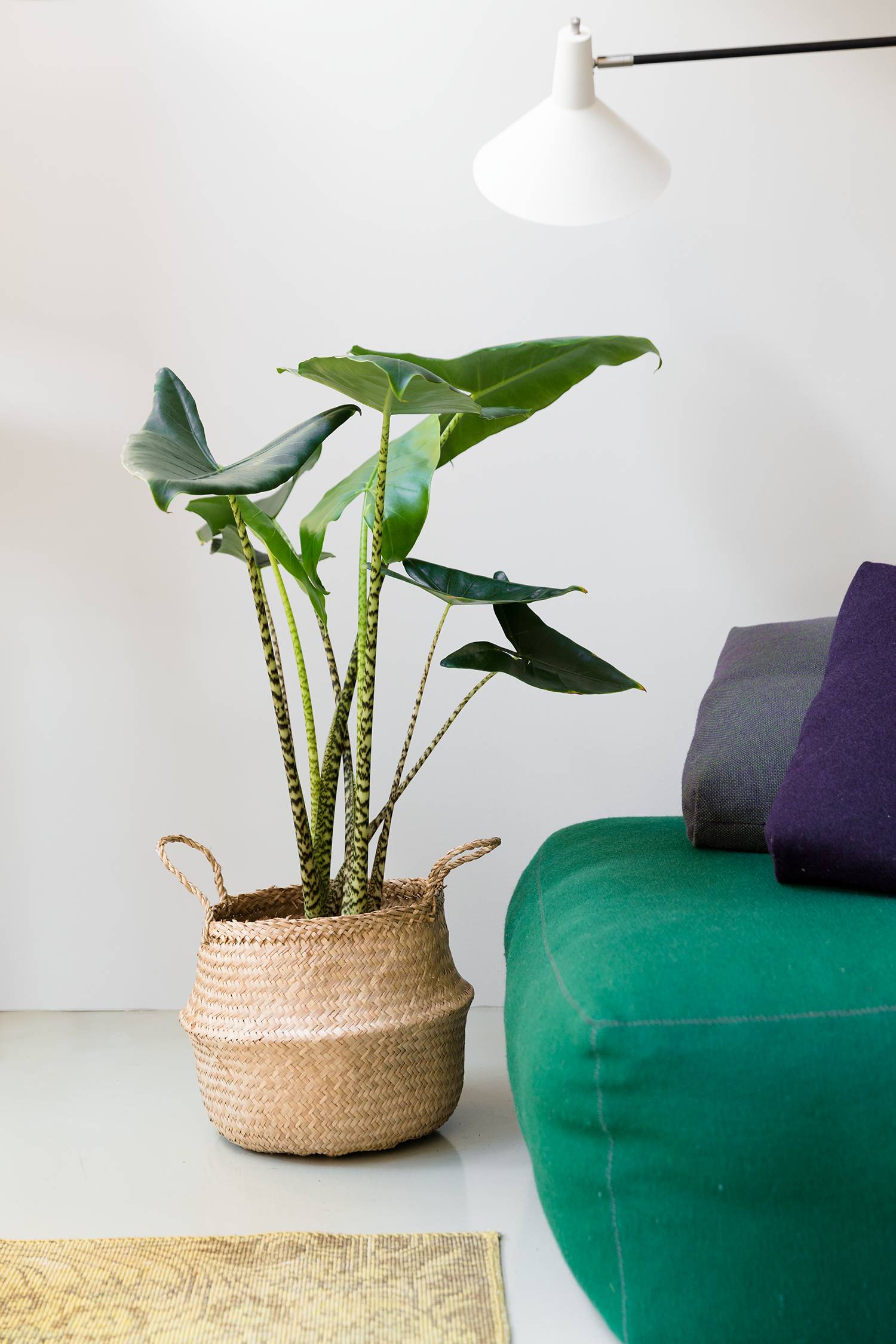
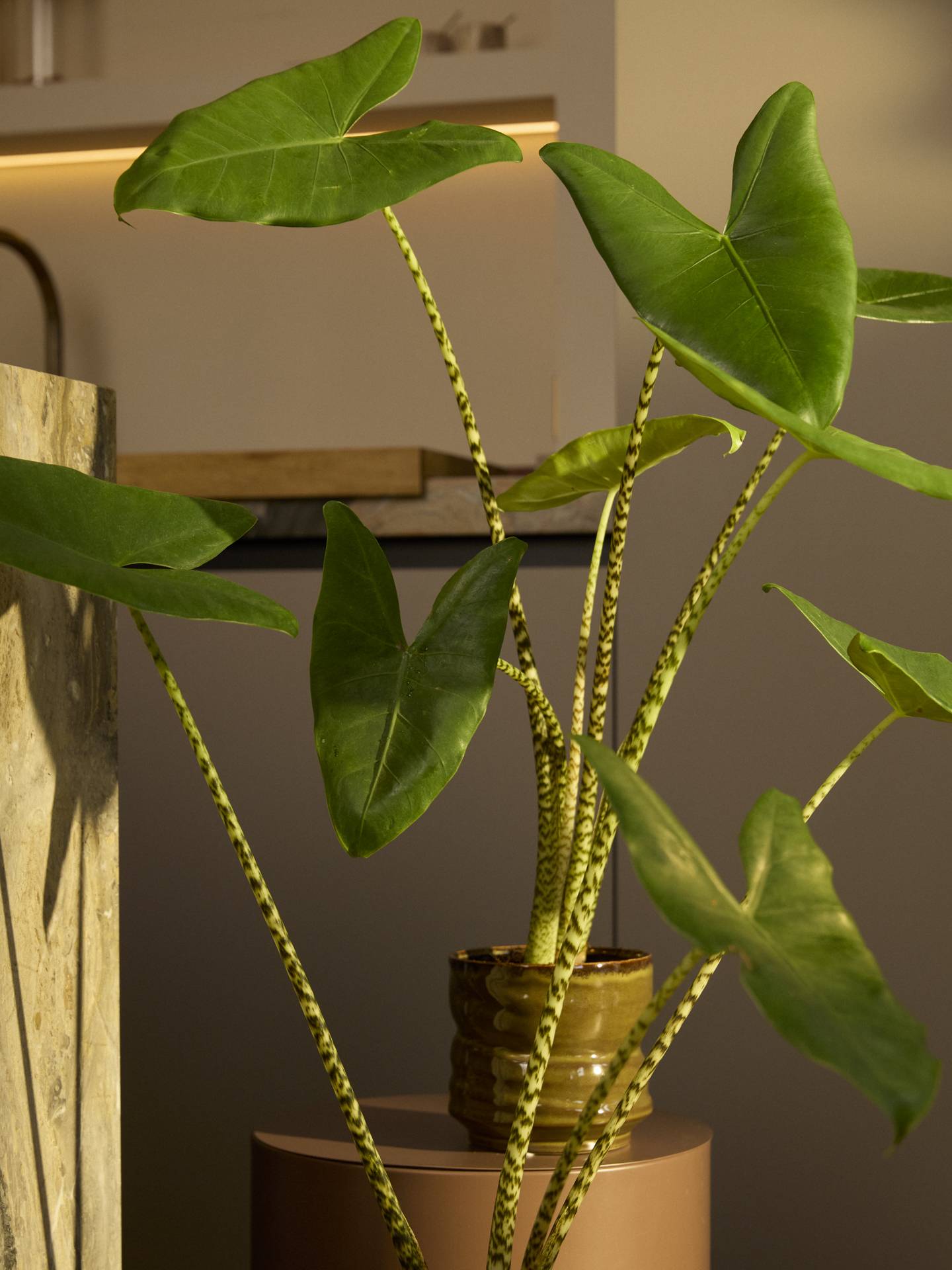
- Alocasia zebrina - recognisable by its unique zebra-print stems, with black-and-white stripes, combined with large, arrow-shaped dark green leaves that resemble elephant ears.
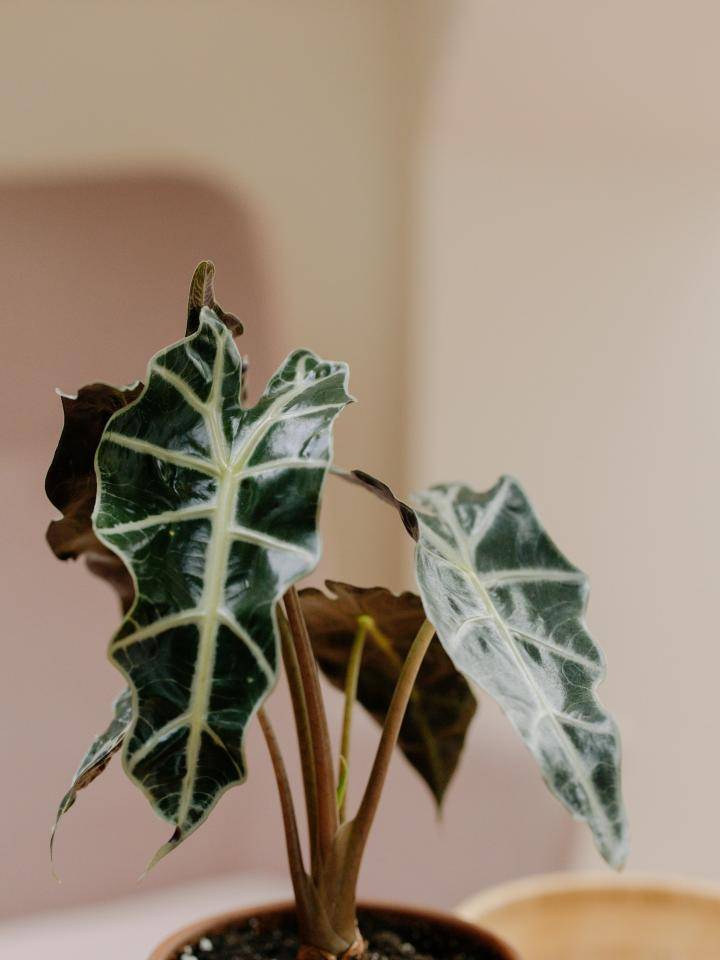
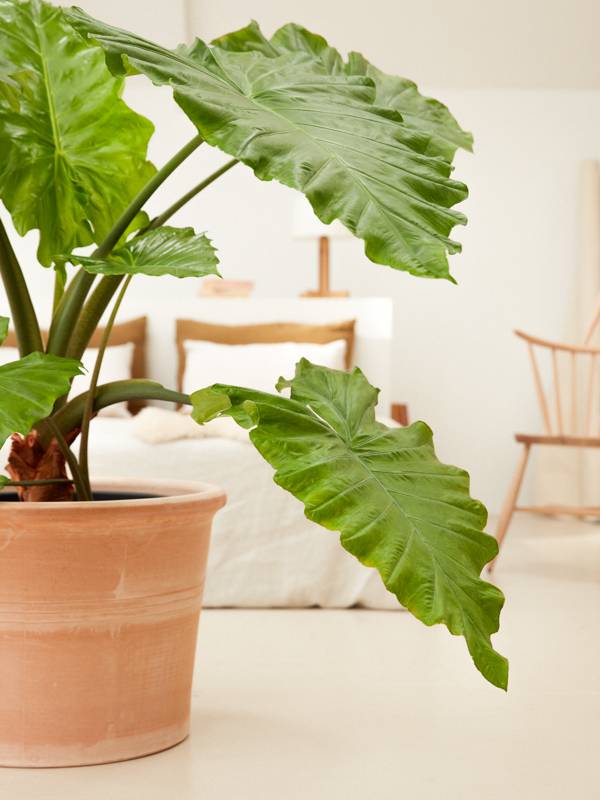
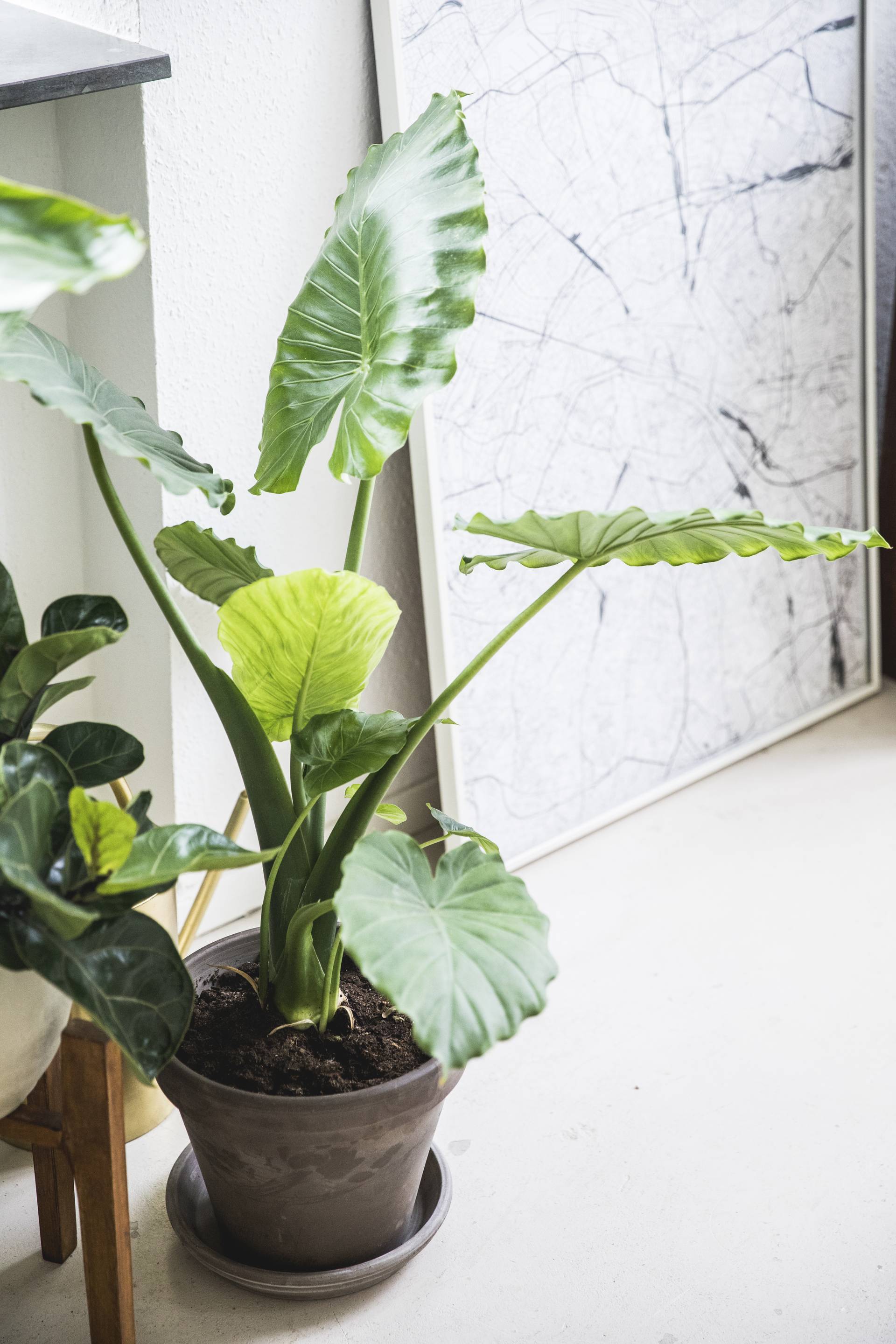
- Alocasia macrorrhiza - known for its huge, glossy, heart-shaped leaves with striking white veins and wavy edges, which can grow up to 60 cm wide.
- Alocasia longiloba - features elongated, arrow-shaped leaves with prominent light veins and often a purplish underside.
- Alocasia odora - recognisable by its elongated, heart-shaped leaves and known for its fragrant flowers.
- Alocasia cucullata - characterised by rounder, upright, heart-shaped leaves. Often seen as a temple plant in Asia and also known as the “lucky plant”.

What to do if your Alocasia develops yellow leaves?
Many Alocasia owners ask: why is my Alocasia turning yellow and what should I do? Only remove a leaf once it is completely yellow or brown, always cutting close to the base. This encourages the plant to produce new leaves.
Yellow leaves can have several causes:
- Overwatering: reduce watering. Signs include soft, limp leaves and soil that stays wet for too long.
- Underwatering: the root ball is too dry. Leaves appear dull and feel firmer and less soft than with overwatering.
- Too little light: move your Alocasia to a brighter spot.
Propagating Alocasia
Alocasia can be easily propagated through its side tubers, making propagation straightforward.
How to propagate alocasia:
- Carefully remove the plant from its pot and look for healthy side tubers.
- Separate these tubers from the mother plant.
- Place them in a pot with airy, well-draining potting soil.
- Keep the soil lightly moist and warm. After a few weeks, new leaves will appear.
Common Alocasia problems and solutions
Drooping leaves
- Cause: too little water, insufficient light or sudden temperature changes.
- Solution: check soil moisture, move the plant to a brighter spot and avoid cold draughts.
Brown leaf tips
- Cause: dry air, too much direct sunlight or nutrient issues.
- Solution: increase humidity, provide indirect light and ensure proper feeding.
Root rot
Cause: excess water or poor drainage.
Solution: repot in airy soil and remove damaged roots.
Styling tips for Alocasia
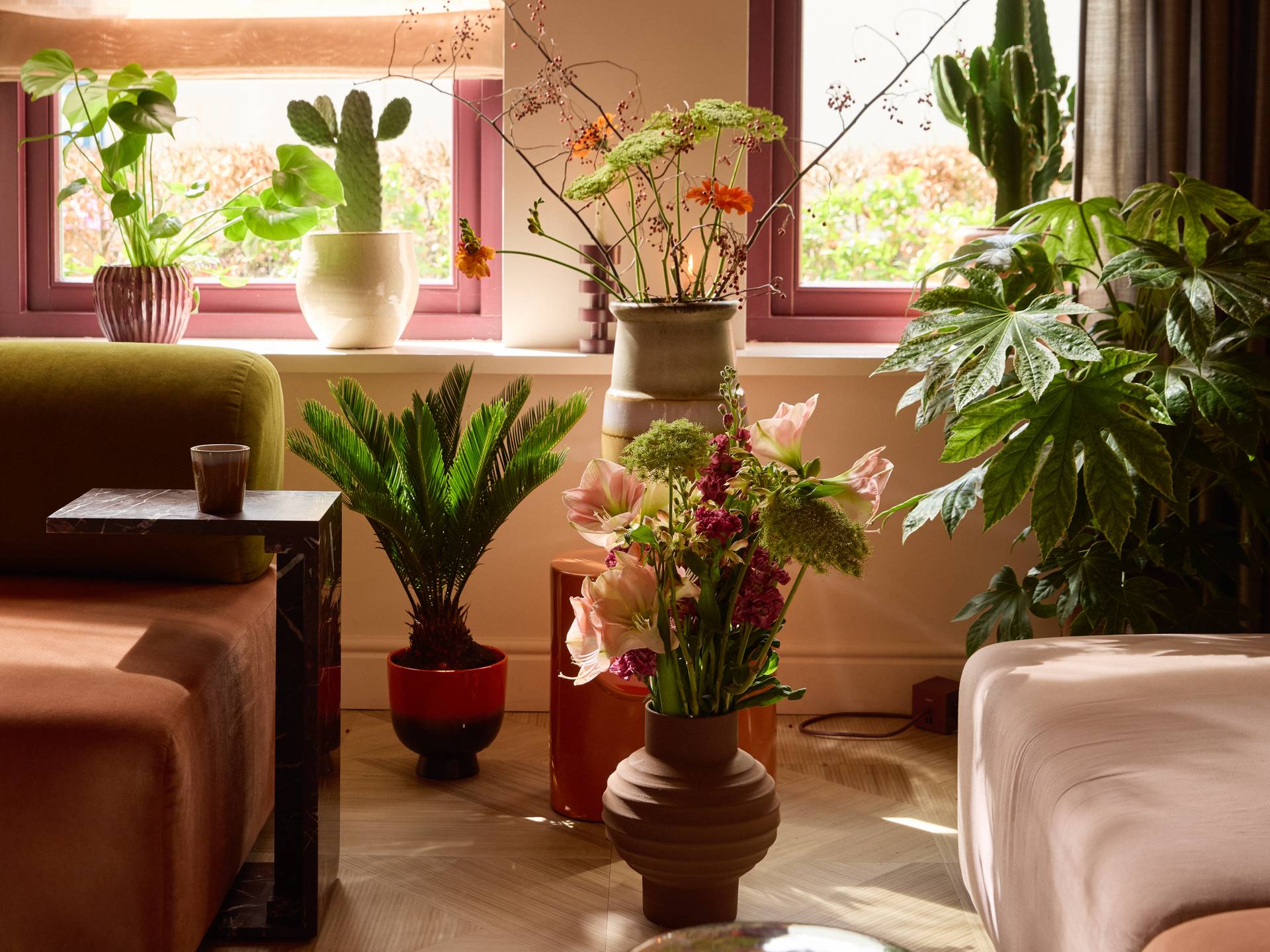
Place your Alocasia in a hanging pot or on a tall plant stand for a tropical statement in your interior. You can also group several plants together in one corner. Another great idea is a long, rectangular planter behind your sofa with multiple Alocasias side by side. Need more inspiration?
Is Alocasia toxic?
Alocasia is mildly toxic if ingested. Its leaves contain oxalates, which can cause irritation in children and pets. Keep the plant out of reach of curious cats and dogs.
Symbolism of Alocasia
Thanks to its symbolism as a “tree that grows into the sky” and its impressive appearance, Alocasia makes a perfect gift for plant lovers. The elephant ear symbolises seizing opportunities, growth, prosperity and spirituality. This symbolism is often linked to the fairy tale of Jack and the Beanstalk, where the idea of a tree growing towards the sky originates. In some cultures, Alocasia is also associated with good luck and protection.
The elephant ear symbolises opportunity, growth, prosperity and spirituality.
Origin of Alocasia
The Alocasia, affectionately known as elephant ear because of its large, dramatic leaves, originates deep within the lush tropical rainforests of Southeast Asia. There, it thrives beneath the dense canopy of towering trees. In this humid, shaded environment, far from direct sunlight, the alocasia has perfectly adapted to life with high humidity. This natural habitat explains exactly why, indoors, Alocasia prefers warmth, protection from draughts and regular misting.