
Written by
Sabina
Description
Partial sun
Little
Green
Pet and kids friendly
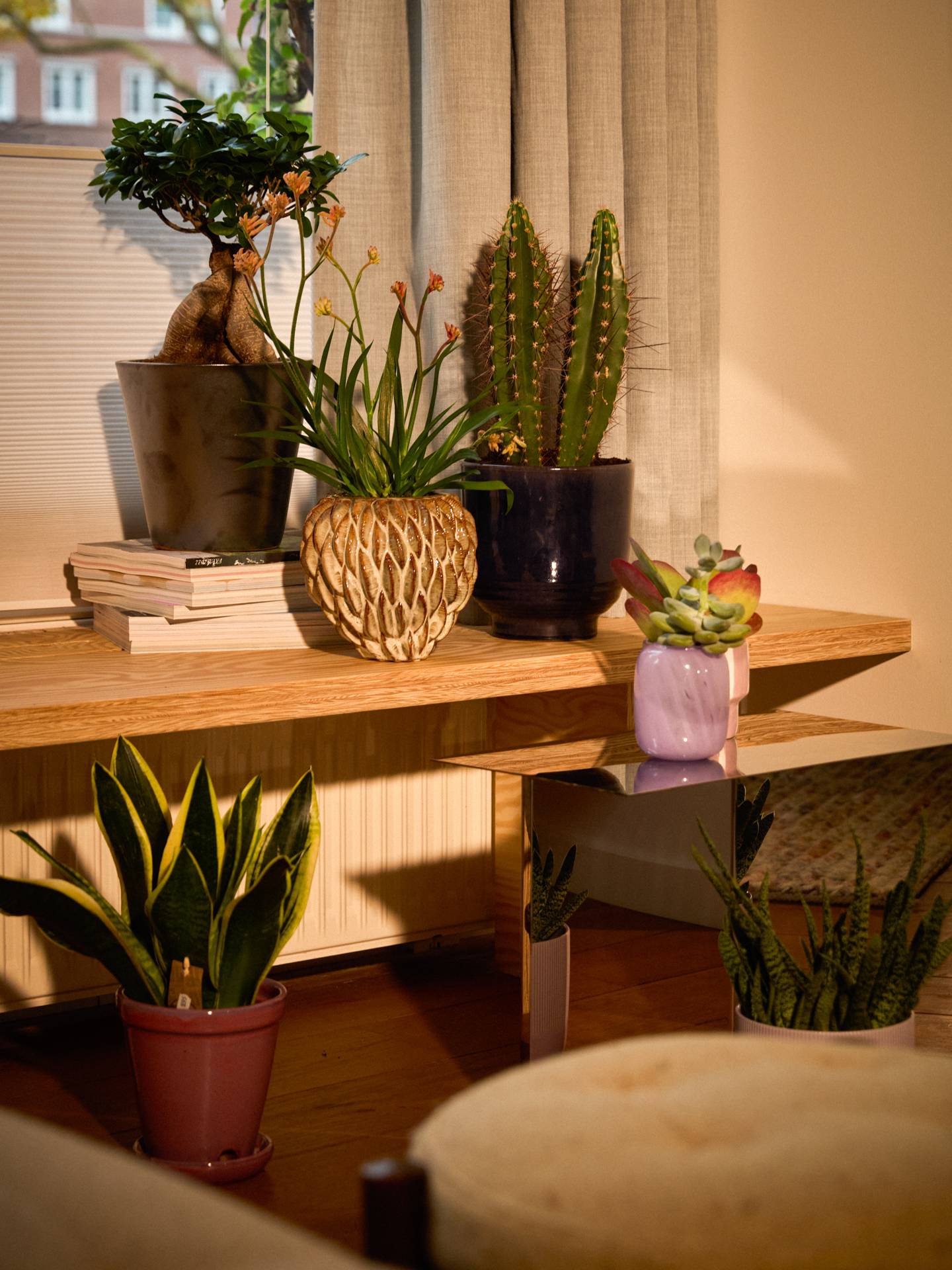
With its decorative braided trunk and hand-shaped leaves, each made up of five finger-like leaflets, the Pachira is no ordinary houseplant. In some cultures, people even believe its green ‘fingers’ can catch good luck and money, which is why it’s also known as the money tree. It’s surprisingly easy to care for, too, so there’s little reason not to bring this distinctive tree into your home. In this guide, you’ll find everything you need to know about the Pachira, from its characteristics and care to its symbolism and origins.
Characteristics of the Pachira
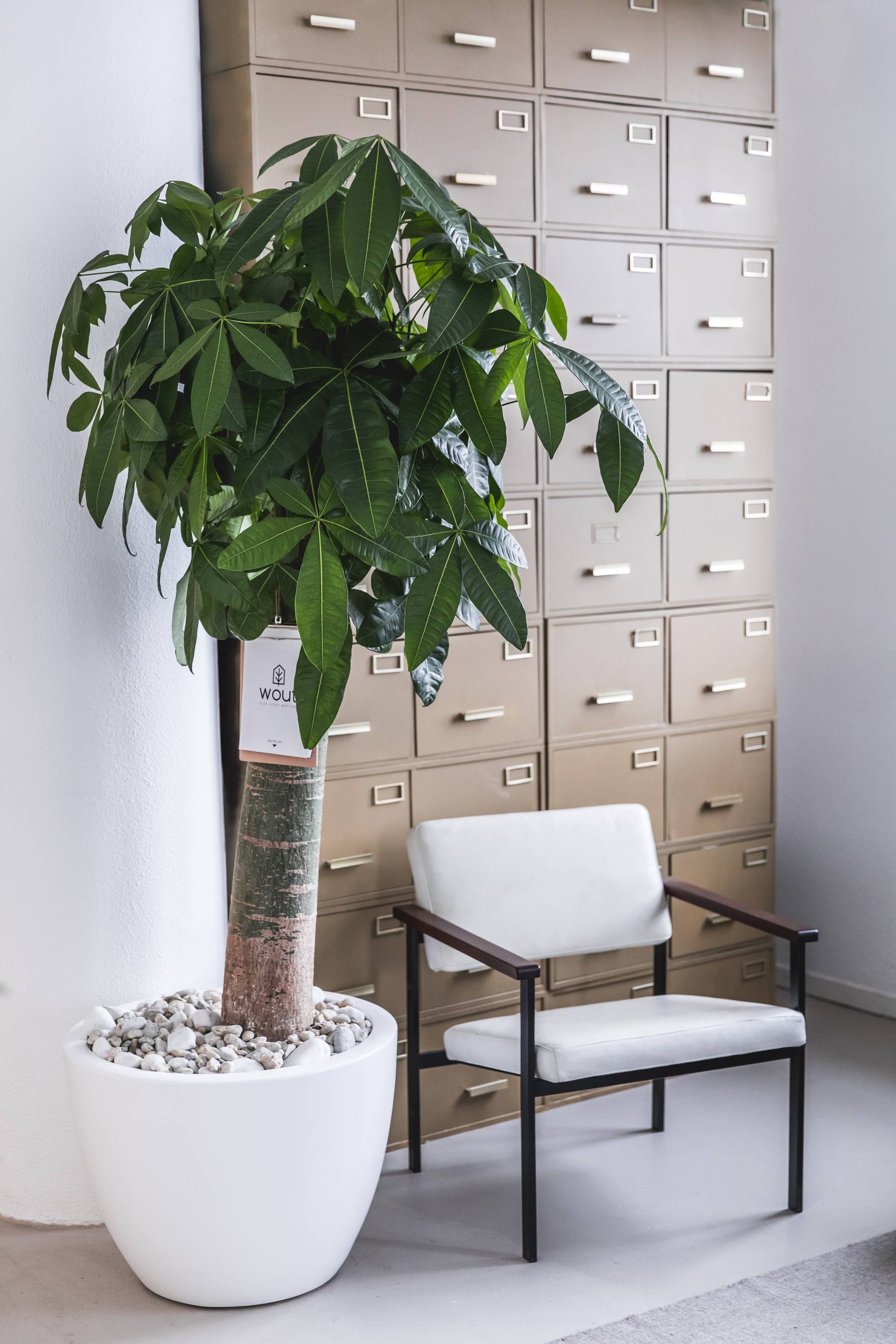
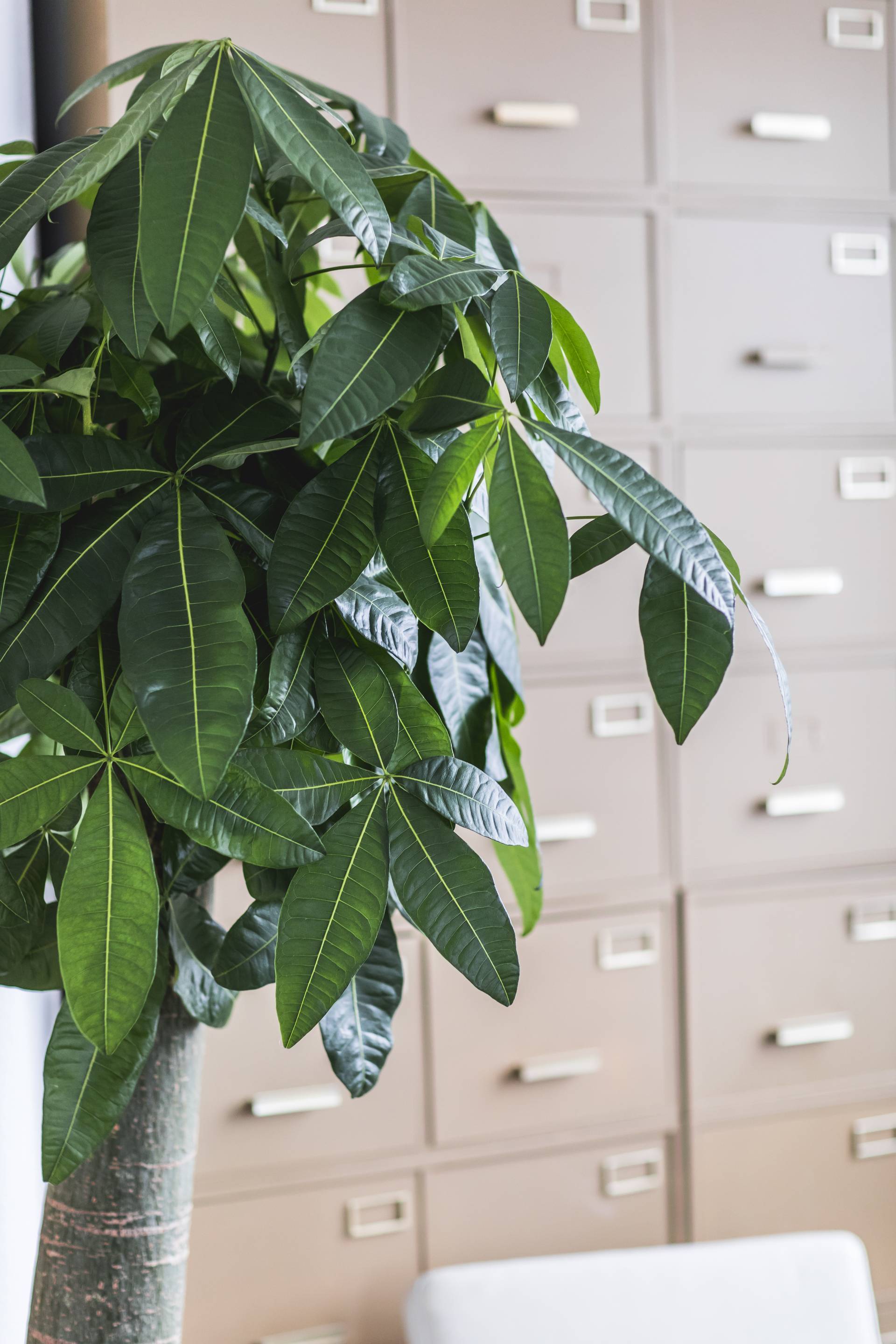
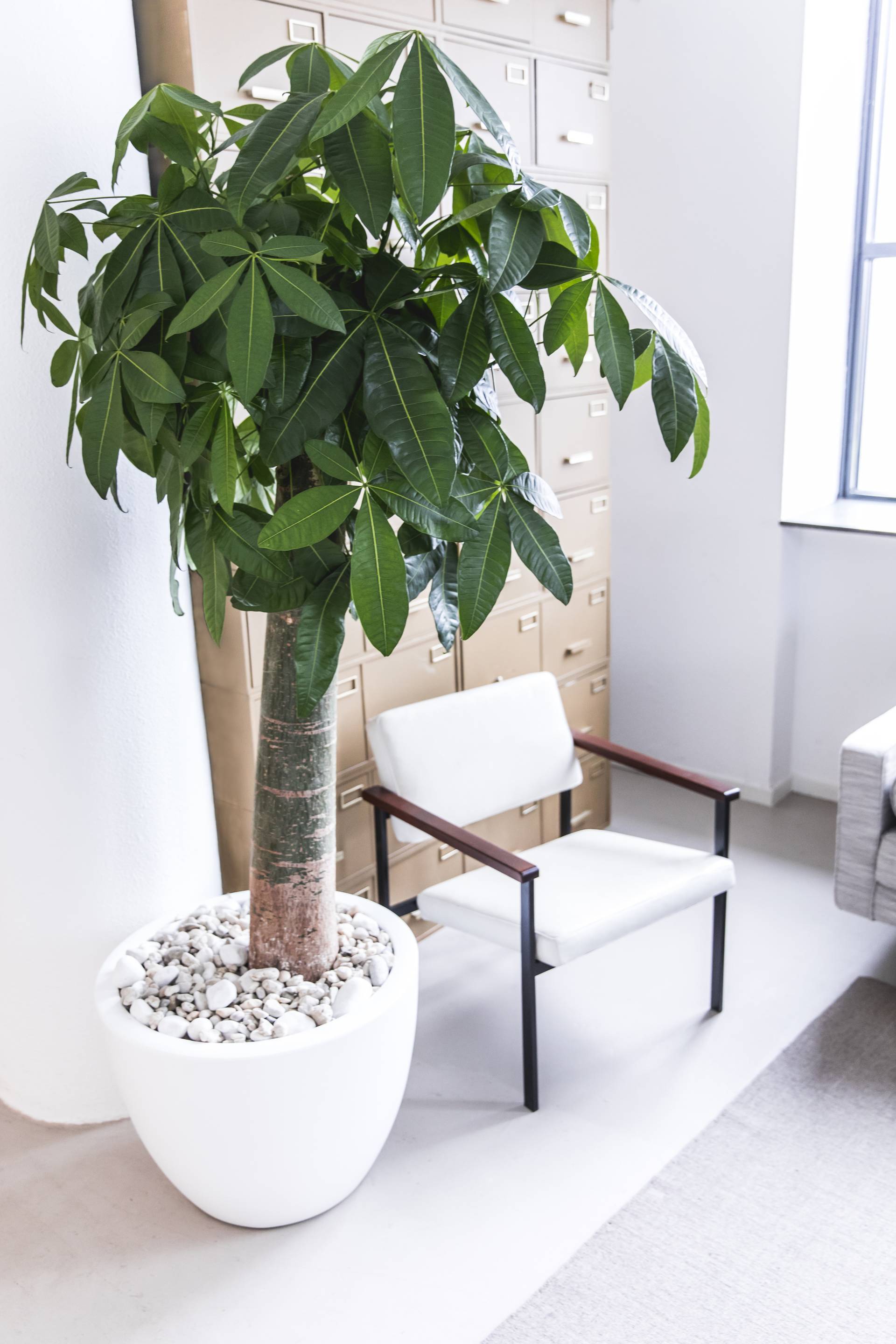
The Pachira, or Pachira aquatica to give it its full name, immediately catches the eye with its two or three braided stems topped by a full crown of deep green leaves. Each leaf has five leaflets on a fairly long stalk, giving the plant an airy look rather than a dense mass of foliage. Those long leaf stalks also let light filter through, giving the Pachira a surprisingly open feel for such a substantial indoor tree.
The tree stores water in its trunk, which explains why it needs relatively little care. You’ll also often find the closely related Pachira glabra sold under the same name. You can recognise it by its trunk, which thickens a little faster. The Pachira belongs to the mallow family (Malvaceae), alongside familiar plants such as Hibiscus, Mallow and Hollyhock.
Caring for a Pachira
The Pachira is an easy housemate when it comes to day-to-day care, as long as you keep a few things in mind.
- Light: moderation is key. Too much bright sun isn’t good for the plant, but too little light isn’t either. If your Pachira is growing noticeably tall with relatively few leaves, that’s a sign it needs a brighter spot.
- Watering: in summer, it’s best to keep the compost moist without leaving the plant standing in water. It doesn’t like wet feet. In winter, you can let the root ball dry out a little more between waterings. Misting the leaves regularly helps keep them looking fresh, and you can add some plant feed about once a month during the summer.
- Yellow leaves: for most houseplants, yellow leaves are a sign of too much water, and the Pachira is no exception. So take care not to overwater it. Check where the plant is standing, too. Is it in full sun? Move it to a bright spot out of direct sunlight. The yellow leaves won’t turn green again, but new leaves should grow in beautifully.
Tip: give your Pachira a quarter turn now and then, as the tree tends to bend towards the light.
Types of Pachira
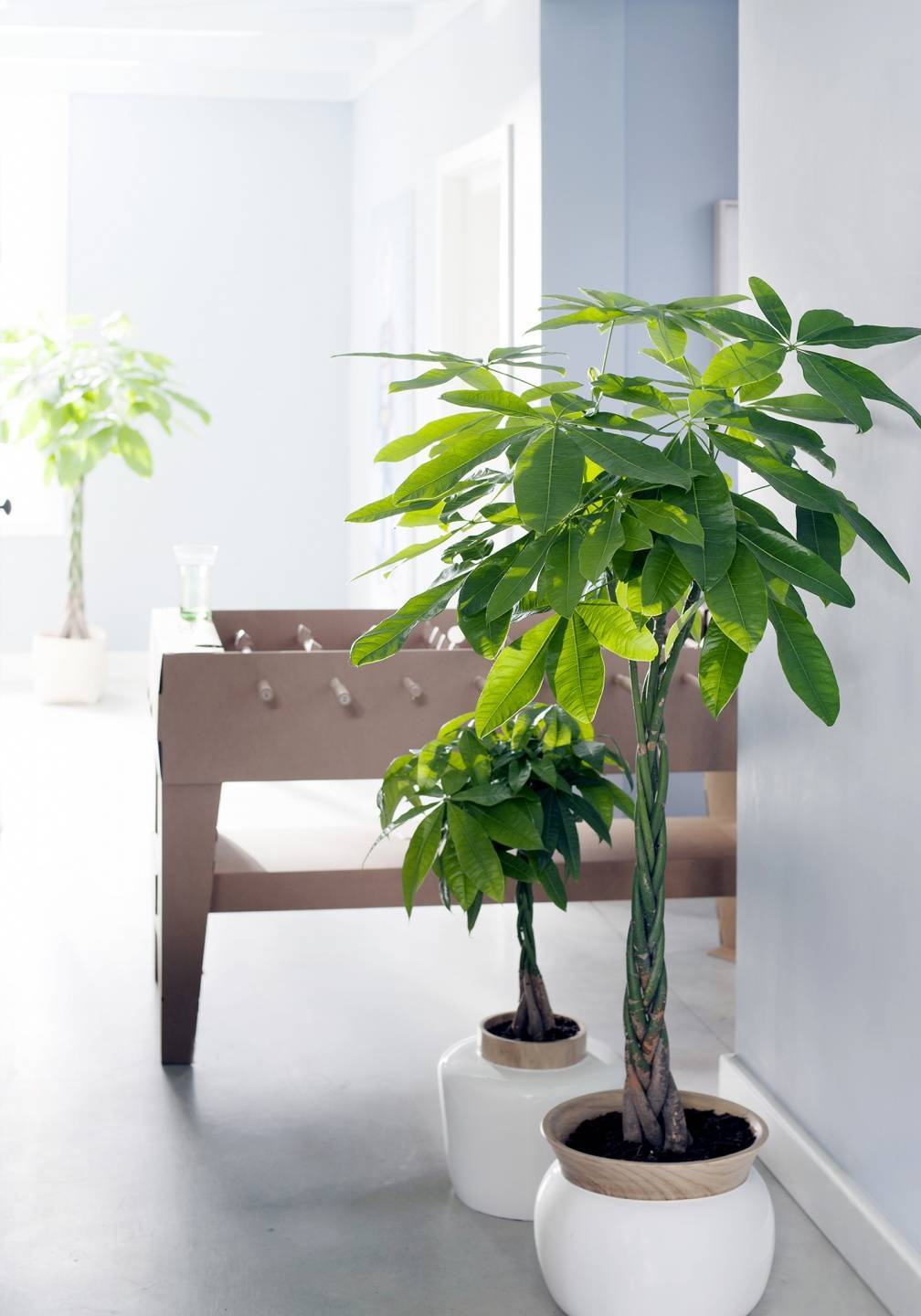
There are around fifty species of Pachira, but the one you’ll almost always find as a houseplant is Pachira aquatica. There’s still plenty of choice when it comes to shape and size: from a small, bonsai-like potted plant to a substantial specimen two metres tall or more, with a trunk made up of one, three or even five braided stems. The more stems are braided together, the fuller and more decorative the tree looks.
Interesting facts about the Pachira
- Braids that grow together: the braided stems won’t unravel on their own. In fact, as the tree grows, the stems gradually fuse together.
- Lucky number: the number five is so significant in Chinese culture that growers sometimes deliberately braid five stems instead of the usual two or three.
Why is the Pachira also called the money tree?
According to Chinese Feng Shui, the Pachira’s leaves, which look a little like green hands if you use your imagination, can catch luck and fortune. Its twisted stems then keep the treasure safe. That’s how it earned the nickname money tree.
The symbolism of the Pachira
The Pachira symbolises luck, wealth and abundance. The number five plays a big part in this symbolism: in Chinese culture, it represents the five elements, giving the Pachira’s five leaflets extra meaning. If you’d like to give luck an extra nudge, put five plants together in a red pot or choose a tree with five braided stems.
Why is the Pachira also called Water cocoa?
Its name comes from an ancient language spoken by Indigenous peoples in Guyana and means something like ‘sweet water nut’. In the wild, the Pachira prefers places where rivers regularly overflow their banks. The tree’s oval brown fruits, which can grow up to thirty centimetres long, are packed with seeds that have traditionally been roasted and used as an alternative to cocoa. Hence the nickname water cocoa.
Where does the Pachira come from?
The Pachira originates from the tropical regions of Central and South America, extending as far as northern Brazil. There, the tree prefers damp places such as riverbanks, swamps and mountain forests. It can grow up to twenty metres tall and produces striking, long yellow petals. As a houseplant, the Pachira stays much more compact.