

Written by
Bente
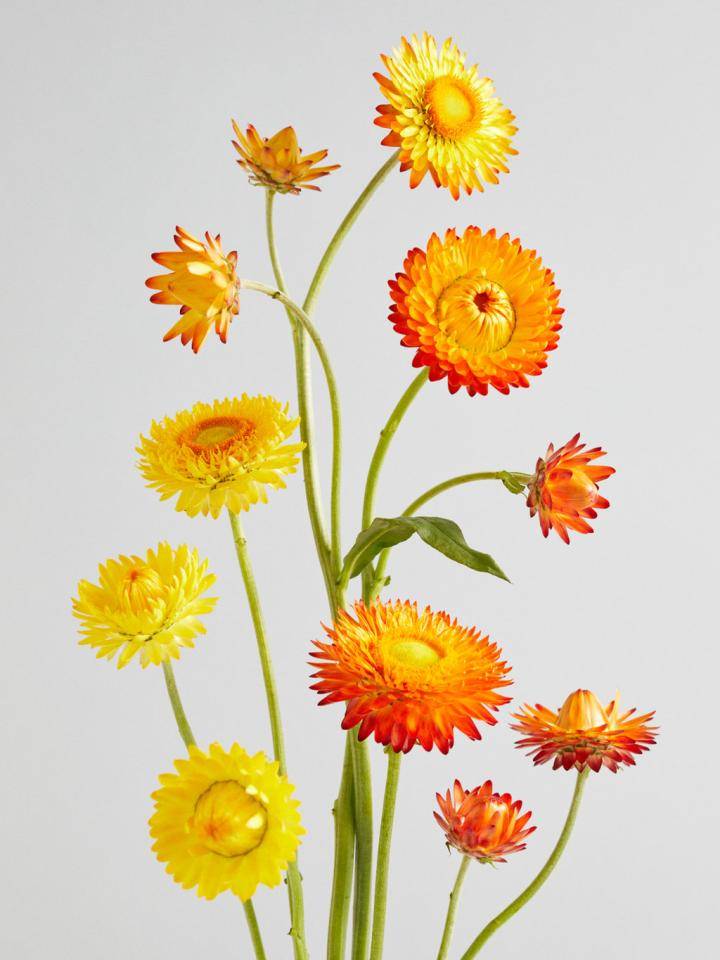
With its striking, papery bracts, warm colours and exceptionally long vase life, Helichrysum is a much-loved cut and dried flower. You may also know the flower as Strawflower: a name that refers to its straw-like texture. From vase care to symbolism: discover everything you need to know about Helichrysum in this guide!
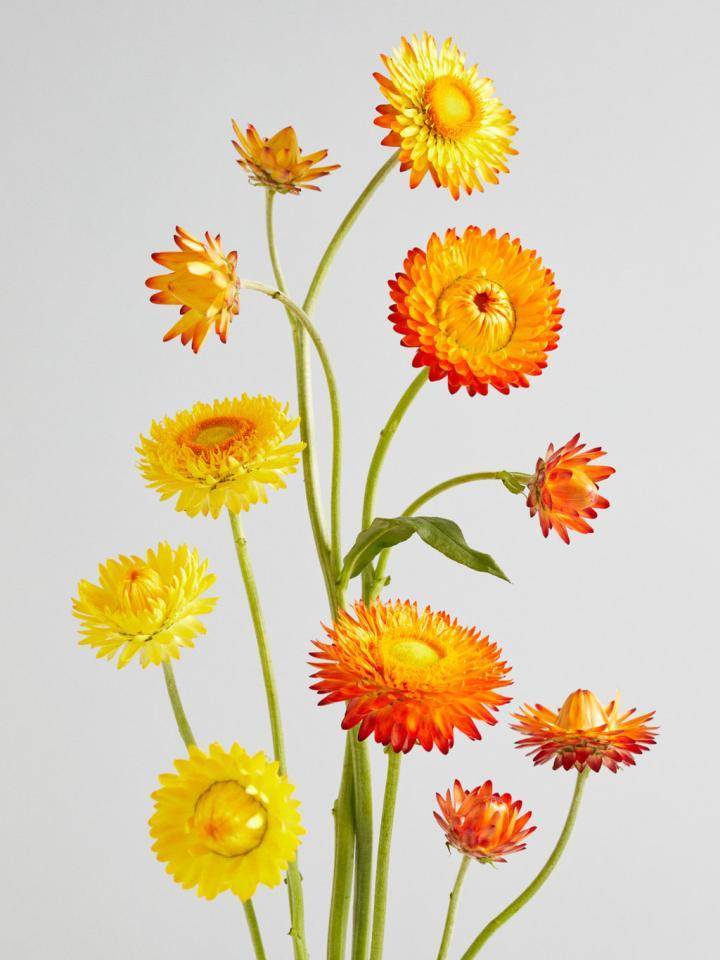
Strawflower crackles like paper, even when it is in bloom and has not yet been dried.
Characteristics and flowering of Helichrysum
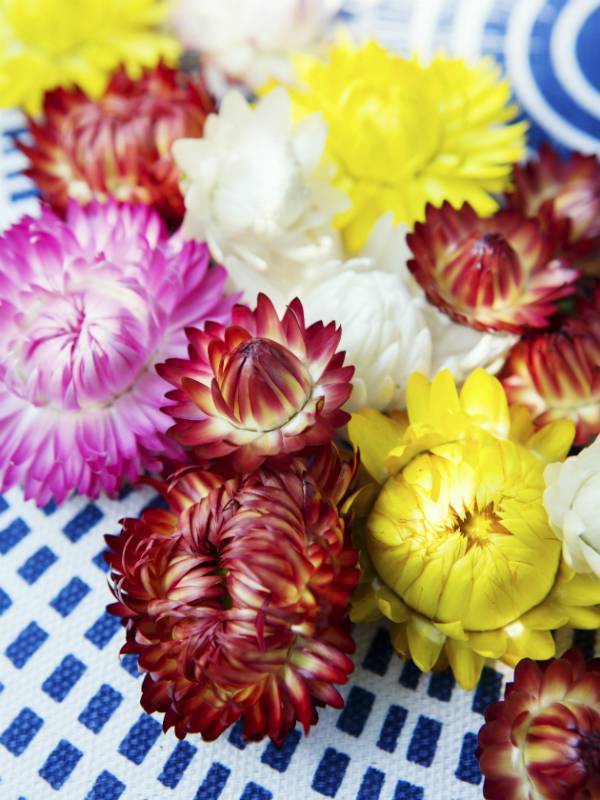
What look like the colourful petals of Helichrysum are actually bracts. They feel dry and papery and retain their colour and shape even after the flower has been dried. The true flowers are the tiny yellow tubular florets at the centre of the flower.
The flowers grow on straight, sturdy stems and come in white, cream, yellow, orange, salmon, red, pink and purple. When grown in the ground, Helichrysum typically flowers from June through to October.
Helichrysum belongs to the daisy family (Asteraceae), one of the largest plant families in the world, which also includes flowers such as Chrysanthemum, Gerbera, Dahlia, Aster and Sunflower.
Why is Helichrysum also known as Strawflower?
The name Strawflower refers to the unusual texture of the bracts. They feel dry, firm and straw-like, almost as if they are made of paper. This means the flower stays beautiful for an exceptionally long time, both fresh and dried. It is no coincidence that it is also known as the ‘everlasting flower’.
Caring for Helichrysum in a vase
Helichrysum is known for its long vase life, but it is also one of the best-known dried flowers in the world, which means the flower does not need water to stay beautiful. Still want to enjoy it in a vase, perhaps among other cut flowers? Follow the care tips below and these tips and tricks to help cut flowers last as long as possible:
- Cut the stems diagonally
- Use a clean vase with fresh water at room temperature
- Change the vase water every 2-3 days
- Do not place the vase in direct sunlight, next to a radiator or near ripening fruit.
Drying Helichrysum
Want to dry Strawflower yourself? Harvest the flower when it is almost fully open, but before the centre is completely visible. Tie small bunches together and hang them upside down in a dry, dark place. After around 2-3 weeks, the flowers will be dry. Tip: take a look at our handy article packed with tips for drying flowers too.
Helichrysum is one of the best-known dried flowers in the world. Once dried, the flower retains its shape and colour for years.
Types of Helichrysum
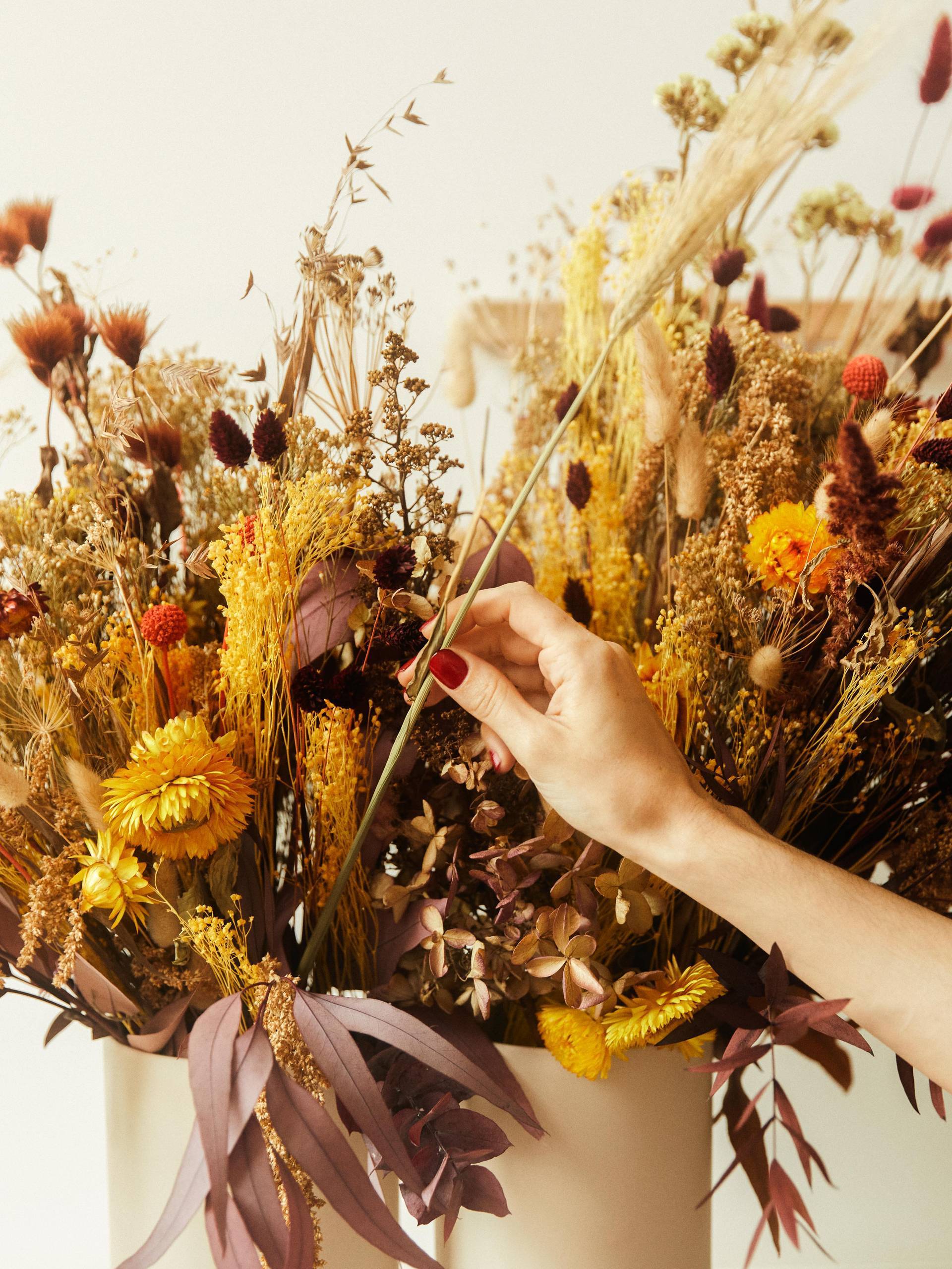
Almost all Helichrysums you see in bouquets and floral arrangements belong to a single species: Xerochrysum bracteatum (formerly Helichrysum bracteatum). This species is known as Strawflower and is grown all over the world. As a result, many varieties have been developed, differing in colour, flower size and flower shape. Helichrysum is generally classified into types based on shape. The best-known are:
- Large-flowered Helichrysum: these varieties have flowers measuring 6-8 centimetres across. They are ideal for bouquets and as striking focal points in floral arrangements.
- Double-flowered Helichrysum: these varieties have flowers made up of several layers of bracts, giving them an extra-full appearance. They are among the most popular types for dried bouquets because they retain their shape so well after drying.
- Single-flowered Helichrysum: this variety has fewer layers of bracts, leaving the yellow centre clearly visible. They give bouquets a natural, meadow-like look and attract plenty of pollinators when grown in the garden.
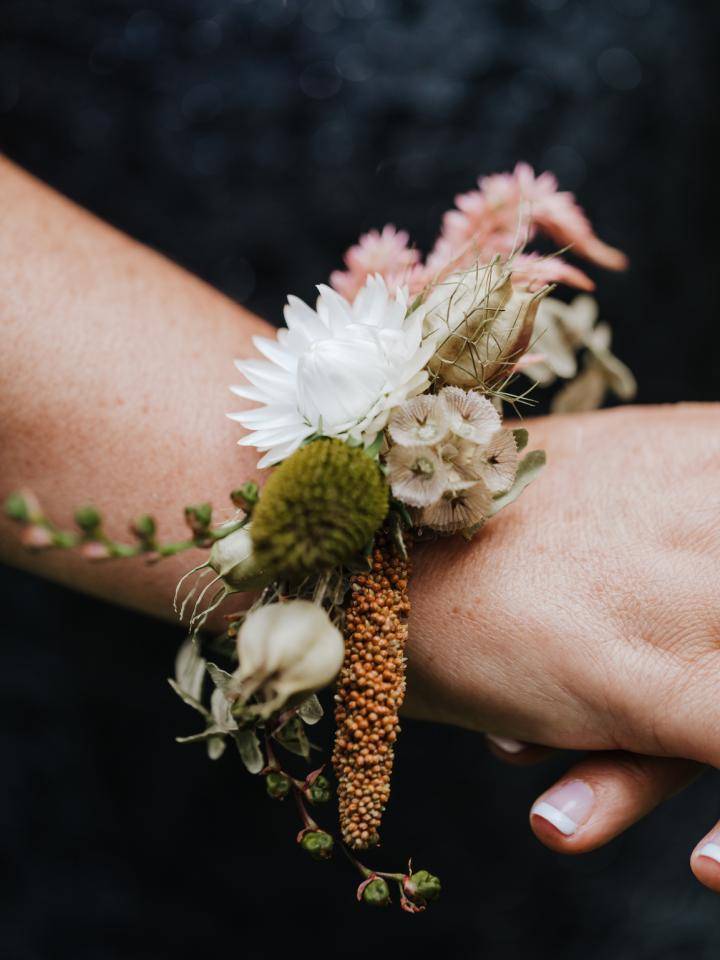
- Compact Helichrysum: this variety stays shorter and produces smaller flowers. They are more commonly used in corsages and delicate dried bouquets.
Symbolism of Helichrysum
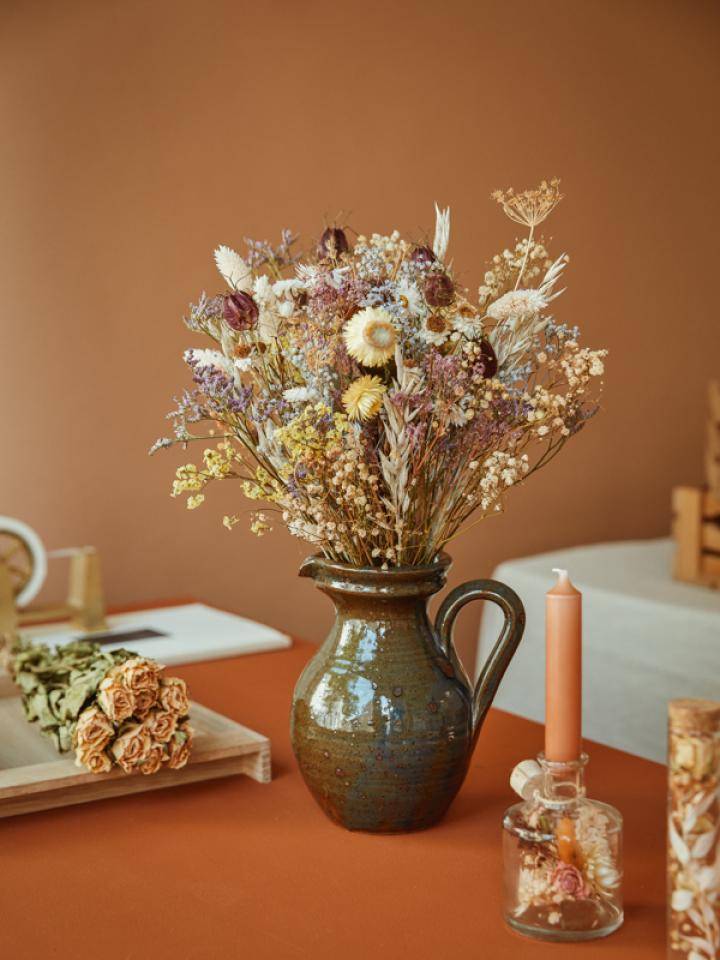
Helichrysum symbolises eternity, remembrance and immortality. The flower naturally owes this symbolism to its long-lasting beauty. It is therefore often used in memorial bouquets and corsages. At the same time, the flower symbolises optimism and warmth, thanks to its sunny colours and long flowering period.
Origin of Helichrysum
Strawflower originates from Australia, where it grows in sunny grasslands, open woodland and on dry slopes. The plant is therefore extremely well adapted to warm summers and long periods of drought. At the end of the 18th century, the flower was brought to Europe, where it quickly became popular as both a cut and dried flower. Today, Helichrysum is grown all over the world.