Written by
Carmen
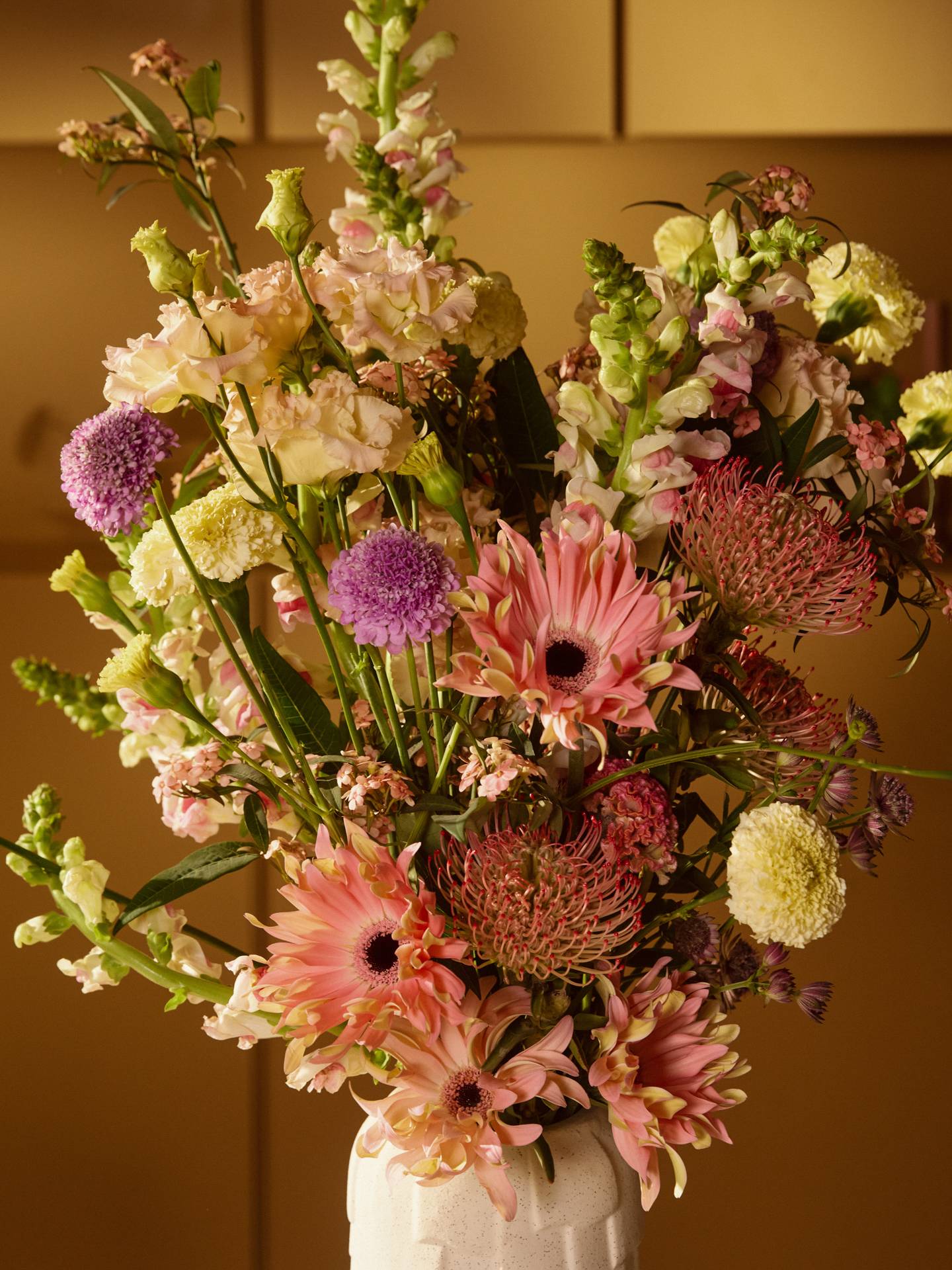
Making a flower arrangement can be as simple as spending an afternoon with your favourite flowers and some floral foam, but with a little passion it can also become a genuine work of art. And you definitely don’t need a floristry qualification. That’s exactly what makes flower arranging so much fun: there’s a technique to suit every skill level and every amount of patience. In this article, you’ll find ideas and tips for both beginners and more experienced flower arrangers.

Making a flower arrangement: easy options to start with
Want to make your own flower arrangement? Start with these techniques. They require very little prior knowledge, but the results are instantly impressive.
1: Working with a Flower Frog. This small tool, also known as a flower pin holder, sits inside the vase and lets you simply secure the flower stems in place. Ideal if you find your flowers constantly shifting or falling over. This tool does in two seconds what you might otherwise spend ages swearing and fiddling with. Take a look, for example, at how the Flower Frog is used to create this beautiful Christmas bouquet.
2: A mini flower ball with dried flowers. Shape a small ball from chicken wire and fill it with a selection of dried flowers, such as Baby’s Breath and Limonium. Place the ball on a table or windowsill, or hang it up as an eye-catcher, then enjoy it for a very long time. Dried flowers don’t wilt, and they never complain that their water needs changing either. Read the full article with a handy step-by-step guide for making this dried flower ball.
3: A classic flower arrangement with floral foam in a bowl. Soak a block of floral foam in water with cut flower food and trim it to fit a low bowl or vase. Start by adding some greenery around the edges to establish the basic shape, then work from large to small: bigger flowers such as Rose or Anthurium first, smaller flowers such as Baby’s Breath last.
4: A floral foam ring as a table decoration. Soak a ready-made floral foam ring, available separately from florists or garden centres, in water for a while and insert individual flowers and leaves until the ring is completely covered. Place it flat on the table as a centrepiece, perhaps with a few tealights in the middle, and you’ve got a table arrangement that looks as though you’ve taken a floristry course, with hardly any fuss. Think, for example, of this wreath. Even better: match your flowers, leaves and decorations to the season. Little mushrooms in autumn, baubles in December... you get the idea.
Making a flower arrangement: for the more experienced flower arranger
Got the basics down and ready to take things a step further? These techniques require a little more patience and precision, but they’ll give you a flower arrangement you can be genuinely proud of, and one your guests will definitely stop to admire.
1: Ikebana-style flower arrangement. With this Japanese approach to flower arranging, it’s not about the number of flowers, but about the shape and position of each individual stem. Play with different heights and deliberately leave empty space between the flowers to create a sense of calm and balance. Here, less really is more.
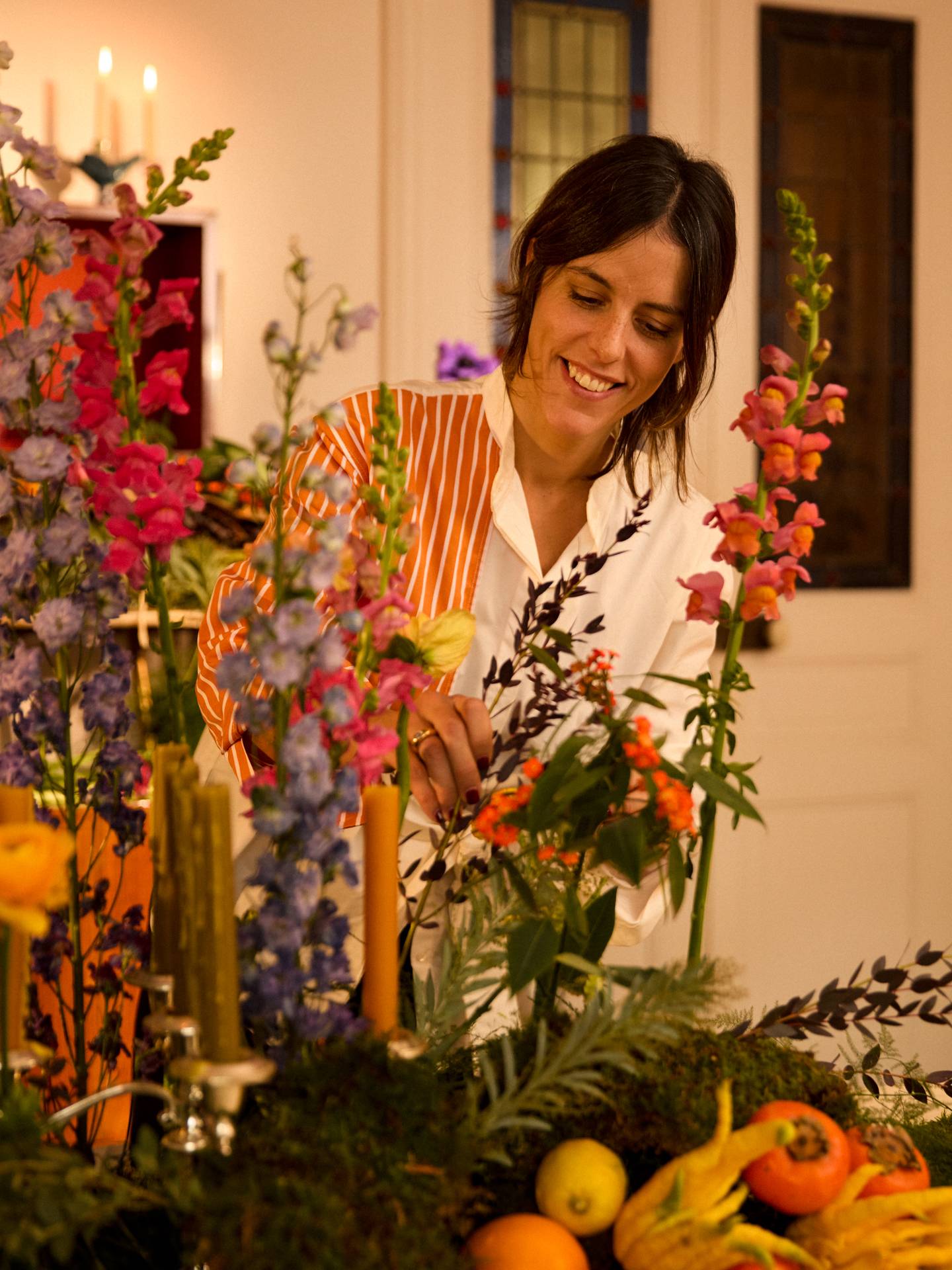
2: A playful flower arrangement with fruit. Combine flowers with fruit, such as grapes or citrus fruits, for a composition that feels more like a work of art than a traditional bouquet. Experiment with angles and shapes you wouldn’t normally put together, and don’t be afraid to go a little over the top. A perfect eye-catcher for the dining table during one of your famous dinner parties, for example.
3: A flower cloud on the ceiling. Shape a larger ball or cloud from chicken wire and fill it with fresh and dried flowers. Hang the whole thing using string or display wire, above the dining table for example, and let the flowers slowly dry into a lasting work of art. A word of warning: everyone who comes round will stare at it.

Handy tools for flower arrangements
Alongside a pair of scissors or a sharp knife, a few extra tools can make arranging flowers a whole lot easier.
- A Flower Frog helps keep flowers upright and in place
- A Twister is a stem holder that lets you position flower stems exactly where you want them
- Floral foam (Oasis) provides support for larger or heavier flower arrangements.
- In any case, work stem by stem rather than stuffing all the flowers into the vase at once, and position flowers diagonally opposite each other to create more depth in the arrangement.
- Oh, and you may already have noticed this, but chicken wire also makes a brilliant base for a flower arrangement.

How to keep your flower arrangement looking beautiful for longer
After all that arranging, you’ll naturally want to enjoy it for as long as possible. Use a clean vase and fresh water, because bacteria are the biggest enemy of a long vase life, even if you can’t see them with the naked eye. Change the water every two to three days, trimming a little off the stems at an angle each time. Your floral foam should also always stay moist. It’s best to keep the arrangement out of direct sunlight and away from radiators, and preferably away from the fruit bowl too, as ripening fruit releases ethylene gas, which makes flowers wilt more quickly.

More inspiration for your next flower arrangement?
Looking for even more ways to create a truly special flower arrangement? Explore our floral signatures too, where well-known floral stylists share their secrets, from ideas that are easy to recreate to genuinely advanced work. Find out how to turn your flower arrangement into a work of art or go all out for the festive season.