

Written by
Sabina
Life isn’t always rosy, but when you’ve got Roses in your vase, you naturally want them to shine for as long as possible. Should you cut them straight or at an angle? Put them in cold or warm water? And how do you avoid those sad, drooping heads? With these 10 clever tips, you’ll enjoy your Roses in a vase for longer.
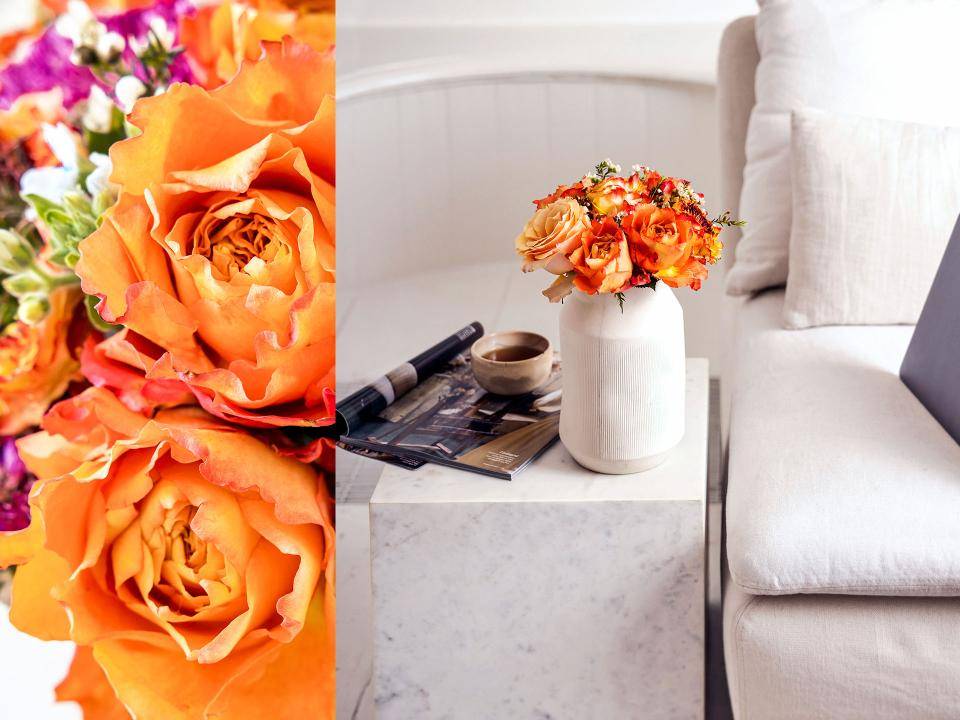
Caring for Roses in a vase: here’s how
Take a look below at the 10 best tips for caring for Roses in a vase.
- Make sure you have the right, genuinely clean vase. Choose a suitable vase that matches the width of your bunch of Roses. Wash your vase thoroughly with hot water, washing-up liquid and a brush. Rinse and dry it well so no soap residue is left behind.
- Re-cut the Roses at an angle using a sharp and clean knife. Cut 1–2 cm off the stem, even if they’ve already been cut at the florist, as a fresh cut helps improve water absorption.
- Remove any leaves that would sit in the water. Leaves in the water encourage faster bacterial growth and cause Roses to go limp. Strip the lower part of the stem, but leave leaves at the top for a fuller look.
- Leave the thorns on the stems as much as possible. It may be tempting to remove the sharp thorns, but it’s best not to. Breaking them off damages the stem, and those tiny wounds are an entry point for bacteria.
- Fill the vase with about 10 centimetres of water at room temperature (not cold or warm water!). Aim for a temperature between 18 and 22 °C. That’s similar to water that’s been sitting in a glass indoors for a while. Not heated and not chilled.
- Add cut flower food to the vase water. This gives your Roses extra energy, slows bacterial growth and improves water uptake. This keeps the stems firmer and helps them last longer.
- Change the vase water every 2–3 days. This is the routine that really makes a difference! Rinse the vase, refill it with fresh water at room temperature and ideally add some new cut flower food. Then continue with tip 8.
- Every 2–3 days, trim a small piece (1–2 cm) off the stems at an angle. Do this, for example, when you refresh the vase water.
- Place Roses in the right spot. That means: out of direct sunlight, away from draughts and not near heat sources or fruit. Ripening fruit releases a natural gas (ethylene), which causes flowers to wilt more quickly.
- Remove faded Roses and petals straight away. Take wilted Roses (and petals) out of the vase immediately. Older flowers produce more ethylene gas (ripening gas).
The routine that makes the difference: change the vase water every 2–3 days and re-cut the stems at an angle.
Extra tip
Go for a transparent glass vase. The advantage is that you can clearly see how much water is left, whether any unwanted leaves are in the water and whether the water is dirty or not. This helps you respond more quickly to what your Roses need.
Drooping Roses: what to do?
- Remove Roses or petals that are already ‘spent’, as this reduces bacteria and ethylene (a gas that speeds up the ageing process of flowers).
- Trim 1–2 centimetres off the stems again at an angle using a sharp, clean knife.
- Place the Roses in clean water at room temperature, preferably in a cool spot.
The most important tip for preventing drooping Roses in the future is to identify the cause. For example, did you give them water that was too warm or too cold? Did you not (re)cut the stems at an angle? Forget to change the vase water? Or are your Roses in the wrong place? And is your vase clean enough?
Read more about Roses?
Curious to learn more? For example, about how Roses are grown? Grower Bart gives you a glimpse inside the greenhouse at Porta Nova Rose nursery and explains how Roses grow in harmony with nature. Also worth a look: our Rose guide. A complete guide to symbolism, varieties, origin and much more!