Written by
Sabina
Looking to bring more colour into your home in a natural way? A flowering houseplant is the perfect choice. We’ve selected ten beautiful indoor plants with flowers, along with simple care and styling tips to help them thrive in your space. Get inspired, choose your favourite (or a few), and let your interior bloom!
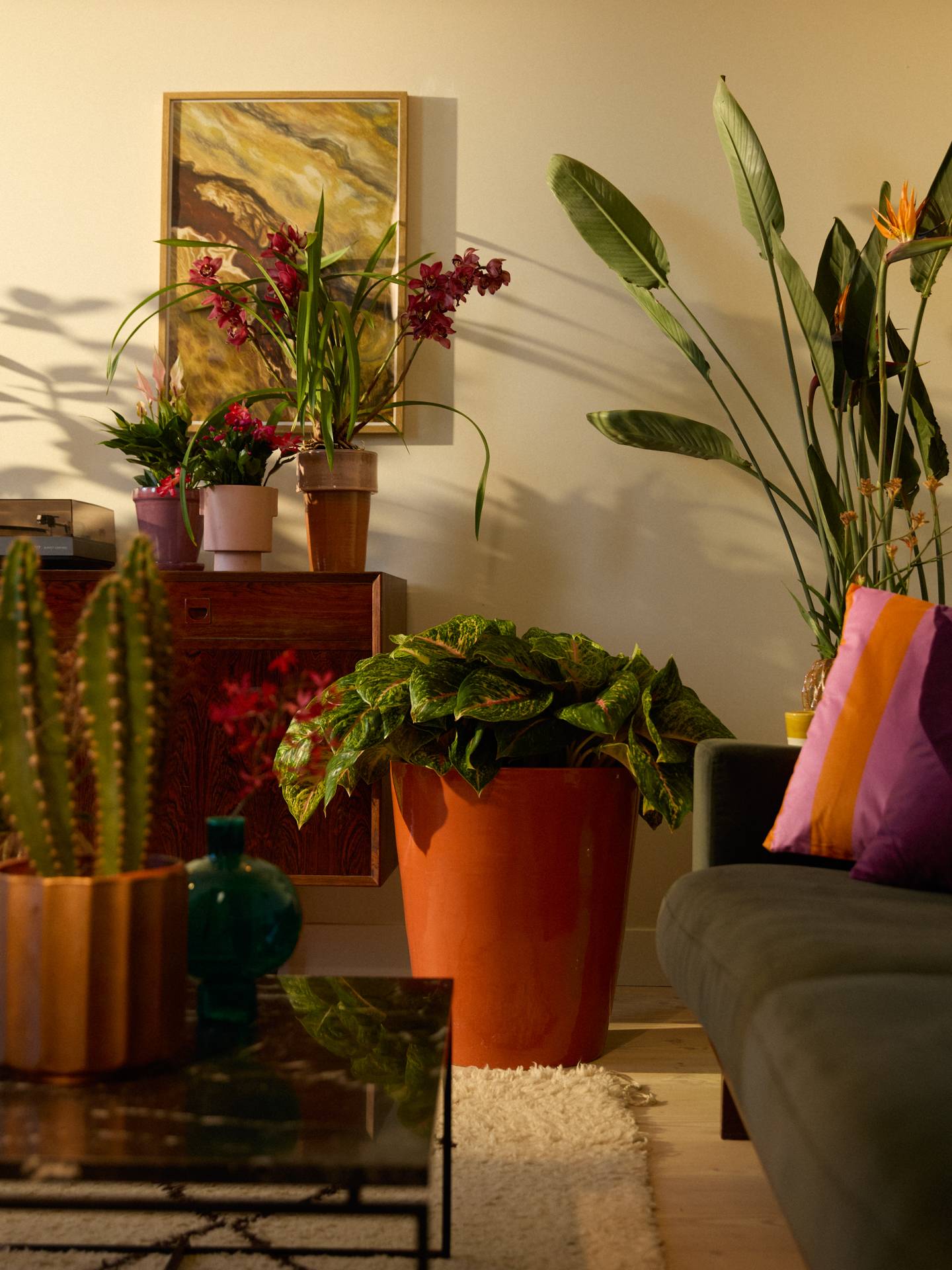
10x flowering houseplants
Flowering houseplants come in all kinds of shapes, styles and colours. From tropical Bromelia to the romantic Lipstick Plant, and from the extravagant Medinilla to the subtle Peace Lily. Discover 10 houseplants with flowers below.
1
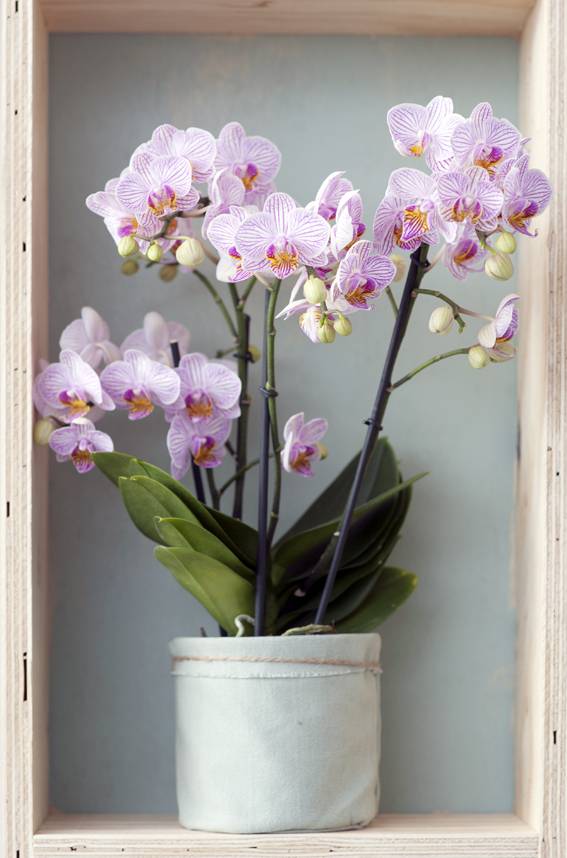
Moth Orchid (Phalaenopsis)
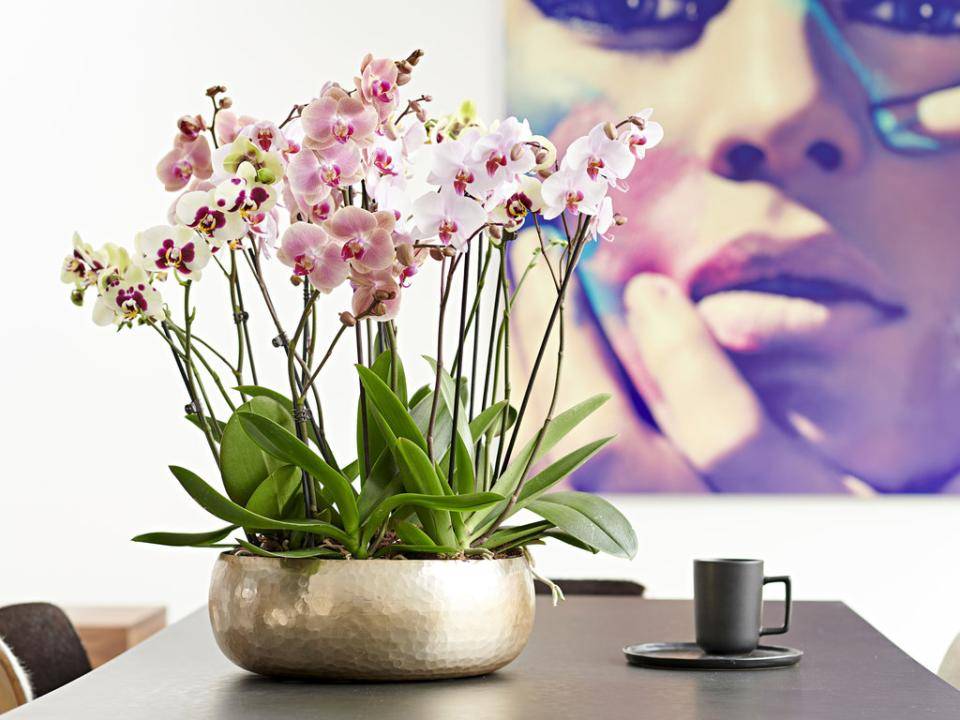
The Orchid is the classic among flowering houseplants. With her elegant sprays of blooms and rich palette of colours, she wins over many hearts.
Care: place your Orchid in a bright spot, but avoid direct sunlight. During the growing season (spring and summer), give the plant a splash of lukewarm water once a week. Outside the growing season, watering once every 10 days is enough. Discover all care tips for Orchid here.
2
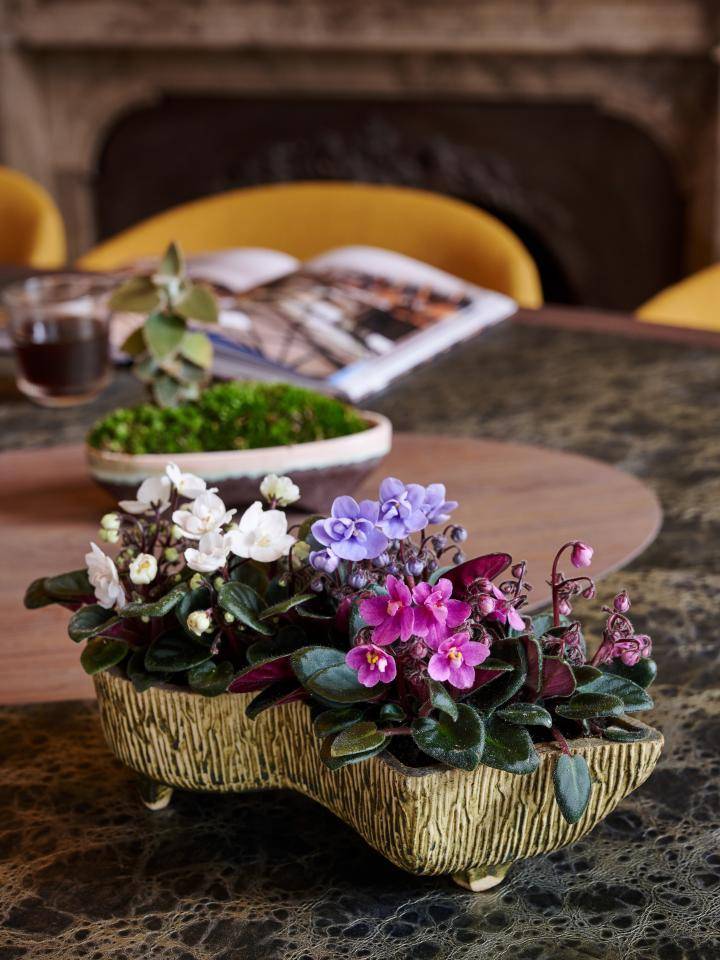
African Violet (Saintpaulia)
With her beautiful little flowers and soft leaves, African Violet is a real crowd favourite. The plant often has purple, blue, white or pink flowers and is known for her retro vibe.
Care: Place the African violet in a bright spot, but avoid direct sunlight. Only water the plant when the potting soil feels slightly dry. Pour the water onto the soil rather than onto the flowers or leaves. Discover all care tips for the African violet here.
3
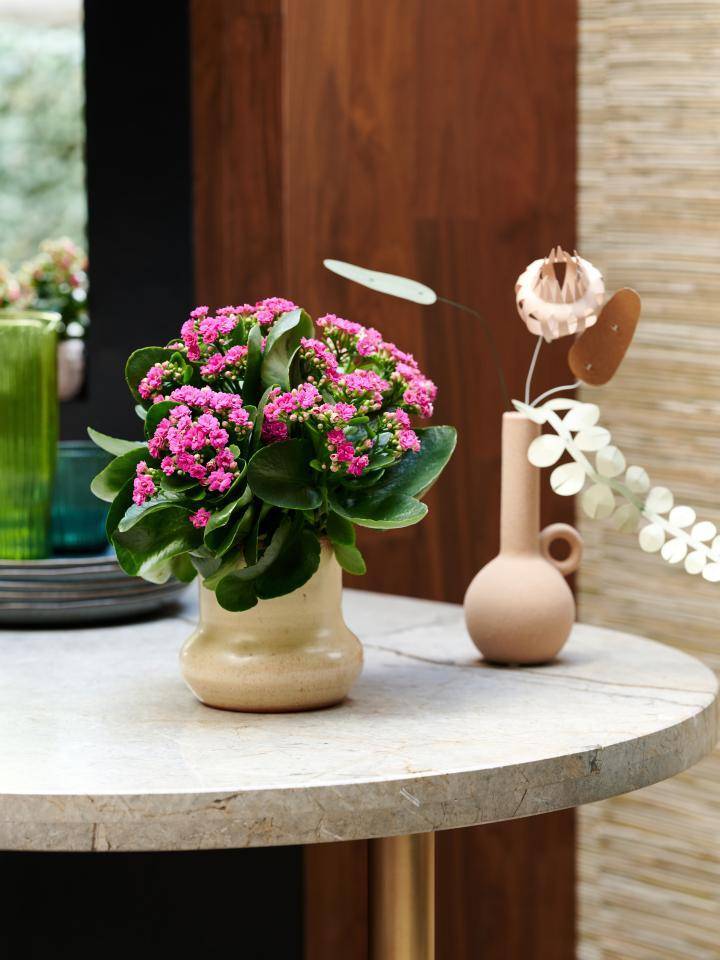
Kalanchoe
Easy to care for, with colourful little flowers that bloom for weeks. Kalanchoe is one of those flowering houseplants you simply can’t get enough of. This succulent comes in colours such as pink, red, orange, white and yellow.
Care: Kalanchoe is a succulent, which means it needs very little care and can even tolerate full sun. Only water when the potting soil feels dry. Discover all care tips for Kalanchoe here.
4
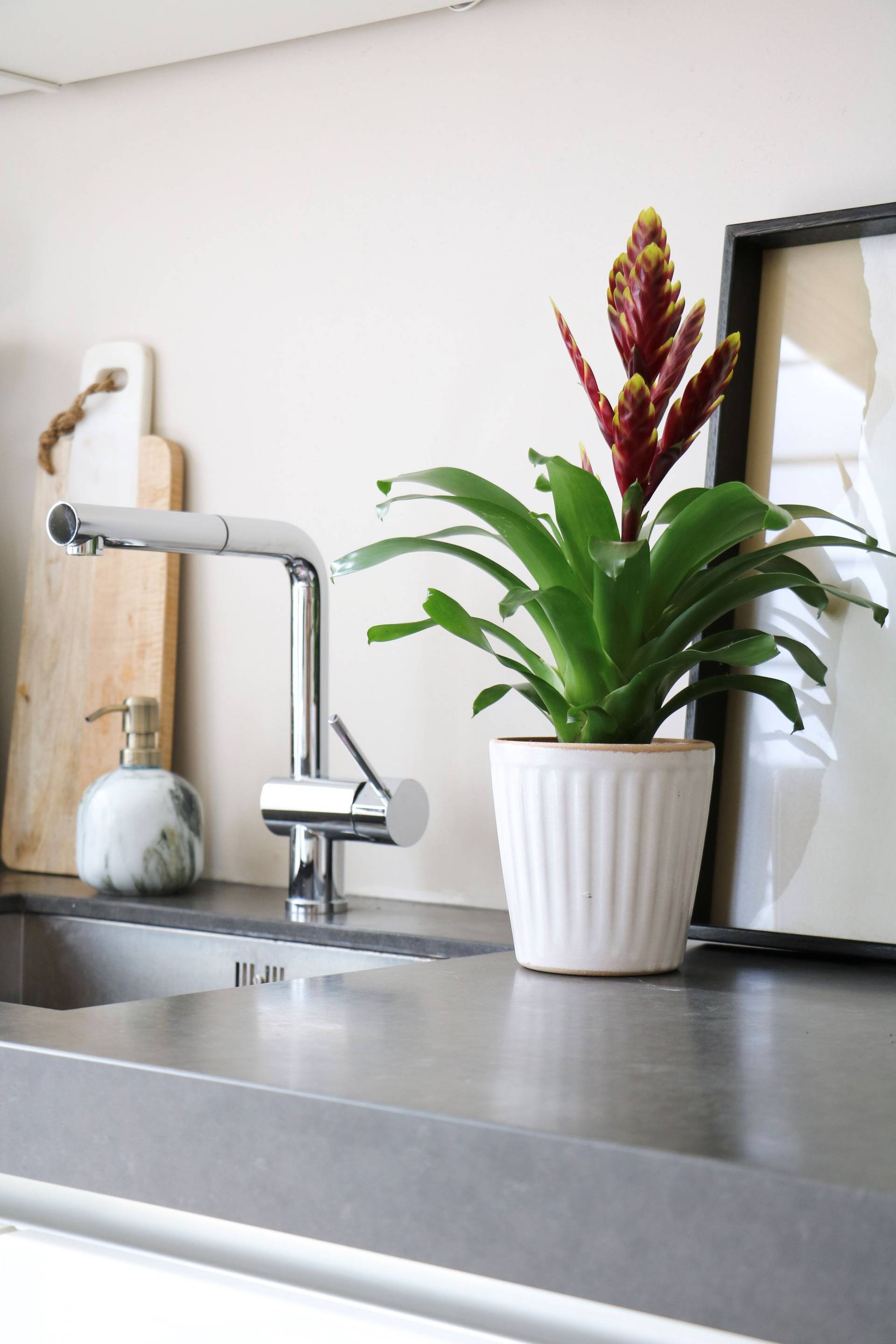
Bromelia
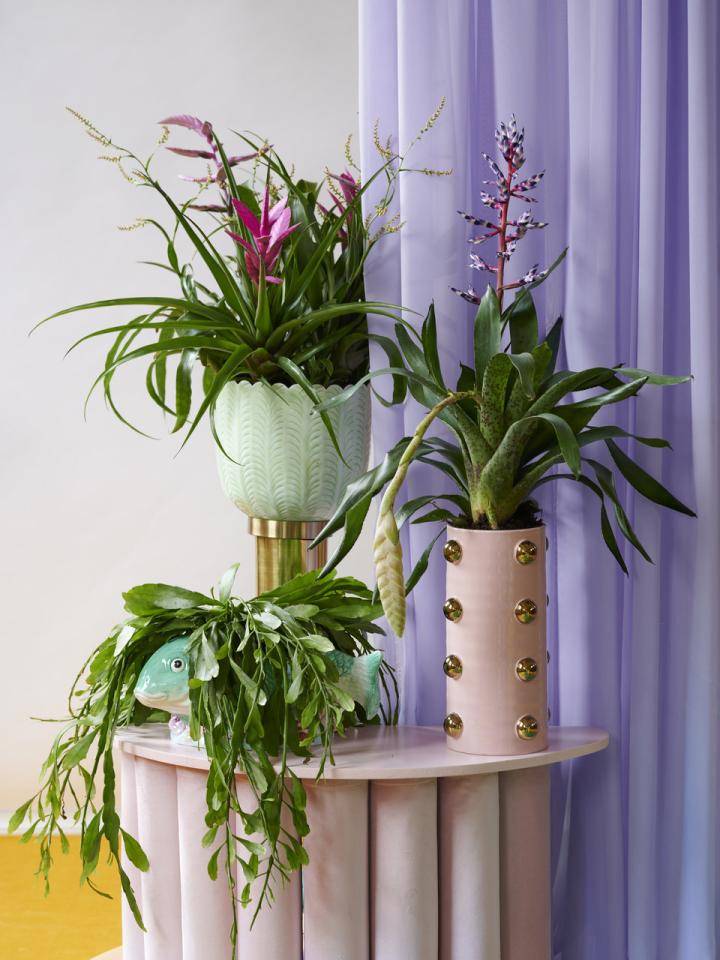
With its brightly coloured bracts (officially not flower petals), Bromelia instantly brings tropical vibes into your home. From the pineapple plant to trumpet-shaped Guzmania and feather-like Vriesea, Bromelia comes in many shapes and colours. All varieties bloom for a wonderfully long time!
Care: Place Bromelia in a bright spot, but avoid direct sunlight. Once a week (spring/summer) or every 10 days (autumn/winter), add a little water into the plant’s ‘funnel’ as well as into the potting soil. Discover all care tips for Bromelia here.
5
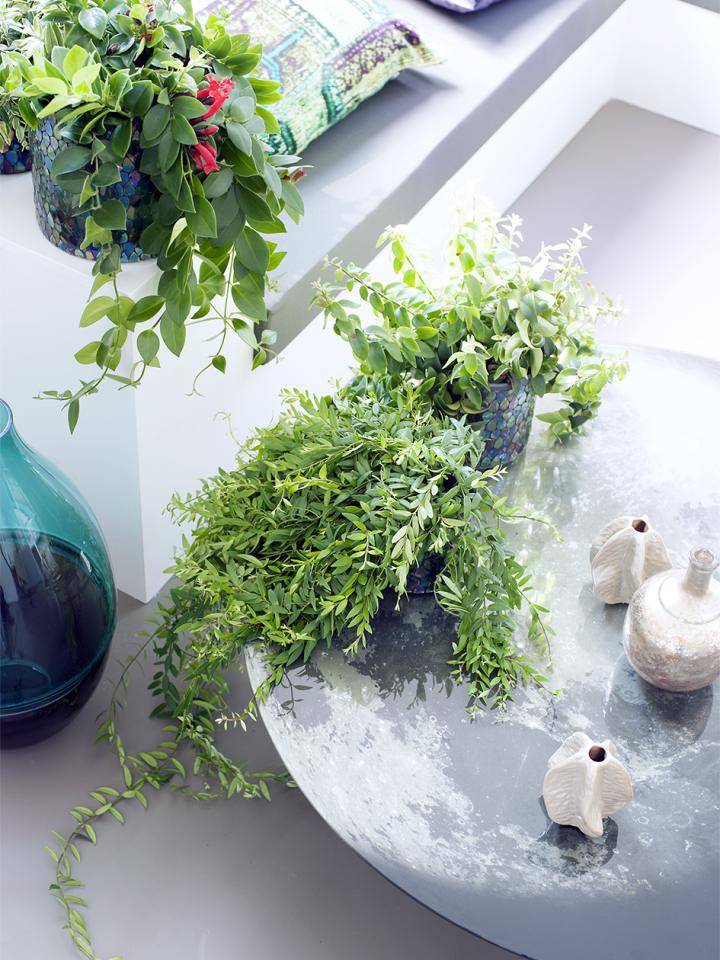
Lipstick Plant
The Lipstick Plant owes its name to its striking red flowers that ‘slide’ out of the buds like a lipstick. This flowering hanging plant is perfect for a high cabinet or a hanging pot.
Care: Place Lipstick Plant in a bright spot, but not in direct sunlight. Water twice a week (spring/summer) or once a week (autumn/winter). Discover all care tips for Lipstick Plant here.
6
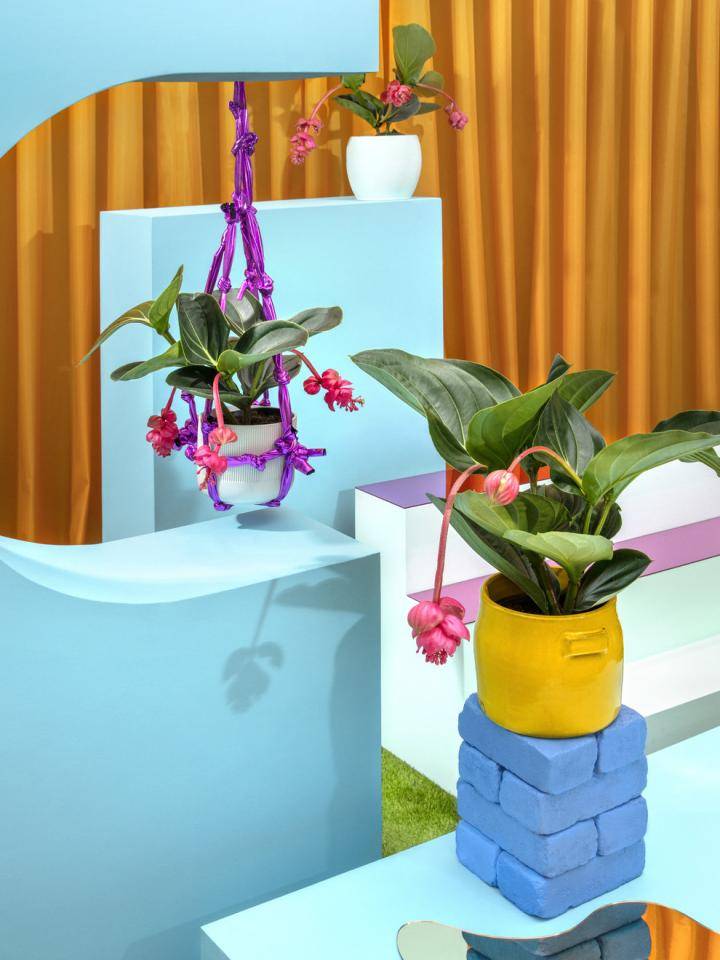
Medinilla
Grand, glamorous and anything but modest. That’s the flowering houseplant Medinilla. Its large, cascading clusters of pink flowers turn this bloomer into a living work of art.
Care: Place Medinilla in a bright spot, but not in direct sunlight. Water at most once a week. The root ball may dry out slightly between watering. Discover all care tips for Medinilla here.
7
Strelitzia reginae
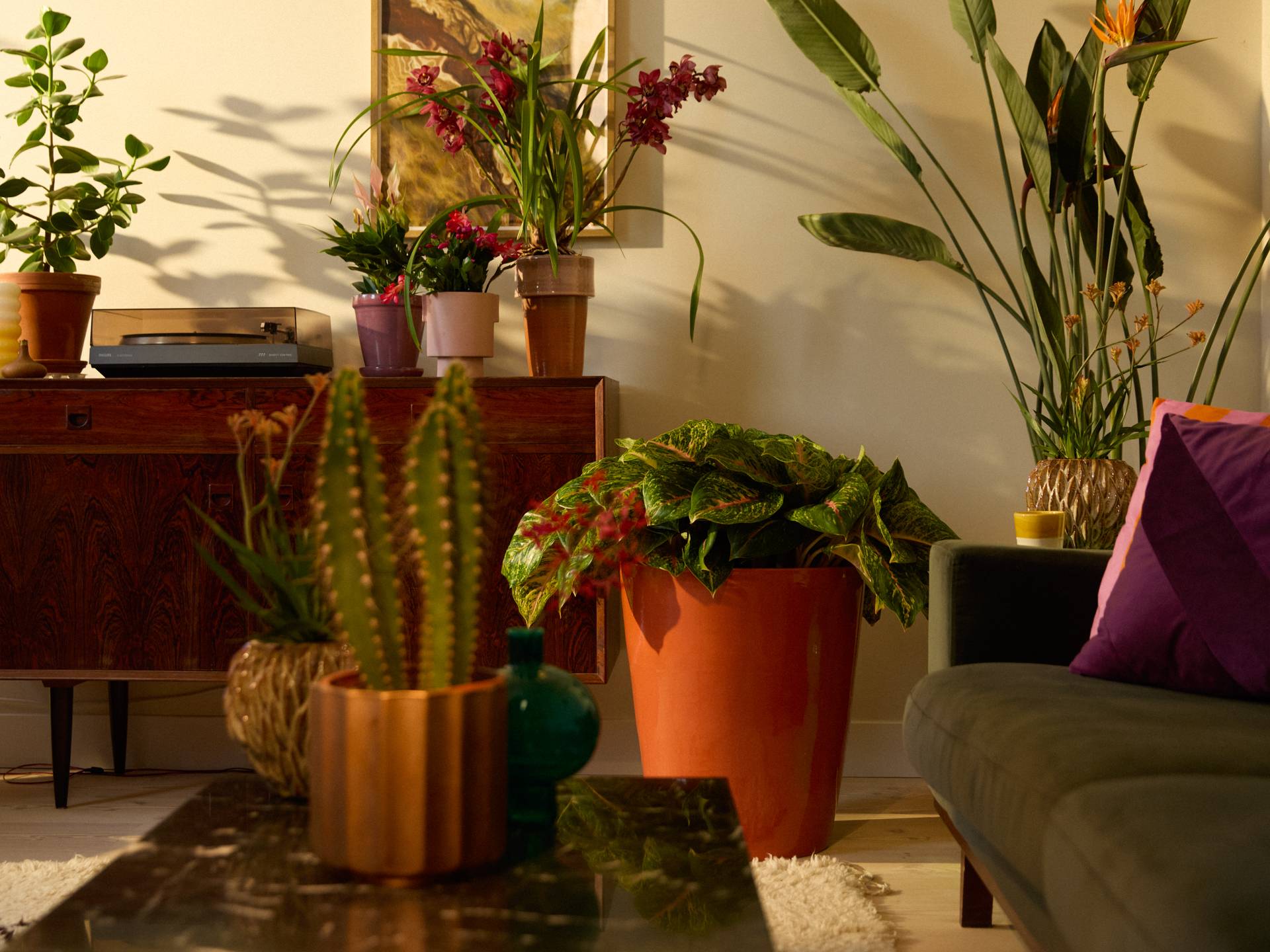
Strelitzia reginae, also known as the Bird of Paradise plant, blooms with spectacular orange and blue flowers that resemble an exotic bird. Good to know. The flowers only appear on plants that are at least 8 years old.
Care: Place Strelitzia reginae in a bright spot, but not in direct sunlight. Keep the potting soil slightly moist at all times. Water twice a week (spring/summer) or once a week (autumn/winter). Discover all care tips for Strelitzia here.
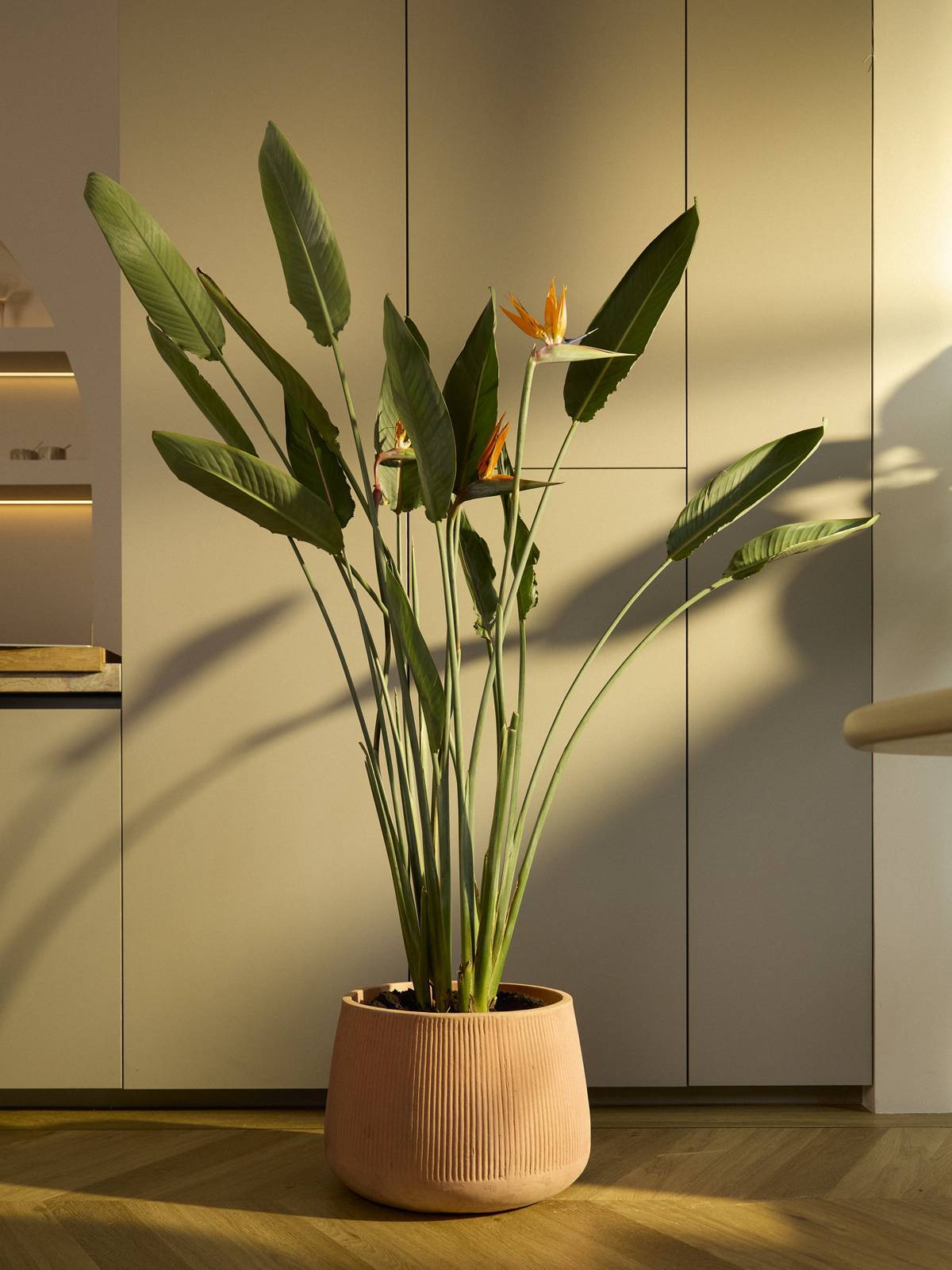
There are two types of Strelitzia that are popular in living rooms. Strelitzia nicolai has large, fresh green leaves but does not produce flowers. Strelitzia reginae has smaller, darker green leaves and can bloom once the plant is around 8 years old.
8
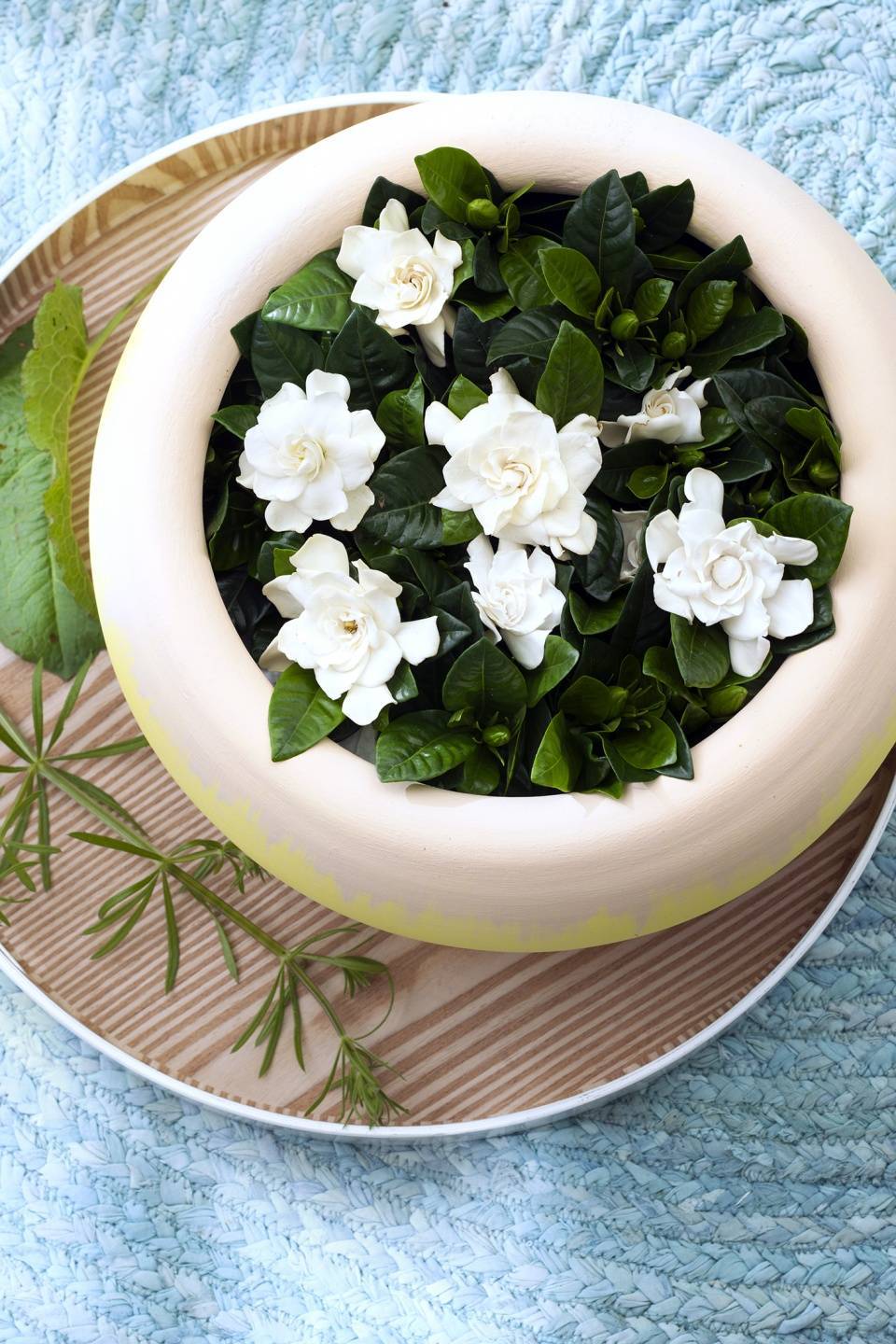
Cape Jasmine (Gardenia)
Cape Jasmine blooms with creamy white, rose-shaped flowers that subtly perfume your interior. The plant has an elegant, romantic and stylish look.
Care: Give Gardenia a bright position, but keep the plant out of strong sunlight. Gardenia needs plenty of water. Keep the root ball consistently moist, but avoid standing water. Discover all care tips for Cape Jasmine here.
9
Anthurium
Anthurium is known for its glossy, heart-shaped ‘flowers’ that bloom for a long time. Strictly speaking, these are not flowers. The actual flower is the ‘spike’, while the coloured parts are bracts. These bracts are often red, green, purple, white or pink.
Care: Anthurium prefers a bright spot, but not in strong sunlight. During the growing season (spring/summer), water weekly. Outside the growing season the plant needs less water. Discover all care tips for Anthurium here.
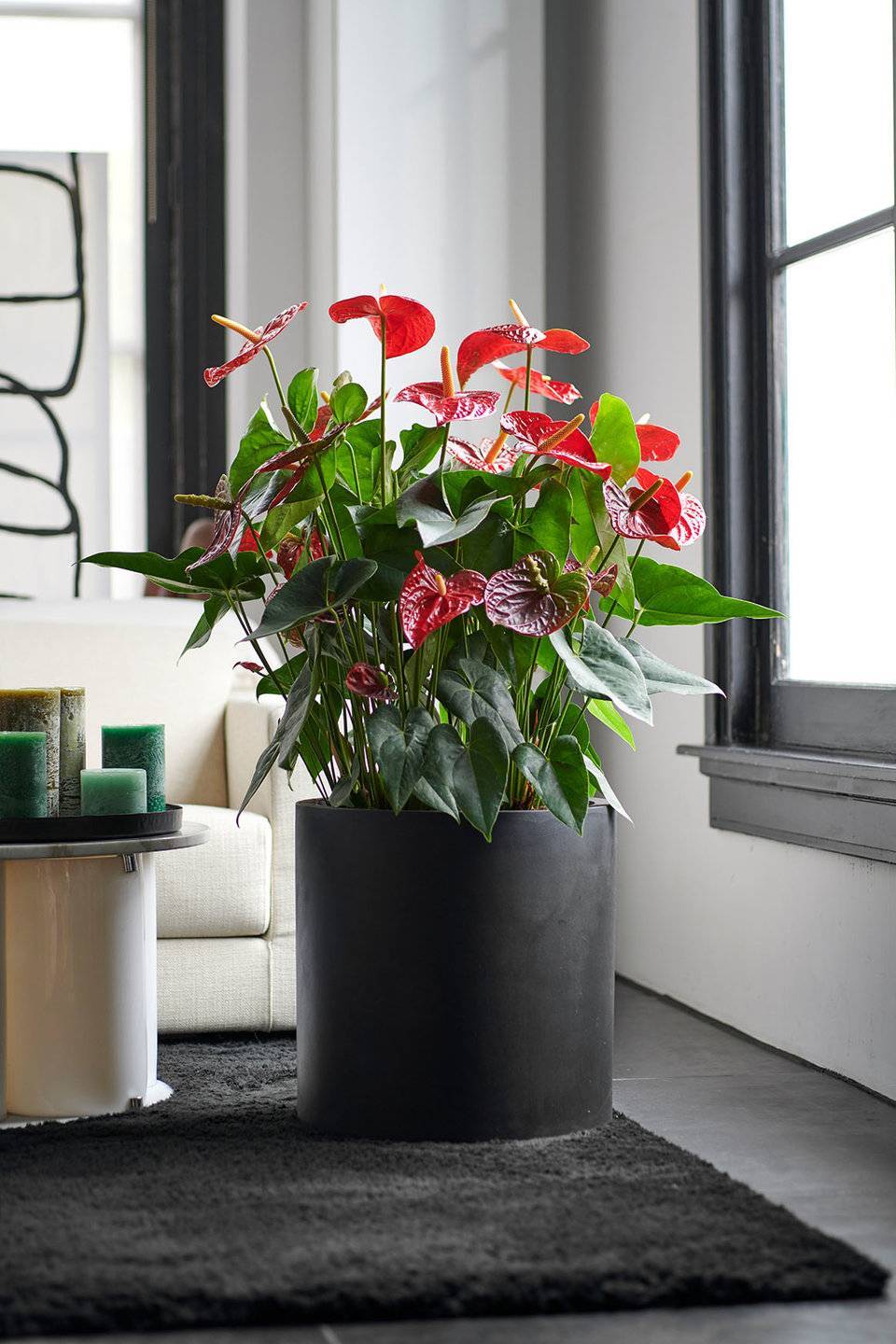
Did you know that with Anthurium, the big, brightly coloured leaf isn’t the flower? It’s actually the small ‘spike’ sticking out of it.
10
Peace Lily
Subtle, stylish and timeless. Peace Lily is loved for its serene look and elegant white ‘flowers’. Here too, what looks like a flower is actually a bract. But that doesn’t make this beauty any less stunning!
Care: Peace Lily doesn’t like the cold. The plant prefers a bright spot without direct sunlight. Water regularly. Keep the root ball moist, but not soaking wet. Discover all care tips for Peace Lily here.
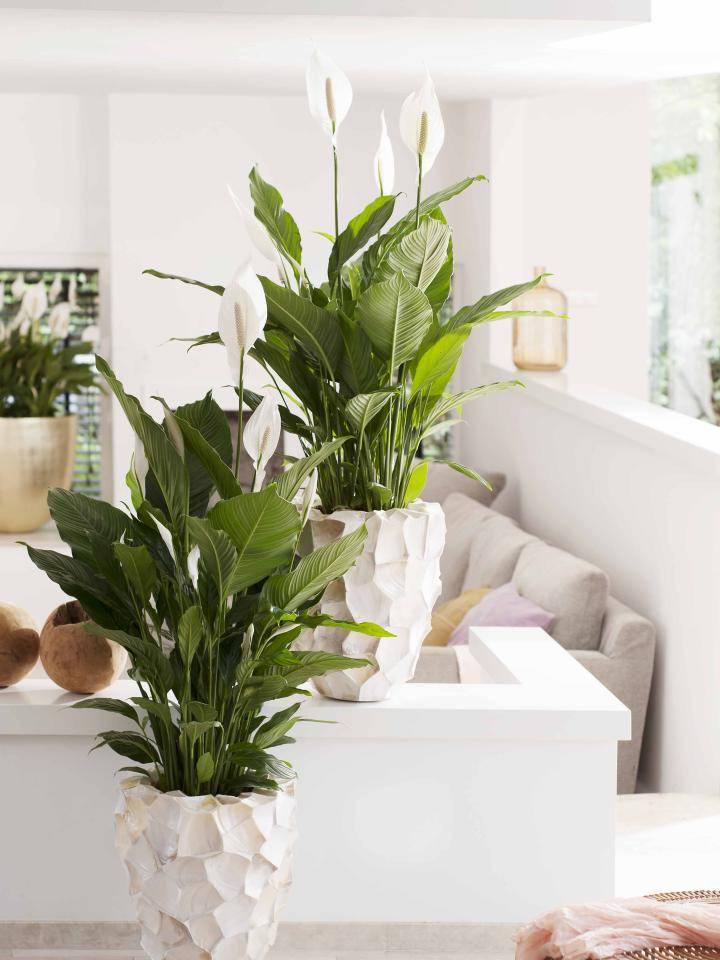
Styling tips for flowering houseplants
- Do you have beautiful photos or artwork on the wall with certain colours? Choose flowering houseplants that echo those colours.
- Need to fill a larger space? Place a large flowering houseplant, such as Medinilla, on a plant stand or side table.
- Want to add colour to your dining table? Choose a wide bowl and place several flowering houseplants in it. This works beautifully with plants such as African Violet and Orchid.
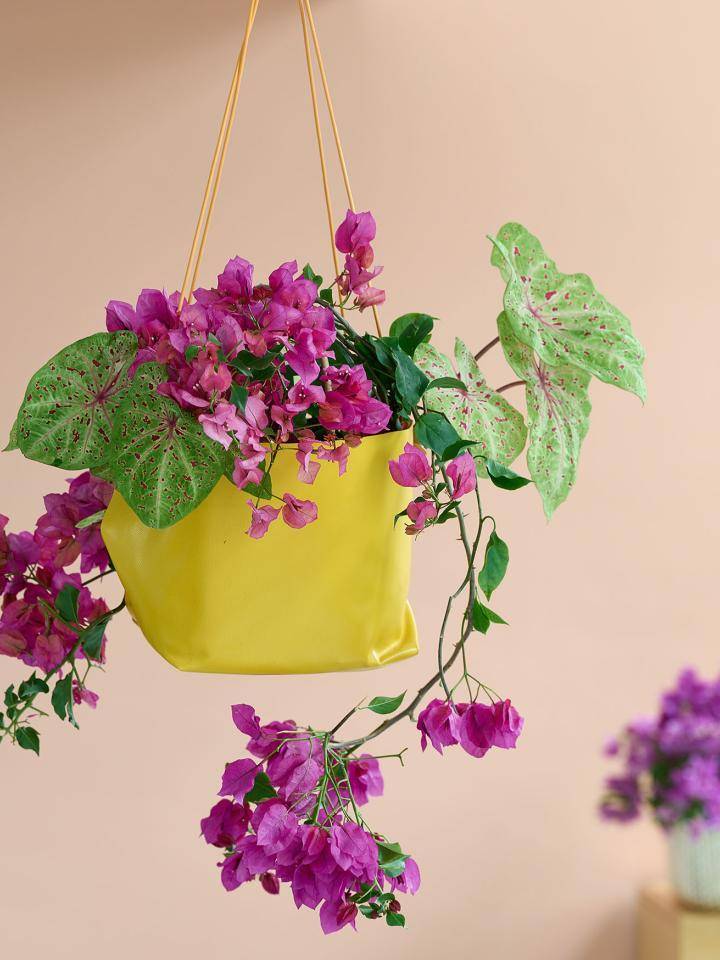
- Combine colourful houseplants with colourful, distinctive pots. This turns your plant corner into a real showpiece.
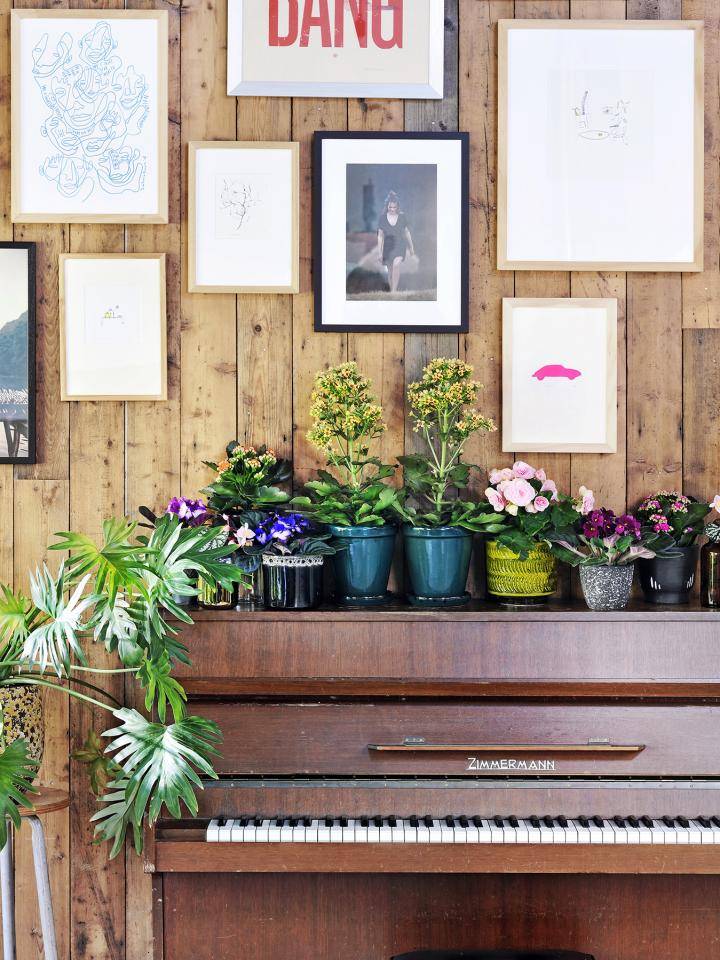
- Mix different colours together for a lively and blooming effect. Think of a row of plants on top of a cabinet (or piano), for example.
More Inspiration
Can’t get enough of colourful plants? Read more about the effect of colourful plants on your career, discover colourful winter bloomers for outdoors, or get inspired by this season’s colours and explore 4 new interior trends.
Sabina
Redacteur
Sabina combineert haar passie voor bloemen en planten met een talent voor schrijven. Ze vertelt verhalen over hoe groen je huis verrijkt - van weelderige kamerplanten tot expressieve boeketten. Haar tips zijn praktisch en sfeervol, met een creatieve twist. Ze gelooft dat groen niet alleen je huis, maar ook je humeur opfleurt - en daar schrijft ze met liefde over.