
Beautiful, healthy houseplants start with the basics. Light and water are important, but good potting soil and the right feed ultimately make the difference between a plant that just about survives and one that truly thrives in your living room. Potting soil provides a stable base where roots can develop and from which plants absorb water and nutrients. In this article, you’ll learn how, with a few simple tips, to keep your plants growing strong and their leaves looking fresh and healthy.
Give your plants a strong and healthy start
Beautiful, healthy houseplants start with the basics. Light and water are important, but good potting soil and the right feed ultimately make the difference between a plant that just about survives and one that truly thrives in your living room. Potting soil provides a stable base where roots can develop and from which plants absorb water and nutrients. In this article, you’ll learn how, with a few simple tips, to keep your plants growing strong and their leaves looking fresh and healthy.
Potting soil for houseplants
Potting soil is much more than just a bit of ‘dirt’ you throw into a plant pot. It’s a carefully composed mix of organic materials that retains moisture, allows air through, and contains nutrients that keep your plants thriving for a long time.
How do you choose the right potting soil?
For most houseplants, a universal houseplant potting mix works perfectly well. This type of soil contains a balanced mix of nutrients and has an airy structure that allows roots to develop properly.
Sometimes, however, a plant has different needs. An Orchid, for example, doesn’t naturally grow in soil but on tree bark. That’s why it’s best to use a special orchid potting mix for this plant, made up of a loose blend of coarse materials such as bark. This ensures the roots get enough oxygen and excess water can drain away easily.
When choosing potting soil, also pay attention to the structure. Good potting soil feels light and airy, retains moisture but doesn’t stay soaking wet. This helps prevent roots from suffocating or rotting.
How often should you replace potting soil?
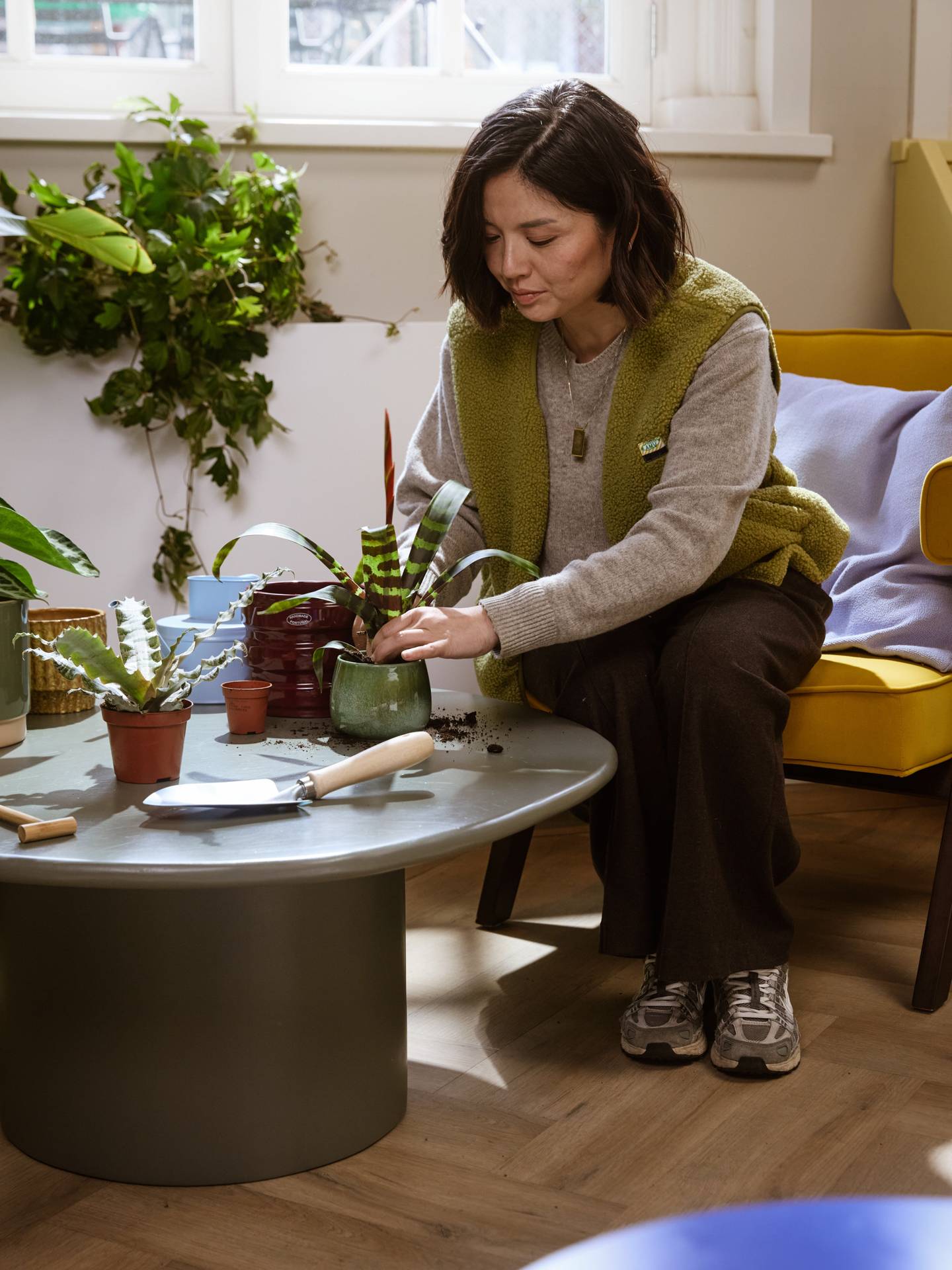
Potting soil becomes depleted over time. Nutrients are absorbed by the plant and the structure can become more compact, meaning water drains less effectively.
A useful guideline is to repot houseplants roughly every 2 to 3 years or to replace the top layer of potting soil. This can be done once a year. Spring, when plants start actively growing again, is an especially good time.
For larger plants that are difficult to repot, you can simply replace the top few centimetres of potting soil. This way, the plant still gets a fresh supply of nutrients.
Not sure if it’s time? Head to the garden centre for a new bag of potting soil if you notice the following:
- Your potting soil is compacted or has sunk
- Your potting soil absorbs water less easily
- Your potting soil has a layer of white mould
- Your potting soil smells musty
Problems with potting soil: flies and other pests
Sometimes you’ll spot tiny flies around your houseplants. These are often fungus gnats, which like to lay their eggs in moist potting soil. Their larvae live in the soil and feed on organic matter. Great for them, less so for you and your plant.
You can usually solve this problem quite easily by letting the potting soil dry out a bit more between waterings, as the larvae thrive in wet soil. It also helps to replace the top layer of potting soil or add a thin layer of dry sand or clay granules on top of the soil.
Another tip to prevent pests is to remove fallen leaves or plant debris from the pot. This keeps the potting soil cleaner and less attractive to insects.
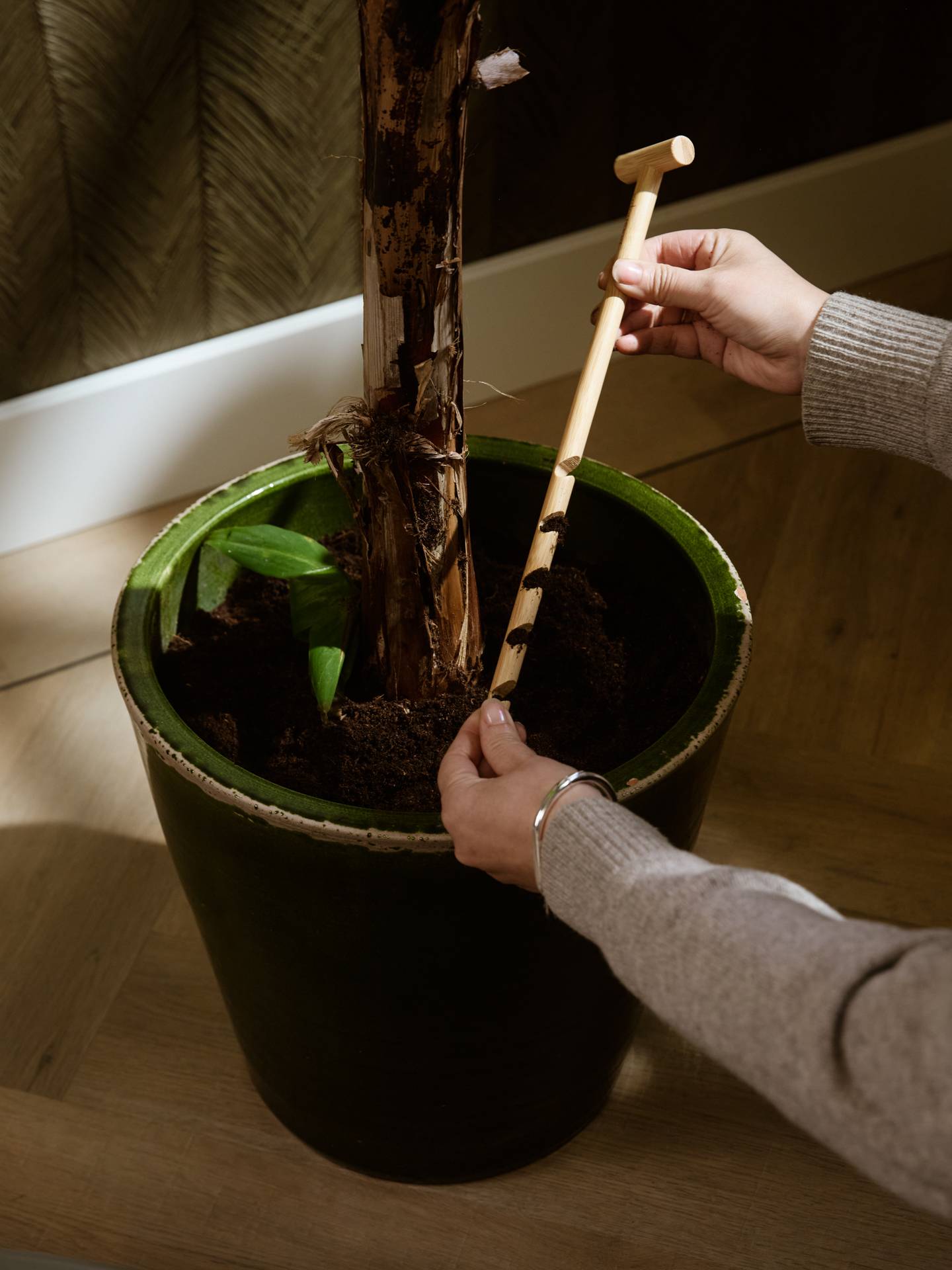
Feed for houseplants
In addition to potting soil, most plants also need extra feed during certain times of the year. Especially when they’ve been in the same pot for a while, the available nutrients gradually run out.
When should you feed houseplants?
Most houseplants grow mainly during the growing season: spring and summer. During this time, they use more energy to produce new leaves and roots. That makes it the perfect time to feed your plants.
In autumn and winter, plants usually grow more slowly and don’t need extra feed. Think of it as their wintersleep and leave them be. Too much feed during this period can even be harmful.
Which feed for houseplants?
There are different types of plant feed available, but it’s best to choose natural or organic plant feed. This type of feed is based on organic ingredients and releases nutrients gradually, allowing plants to absorb them more effectively.
Natural plant feed also helps support the soil life in the potting mix. This results in healthier roots and stronger plants.
Always follow the recommended dosage and give slightly less rather than too much. Overfeeding can lead to brown leaf tips, a white residue on the potting soil, or disrupted growth.
Need more inspiration?
Have you caught the bug and are you on a mission to become the ultimate plant carer? Take a look at our general plant care tips as well. Also discover articles on which houseplants are suitable if you have pets and how to get rid of aphids.