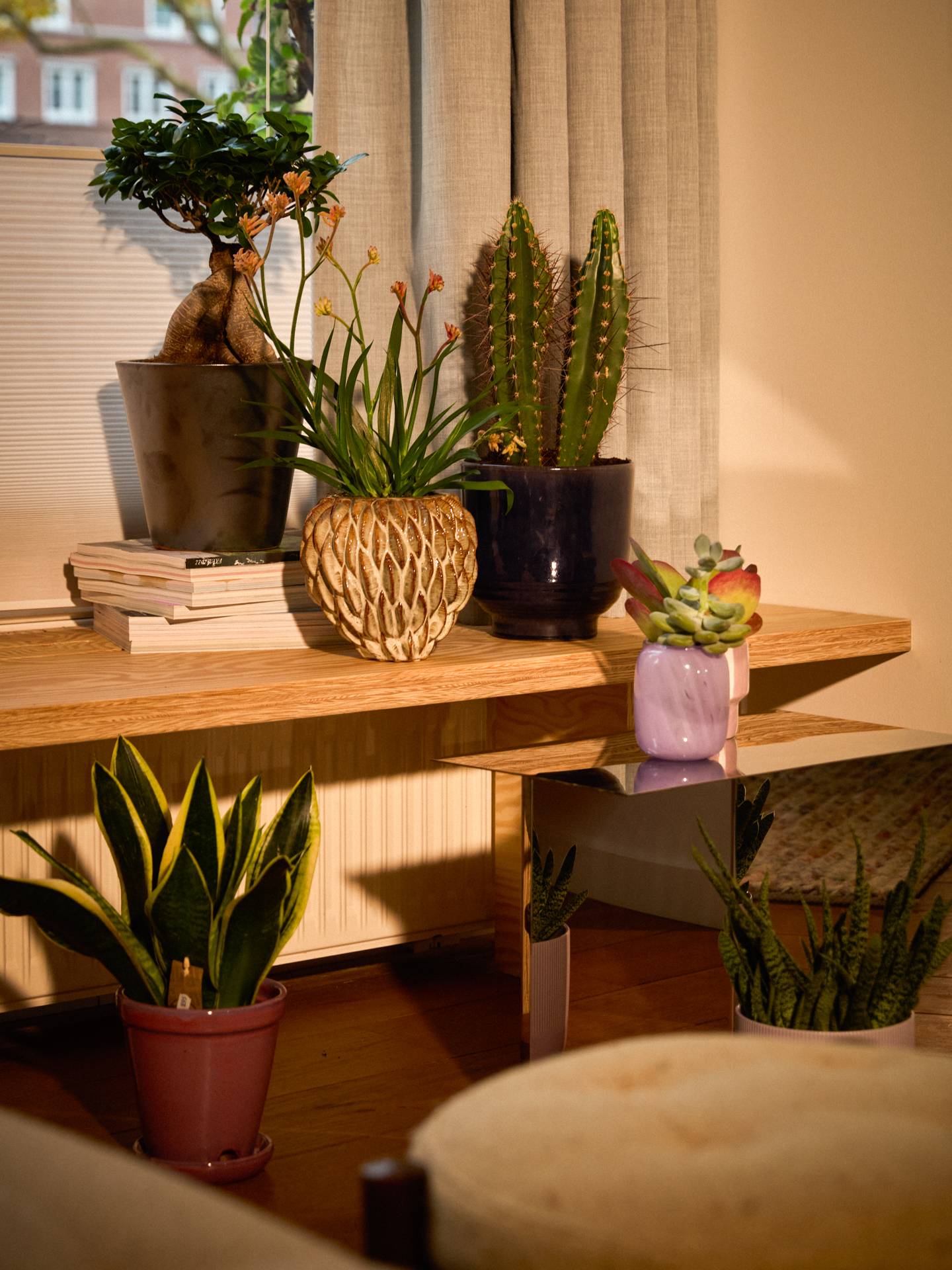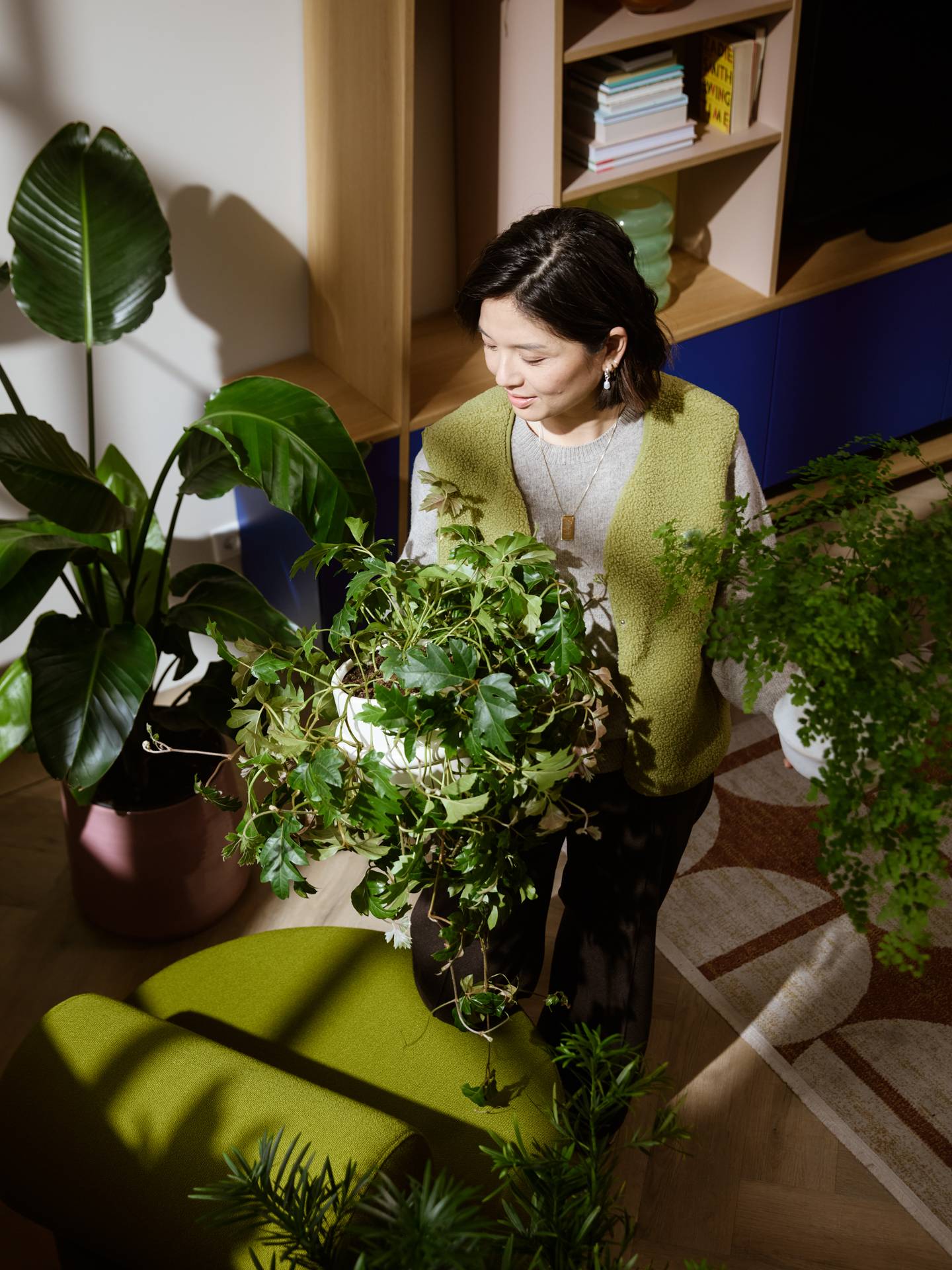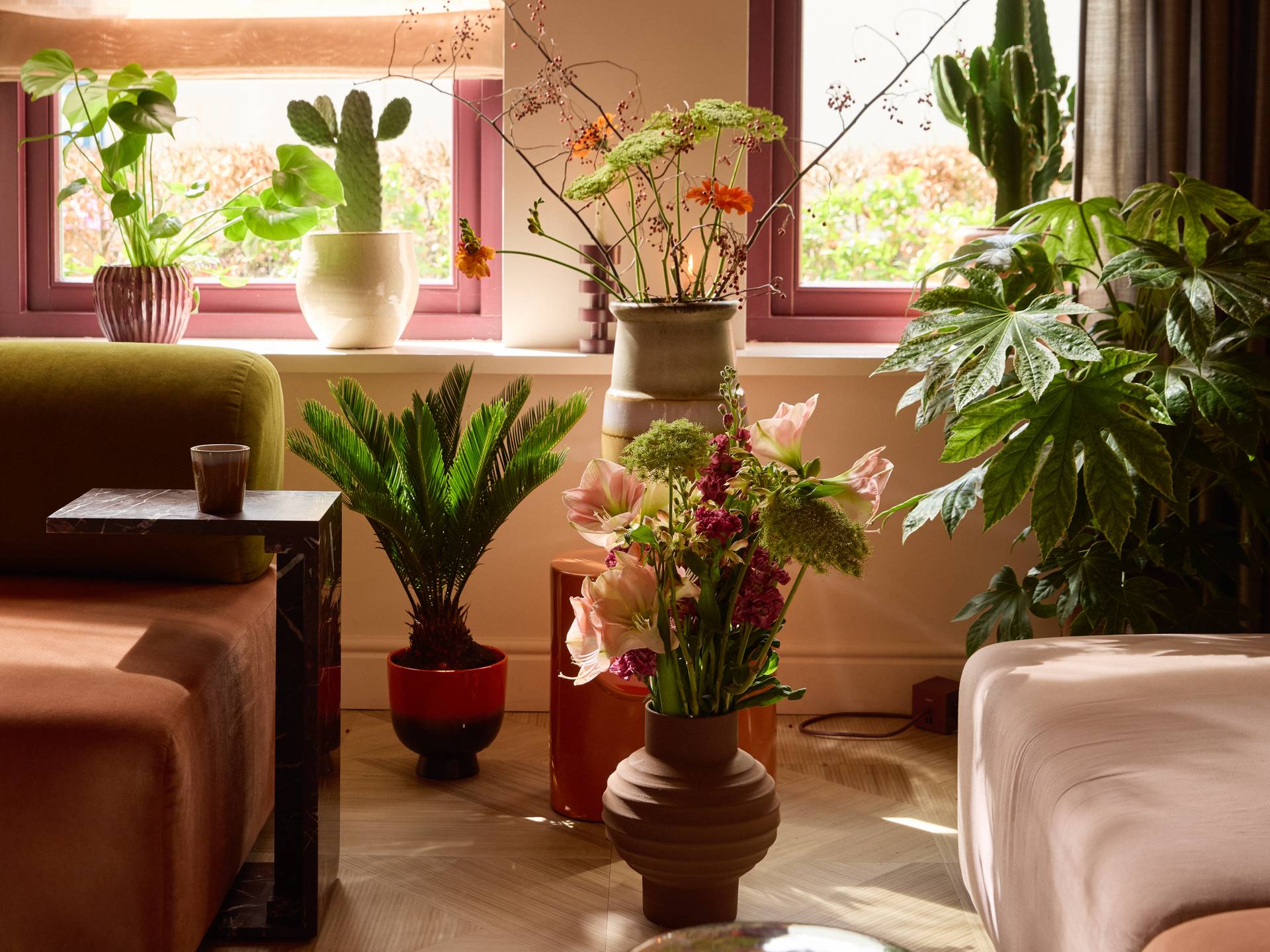

The houseplant with a stem is on a real rise. And it’s not hard to see why. A houseplant on a stem combines the best of both worlds: the strength and presence of a tree, with the ease of a houseplant. That makes these plants true atmosphere creators as well as tough characters that can take a bit of a knock. Whether your interior is minimalist or warm and botanical, a house tree is an instant eye-catcher. These are 7 popular stemmed plants that truly stand out in appearance.
1
Ficus Lyrata on stem (Fiddle Leaf Fig)
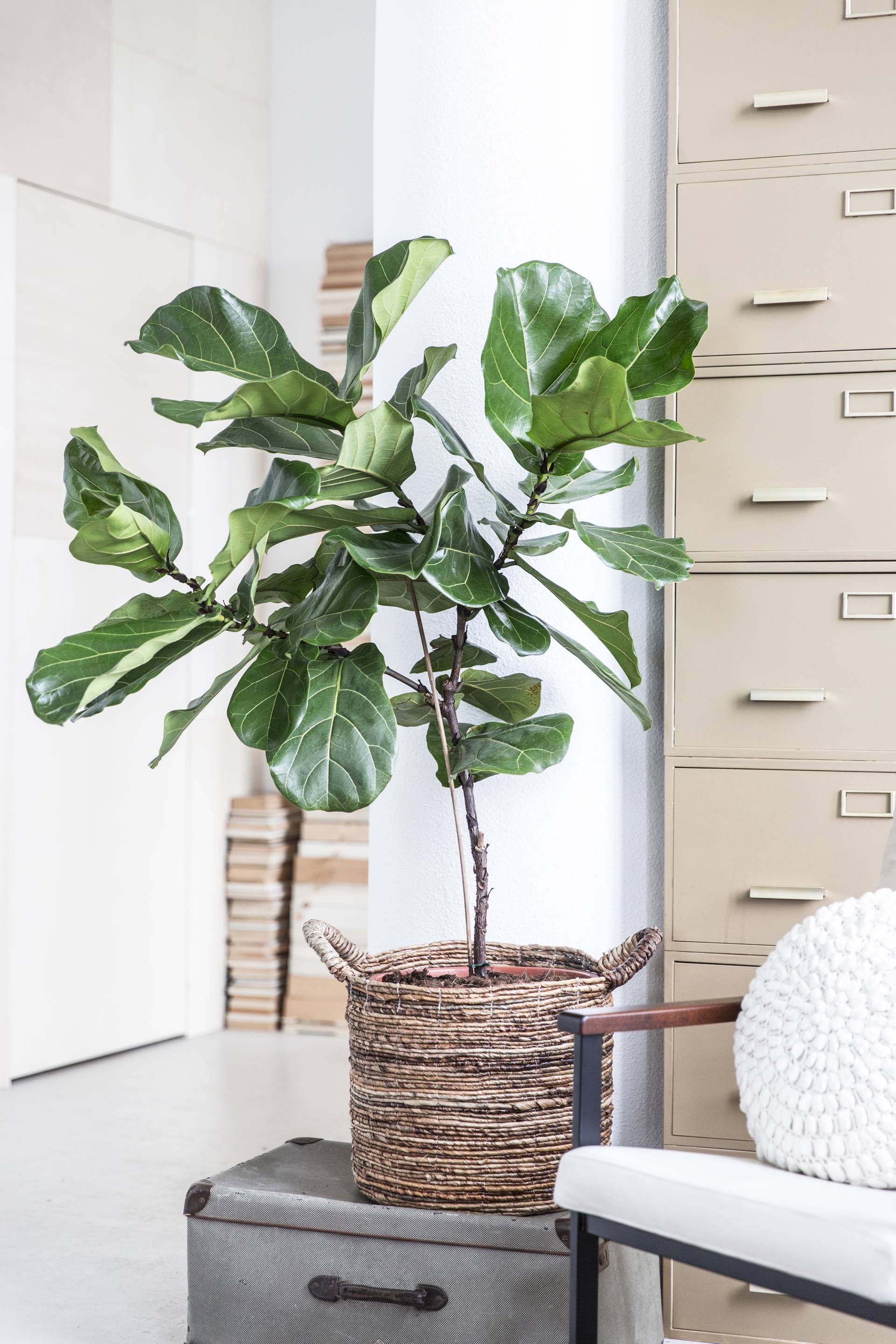
Ficus Lyrata on a stem, also known as the Fiddle Leaf Fig, has large, glossy leaves shaped like a violin. The combination of a straight trunk and a full crown gives this stemmed houseplant an architectural look that fits perfectly in modern interiors.
This plant prefers a bright spot without harsh afternoon sun and enjoys regular small amounts of water, keeping the soil slightly moist without letting the roots sit in water. Because the Ficus is sensitive to change, it prefers a fixed spot in the home. Want to really spoil it? The Ficus loves high humidity, so feel free to mist it regularly.
Want to read more? Take a look at the plant guide for the Ficus Lyrata.
2
Polyscias (Aralia)
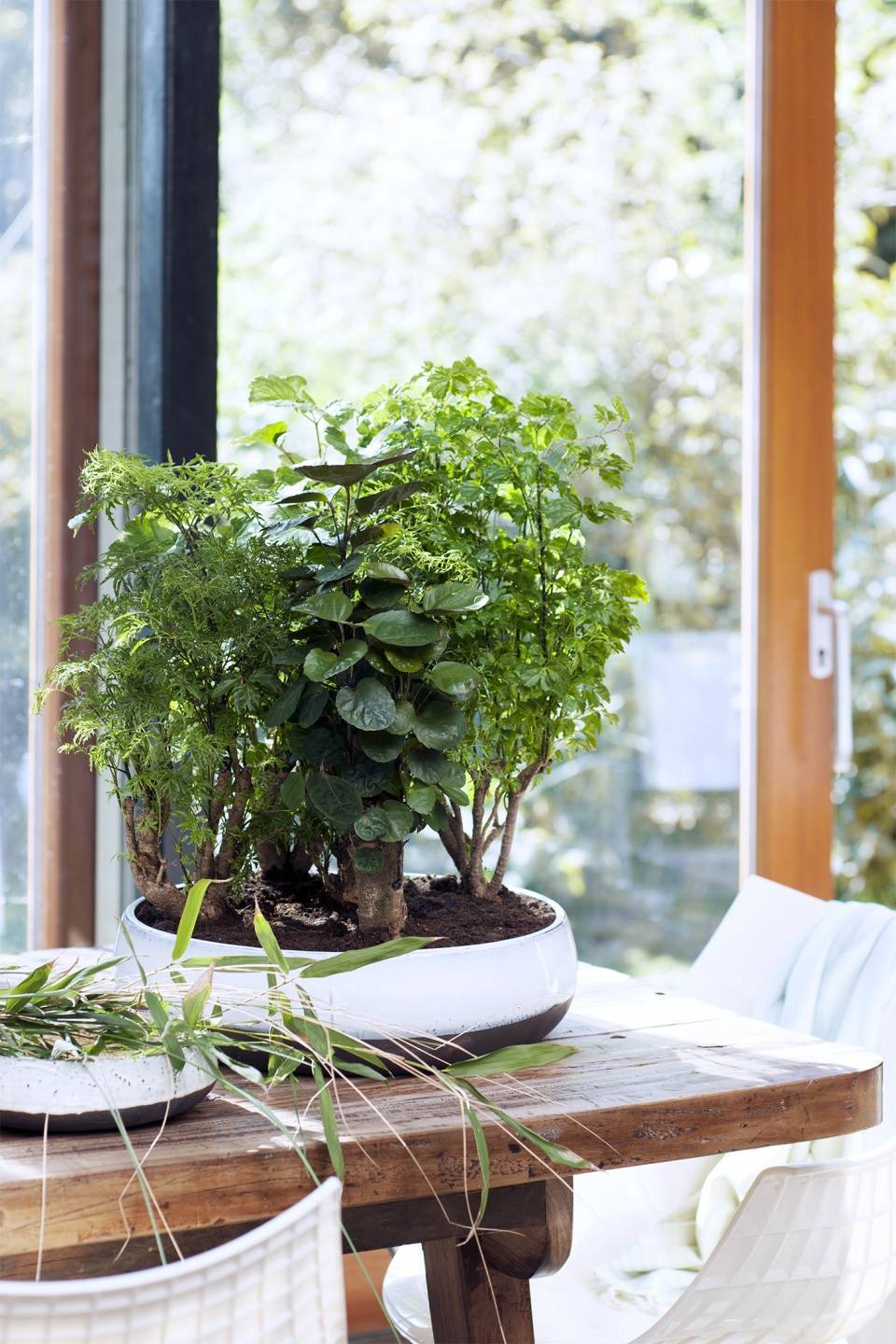
Polyscias has an elegant, branching growth habit with refined leaves that can be round or slightly heart-shaped. Thanks to its slender trunk and airy crown, this stemmed plant looks subtle and stylish.
It feels most at home in a shaded spot with indirect sunlight, where the root ball stays lightly moist without becoming waterlogged. It’s better to water little and often than to give it the occasional heavy drench. It doesn’t cope well with large temperature changes or draughts, so a stable spot in a cosy corner is ideal. And: pruning is absolutely fine!
Discover more in the plant guide for the Polyscias.
3
Pachira (Money Tree)
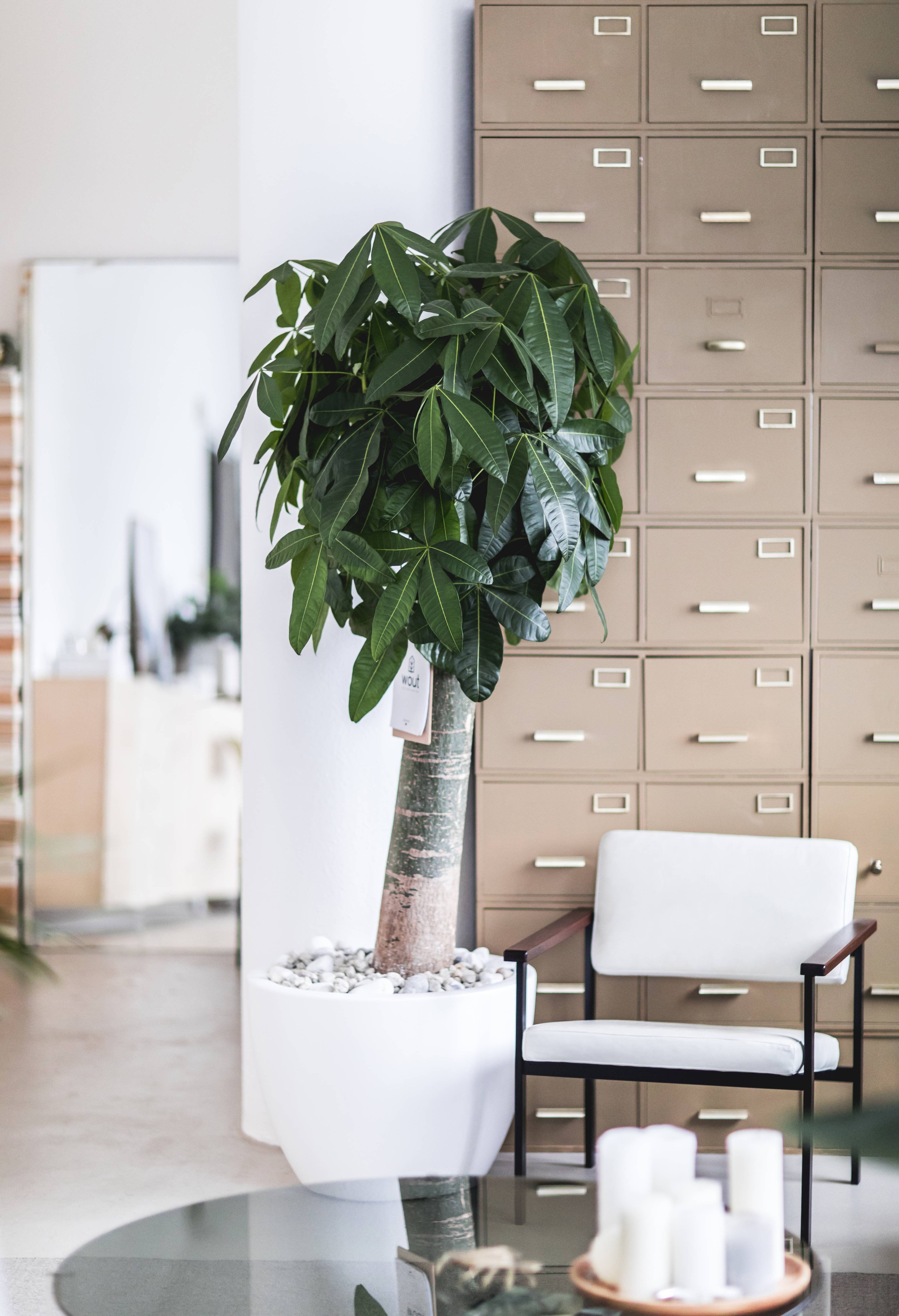
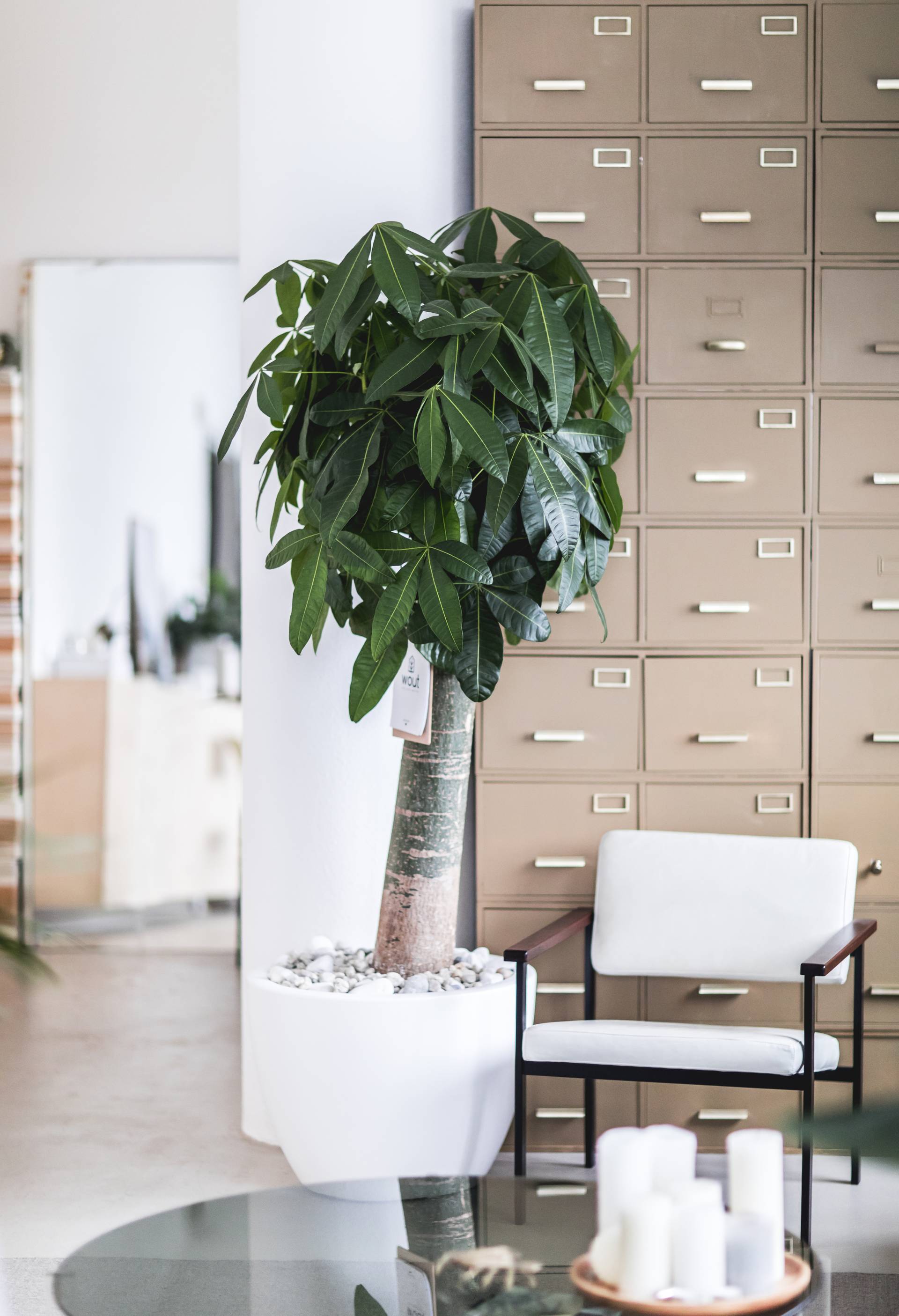
Pachira is perhaps the best-known plant with a braided trunk. The intertwined stems give this house tree a playful, almost sculptural character, while the hand-shaped leaves create a fresh, green crown.
This stemmed plant enjoys a bright spot but can also cope well with partial shade. Full, harsh sun won’t make your Money Tree happy at all, which you’ll quickly notice from any yellowing leaves. Allow the soil to dry slightly between waterings, and during the growing season (spring and summer) it appreciates a bit of extra feeding.
Read more in the plant guide for the Pachira.
4
Beaucarnea (Ponytail Palm)
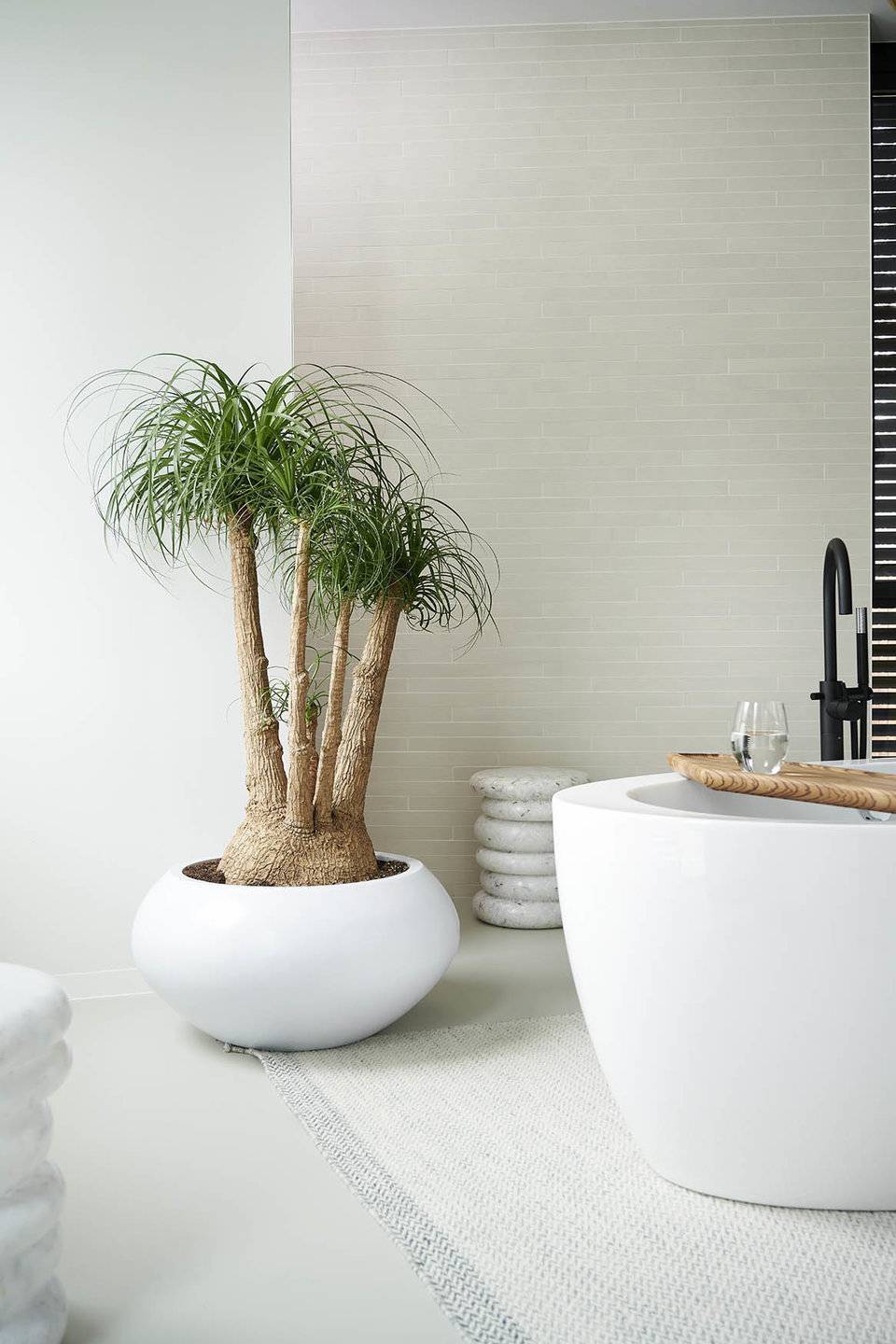
Beaucarnea, also known as the Ponytail Palm, immediately stands out thanks to its thick, bulbous trunk where it stores water. On top grows a playful tuft of narrow, arching leaves, creating a quirky silhouette.
Because this stemmed houseplant stores moisture in its trunk, it needs little water and prefers a bright spot, but not in full sun. Especially in winter, it’s important to water sparingly. Important to know: cats love to chew on the leaves of Beaucarnea. The plant isn’t toxic, but the leaves won’t recover from such a snack attack by your furry housemate.
Want to know more? Visit the plant guide for the Beaucarnea.
5
Dracaena (Dragon Tree)
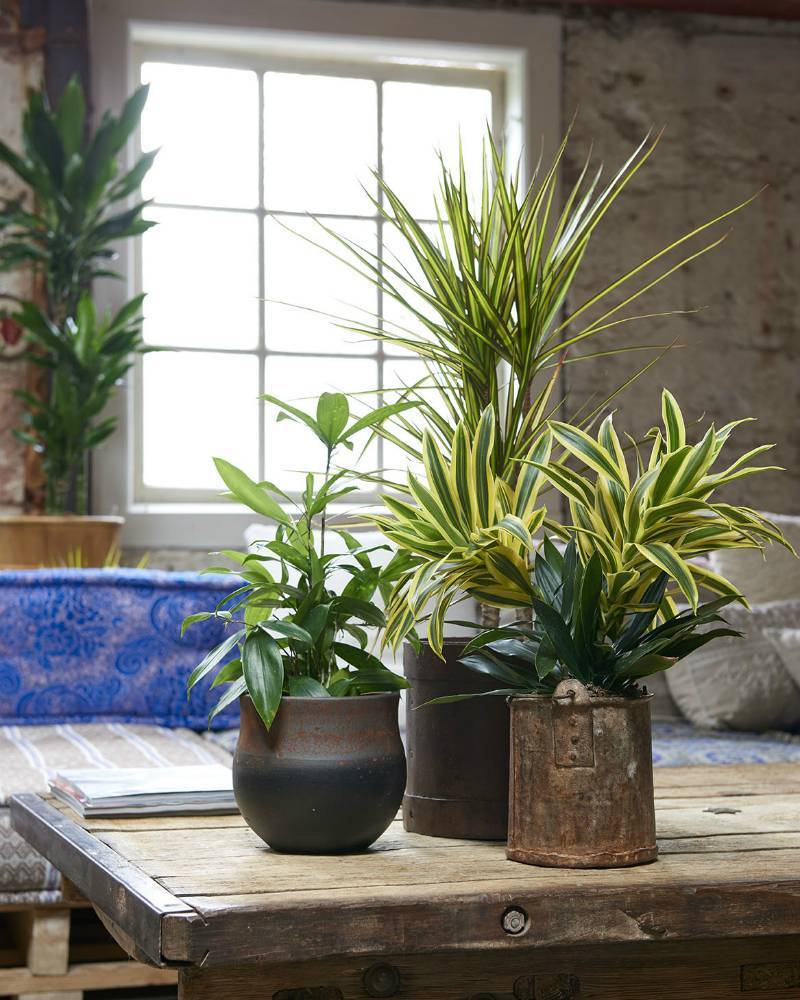
The Dracaena has a sturdy trunk with a compact tuft of narrow leaves at the top, which depending on the variety can be solid green or variegated. Often, a plant consists of multiple trunks, usually two or three, growing together in one pot to create a full, playful look.
It does well in a bright to partially shaded spot and requires moderate watering, allowing the top layer of soil to dry out first. Thanks to its resilient nature, this is an ideal choice if you’re looking for a low-maintenance house tree. Simply put: do you sometimes forget to water your plants? Your Dracaena won’t hold it against you.
Check out the plant guide for the Dracaena.
6
Schefflera (Vingerplant)
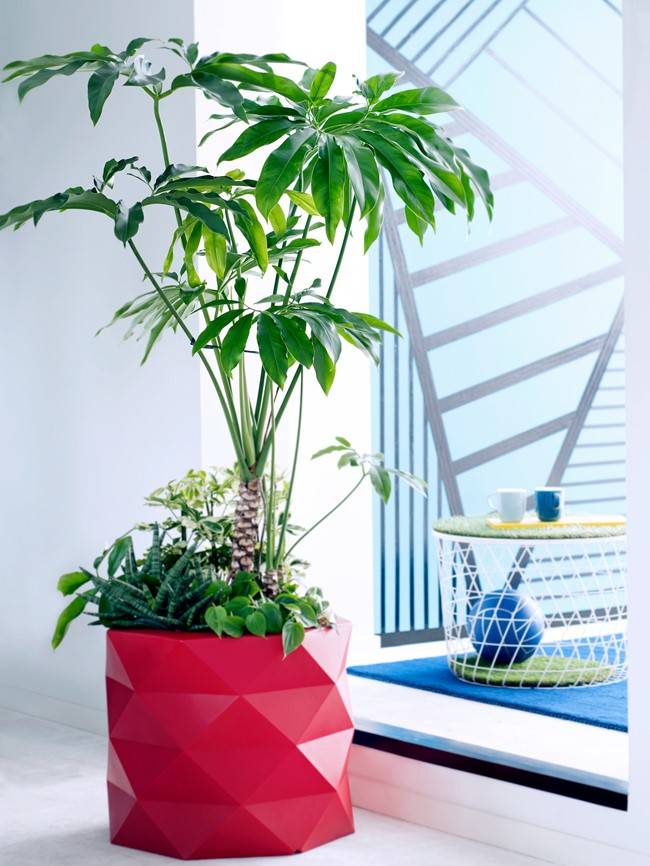
The Schefflera, also known as the Umbrella Plant, has hand-shaped leaves that grow like little umbrellas on its branches. On a stem, it forms a full, rounded crown that creates a lively and fresh effect.
A bright spot without direct, harsh sunlight is ideal for this green housemate. The root ball may stay slightly moist, but excess water should drain away properly to prevent root issues. Occasional misting helps keep the leaves looking their best. Does your Umbrella Plant have highly variegated leaves? Lucky you! Just keep in mind that it will need slightly more light to maintain those beautiful patterns.
Read more in the plant guide for the Schefflera.
7
Yucca (Spineless Yucca)
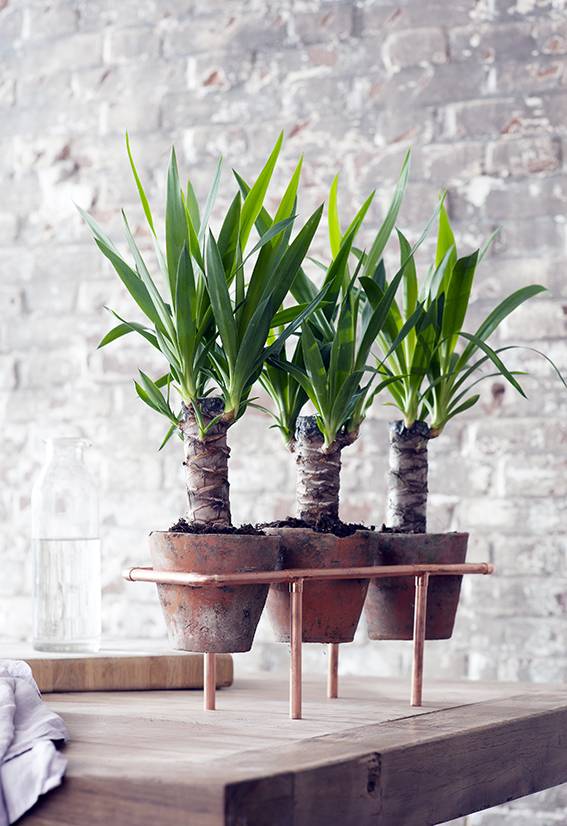
The Yucca, also known as the Spineless Yucca, has a robust trunk with strong, sword-shaped leaves that grow upright. This stemmed plant instantly brings a bold, sunny feel into your home.
It prefers a bright to sunny spot and tolerates drought well, meaning it’s better to underwater than overwater. This makes the Yucca a strong and easy-care stemmed houseplant.
Discover all care tips in the plant guide for the Yucca.
Styling tips for a stemmed houseplant
- A stemmed houseplant looks its best when you really use it as a spatial element. By placing a plant with a trunk slightly away from a corner instead of right up against the wall, it gets more breathing space and feels like a full part of your interior. And it’s usually better for its leaves too, that extra bit of room.
- In open spaces, a tall stemmed plant also works well as a subtle room divider. Think of visually separating a sitting area from a dining space, without blocking the light. The trunk keeps the view open.
- For added depth, combine a stemmed houseplant with lower plants in different leaf shapes and colours. This creates a layered green effect, where the taller plant forms the base and smaller plants complete the look.
- By playing with pots in natural materials, earthy tones, or even a contrasting colour, you enhance both the character of the plant and your interior. Tip: are the leaves of your house tree getting a bit ‘in the way’, meaning you brush past them too often? Try placing it on a stylish stool, up it goes.
More inspiration?
Looking to add even more height and a tropical feel to your home? Then have a read of our article on 5 popular indoor palms for even more green inspiration. Or read all about combining and styling different houseplants if one plant just isn’t enough for you. That way, you’ll discover which stemmed plant or house tree perfectly suits your interior style and turn your home into a true green oasis.