
Written by
Carmen
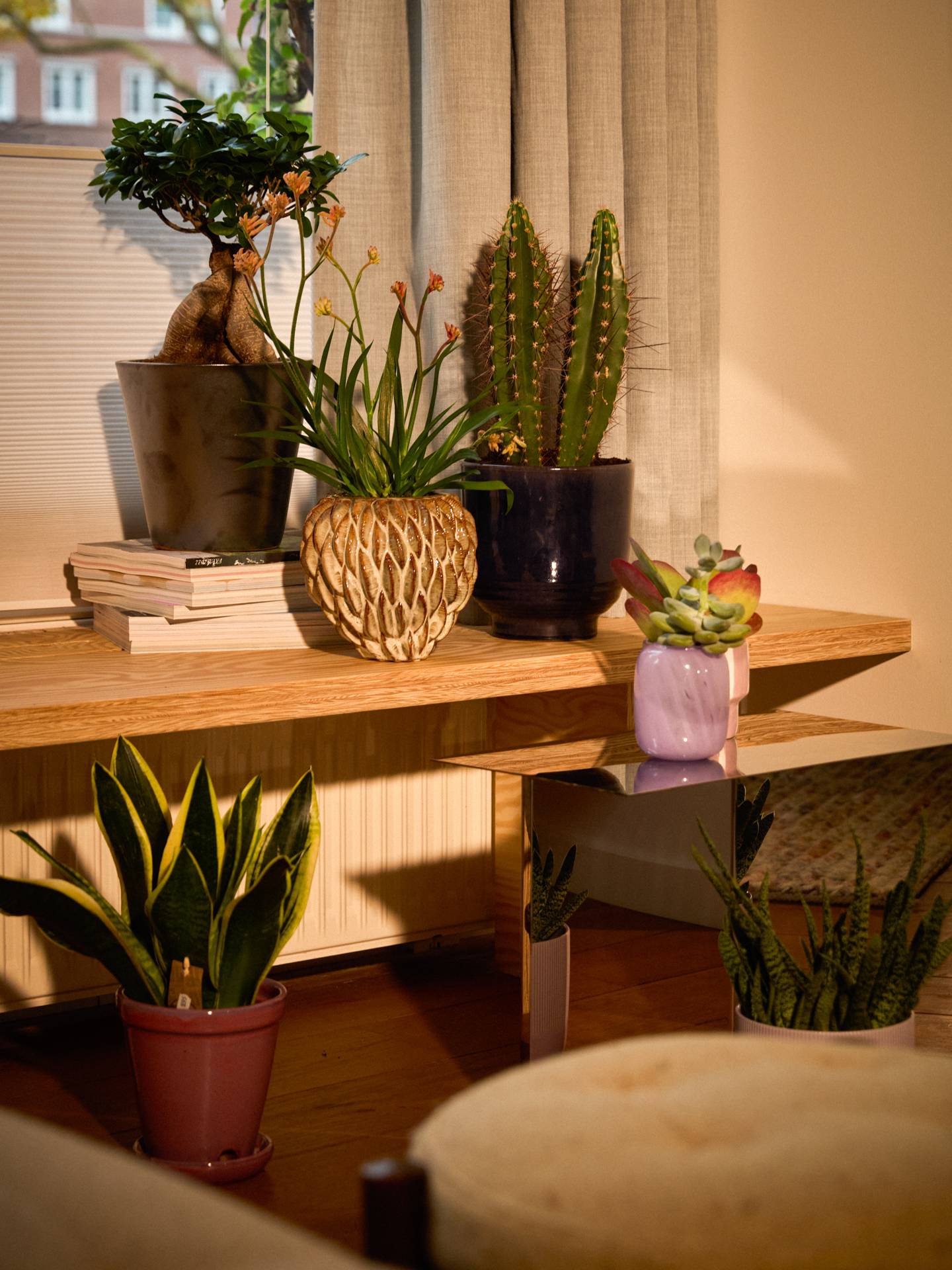
Whether your home is sleek and modern, country style, Scandinavian or a cheerful urban jungle, there’s a succulent to suit it. These lovely little plants are easy to look after, too. Succulents store water in their thick leaves and stems, so they’ll be just fine if you forget to water them now and then. They come in all sorts of shapes, from neat rosettes and miniature trees to trailing strands, and some even flower. We’ve picked seven beautiful succulents for you. Which is your favourite?
1
Echeveria
Echeveria grows in an elegant rosette that looks like a little rose carved from stone. It’s easy to see why it’s also called the Mexican Rose. Its leaves come in blue-grey, mint green, pink and purple, often with a powdery coating that gives them a soft, matt finish. Pop it in a concrete or white pot on a sunny windowsill and it’ll look right at home.
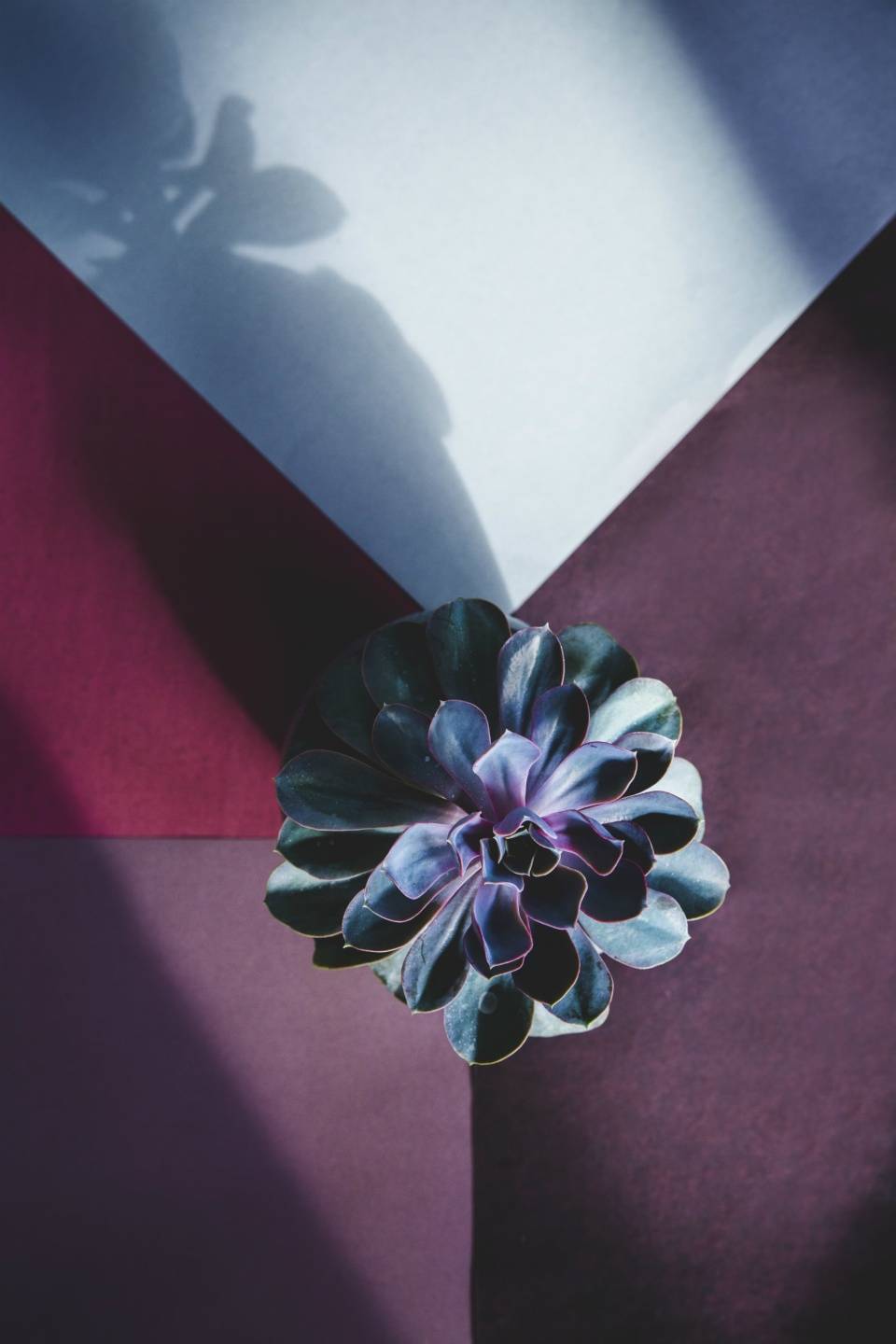
Did you know that the powdery coating on an Echeveria’s leaves acts as a natural sunscreen? It protects the plant from intense light.
2
Aloë Vera
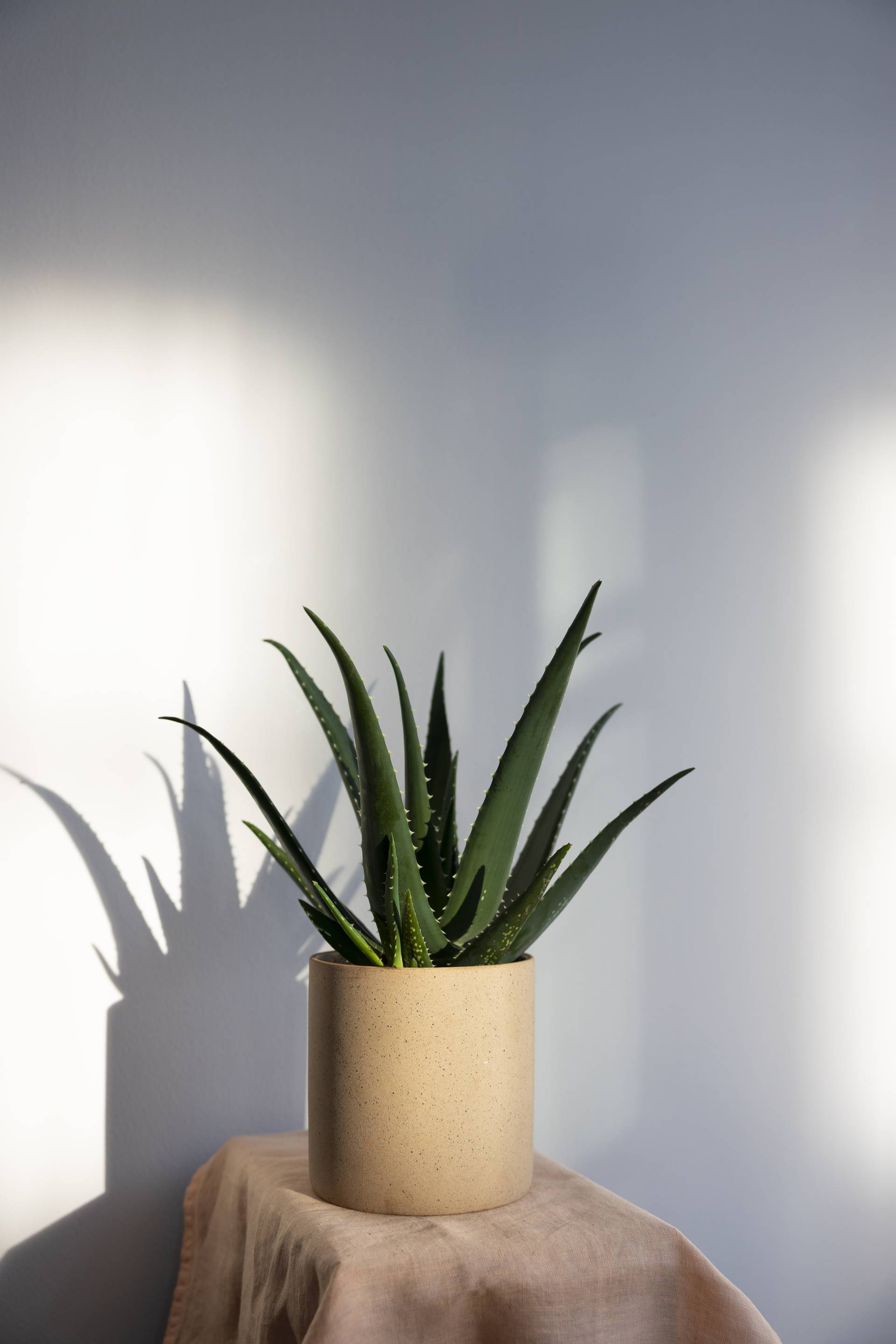
With its thick, pointed leaves and serrated edges, Alöe Vera has a striking, rugged look. The clear gel inside its leaves earned it the nickname ‘wonder plant’. It likes plenty of light and warmth, so it’ll feel right at home in a terracotta pot by a window or door, or on a sunny windowsill.
3
Jade Plant
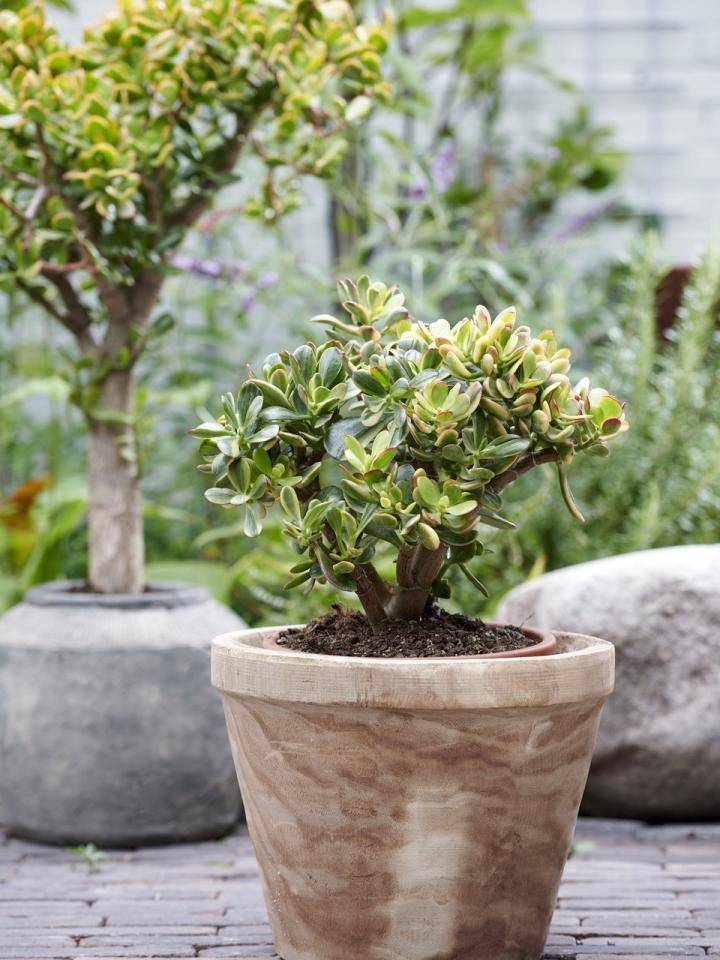
The Jade Plant, also known as the Money Tree or Crassula, is a succulent that looks like a miniature tree. It has a sturdy trunk and glossy, rounded leaves that develop red edges in the sun. Pachira sometimes goes by the name Money Tree too, so the names can get a little confusing.
4
Haworthia
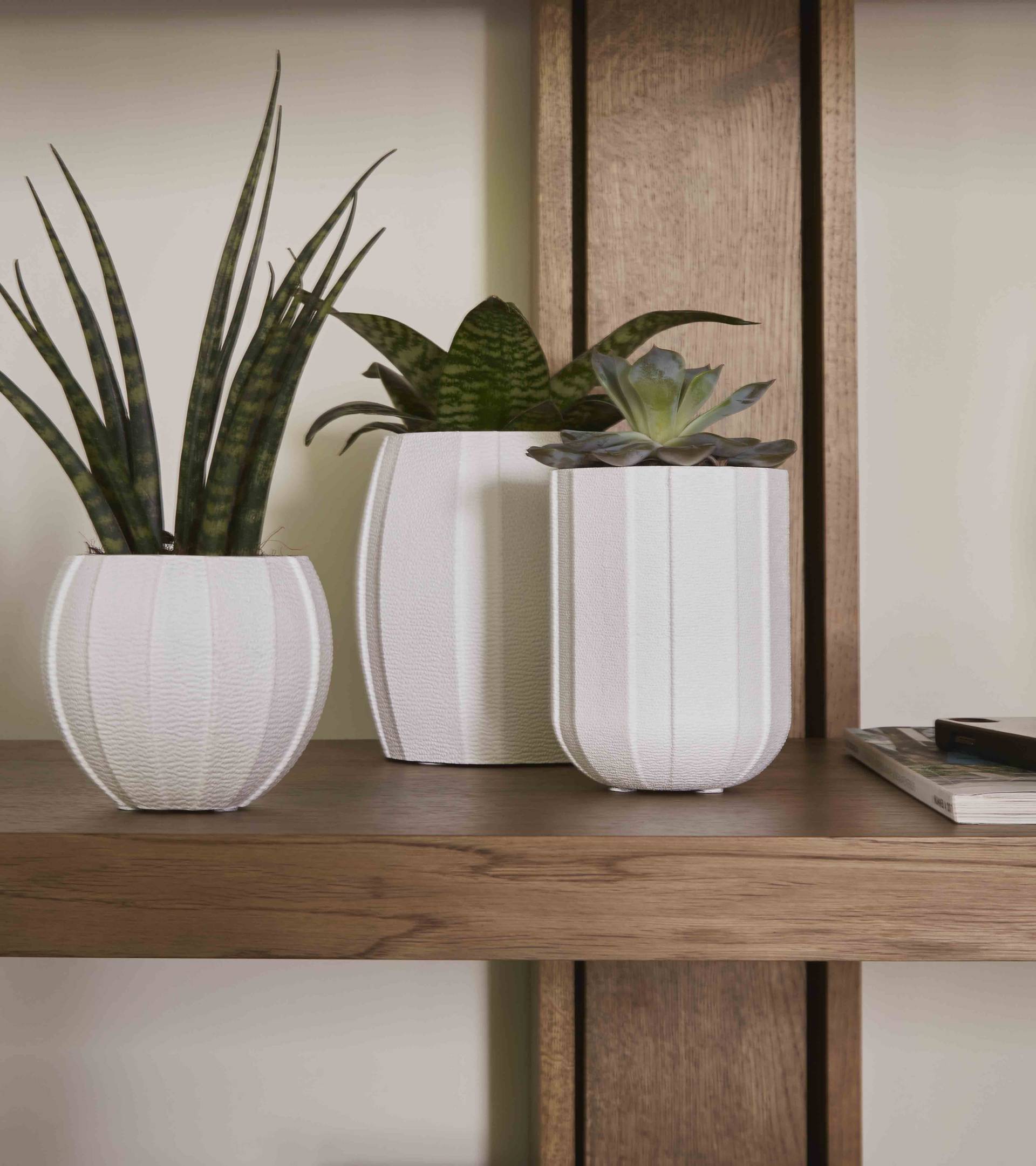
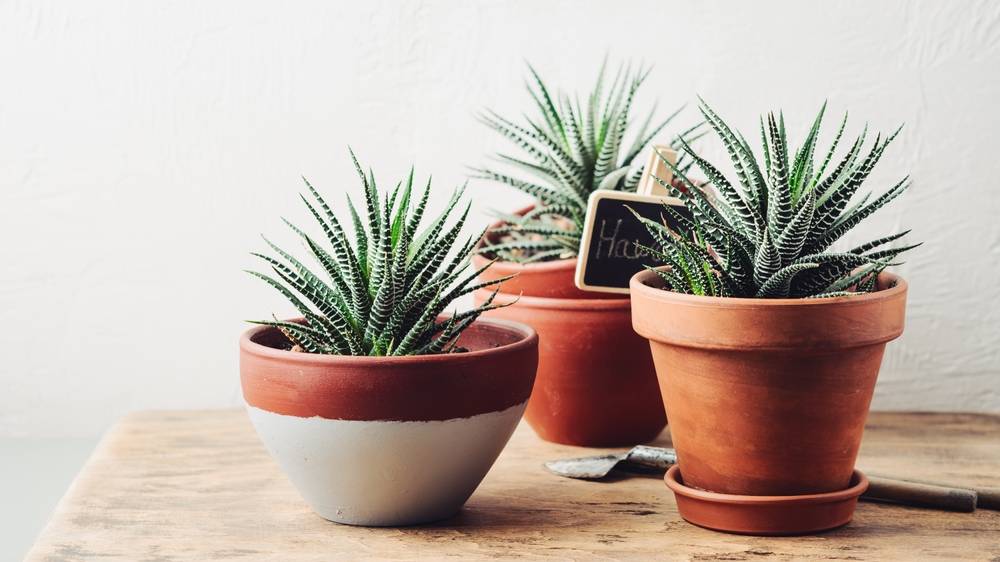
Haworthia is small and compact, with pointed leaves marked with white stripes or dots that give it a bit of a zebra look. Most succulents prefer full sun, but Haworthia is happy in a bright spot out of direct sunlight. That makes it ideal for a small room, a desk or a bookshelf.
5
Kalanchoë
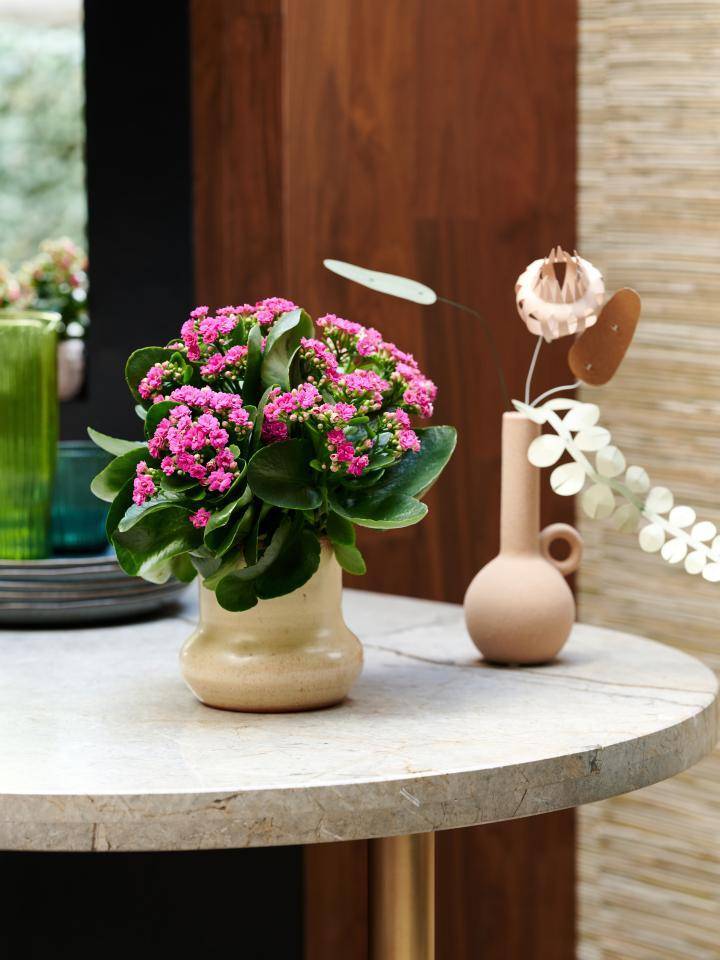
Fancy a splash of colour? Kalanchoe is a flowering succulent that’s covered in clusters of tiny red, pink, orange, yellow or white flowers for weeks. It’s compact, needs very little water and instantly brightens up a country-style or colourful room. Group a few in different colours on the table for a cheerful display.
6
String of Pearls
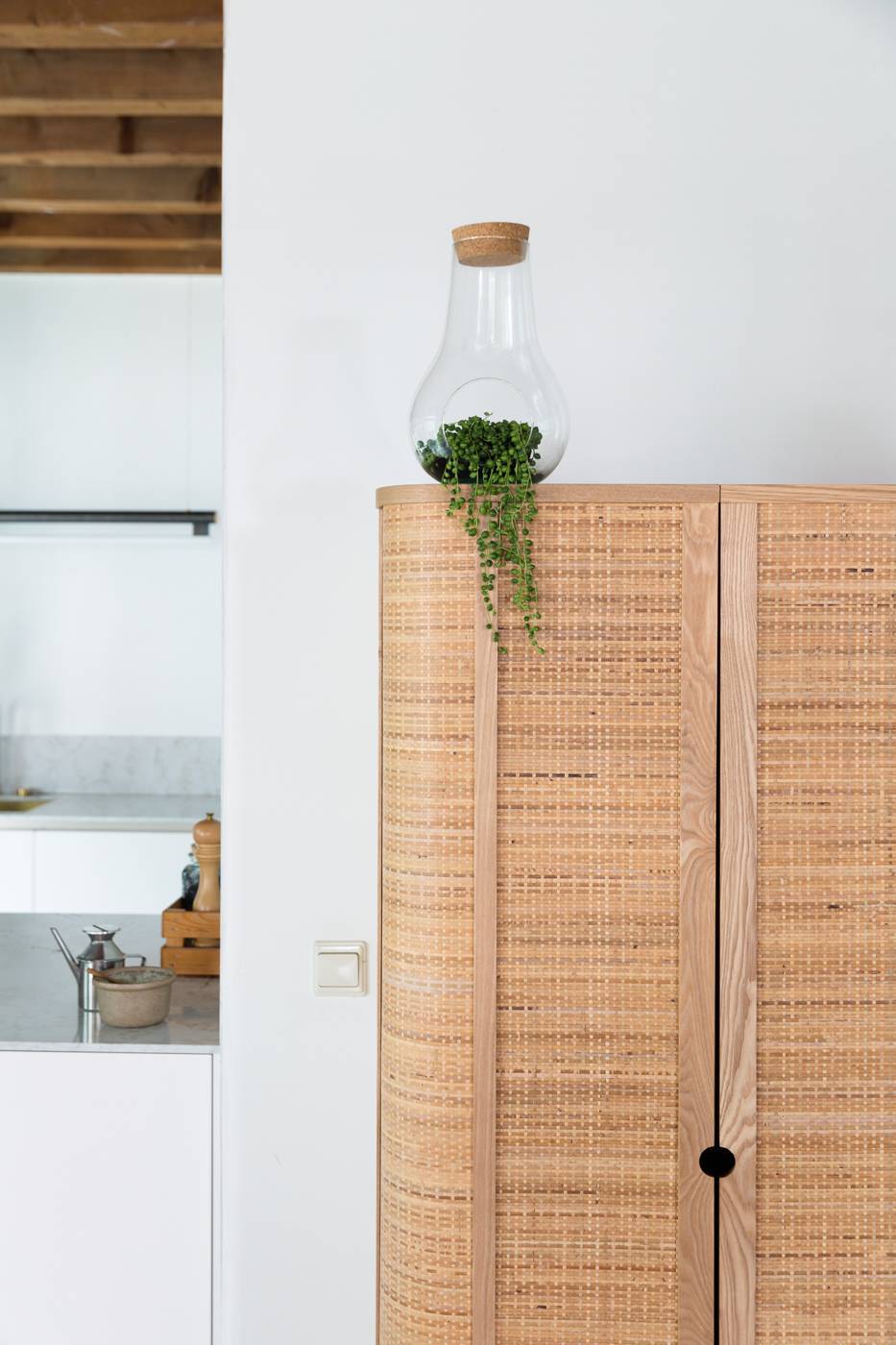
String of Pearls is the cheeky one of the Succulents. Its long strands are dotted with tiny green balls, as if someone’s threaded peas onto a necklace. In a hanging pot or on top of a tall cupboard, those strands can trail down for up to a metre. It’s a real eye-catcher in a boho room or an urban jungle. It likes a bright spot out of strong afternoon sun.
7
Sedum
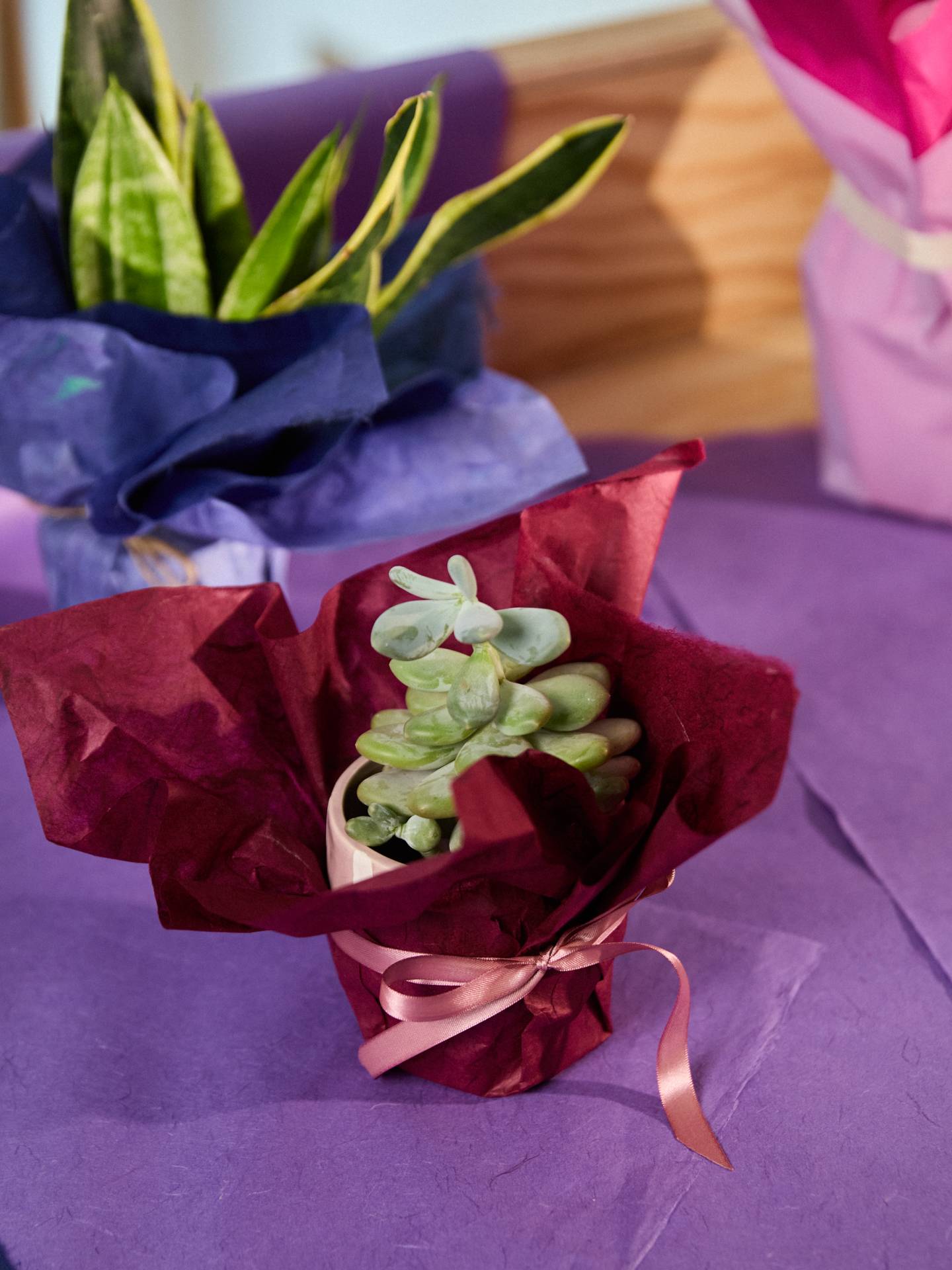
Sedum, also known as Stonecrop, is a large group of plants that come in all sorts of shapes. Indoors, Burro’s Tail looks lovely in a hanging pot, with its long trailing stems packed with plump leaves. Outdoors, you’ll find Sedum growing as ground cover or even on green roofs. Its relaxed, natural look works well in a country-style room or in a shallow bowl with other succulents.
Why succulents suit every home
Succulent plants, often simply called succulents, store moisture in their thick leaves, stems or roots. That means they can go quite a while without water, which makes them ideal if life gets busy or you simply haven’t got green fingers. There’s a huge variety to choose from, too. From a tiny Haworthia on your desk to a sturdy Jade Plant on the sideboard, there’s a shape, colour and size to suit every style and space. Want to know more about the different types, how to take cuttings and where succulents come from? Read our complete guide to succulents.
A quick guide to caring for succulents
However different these succulents look, the basics of caring for them are much the same. These tips will keep them all looking their best:
- Give them a bright, warm spot. A south-facing spot indoors is ideal for most succulents. Haworthia and String of Pearls prefer to stay out of the strongest afternoon sun.
- Give them a good soak in one go. This works better than giving them a little sip each week, which makes it easy to overwater them. Give the compost time to dry out completely before watering again. This can take weeks.
- Feed sparingly. A little plant food once a month in spring and summer is plenty.
- Choose the right compost and pot. Cactus compost and a pot with a drainage hole let excess water drain away. Time for a bigger pot? Read up on how to repot your plants.
- Feel free to put them outside in summer. They love a sunny spot on the balcony or patio, as long as they’re sheltered from the rain.
Frequently asked questions about succulents
How often should you water a succulent?
A good soak every few weeks works better than a little water each week. Let the compost dry out between waterings. In winter, when the plant is resting, it needs even less water.
Where’s the best place to put a succulent?
Most succulents like a bright, warm spot, such as a south-facing windowsill. Haworthia is also happy in a bright spot out of direct sunlight.
Why is my succulent growing tall and thin?
It needs more light. The plant stretches as it reaches for the sun, leaving it looking floppy and leggy. Move it somewhere brighter. The stretched stem will stay that way, but you can cut off the top and use it as a cutting. Let the cut end dry for a few days, then place it in dry cactus compost, where it’ll grow new roots. The stem left in the pot will often put out new shoots in a bright spot. That’s an extra plant for free.
Are succulents poisonous to pets?
Most succulents are non-toxic. Take care with the Jade Plant (Money Tree or Crassula) and Kalanchoe, which can be mildly toxic to cats and dogs if eaten in larger quantities. Alöe Vera and String of Pearls can also cause mild symptoms if eaten. To be on the safe side, always keep these varieties out of reach of pets. The rest are generally safe to have around the house.
Can you put succulents outside?
Yes, many succulents love a sunny spot outdoors in summer, as long as they’re sheltered from the rain. Some types of Sedum are even hardy enough to stay outside all year round.
How do you propagate a succulent?
You can use a leaf, a stem or an offset. Let a leaf or stem cutting dry for a week first, then insert it into moist compost. Alöe Vera can only be propagated from offsets. You’ll find more methods in our article on taking plant cuttings.
What’s the difference between a succulent and a cactus?
All cacti are succulents, but only some succulents are cacti. Cacti usually have spines and need even more light and less water than other succulents.
Which succulents flower?
Kalanchoe is known for flowering for weeks on end. An Echeveria or an older Jade Plant can surprise you with little flowers too, especially in a sunny spot.