
Written by
Tommie
Description
Partial sun
Moderate
Flowering
Attracts pollinators
Directly to
- Characteristics and flowering
- What varieties of Azalea are there?
- Where should an Azalea be placed?
- Care for Azalea: water, feeding and humidity
- What to do after an Azalea has finished flowering
- Is an Azalea hardy?
- Pruning Azalea: when and how?
- Is Azalea poisonous?
- Meaning and symbolism of the Azalea
- Where does the Azalea originally come from?
The Azalea is one of the most beloved flowering garden plants. In spring, this shrub transforms into a sea of colour, with blooms in white, pink, red, purple and sometimes even orange or yellow. Whether you have an Azalea in the ground, in a pot on the terrace or as an Azalea Bonsai, with the right care you can enjoy it for many years.
In this complete Azalea guide, you’ll find everything you need to know. From characteristics and varieties to positioning, indoor and outdoor care, pruning, propagation, hardiness and flowering.
Characteristics and flowering
The Azalea is a compact, woody presence that visibly comes to life in spring. Depending on the variety, the foliage either remains green or drops in winter, while the small to medium-sized oval leaves give the plant a fresh and well-kept appearance.
An Azalea generally flowers between April and June, for around 3 to 5 weeks. During this period, the blooms can almost completely cover the plant, which explains why it takes centre stage in both garden beds and pots.
Despite its exuberant flowering, growth remains compact, making the Azalea suitable for borders as well as terraces. Acidic, humus-rich soil is essential. With that foundation in place, the Azalea develops into a reliable and colourful spring bloomer.
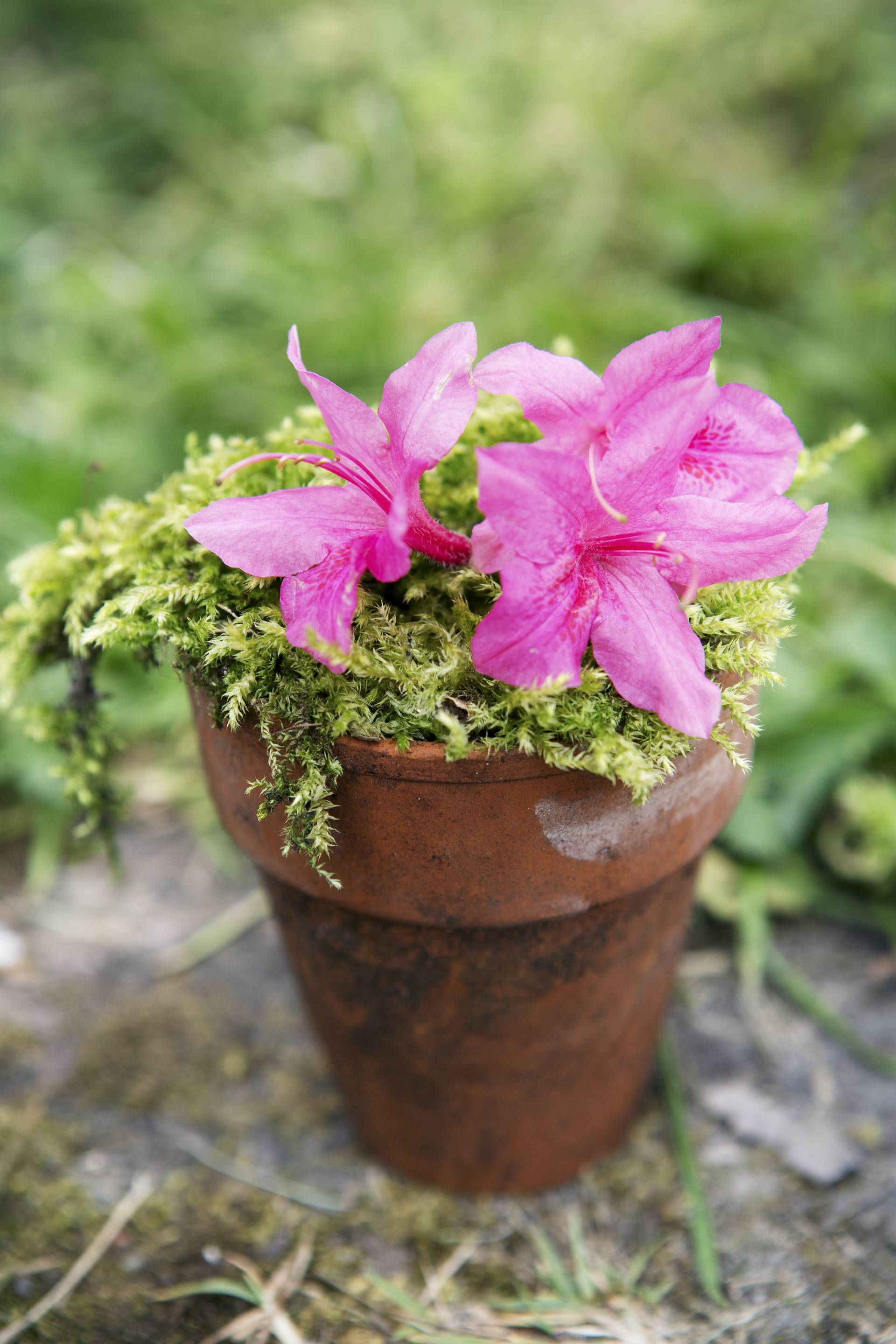
What varieties of Azalea are there?
Garden Azaleas are usually divided into deciduous and evergreen varieties. Botanically, they belong to the genus Rhododendron, part of the heath family (Ericaceae). This family also includes plants such as Heather, Skimmia, Pieris and Vaccinium, including Blueberries.
Although Azaleas are botanically Rhododendrons, they are often regarded as a separate group in practice. This is due to their compact growth habit and distinctive flowering.
Deciduous Azaleas
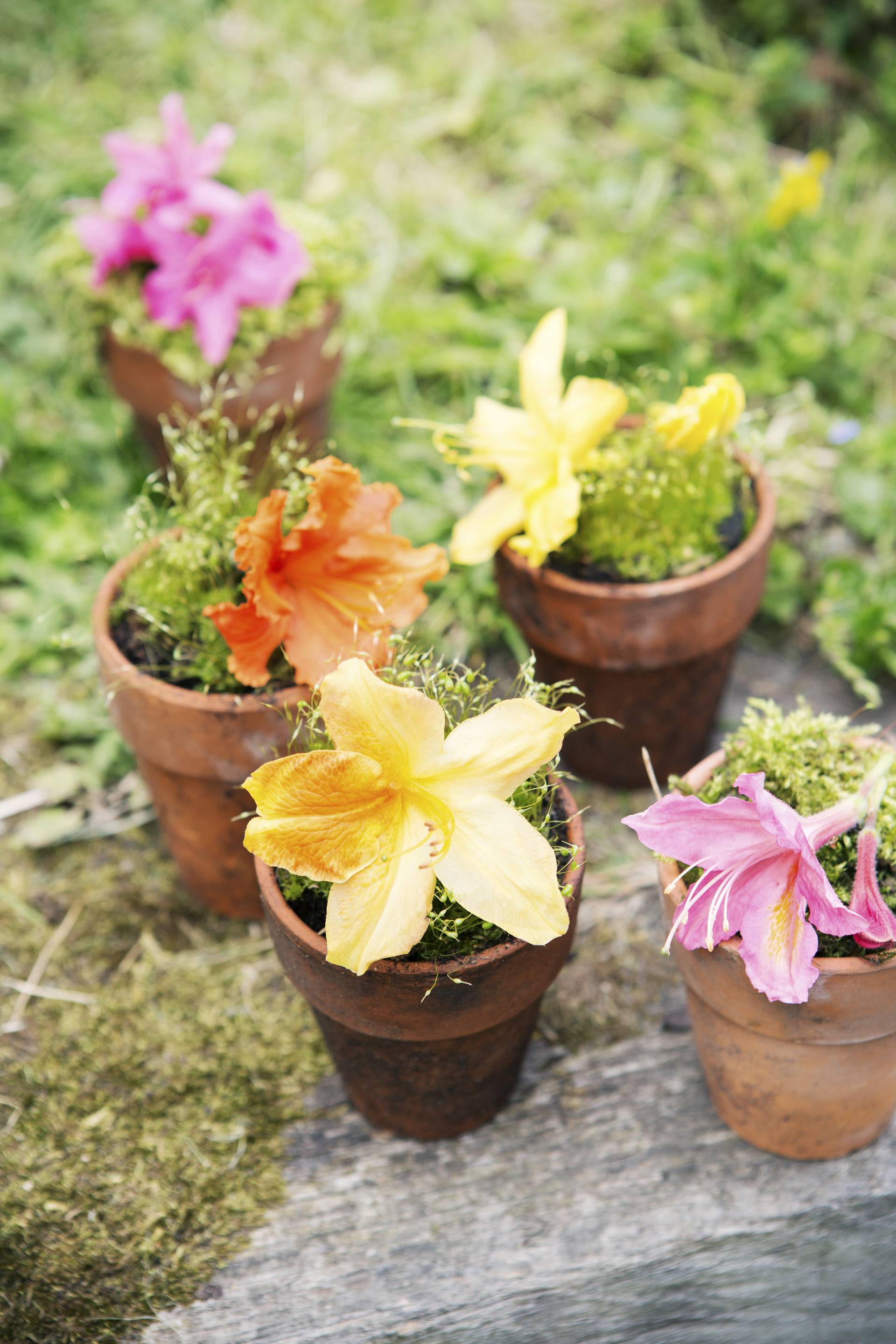
Deciduous Azaleas lose their leaves in winter. They grow vigorously and flower abundantly in spring. Many varieties develop warm autumn colours such as yellow, orange and red.
- Azalea lutea (Rhododendron luteum)
A botanical species with large, often fragrant flowers that bloom in late spring. It grows more loosely and taller than many other Azaleas and stands out for its striking autumn colour. - Azalea molle (Rhododendron molle)
Flowers in spring with large, trumpet-shaped blooms in warm shades. This species is robust and forms the basis for many deciduous Azalea hybrids.
Evergreen Azaleas (Japanese Azaleas)
Evergreen Azaleas retain their foliage in winter or are semi-evergreen. They remain compact and are widely used in borders, rock gardens and pots. Thanks to their dense growth and rich flowering, they are ideal for smaller gardens.
The term Japanese Azalea refers to a horticultural group rather than a single botanical species.
- Kurume Azaleas
Compact, evergreen Azaleas with many small flowers. They bloom profusely in spring and are among the most widely used Japanese Azaleas in gardens. - Satsuki Azalea's
Flower slightly later in the season, with larger and more refined blooms. These Azaleas are popular in pots and are also frequently grown as bonsai. - Azalea obtusum (Rhododendron obtusum)
This name is used for compact, evergreen Azaleas with dense flowering. It usually refers to a hybrid complex that forms the basis of many Japanese Azalea cultivars.
An Azalea has been regarded for centuries as a symbol of refinement and attentiveness.
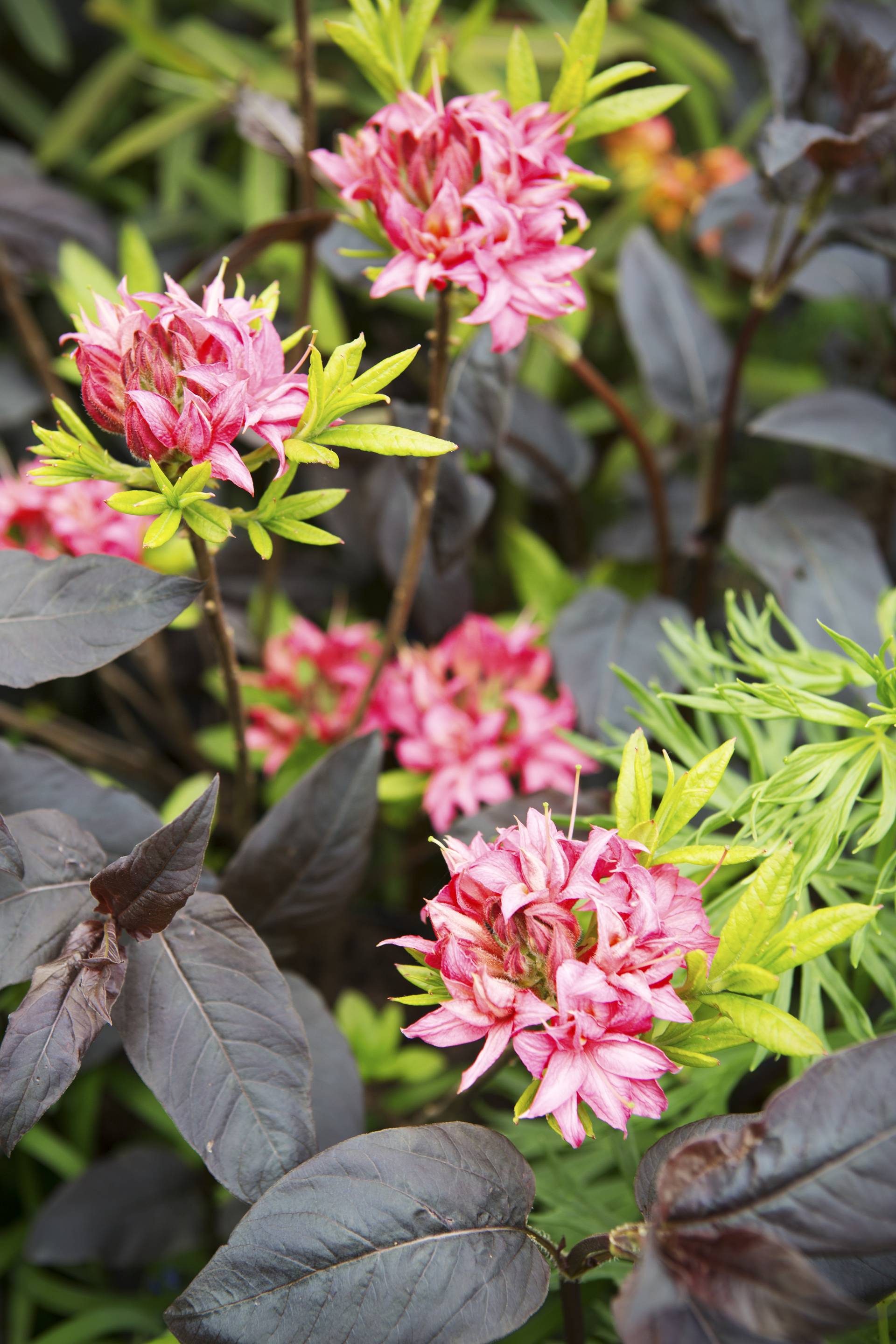
Where should an Azalea be placed?
The right position determines a healthy plant and abundant flowering. An Azalea prefers:
- Partial sun or light shade
- Shelter from harsh midday sun and strong winds
- Acidic, well-draining and humus-rich soil
An Azalea can tolerate some sun, particularly in the morning or evening. Full midday sun can lead to drying out and leaf scorch.
Care for Azalea: water, feeding and humidity
- Keep the soil slightly moist
- Never allow the root ball to dry out completely
- Preferably use rainwater
- Apply mulch to help retain moisture
What to do after an Azalea has finished flowering
Carefully remove faded flowers by hand. This prevents seed formation and allows the plant to focus its energy on developing new buds for the following season.

Is an Azalea hardy?
Many Azaleas cope well with winter conditions. Japanese and deciduous varieties are strong and tolerate temperatures down to around minus fifteen degrees Celsius.
If your Azalea is in a pot, it will need extra care. Place the pot in a sheltered spot, protect it from frost and ensure the root ball does not dry out.
Pruning Azalea: when and how?
Pruning an Azalea is not always necessary, but it helps keep the plant compact and vigorous.
- Prune immediately after flowering, usually in June
- Never prune late in the season, as you will remove flower buds
- Limit pruning to light corrections
- Always use clean and sharp pruning tools
Is Azalea toxic?
Azaleas are poisonous to both people and pets. In animals, particularly Cats, Dogs and Rabbits, symptoms can be more severe. It is therefore wise to keep an Azalea out of reach of children and animals and to avoid contact with the mouth or food. If in doubt or after ingestion, always consult a doctor or veterinarian.

Meaning and symbolism of the Azalea
For centuries, an Azalea has symbolised refinement and attentiveness, particularly within East Asian cultures such as Japan and China, where the plant holds a permanent place in gardens, art and poetry. There, an Azalea is often associated with care, emotional balance and a restrained form of beauty.
The flowers draw attention with their colour and shape, while the plant itself remains compact and controlled. It is precisely this combination that makes the Azalea so distinctive. Striking without overpowering, elegant in its simplicity.
Where does the Azalea originally come from?
Azaleas originally come from Asia, particularly China, Japan and Korea. There, they grow naturally in wooded and mountainous regions. Through growers and botanical gardens, they found their way to Europe, where they became established favourites in gardens and parks.