
Written by
Tommie
Description
Partial sun
Moderate
Green
Pet and kids friendly
Directly to
- Characteristics and flowering
- Plant family
- Why do Maranta leaves move?
- Which varieties of Maranta are there?
- Where should a Maranta be placed?
- Caring for Maranta: water, feeding and humidity
- Propagating Maranta: how to do it
- Is Maranta toxic?
- Common problems when caring for Maranta
- Maranta as a hanging plant
- Meaning and symbolism of the Maranta
- Where does the Maranta originally come from?
The Maranta, also known as the Prayer Plant, owes its name to the remarkable behaviour of its leaves. They move with the daylight, opening in the morning and gently closing at the end of the day. It happens quietly, almost unnoticed. That subtle movement is exactly where the charm of this houseplant lies.
In this complete houseplant guide, you’ll find everything you want to know about the Maranta. From characteristics and varieties to positioning, care, propagation, symbolism and origin.
Characteristics and flowering
Maranta, often referred to as the Prayer plant, is a tropical foliage plant where the leaves naturally steal the spotlight. Not because of their size, but because of their detail.
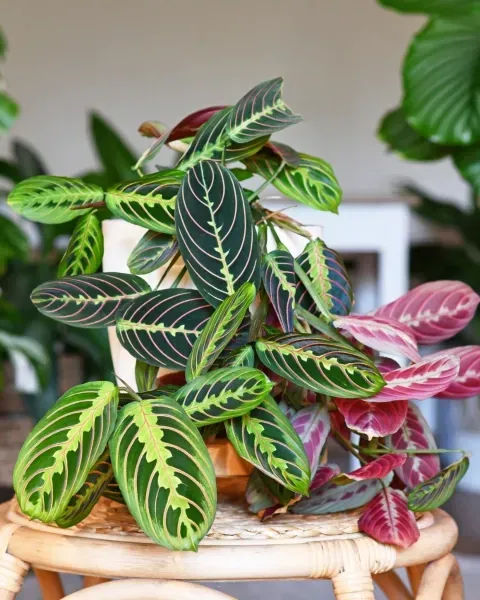
The leaves are oval to round and feel soft to the touch. They are richly patterned with veins and markings in various shades of green, often combined with cream, pink or red. In many varieties, the underside of the leaf is deep red or purple, which becomes especially visible when the leaves rise in the evening.
That daily opening and closing is not a trick, but a natural response to light and darkness.
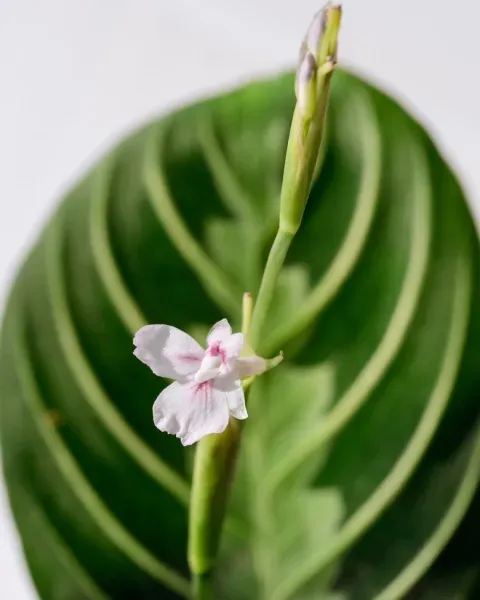
Maranta can produce small white or pale lilac flowers, but the bloom is subtle. The plant is loved primarily for its beautiful leaf patterns and movement.
Why do Maranta leaves move?
The leaves of the Maranta move with the daylight. During the day, they lie open to absorb light. At the end of the day, they slowly fold upwards.
This natural rhythm is called nyctinasty. It helps the plant retain energy and moisture and is an adaptation to the conditions in which the Maranta originally grows. By closing its leaves in the evening, the plant protects itself from cooling and drying out.
Even indoors, this behaviour remains visible, a quiet reminder of the tropical environment the plant comes from.
Which varieties of Maranta are there?
Within the genus Maranta, there are around 40 to 50 botanical species. Only a small number are kept as houseplants. Below are the varieties you are most likely to encounter indoors.
Where should a Maranta be placed?
The best spot for a Maranta is bright, without direct sunlight. In nature, the plant grows on the forest floor, sheltered by taller vegetation. Indoors, this translates to filtered daylight.
A position near a north or east facing window works well. Too much sun can cause the leaves to fade or become damaged. Maintain a consistent temperature of at least 18 degrees Celsius and avoid draughts.
Caring for Maranta: water, feeding and humidity
Caring for a Maranta is not about doing a lot. It is about doing the right things consistently.
- Watering
Keep the compost lightly moist. Do not allow the root ball to dry out, but avoid leaving water sitting at the bottom of the pot. Rainwater or low limescale water helps keep the leaves looking their best. - Humidity
Marantas prefer slightly higher humidity. In dry air, brown leaf edges can appear quickly. Regular misting or placing the plant near other plants can already make a difference. - Feeding
During the growing season, feeding once a month with houseplant fertiliser is sufficient. In winter, the plant can rest.
The Maranta shows that moving with the rhythm of life can sometimes be the strongest form of growth.
Propagating Maranta: how to do it
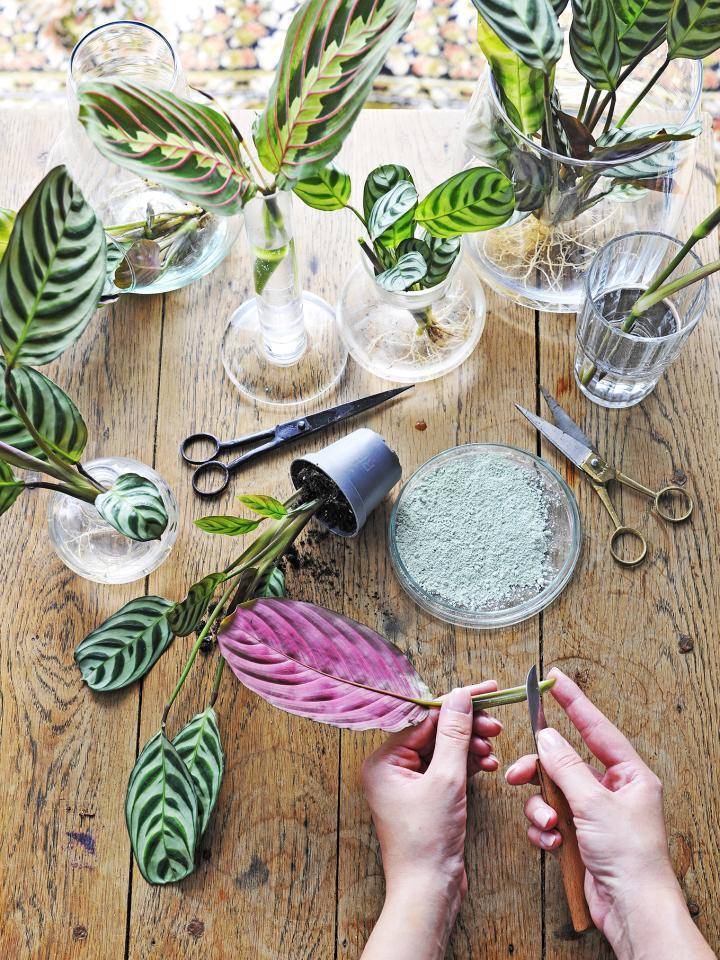
Propagating a Maranta is a lovely way to multiply your plant and follow the growth process up close. Maranta propagation is done through stem cuttings in water.
Spring and early summer are the best times for this. During this phase, the Maranta is actively growing and new roots develop more quickly. If you would like to understand the basics of propagation first, read more about plant cuttings. It helps you start with confidence.
Is Maranta toxic?
The Maranta is non-toxic to both humans and pets. This makes the plant suitable for households with cats, dogs or young children.
Common problems when caring for Maranta
Maranta with brown leaf edges
If your Maranta develops brown leaf edges, this is often caused by dry air or hard tap water. Increase humidity, for example by misting regularly, and preferably use filtered or rainwater.
Drooping leaves
Drooping leaves are usually a sign that the soil is too dry or that the plant is standing in a spot that is too cool. Check that the compost remains lightly moist and move the plant to a warm, draught free position.
No flowering
The Maranta rarely flowers indoors. This is normal and not a cause for concern. The plant is mainly appreciated for its foliage.
Maranta as a hanging plant
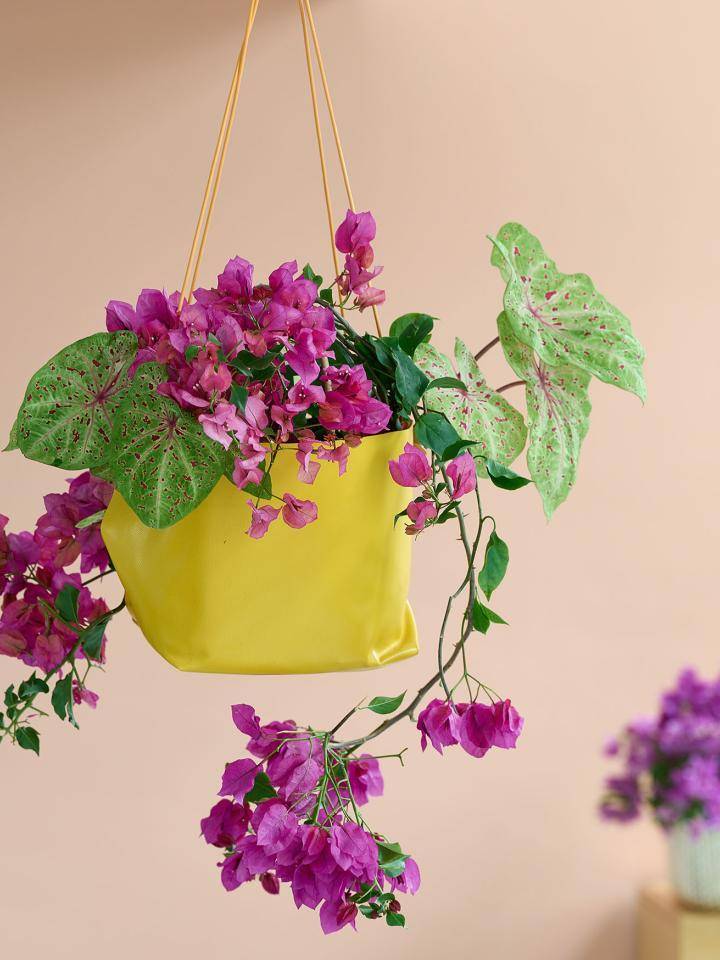
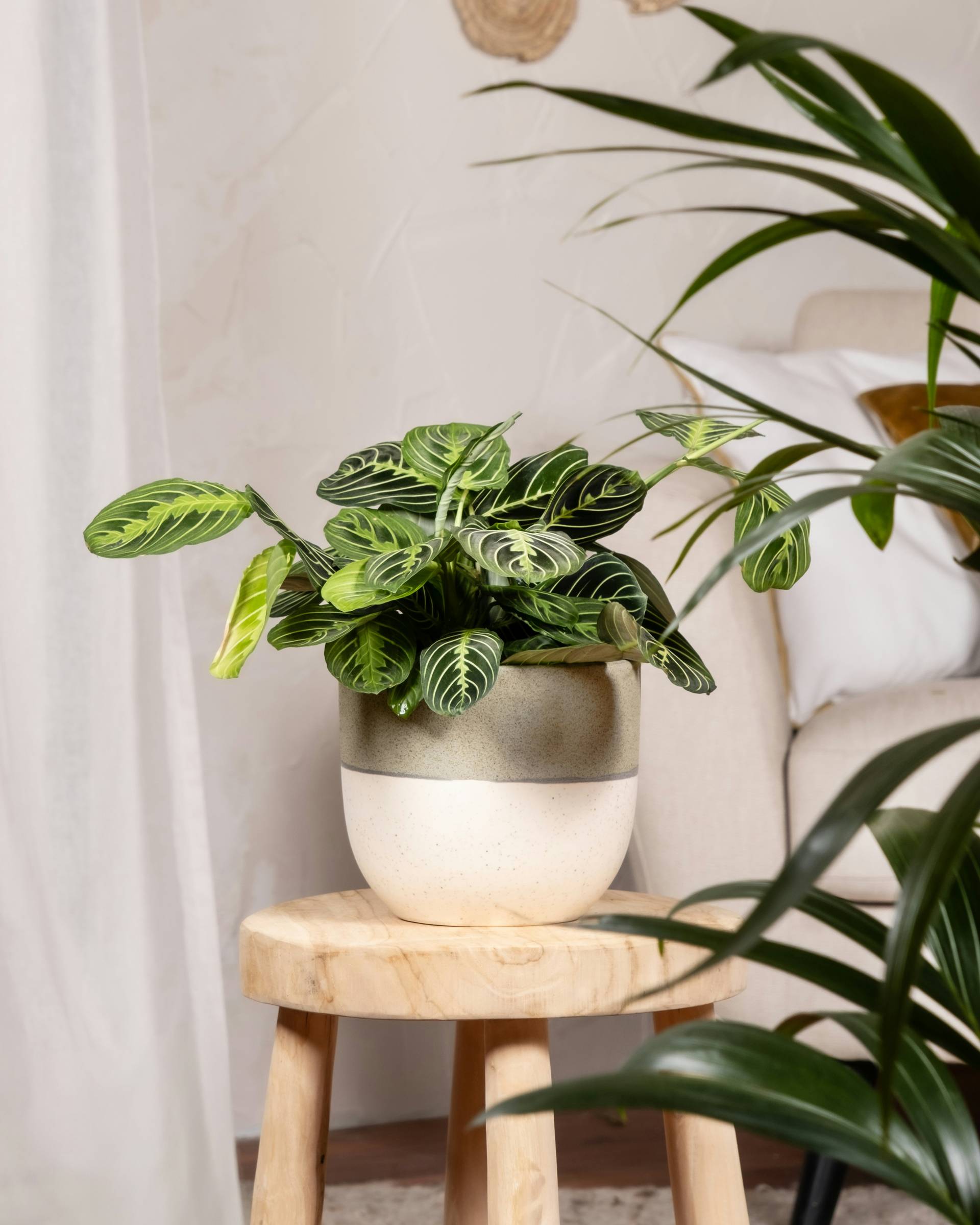
Thanks to its low, creeping growth habit, the Maranta works beautifully as a hanging plant. In a hanging pot, the leaves have space to fall naturally, allowing the patterns and colours to stand out even more. Especially in bright rooms, this creates a calm, green atmosphere.
Meaning and symbolism of the Maranta
The Maranta symbolises attentiveness and alignment. Its leaves open and close each day, quietly responding to light and darkness. It reminds us that growth does not always have to be visible to have value, and that movement and rest complement one another.
It is precisely this gentle message that makes the Maranta a warm and personal gift for someone you care about.
Where does the Maranta originally come from?
Marantas originate from the tropical rainforests of Central and South America. There, they grow close to the ground beneath the canopy of larger plants and trees. The light is soft and filtered, the air consistently humid and the temperature stable.
These conditions are still reflected in what the Maranta needs indoors. No harsh sunlight. No dry air. No dramatic fluctuations.
When you understand this background, it becomes clear why the plant thrives with consistency and attention, and struggles with sudden changes or heavy handed care.