
Written by
Sabina
Description
Indirect light
Little
Green
Hoya, also known as the Wax Plant, is a popular houseplant known for its thick, waxy leaves and graceful growth habit. Its long trailing stems make this tropical plant perfect for climbing or cascading from a hanging pot. Read on and discover everything there is to know about Hoya!

Characteristics and flowering of Hoya
Hoya can be recognised by its fleshy, often waxy leaves and long trailing stems, which allow the plant to climb or hang effortlessly from a pot.
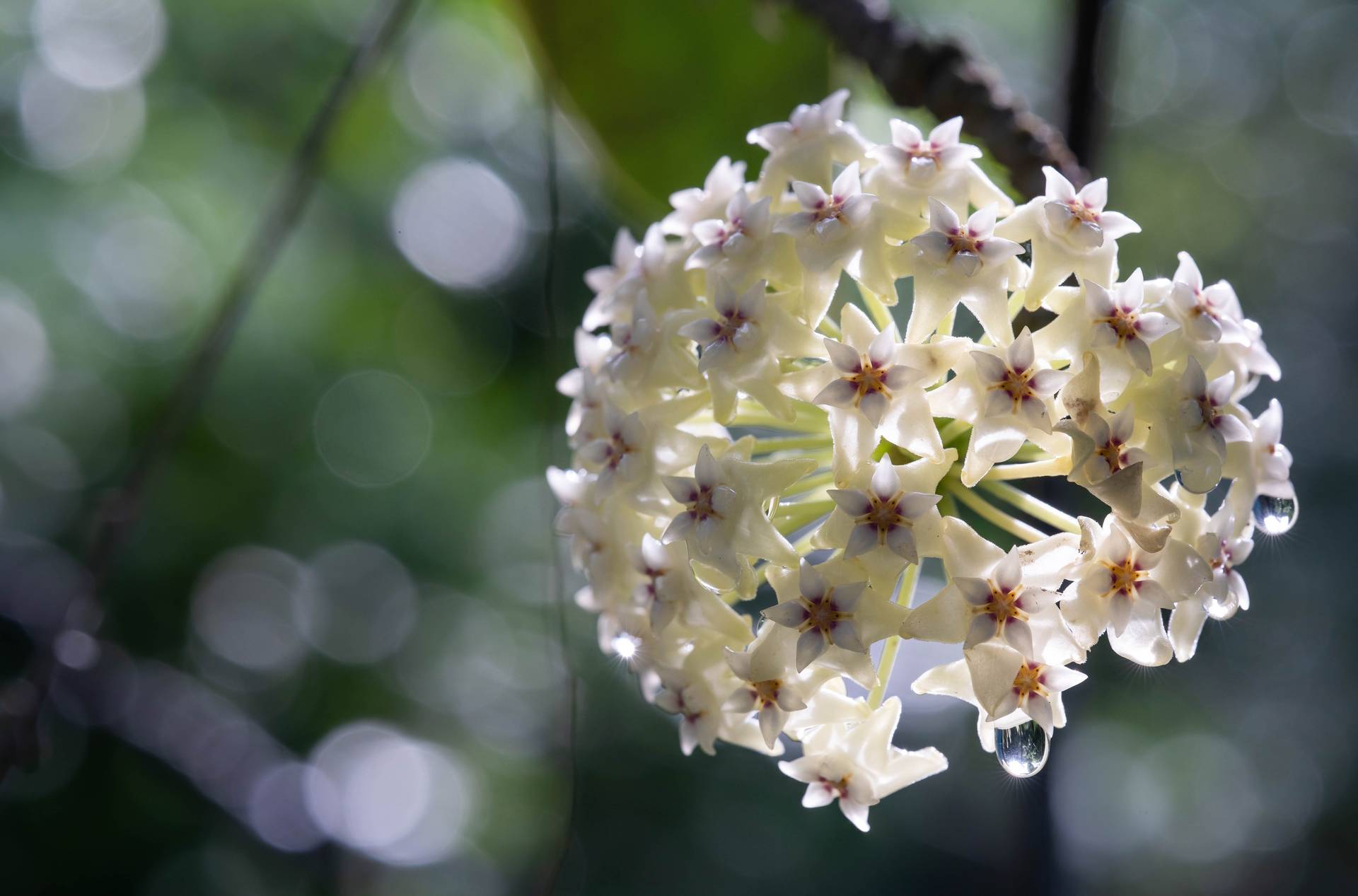
At first glance, it may seem as though Hoya never flowers. Young Wax Plants generally do not bloom, but after several years, and under the right conditions, the plant can produce a spectacular display of flowers. Rounded clusters of star-shaped white or pale pink blooms appear along the stems. The flowers feature a deep pink-red centre and release a sweet fragrance. Hoya usually flowers in spring or summer.
Hoya belongs to the dogbane family (Apocynaceae), which also includes plants such as Oleander and Periwinkle (Vinca).
Young Hoyas rarely flower, but after several years and under ideal conditions, they can produce a spectacular display of blooms.
Caring for Hoya
Hoya is relatively easy to care for, provided you keep its tropical origins in mind.
- Location: place your Wax Plant somewhere with plenty of bright, indirect light. The plant can tolerate morning and evening sun, but avoid intense midday sunlight.
- Water: thanks to its thick, fleshy leaves, Hoya requires relatively little water. Allow the compost to dry out slightly between waterings. Like many other houseplants, Hoya needs more water during spring and summer (the growing season), around once a week, than in autumn and winter (once every two weeks or less).
- Humidity: Hoya enjoys higher humidity levels. You can occasionally mist the plant using a spray bottle.
- Feeding: feed your Wax Plant every 2 to 4 weeks during the growing season (spring and summer) with a houseplant fertiliser. This helps encourage flowering.
Hoya stores water in its thick, fleshy leaves, which means it needs relatively little watering. It is better to underwater a Hoya than to overwater it.
How do you get Hoya to flower?
Is your Hoya not flowering (yet), and would you love to enjoy its beautiful white blooms? Here are some tips to encourage flowering.
- Choose the right location: a spot with plenty of bright, indirect sunlight. The more light the plant receives (without scorching), the greater the chance of flowering. A position near an east- or west-facing window is ideal.
- Don't move your Hoya: if your Hoya is thriving in its current spot, leave it there. Moving it can cause unnecessary stress.
- Provide enough nutrients: feed your Hoya every 2 to 4 weeks during the growing season. This supports flower production.
- Water moderately: Hoyas will not flower if the compost remains too wet. A slight period of dryness can actually encourage blooming.
- Avoid using an oversized pot: Hoyas often flower better when they are slightly root-bound. In a pot that is too large, the plant will put more energy into root and leaf growth.
- Be patient: some Hoyas take years before flowering for the first time. Once flower spurs appear, they can produce blooms year after year.
- Do not remove old flower spurs: after flowering, small stalks remain on the plant. Leave these in place, as future flowers will grow from them.
Do not remove old flower spurs, as new flowers will develop from them!
Hoya: yellow leaves or limp leaves?
Have you noticed your Hoya developing yellow leaves or limp foliage? This is often a sign of overwatering. Hoyas do not cope well with waterlogged roots. Always allow the compost to dry out slightly before watering again. Also check that excess water can drain freely from the pot. Is your Hoya still struggling with yellow or limp leaves? Take a closer look at other aspects of its care, such as light levels, feeding and whether the plant has been moved recently. Refer to the care tips above.
Types of Hoya
There are more than 500 varieties of Hoya, each with its own distinctive leaf and flower shapes. The most popular varieties grown as houseplants are:
- Hoya carnosa: the best-known variety, often used as a trailing houseplant in interiors. It produces slightly larger flowers that are white or pale pink with a pink-red centre.
- Hoya kerrii: also known as the Sweetheart Plant due to its distinctive, sturdy heart-shaped leaves. This variety is often sold as a single-leaf cutting. Hoya kerrii grows slowly and will not flower in this form, as only a complete plant can continue growing and eventually bloom.
- Hoya bella: a compact and prolific flowering variety with delicate, fresh green leaves. It has a trailing growth habit and flowers relatively easily, producing white star-shaped blooms with a purple centre. Ideal for smaller spaces and hanging pots.
- Hoya pubicalyx: recognised by its elongated leaves, which are often speckled with silver markings. This is a hardy, fast-growing variety that flowers relatively easily, producing pale pink to sometimes dark purple blooms.

Thanks to its heart-shaped leaves, Hoya kerrii is a popular gift as a symbol of love!
What is the symbolism of Hoya?
Hoya carries several symbolic meanings. First and foremost, the Wax Plant symbolises lasting relationships and strong connections. This symbolism comes from the plant’s long lifespan and its ability to flower repeatedly when properly cared for. It is also associated with happiness and love. Hoya kerrii, in particular, is often given as a gift as a token of affection.
Origin of Hoya
Hoya originates from tropical regions of Southeast Asia, India and Australia. There, the Wax Plant often grows as an epiphyte. This means it attaches itself to trees or rocks without drawing nutrients from them. Instead, Hoya absorbs moisture and nutrients from the air, rainfall and organic matter around its roots. Because Hoyas naturally grow on trees and rocks, they are accustomed to filtered light.
Where does the name Hoya come from?
Hoya is named after the English botanist Thomas Hoy, who was renowned in the 18th century for his knowledge of tropical plants. He had a great passion for cultivating and studying exotic plant species. The name was given by botanist Robert Brown in recognition of Hoy’s contribution to the field.