Fern Palm


Written by
Sabina
Indirect light
Little
Green
Easy to care for

The Fern Palm belongs to the Cycadaceae family, an ancient group of plants that already existed alongside the dinosaurs. One of its most distinctive features is its thick, bulbous trunk, from which stiff, feather-like leaves emerge in perfect symmetry. Thanks to its robust structure, the plant grows exceptionally slowly and can live for hundreds of years. This is why it is often referred to as a “living fossil”.
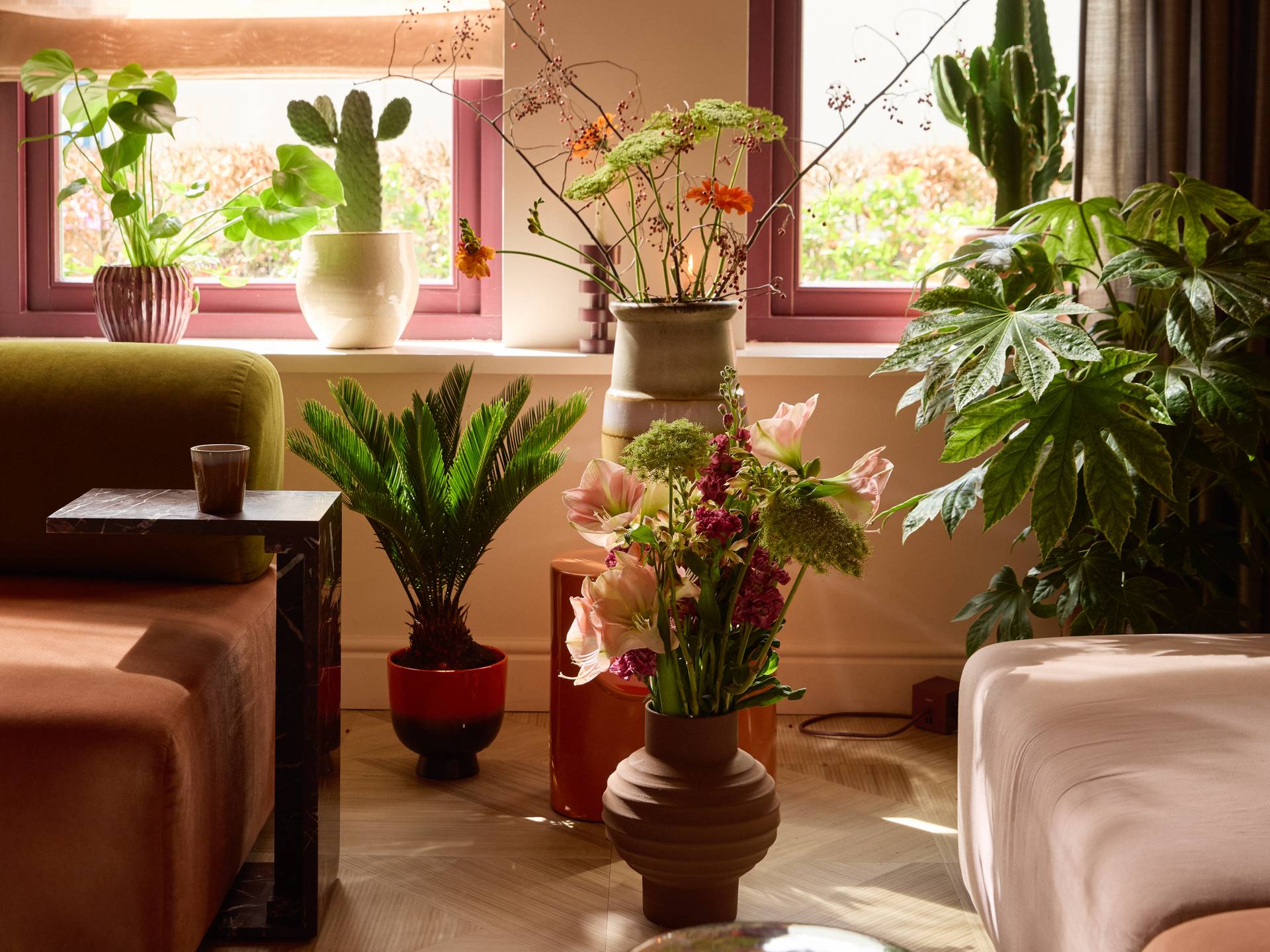
Its natural symmetry makes Cycas revoluta, also known as the King Sago Palm or Japanese Sago Palm, a striking focal point. From a rugged, woody trunk, dark to bright green glossy fronds unfurl and eventually arch downwards in a perfect circle. The tough, leathery leaflets remain flawless for months, provided they are not handled.
Thanks to its robust structure, the Fern Palm grows exceptionally slowly and can live for hundreds of years.
Unlike flowering houseplants, the Fern Palm does not produce flowers but cones. A mature Fern Palm, usually over ten years old, may produce an impressive male or female cone every few years. This appears in the centre of the crown and can grow up to 30 cm tall. After several months, the cone naturally dries out. Only remove it once it has completely dried.


Once night-time temperatures consistently remain above 12°C, you can move your Fern Palm outside onto a patio or terrace. Choose a spot in partial shade, protect the plant from strong winds and make sure the pot does not become waterlogged during heavy downpours. In October, bring it back indoors to prevent frost damage.
There are around 115 species of Cycas worldwide. The following are the most commonly grown indoors:
The Fern Palm is an ancient cycad that was already growing on Earth around 200 million years ago. Today, only eight genera remain, with the remarkably resilient Cycas found mainly in southern Japan, Taiwan and parts of Southeast Asia. European botanists discovered the plant in the 18th century and cultivated it in the conservatories and orangeries of grand estates.

Fern Palm
Yes, the Fern Palm is highly toxic to pets such as dogs and cats. All parts of the plant contain cycasin, a toxin that can cause severe stomach and liver damage if ingested, particularly in pets and young children. Wear gloves when pruning and keep the plant out of reach of pets. Discover which houseplants are safe and unsafe for pets.
The Fern Palm symbolises eternity and survival, representing a long and untroubled life. Around Asian temples, the plant forms a sacred quartet alongside the Red Camellia, White Camellia and Ginkgo, believed to attract good fortune, wisdom and steadfastness.