
Written by
Anna
Description
Sun
Much
Green
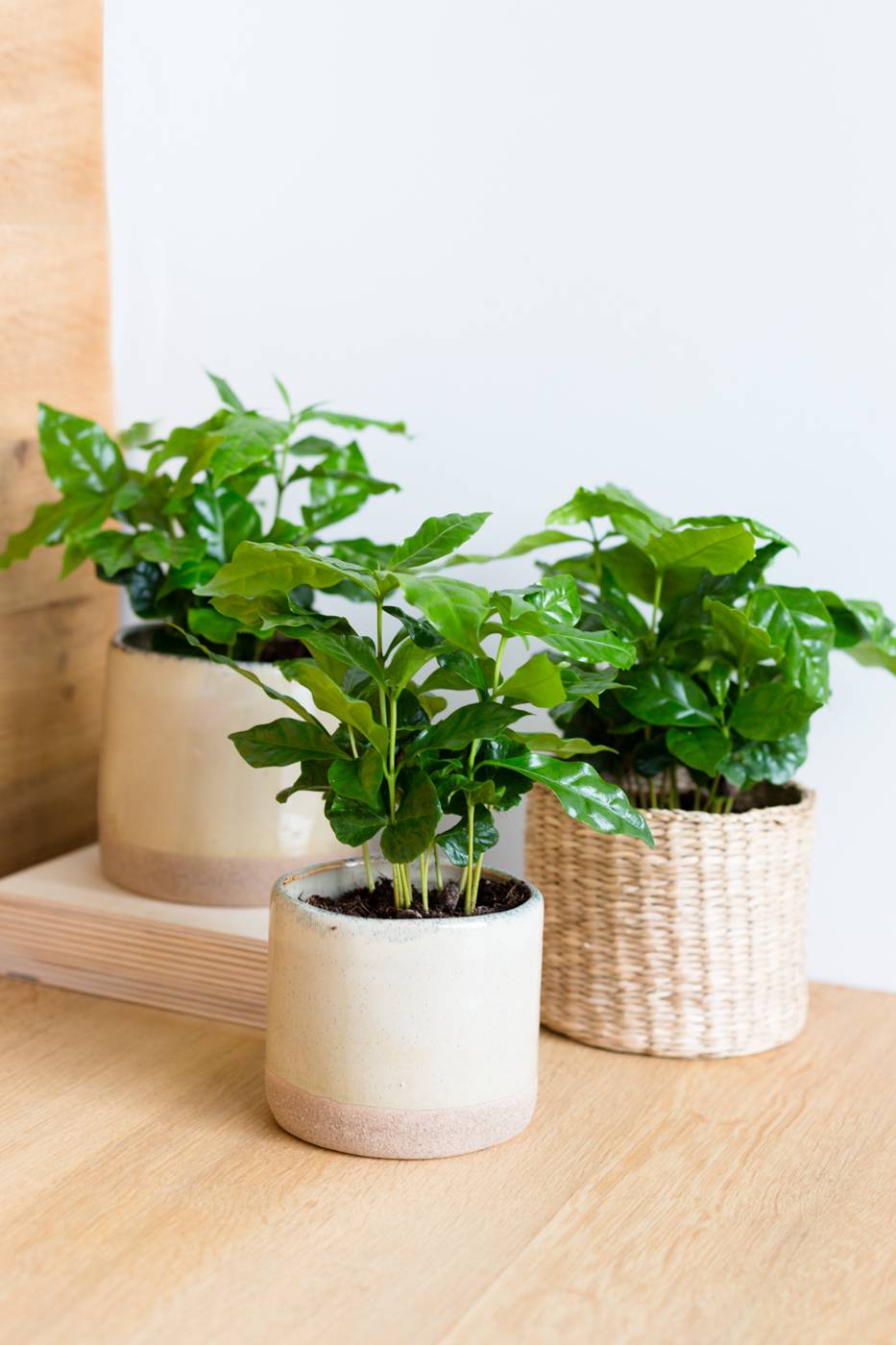
From the beans behind your fragrant espresso to a lush green feature in your home, the coffee plant brings both worlds together. Coffea arabica, better known as the Coffee Plant, is responsible for three quarters of all coffee beans produced worldwide and is also a surprisingly easy houseplant to care for. In this complete guide, you'll discover everything you need to know, from care and the ideal position to flowering, symbolism and origins.
Characteristics and flowering of the Coffee Plant
The Coffee Plant belongs to the Rubiaceae family, the same family as Gardenia and Ixora, among others. The plant has glossy, dark green leaves with a leathery texture and gently wavy edges. Young plants are often compact, but under ideal conditions a Coffee Plant can grow to around 1.5 metres tall indoors.

Coffee Plant outdoors / in the garden
Can your Coffee Plant spend the summer outdoors? Absolutely! Create your own mini coffee plantation on a patio or balcony once night-time temperatures stay above 15 °C. Choose a warm, sheltered spot with morning sun and protect the plant from strong winds. Bring it back indoors before the first autumn chill arrives.
Types of Coffee Plant
In most garden centres you'll mainly find young Coffea arabica plants: compact, easy-care houseplants with beautifully glossy leaves. However, if you look a little further afield, you may come across some interesting varieties:
- Coffea arabica Nana: a compact variety that rarely grows taller than 40 cm, making it ideal for a windowsill or desk.
- Coffea canephora (Robusta): grows slightly faster, tolerates warmer and drier air, and has somewhat tougher leaves.
- Coffea liberica: recognisable by its strikingly large leaves. It is only occasionally available from specialist growers and is a great choice for collectors.
All of these varieties require broadly the same care: plenty of indirect light, lightly moist compost, and high humidity.
Coffee Plant with brown leaves
Does your Coffee Plant have brown leaf edges or dry, crispy leaves? This is usually a sign of:
- Too-dry air: increase humidity with a bowl of water or a humidifier.
- Direct afternoon sun: move the plant around one metre away from the window.
- Cold draughts: keep it away from open windows and doors.
Has your Coffee Plant suddenly started dropping lots of leaves? Check the root ball. Soil that remains wet for too long can cause root rot. Allow the compost to dry out slightly and remove any soggy roots if necessary.

Is the Coffee Plant toxic?
All parts of the Coffee Plant contain caffeine, which makes it mildly toxic to pets such as cats, dogs and small animals, as well as to people if larger quantities of leaves or unroasted beans are consumed. Symptoms may include nausea, mild stomach upset, restlessness or an increased heart rate. Keep curious pets away from fallen leaves and berries, and place the plant somewhere that young children cannot easily reach. If ingestion is suspected or you are unsure, it is advisable to consult a vet or doctor. Read more here about which plants are safe and unsafe for pets.
Symbolism of the Coffee Plant
The Coffee Plant symbolises energy, alertness and hospitality. This meaning stems from the stimulating effect of coffee itself, a drink that brings people together all over the world during social occasions and long hours of work or study.
Origin of the Coffee Plant
Coffea arabica originated in the highlands of Ethiopia. From around 1000 AD onwards, the plant was cultivated in Yemen, where the Arabic word ‘kahveh’ (stimulating) emerged. Through trade, the Coffee Plant reached Europe in the 17th century and later spread to tropical regions across the globe. Today, there are 33 wild species growing in Africa, 14 in Madagascar, and 3 in Southeast Asia and Mauritius. Arabica remains the most popular and flavourful variety, accounting for three quarters of global coffee bean production.