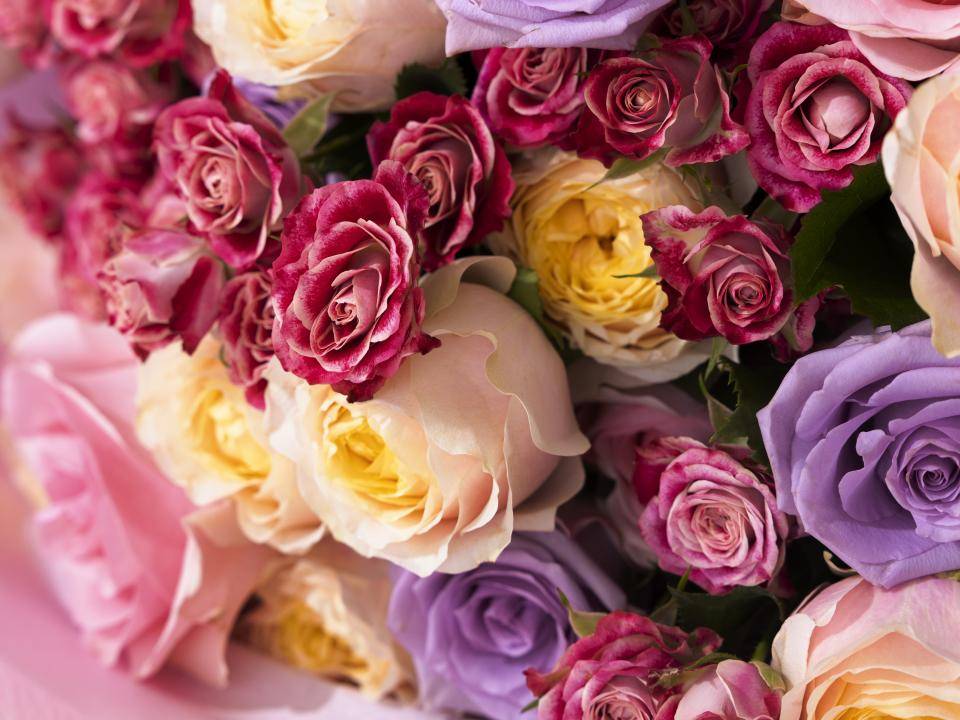

Lisianthus is a popular cut flower, much loved in bouquets for its refined, romantic appearance and long vase life. The flower is often compared to a Rose because of its shape and wide range of colours, but there are plenty of differences too! Read on to discover everything about Lisianthus.
Lisianthus characteristics and flowering
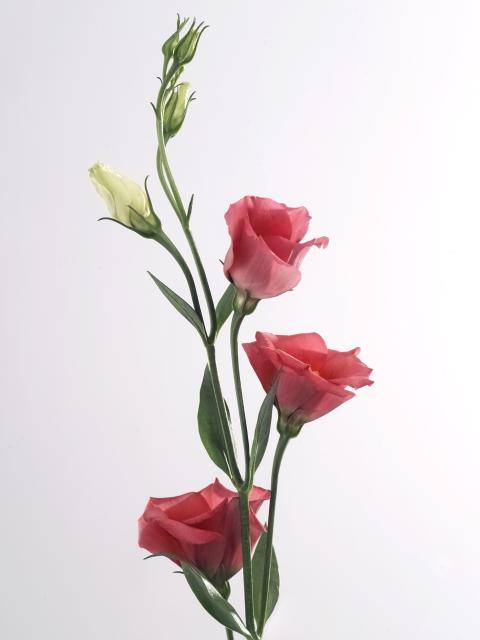
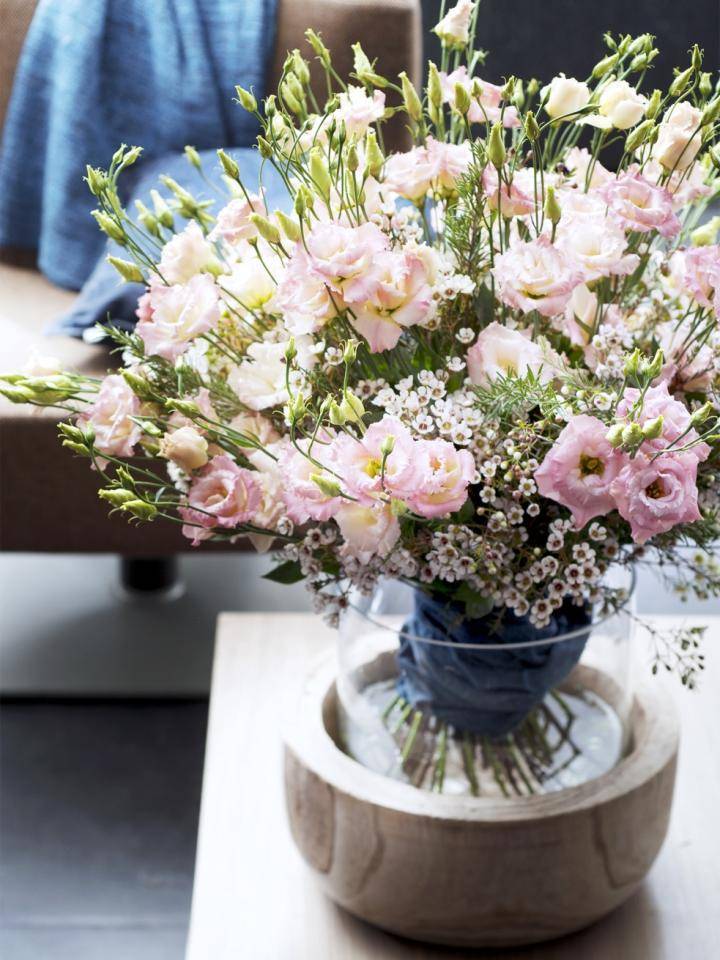
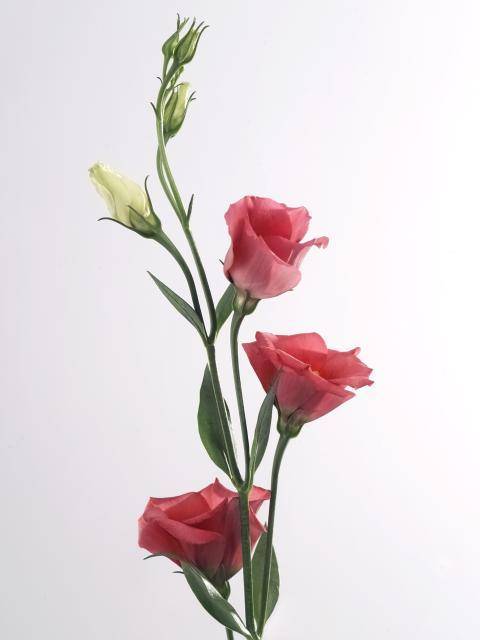
Lisianthus looks quite similar to a Rose, thanks to its layered petals. But there are some major differences. While a Rose has one flower per stem, Lisianthus branches, producing several flowers (or flower buds) on a single stem. Lisianthus also has no thorns, a more slender stem and a lighter, airier appearance than a Rose.
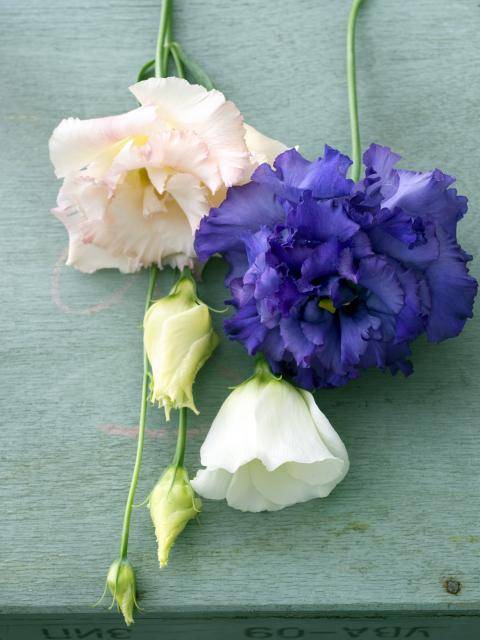
Lisianthus comes in a wide range of colours, from white and pink to purple and yellow-green. Most commonly, the flower is blue-purple, just like the wild species. As a cut flower, Lisianthus is available all year round, but it naturally flowers from summer into early autumn.
Lisianthus belongs to the gentian family (Gentianaceae), a plant family best known for its elegant flowers. The botanical name for Lisianthus is Eustoma.
Thanks to its many flower buds, which open gradually, you can enjoy a bouquet of Lisianthus for even longer.
Caring for Lisianthus
Lisianthus is a hardy cut flower, known for its long vase life. With the right care, the flower can stay beautiful for as long as two to three weeks! Take a look at these basic rules and tips to keep your flowers looking their best for as long as possible, and follow the Lisianthus vase care tips below:
- Use a clean vase.
- Cut the stems at an angle with a sharp knife.
- Remove any leaves that would sit below the waterline.
- Fill the vase with a little fresh water and, if desired, cut flower food.
- Change the vase water every 2-3 days.
- Keep the flowers out of direct sunlight and away from ripening fruit. Ripening fruit releases ethylene gas, which causes flowers to wilt more quickly.
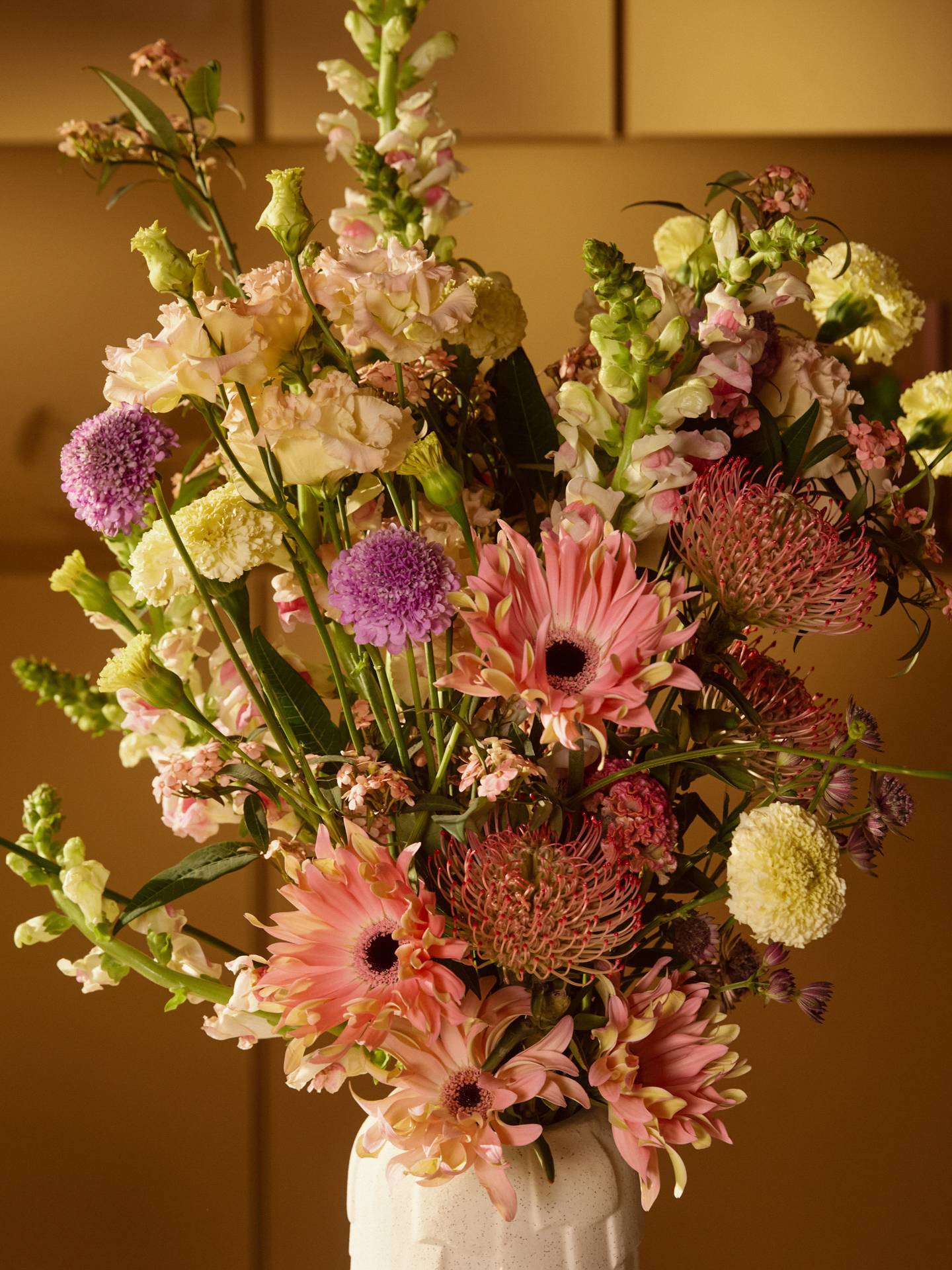
The botanical name for Lisianthus is Eustoma.
What types of Lisianthus are there?
Botanically speaking, there are only a few Eustoma species, namely Eustoma grandiflorum (by far the best-known species), Eustoma exaltatum (a smaller, wild species) and Eustoma barkleyi (a rare species).
Almost all Lisianthus you see at florists and garden centres are varieties of Eustoma grandiflorum. There are hundreds of cultivars (cultivated varieties) of this species. They mainly differ in flower shape, size and colour. The most popular are double-flowered cultivars, which closely resemble Roses. There are also single-flowered cultivars with a lighter, airier look, as well as unusual varieties with fringed or two-tone flowers.
Almost all Lisianthus you see at florists and garden centres are varieties of the botanical species Eustoma grandiflorum.
Is Lisianthus poisonous?
No, Lisianthus is not known to be poisonous to people or pets. So you can happily bring the flower into your home! Even so, it is always sensible to keep flowers out of reach of small children and pets.
Symbolism of Lisianthus
With its elegant flowers and romantic appearance, Lisianthus symbolises appreciation, gratitude and loving connection. The flower is often given to show someone just how much they mean to you.
Because the flowers open gradually, Lisianthus is also often associated with growing love. In bridal bouquets, the flower symbolises a long-lasting and harmonious relationship.
Origin of Lisianthus
Lisianthus, also known as Eustoma (grandiflorum), originally comes from the warm prairies and grasslands of the southern United States, northern Mexico and parts of the Caribbean. There, the plant grows in sunny, open areas with well-drained soil. In the wild, Lisianthus usually has purple to blue-violet flowers, a colour also found in many cultivated varieties.
Although botanists have known about the plant since the 19th century, Lisianthus only really became popular worldwide as a cut flower in the second half of the twentieth century. Today, Lisianthus is grown around the world and is one of the most popular and long-lasting cut flowers for bouquets and floral arrangements.
Lisianthus is also known as Prairie Gentian, as the flower originally comes from the sunny prairies and grasslands of the United States and Mexico.