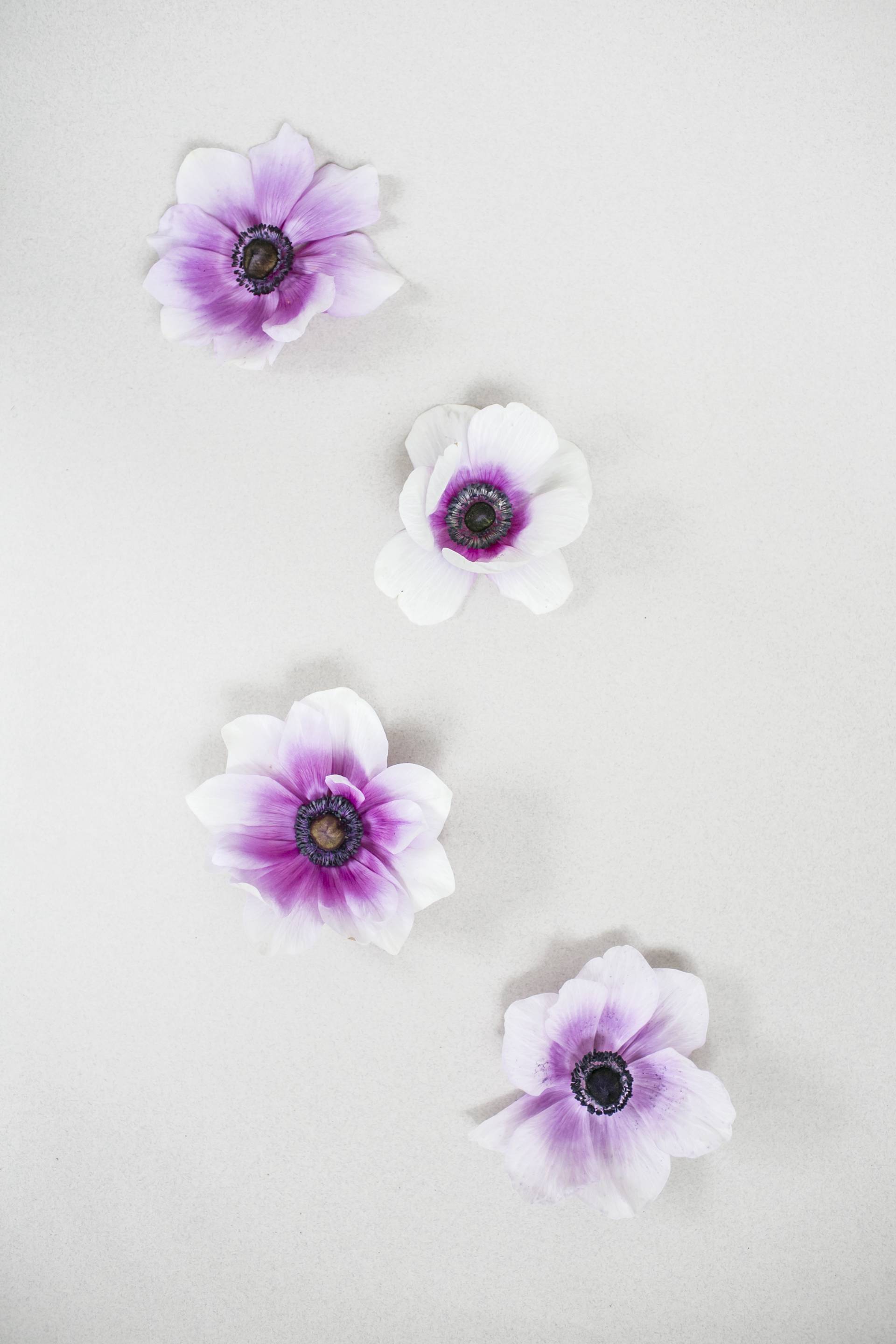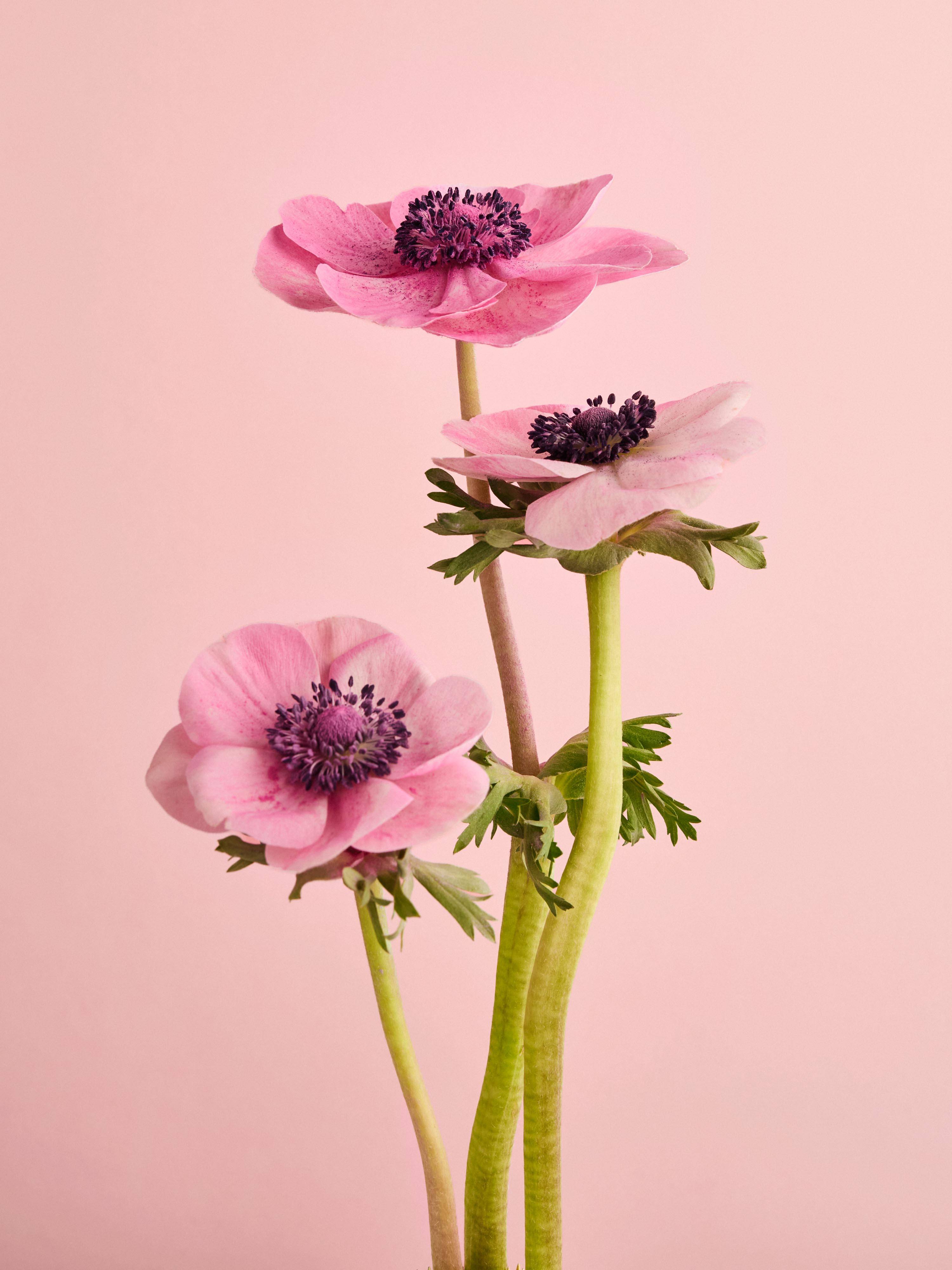


The Anemone is a wonderfully versatile flower, loved both in the garden and in bouquets. As a cut flower, it instantly brightens up any arrangement. In the garden, it brings colour to the winter months and early spring. In this complete guide, you will find everything you need to know about Anemone care, the main varieties, how to use the Anemone as a cut flower and garden plant, and the symbolism and origins of this beautiful bloom.
Characteristics and flowering
The Anemone, also known as the windflower, belongs to the buttercup family Ranunculaceae, just like Ranunculus and Poppy. The name Anemone comes from the Greek word anemos, meaning ‘wind’, as the flowers often sway gently in the breeze. Quite poetic, really.
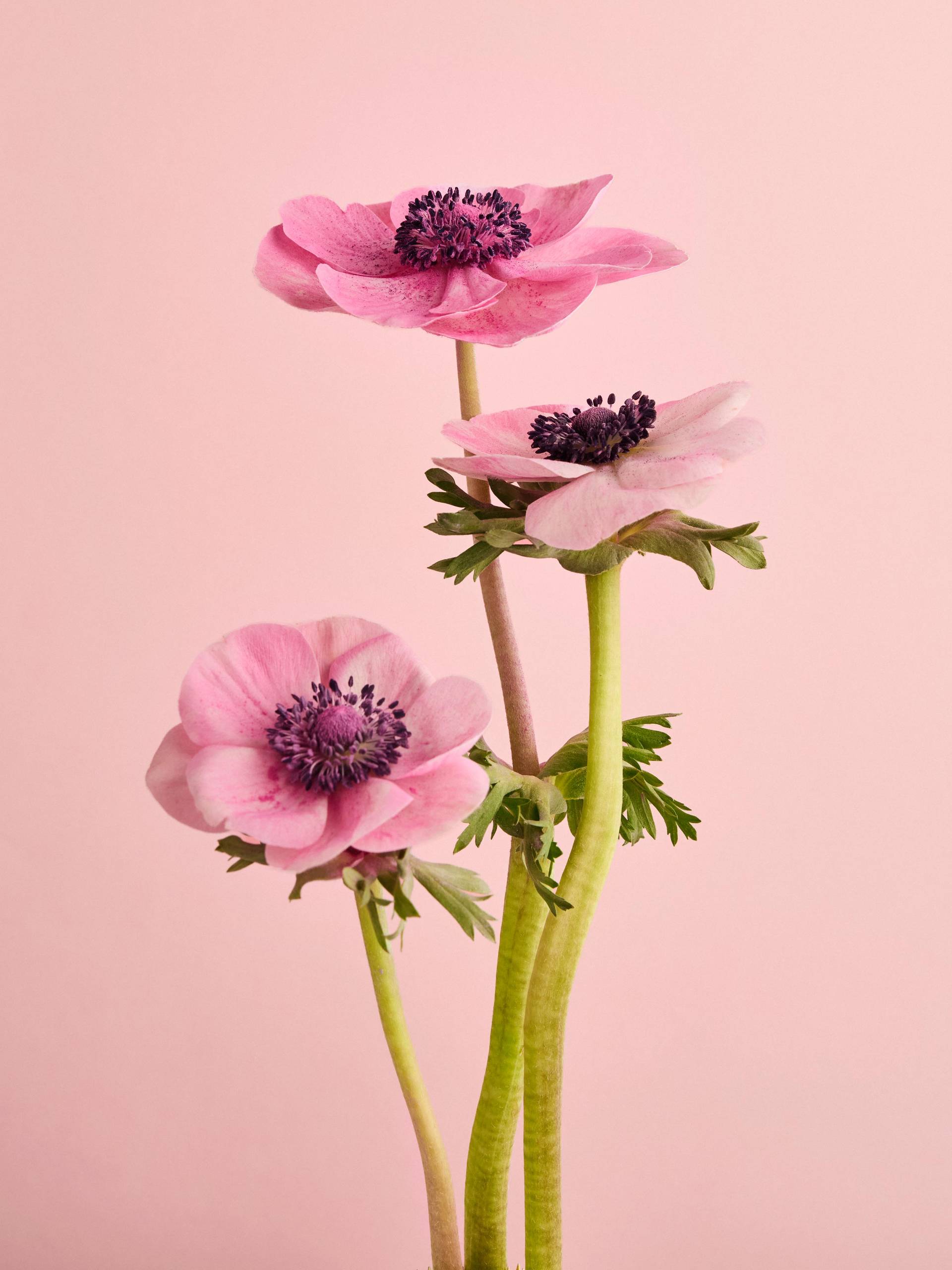
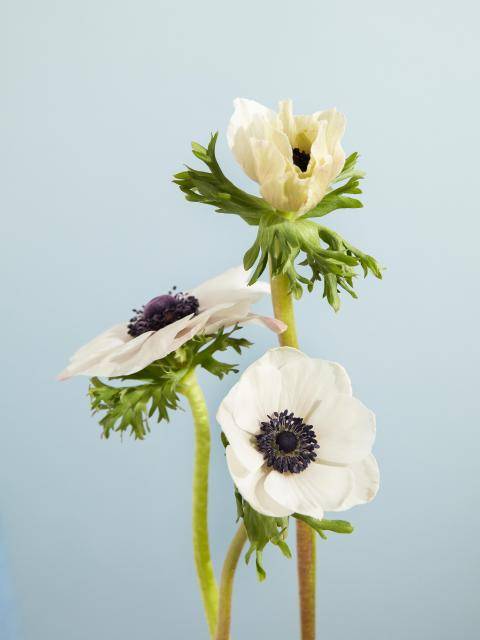
These are the key visual characteristics of Anemone:
- Flowers: Single, cup-shaped blooms, often in striking colours
- Colours: Red, White, Pink, Purple, Blue
- Leaves: Deeply cut, feathered (the indentations do not reach the midrib), dark green
- Flowering period: As a cut flower, it often blooms from winter to early spring. Garden varieties flower in spring or autumn, depending on the species
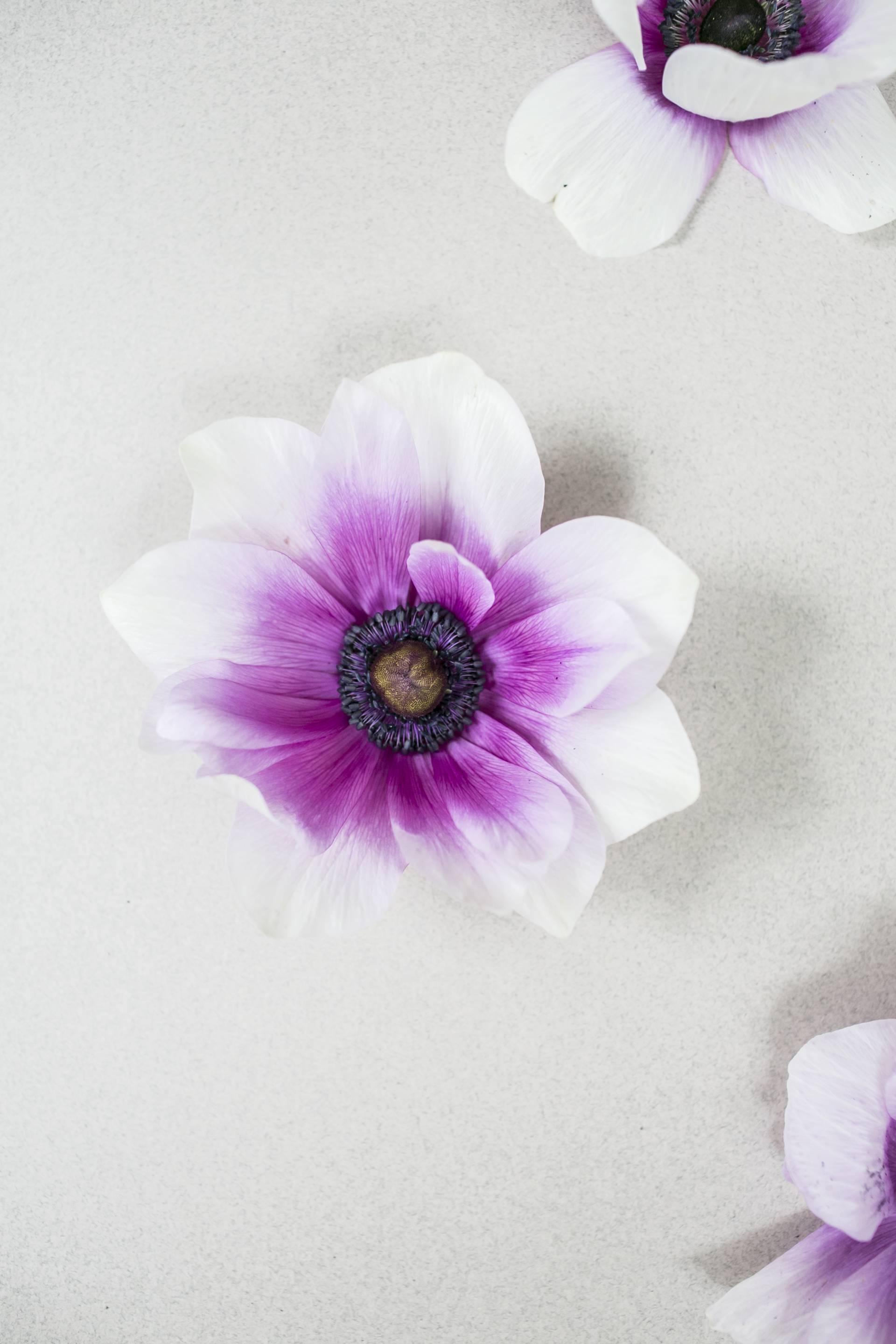
- Flower centre: A ring of golden-yellow stamens surrounded by colourful sepals in Black, Yellow, Green, White, Pink or Purple. The contrast with the petals is dramatic and truly beautiful.
What varieties of Anemone are there?
There are around 120 botanical species of Anemone. The most well-known are:
- Anemone coronaria – eye-catching blooms in Red, White, Blue and Purple. Popular as a cut flower
- Anemone blanda – a low-growing, early bloomer in Blue, White or Pink. Ideal for borders and rock gardens
- Anemone hupehensis – an autumn-flowering variety, often Pink or White. Adds colour to the late-season garden
- Anemone nemorosa – the Wood Anemone, small and White-flowering, often found along natural woodland edges
Anemone care in a vase
For more general tips on cut flowers, see our article on how to keep flowers looking beautiful for as long as possible.
The Anemone is a stunning cut flower, but it does need the right care to stay at its best:
- Water: use cold to lukewarm water. Change it every two days
- Stems: cut at an angle to encourage water uptake
- Temperature: keep in a cool spot, away from direct sunlight
- Nutrition: add cut flower food if desired to extend vase life
Anemone as a garden plant
The Anemone is not only a favourite cut flower for the vase, but also a much-loved garden plant. See our plant guide for Anemone for more details.

Meaning and symbolism of the Anemone
The Anemone symbolises protection, anticipation and transience. In bouquets, the flower is often used to express hope and remembrance. The Anemone also represents hope and new beginnings, inspired by its response to the wind, as well as love, care and devotion.
Depending on the colour, the meaning can vary. Red stands for love and passion. White symbolises purity and protection. Blue represents hope and calm.
The flower is also closely associated with Greek mythology and the fleeting nature of life.
Where does the Anemone originally come from?
Anemones originate from various temperate and subtropical regions around the world, with a strong presence in Southern Europe, Central Asia and North America. The name derives from the Greek word anemos meaning wind, referring to the wind-sensitive petals and seeds. Mythological stories link the flower’s origin to nymphs and gods.
The plant was introduced to the Netherlands more than 400 years ago.