Flower arranging is both an art and a wonderfully enjoyable way to brighten up your home. Whether you want to create an elegant table bouquet or a structured floral arrangement. With the right techniques, tools and a little practice, you will quickly achieve beautiful results. Add to that how wonderfully relaxing it is to spend time with fresh flowers, floral foam and your favourite pair of pruning shears.
In this article, you will discover what you need for flower arranging, practical tips for arranging flowers, different styles, and useful tools. This gives you a complete overview that you can use for all your floral projects.
What do you need for flower arranging?
Before you start, it is really important to have the right basic supplies ready. This helps you work efficiently and get the most out of your time and your flowers.
Essential tools for flower arranging
- Sharp and clean knife or pruning shears – to cut flowers neatly so they stay beautiful in the vase for longer.
- Vase – large, heavy or specially shaped depending on the bouquet. For example, there are special vases for Tulips, and when working with Gladioli you will need a different vase than for a Hydrangea.
- Vase water – fill the vase with enough water, but not too much. Often you only need a small layer of water. You can add cut flower food if desired. You can find more tips on how to enjoy your flowers for as long as possible here.
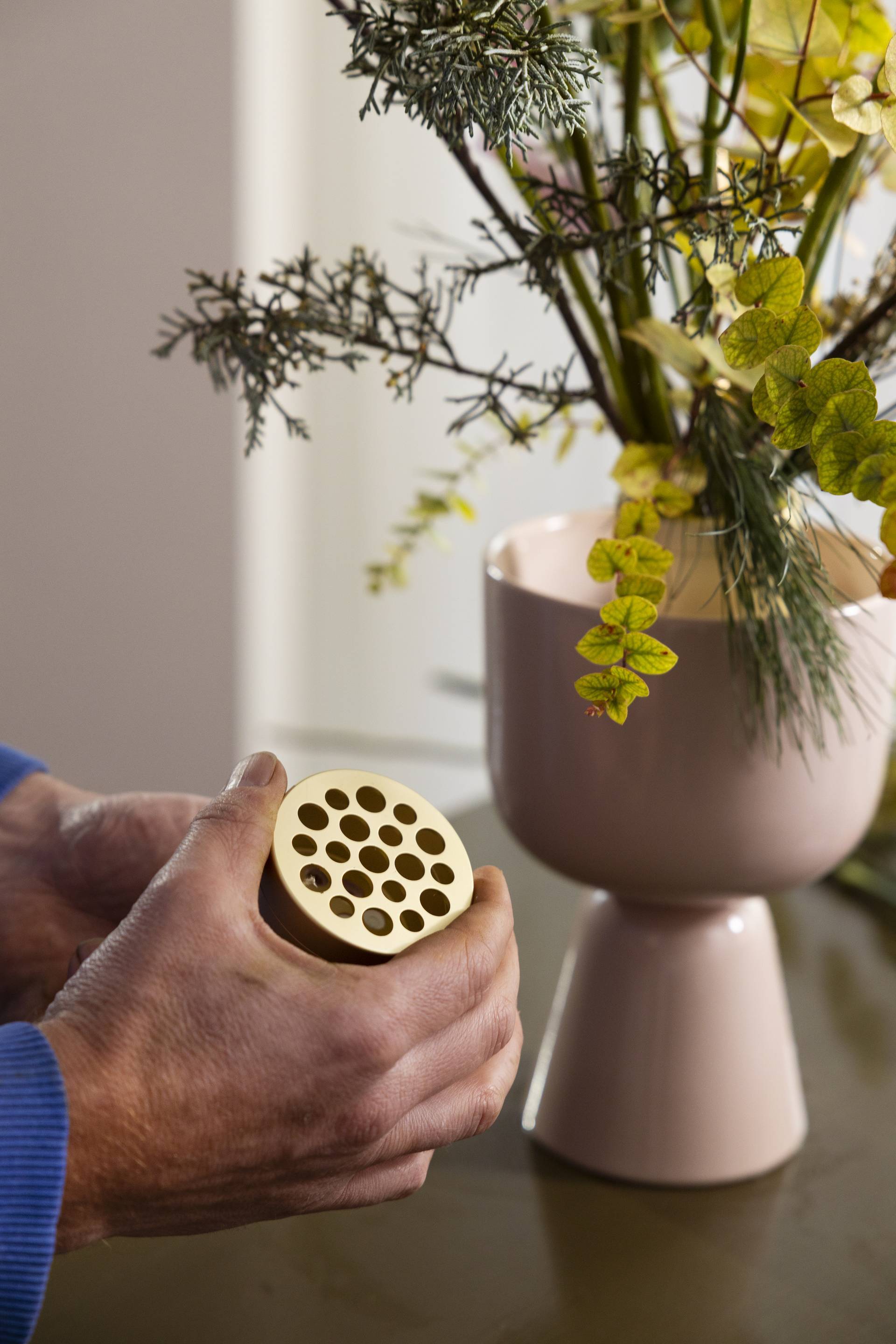
- Optional aids – such as a flower frog, twister or floral foam, for sturdier arrangements.
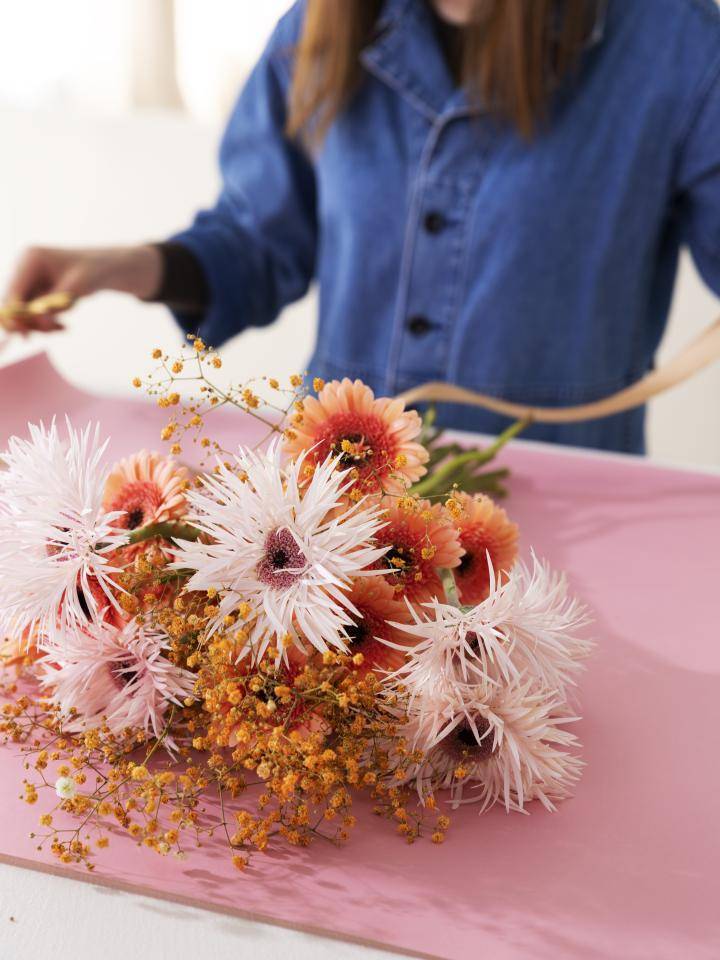
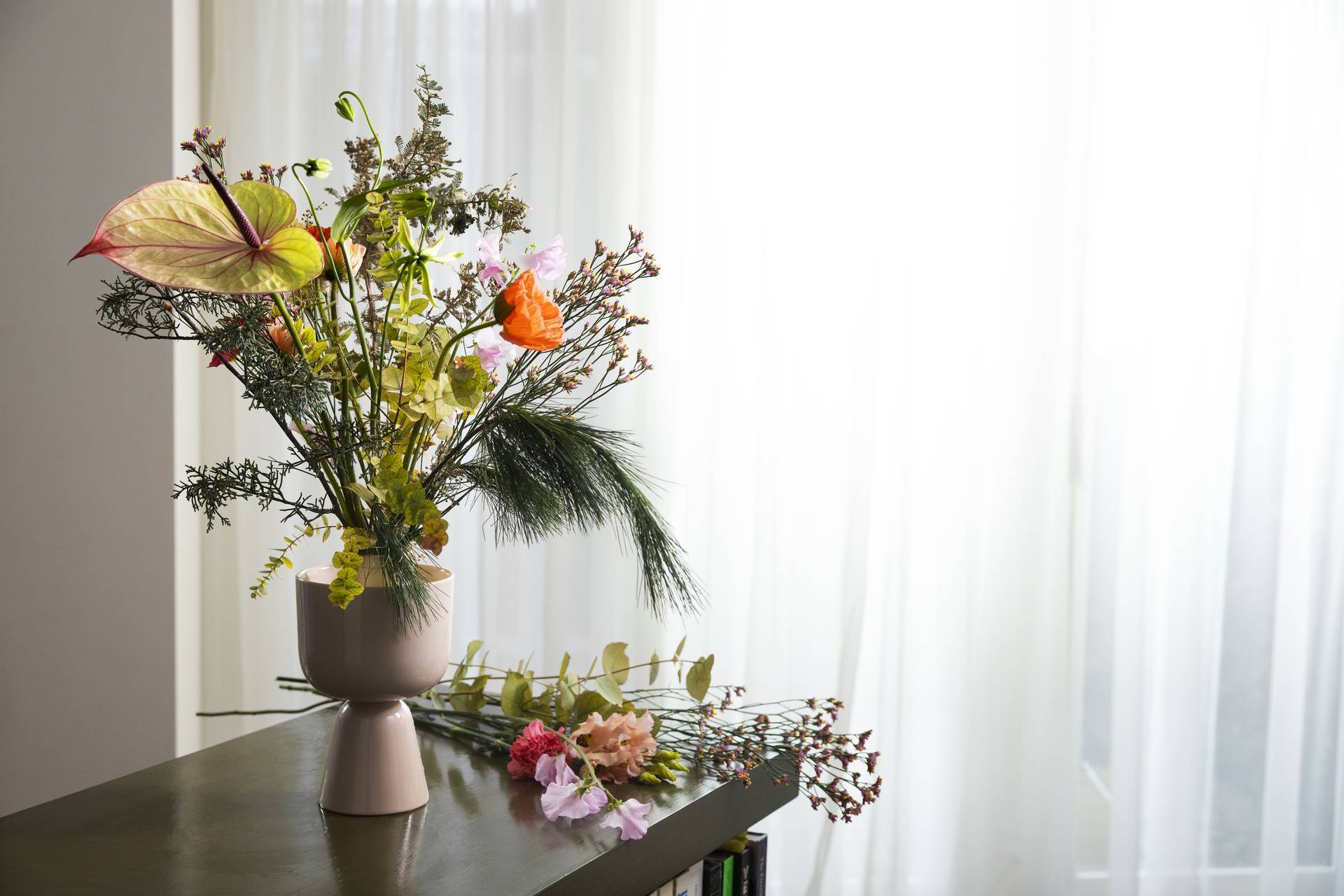
Tip: For heavy or large bouquets, use a wide and stable vase so everything stays firmly in place. For loose, meadow style bouquets, a taller, narrower vase is often enough. Have more flowers than vases at home? Do not underestimate your favourite carafe or water jug.
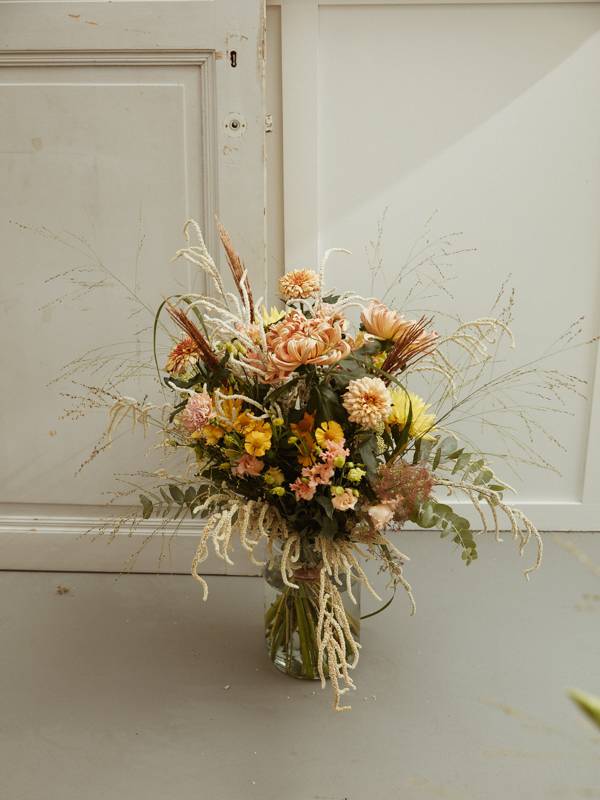
Basic tips for flower arranging
With a few simple rules, you can quickly create a beautiful and harmonious bouquet. Of course, you can follow these tips closely, but do not forget to enjoy being creative and doing your own thing.
- Bring flowers into your home that genuinely make you happy: make sure there is variation in size, length, colours and shapes.
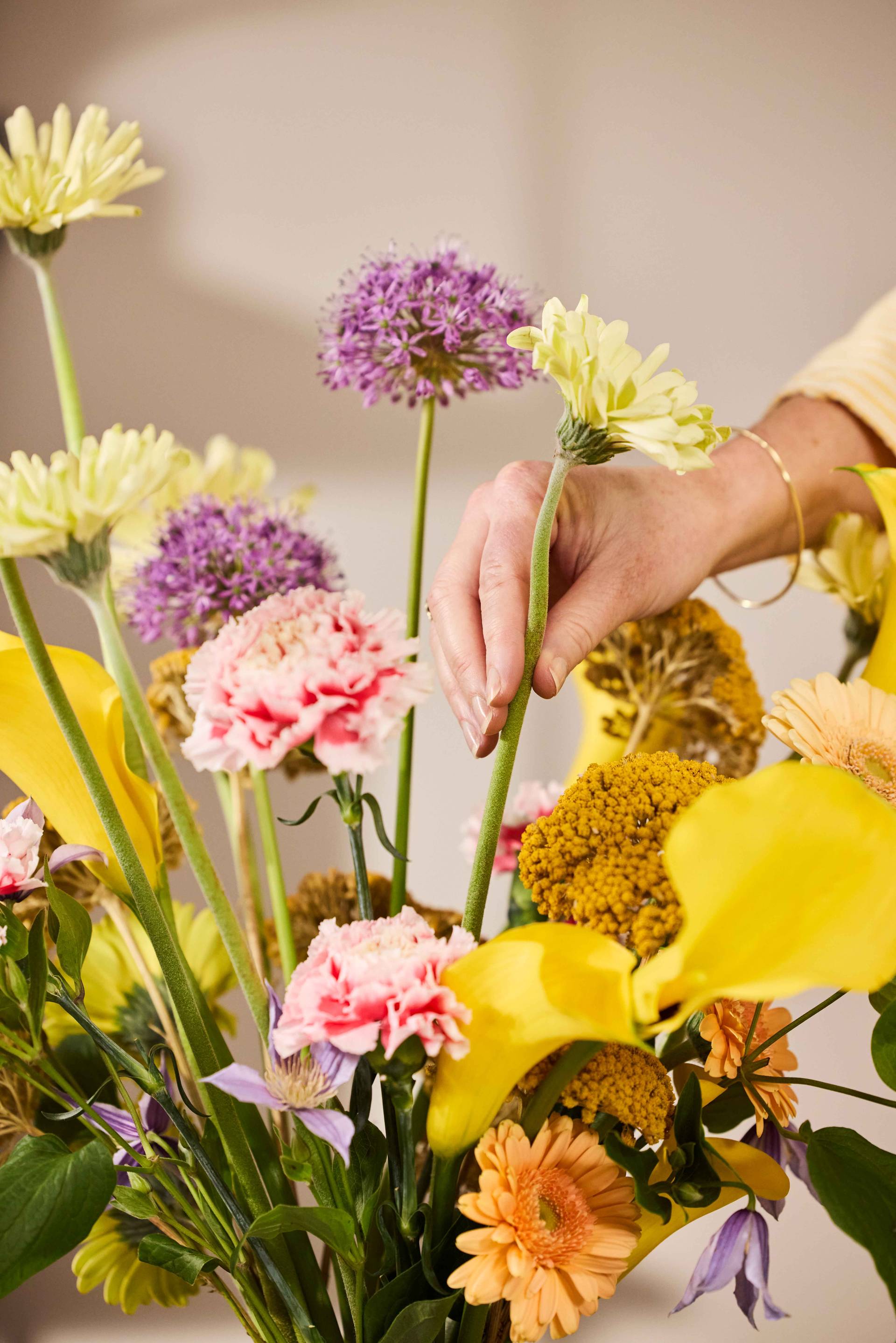
- Work stem by stem: never force all the flowers into the vase at once.
- Arrange flowers diagonally opposite each other: this creates depth and a natural look.
- Vary height and direction: especially in meadow style bouquets, different heights are often used, but it does not always have to be that way.
- Combine colours and shapes: flowers with different colours and forms enhance each other and make the bouquet interesting to look at.
Work stem by stem: never force all the flowers into the vase at once.
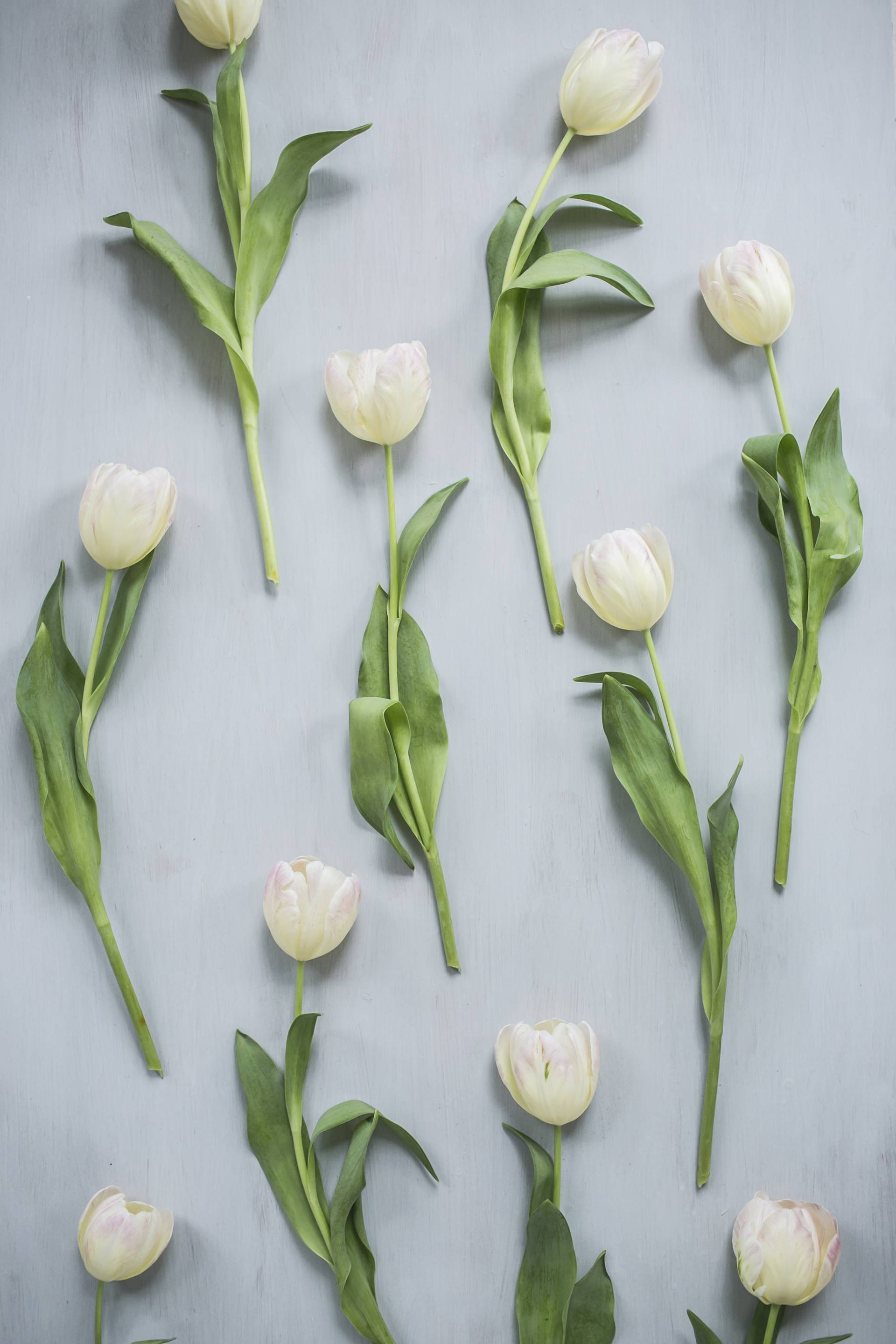
Step by step: creating a simple basic bouquet yourself
- Prepare the vase and water. First choose a suitable, clean vase and fill it with a small layer of clean water. Add your favourite cut flower food if desired. Not sure whether to use warm, cold or lukewarm water? Check what suits the flowers you have bought.
- Prepare the flowers. Cut the stems diagonally with a sharp knife or pruning shears. Remove excess leaves that touch the water. Note: always check per flower whether diagonal cutting is actually recommended. For Tulips, for example, it is better to cut them straight, so they do not continue growing too vigorously in the vase.
- Start with the largest flowers. Place the largest or most eye catching flowers in the centre of the vase.
- Fill in with smaller flowers and greenery. Work from large to small, fill empty spaces and let some stems extend slightly for a natural look.
- Check balance and height. Turn the vase around and see whether the bouquet looks good from all angles. Adjust stems for balance and harmony.
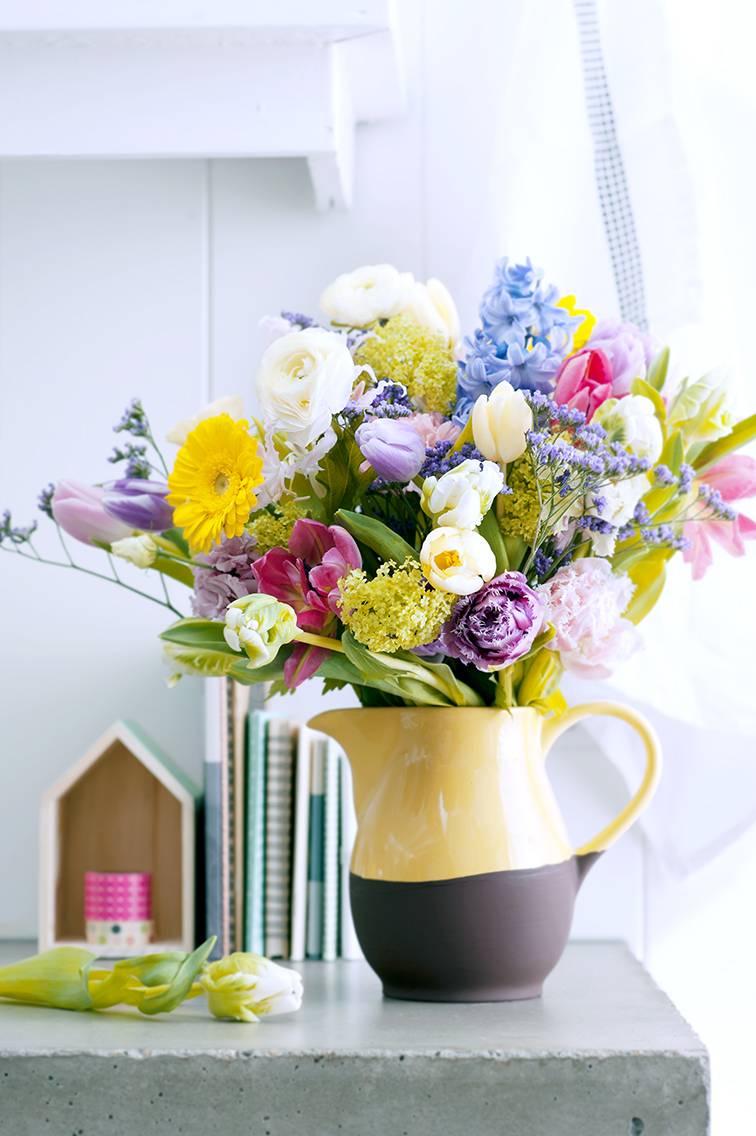
Tip: experiment with light colour accents such as white, cream or pink to make the bouquet feel extra fresh and elegant.
Tools for flower arranging
A flower frog, twister or floral foam. No idea what these are? A flower frog is a type of base into which you can gently pin your flowers upright, providing support. A twister is a stem holder that allows flower stems to be twisted into position in the vase. Read everything about these handy tools here. And then there is floral foam. Floral foam is a material that looks a bit like firm foam, into which you can insert flowers, branches or other accessories for your arrangement.
Different ways of flower arranging
There are many styles you can try, each with its own look and technique.
Biedermeier
A Biedermeier bouquet is structured and round, with flowers arranged in circles or layers, sorted by colour. Start in the centre with the largest flowers and work outwards with smaller ones. You can find more steps in this Biedermeier guide.
Meadow bouquet
For a easy-breezy bouquet inspired by the feeling of a freshly picked meadow, choose flowers of different types, colours and heights. Work from large to small and let some stems extend slightly. This creates a playful and natural effect.
Japanese flower arranging (Ikebana)
Ikebana is all about minimalism, balance and line. It is a Japanese art form that focuses on restraint, structure and thoughtful composition. In Ikebana, it is not about the number of flowers, but about the shape and position of each stem. Work with height differences and negative space to give the arrangement calmness and elegance. Negative space in Ikebana refers to the empty or white space between the flowers, branches and leaves, which is just as important as the objects themselves. It creates calm, breathing room and a sense of harmony and balance.
Tip: A tool such as a flower frog can help you create this negative space.
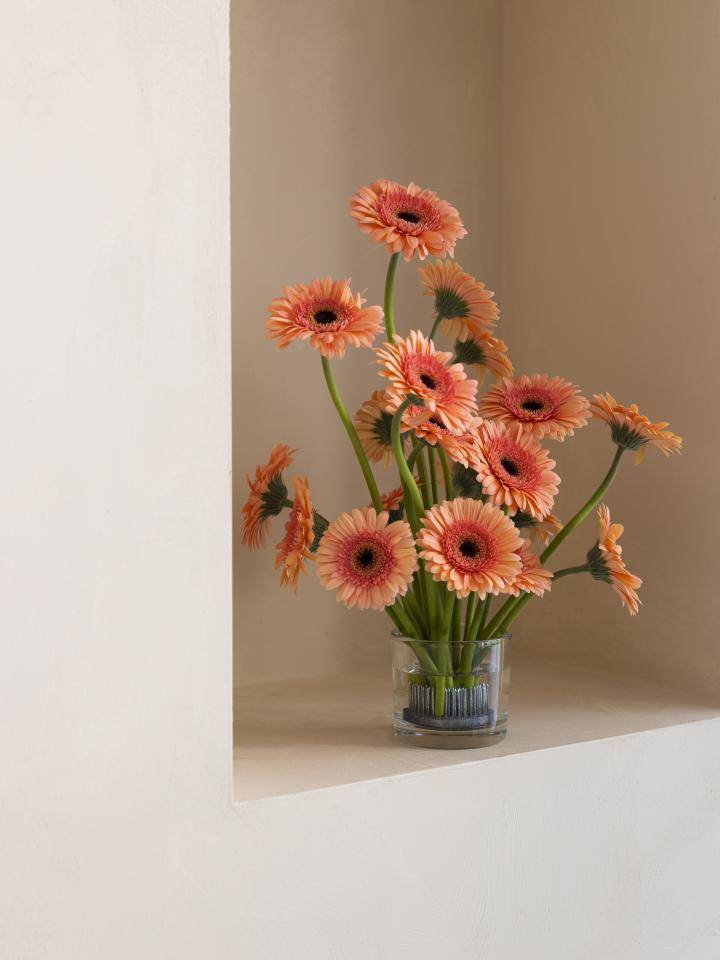
In Ikebana, it is not about the number of flowers, but about the shape and position of each stem.
Christmas flower arranging
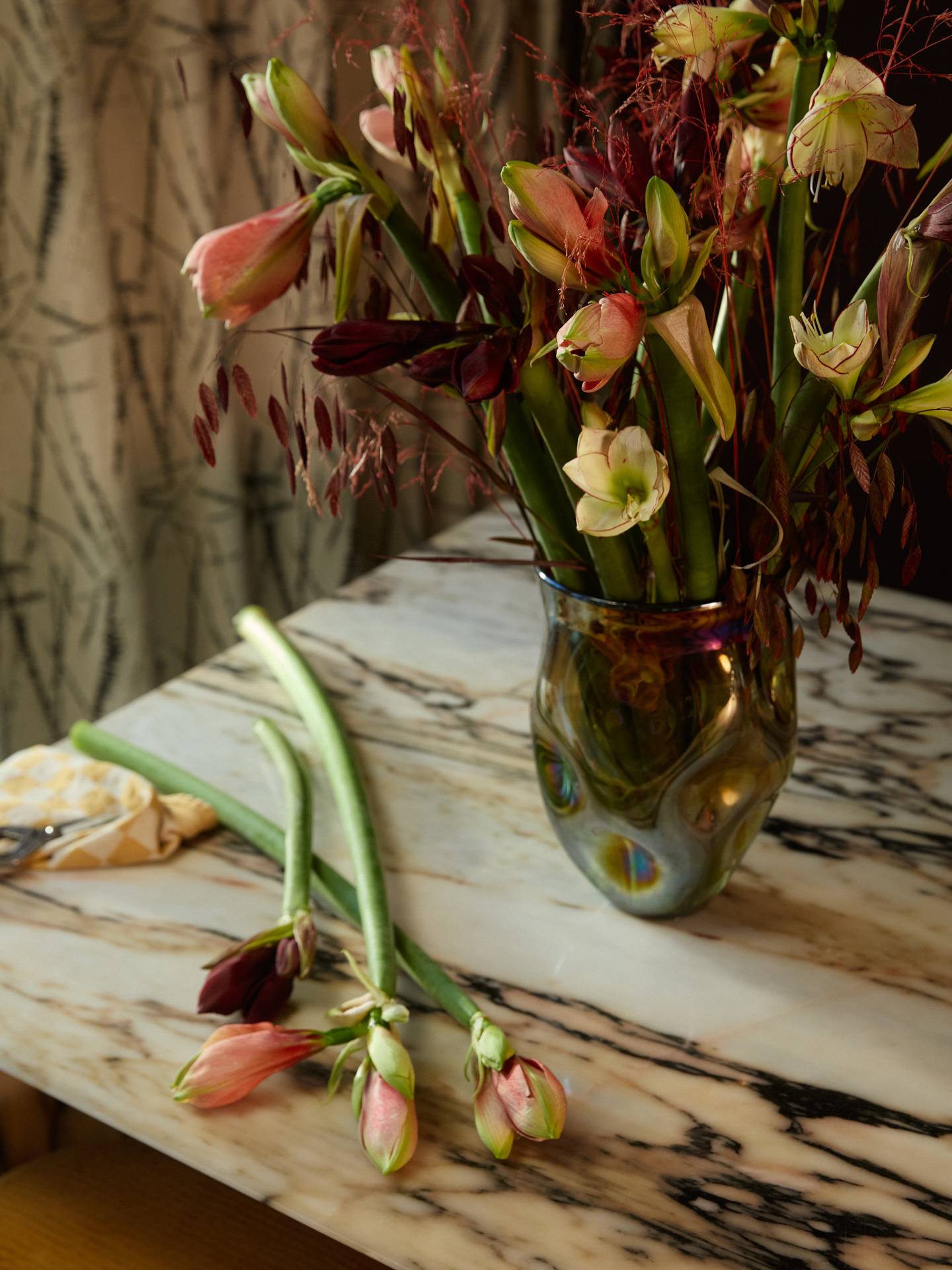
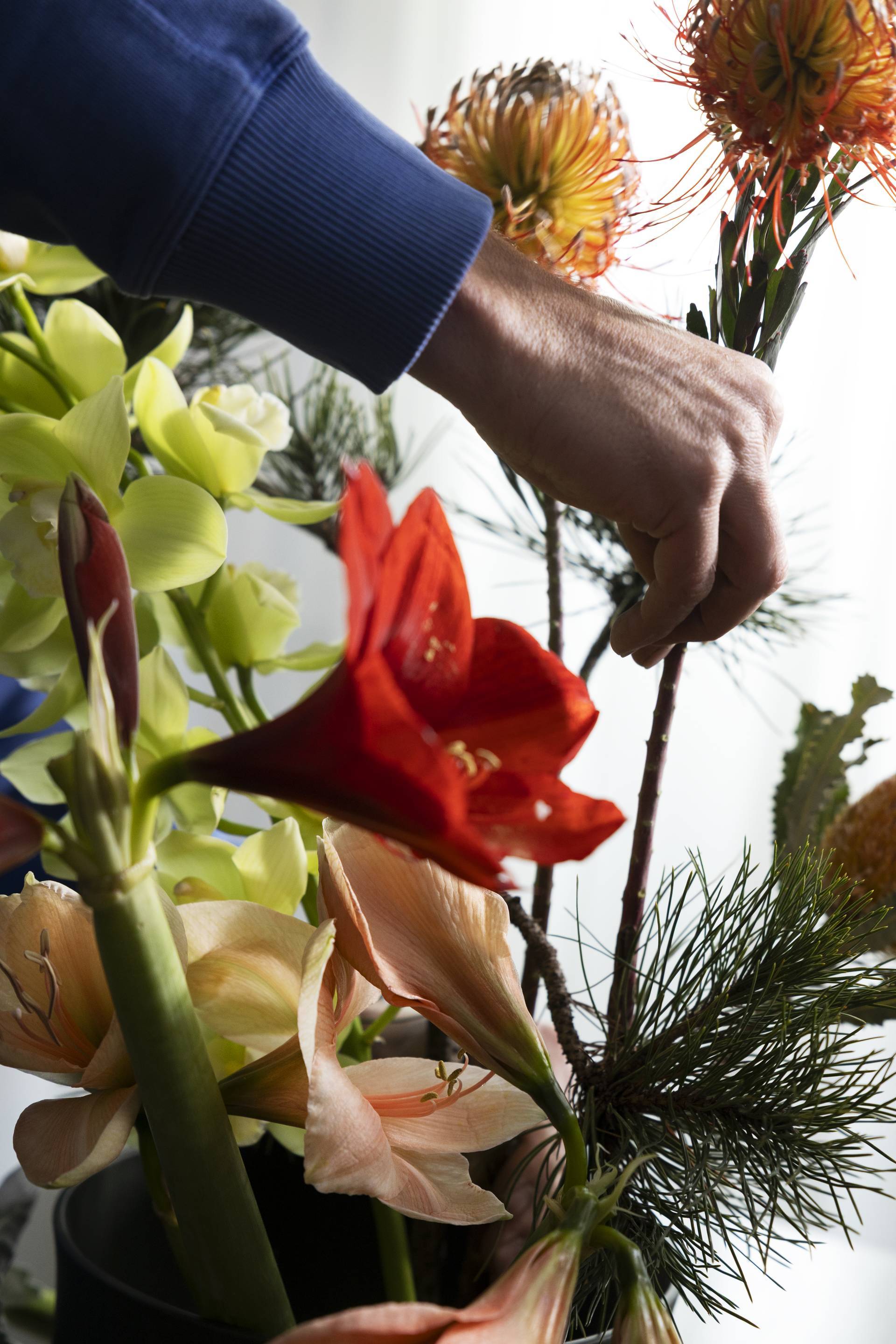
During the festive season, you can combine flower arranging with Christmas decorations to create a warm, celebratory atmosphere. Think deep red, green and white flowers combined with pine branches, baubles or sparkling accessories. You can use tools such as a twister to keep the arrangement sturdy.
Tip: for Christmas bouquets, you can use the tool combinations from the article on styling Christmas bouquets. Or get inspired by other Christmas bouquet ideas.
Need more inspiration?
Flower arranging offers endless possibilities. Would you like to discover even more techniques and styles? Then take a look at our other inspiration articles on scented bouquets, Biedermeier, eazy-breezy meadow arrangements and Christmas bouquets. That way, you will always have a guide at hand to help you create the most beautiful bouquets and floral arrangements yourself!