

Written by
Carmen
In this article you will discover what Japandi really means, and which plants perfectly complement this harmonious style. This refined interior trend combines Japanese minimalism with Scandinavian simplicity and revolves around calm, natural materials and soft earthy tones. With the right houseplants you subtly add life, balance and warmth without disturbing the serene atmosphere.
What is Japandi style?
Japandi is a combination of ‘Japanese’ and ‘Scandinavian’. The style centres on simplicity, functionality and natural harmony. The right plants fit seamlessly into this look, as long as they radiate calm and do not dominate the space.
A Japandi interior is characterised by:
- Soft, neutral colours such as beige, sand, taupe and warm grey
- Natural materials such as wood, linen, wool and ceramics
- Clean lines with subtle, organic shapes
- A minimalist approach where quality matters more than quantity
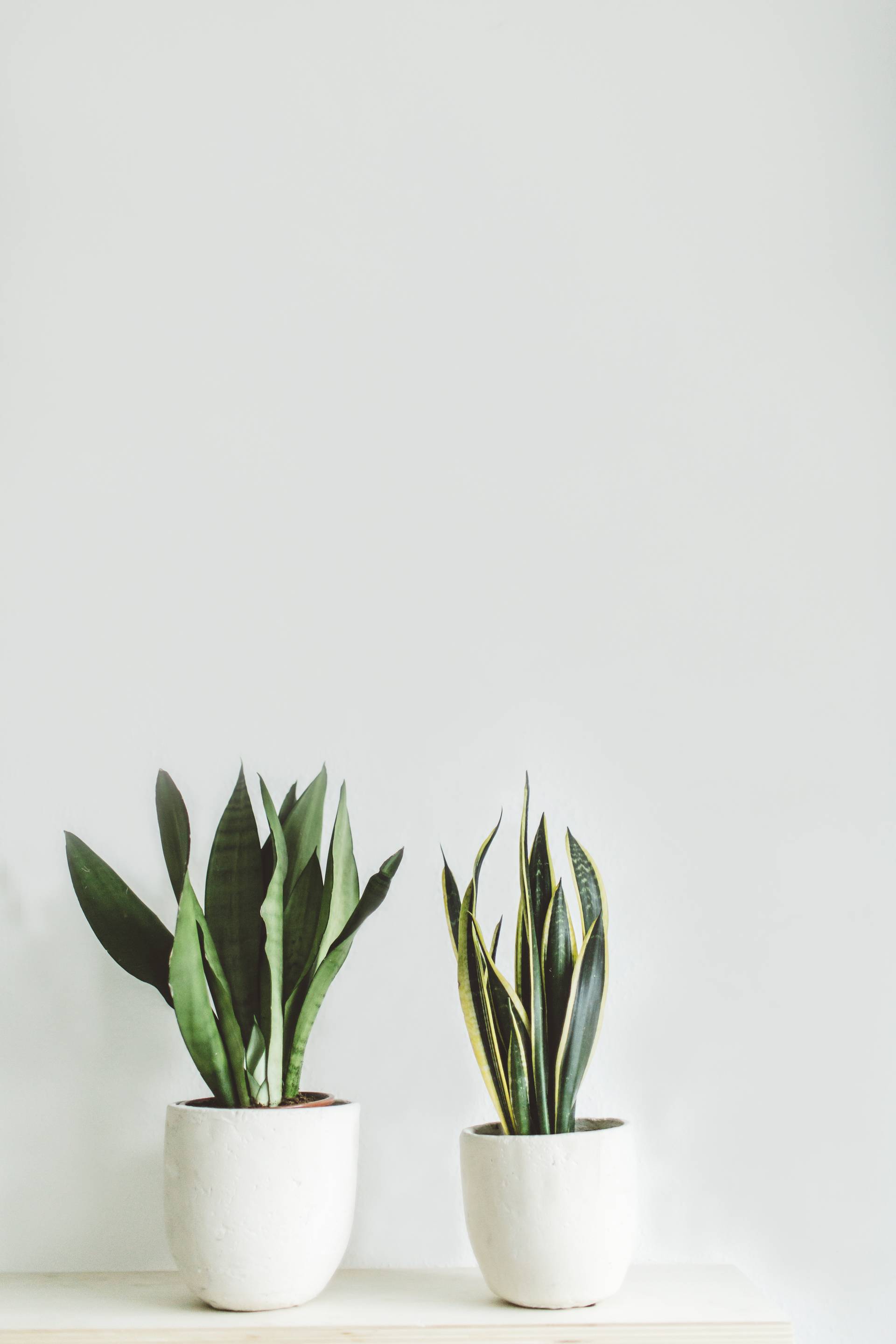
Japandi is a combination of ‘Japanese’ and ‘Scandinavian’.
Which plants suit a Japandi interior?
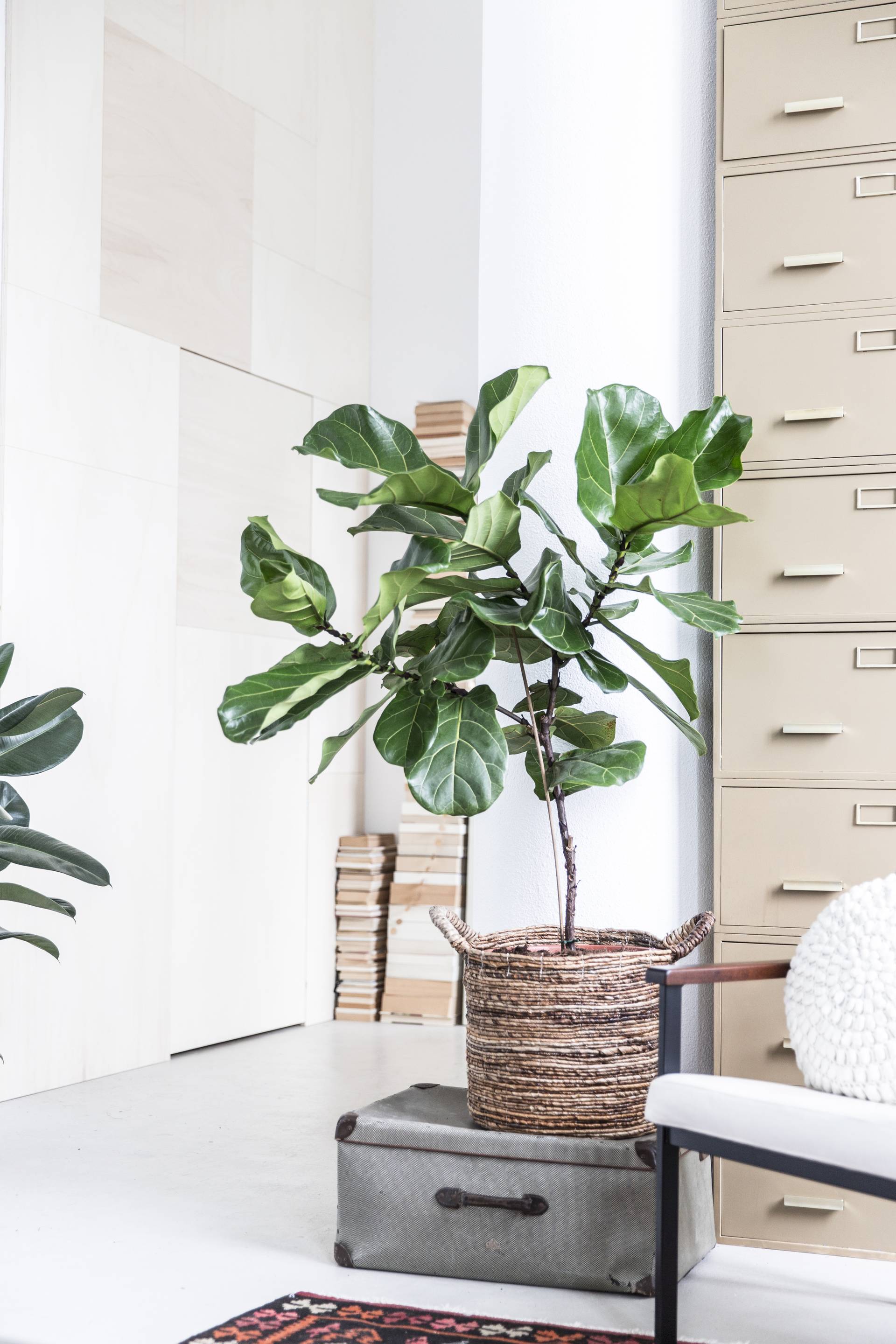
When choosing a Japandi houseplant, the focus is on shape, texture and simplicity. It is better to choose one larger plant with character than several smaller varieties grouped together. Plants with distinctive yet calm leaf structures work best with this style. These plants have a strong, clear form and natural green tones that perfectly complement a Japandi interior.
Popular Japandi plants include:
- Ficus Lyrata
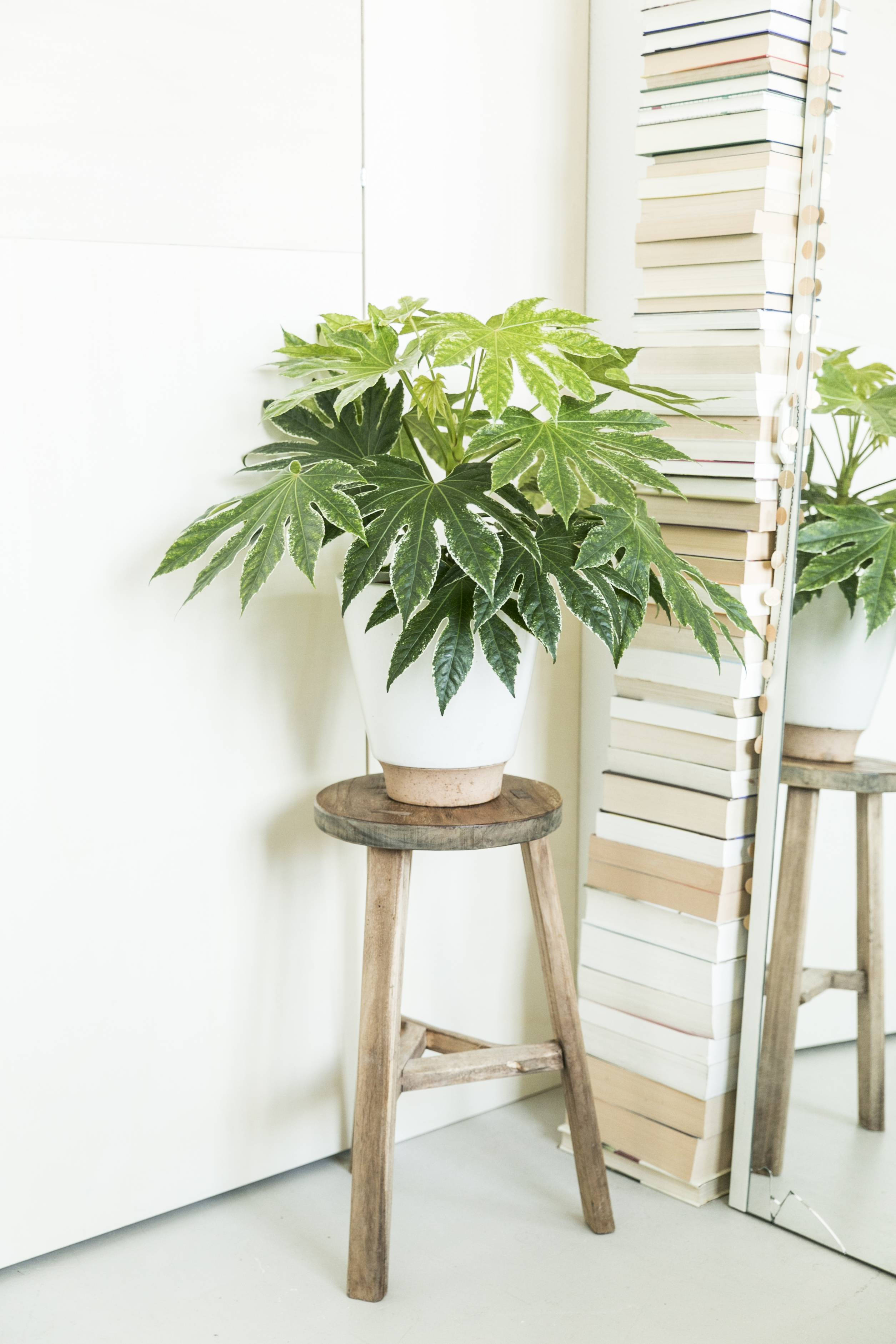
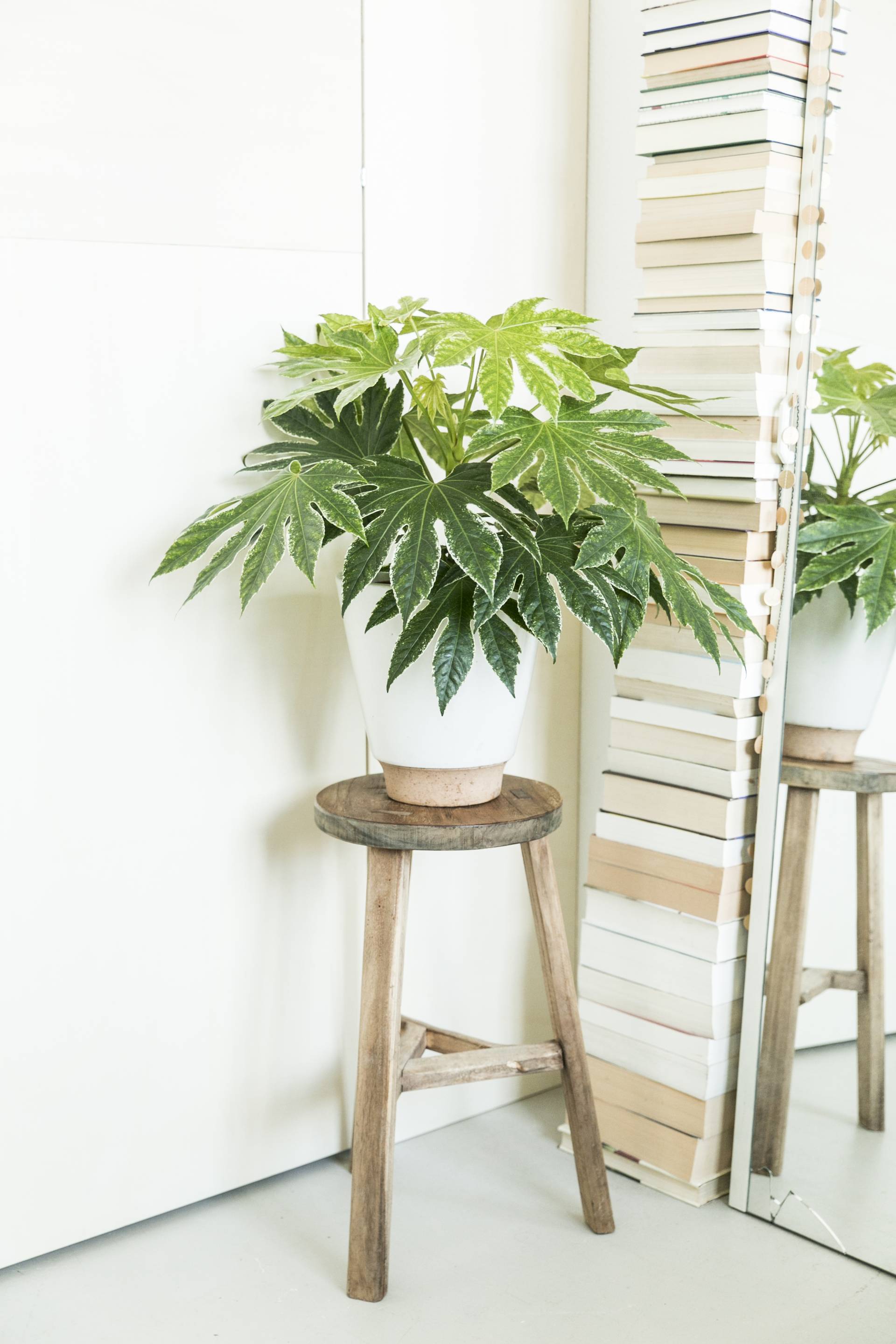
- Fatsia
- Strelitzia
- Bonsai
- Sansevieria (Snake plant)
- Zamioculcas
- Olive Tree
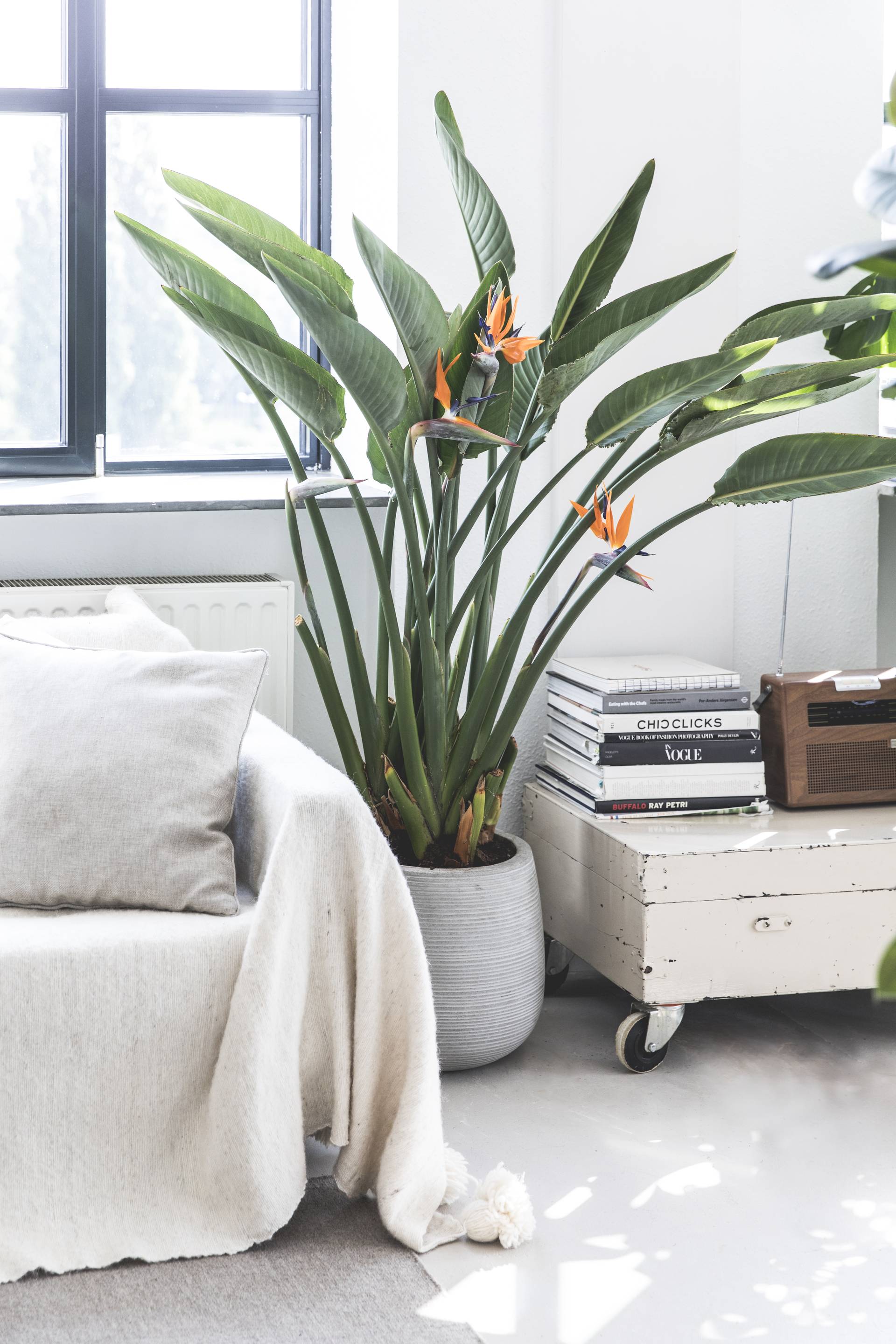
Japandi interior styling: how to style plants in your home
Not only the plant itself, but also the way you present it determines the overall effect. In a Japandi interior plants are given space, both literally and visually. Think calm compositions and natural materials. By placing plants thoughtfully, you create balance between form, light and material.
This is how you enhance the Japandi feeling:
- Keep it simple. Choose one statement plant per room
- Go for natural vibes. Use pots made from matte ceramics, terracotta or natural stone
- Work with asymmetry rather than symmetry
- Forget crowded plant corners. Leave enough ‘empty space’ around the plant
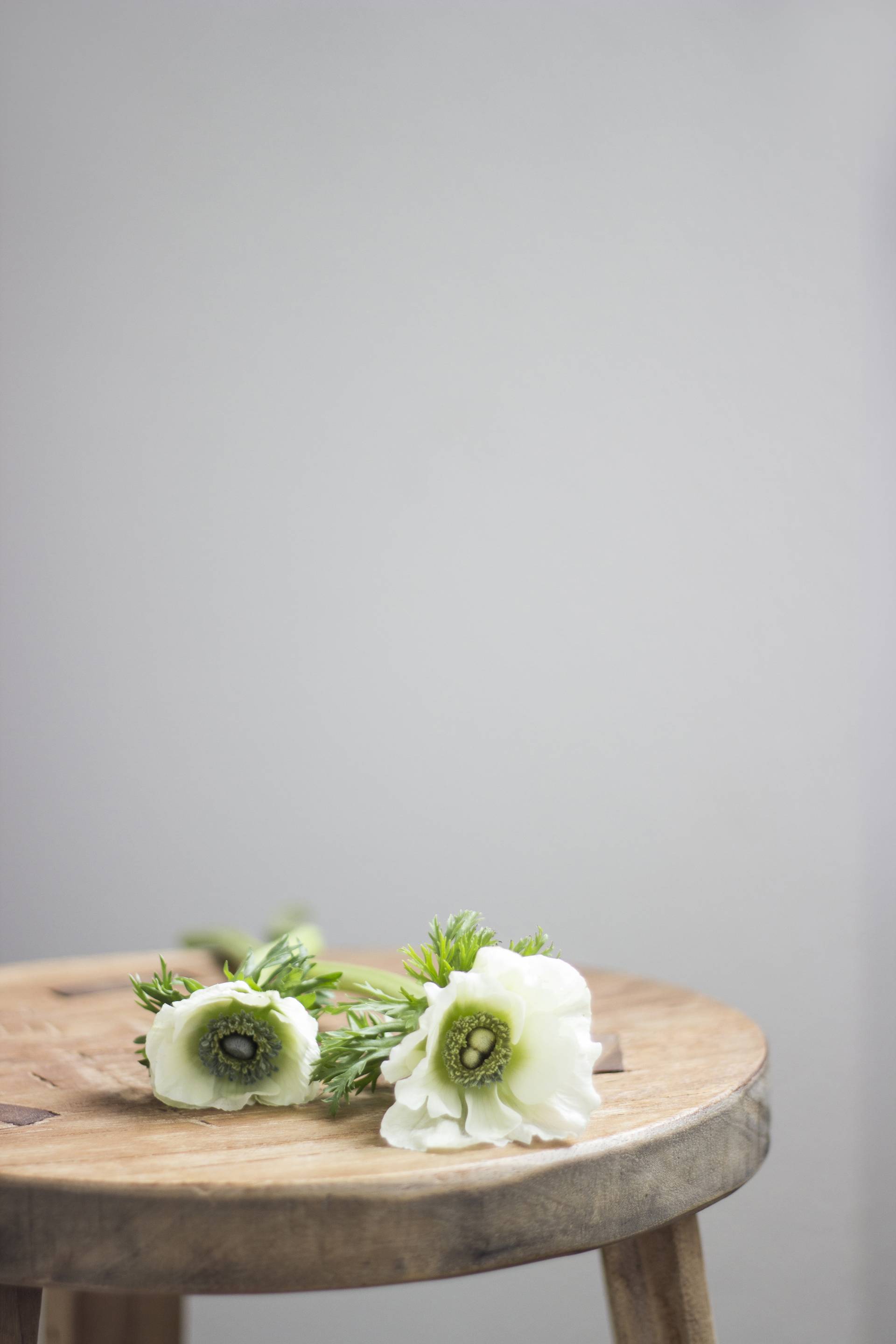
Flowers in a Japandi interior
Flowers can also be part of a Japandi interior, provided you choose simplicity and subtlety. Avoid full, exuberant bouquets and instead opt for restrained arrangements where form takes centre stage. It is also worth exploring Ikebana, a Japanese flower arranging style. A single branch or flower in a calm vase can already be enough to add atmosphere.
Flowers that suit a Japandi interior well include:
- Branches of Cherry blossom
- A single Anemone in a minimalist vase
- Dried flowers in soft natural tones, perhaps even in the same colour as your vase, wall and coffee table
- Airy wildflowers in a shallow bowl
Why plants are essential in a Japandi interior
Without greenery, a Japandi interior can quickly start to feel too strict or static. Plants bring movement and softness, while also reinforcing the natural character of the style. They create a subtle contrast with wood and textiles and make a space feel alive without causing visual clutter. By consciously choosing popular Japandi plants with a calm appearance, you create an interior that feels peaceful, warm and timeless.
Japandi style outdoors
Japandi is also a style that translates beautifully to outdoor spaces. Whether you have a large garden or a cosy balcony, the rules remain simple. Unlike traditional symmetrical gardens, a Japanese garden focuses on natural shapes, soft lines and a balance between height, colour and texture. Basic elements such as water features, stones, Moss and greenery create a serene atmosphere that invites so much relaxation you might almost turn into a Buddha yourself.
And the beauty of a Japanese garden. There is space for one everywhere. Whether you want to create a large garden, a small urban garden or even a mini Japanese garden on your balcony, the principles remain the same. Harmony, calm and natural beauty.
Looking for more inspiration for a natural interior style?
With the right balance between simplicity and greenery, your Japandi interior becomes a place where calm and nature come together. Would you like to experiment further with greenery in your home? Take a look at: