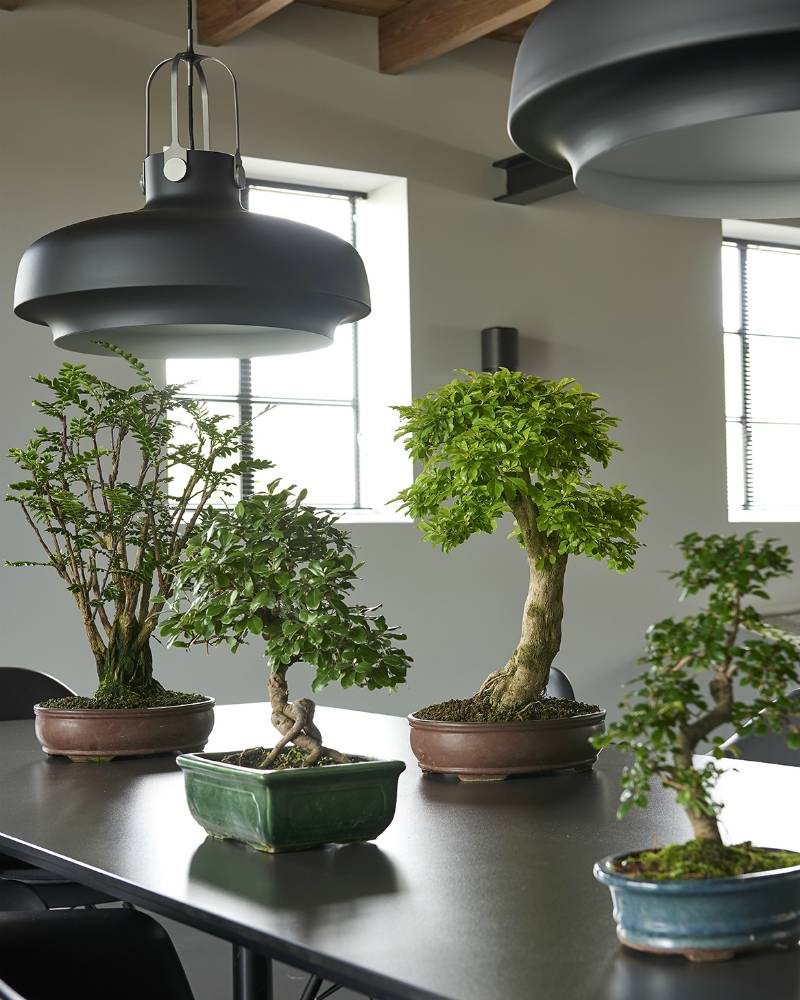
Bonsai is the Japanese word for ‘tree in a pot’. Bonsai is both an art form and an umbrella term for various types of miniature trees. From care and origins to symbolism: discover everything there is to know about the Bonsai tree in this guide!

Characteristics and shapes
Bonsai is not a separate plant species, but an ancient cultivation art in which trees and shrubs are grown in miniature form in a tray or shallow pot. The aim is not to create a ‘small plant’, but to represent a fully grown tree on a miniature scale.
You can recognise a Bonsai tree by its unique tree-like appearance, including its woody trunk and branch structure. Through pruning, wiring and the use of a small pot, the plant grows slowly, stays compact and develops small leaves, while still capturing the look of an old tree. Whether a Bonsai tree flowers depends on the plant species used.
Because bonsai is not a botanical species but a cultivation art, it does not belong to one fixed plant family. A wide variety of trees and woody shrubs can be shaped into bonsai.
Caring for a Bonsai tree
Here’s how to care for your miniature tree as well as possible:
- Place the Bonsai tree somewhere with plenty of indirect sunlight (not in full sun).
- Make sure the potting soil stays slightly moist at all times (prevent the root ball from drying out), but don’t let the soil become too wet.
- How often your bonsai needs water depends on the species, pot size, location and the season. In spring and summer, a bonsai needs more water than in autumn and winter.
- Feed bonsai with plant food once every 3 weeks during the growing season (spring and summer).
- In summer, when temperatures outside are above 12°C, a bonsai can also be placed outdoors (in a sheltered/covered spot).
- Check the care tips specific to your miniature tree, because every bonsai is different.
- You can shape the trees as desired by pruning or guiding the branches with wire.

What types of bonsai are there?
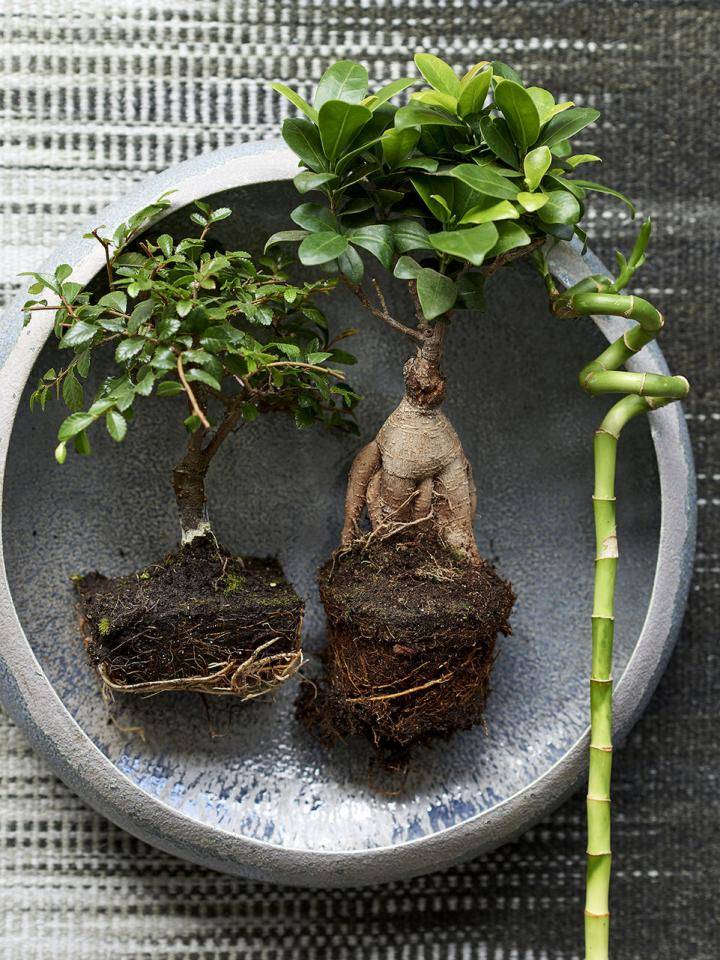
Because bonsai is not a botanical species, and the plant can originate from different plant species, there are no official bonsai varieties. There are, however, plant species that are commonly grown as indoor plants. The best known are:
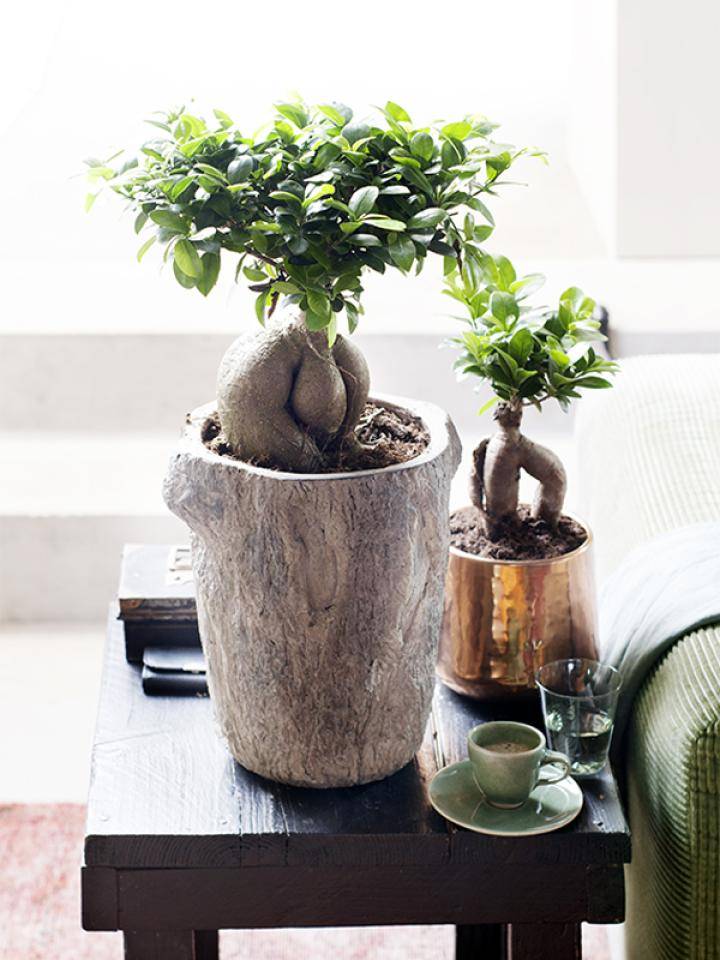
- Ficus bonsai (Ficus microcarpa / Ficus retusa): this is the most popular indoor bonsai. Ficus bonsai is strong and highly tolerant of dry air. You can recognise the Ficus bonsai by its glossy, oval leaves and distinctive thick trunk.
- Chinese Elm bonsai (Ulmus parvifolia): this is an elegant bonsai with small, delicate leaves and beautiful branching. This bonsai is suitable for indoors, but often thrives even better outdoors.
- Jade bonsai (Crassula ovata): this succulent can be recognised by its thick, rounded leaves. Because it is a succulent, it is a very easy houseplant that requires relatively little water.
- Schefflera bonsai (Schefflera arboricola): this tropical plant can be recognised by its hand-shaped leaves. The plant grows relatively quickly, making it easy to shape as a bonsai. Ideal for beginners!
Is a bonsai poisonous?
Whether a Bonsai tree is poisonous depends on the species. Ficus bonsai is mildly toxic to pets such as dogs and cats. Jade bonsai (Crassula) is toxic to pets. Always check the specific species if you are unsure.

Pruning a bonsai into shape: when and how?
Ideally, prune a bonsai between March and May. In summer, you can lightly prune to keep the shape looking neat and tidy. In autumn and winter (the dormant period), it’s best not to prune a bonsai.
You can determine the character of a miniature tree yourself by pruning it into your desired shape. These steps will help you get started with confidence:
- Take a good look at your tree: step back and decide on the desired shape. Which branches are distracting? And which branches should you keep?
- Remove distracting branches. For example, trim away branches that cross each other, grow inwards, or disrupt a pleasing shape.
- Work from coarse to fine: start with the overall structure of the tree and then refine the details.
- Check the bonsai from every angle: don’t prune too much at once! Look at your bonsai from all sides. This helps prevent pruning the tree out of balance.
You don’t prune a bonsai perfectly in one go. It’s a process of observing, adjusting and, above all, patience.

Symbolism of Bonsai
Bonsai carries several symbolic meanings. First of all, the miniature trees symbolise patience and care. This is linked to the attention and dedication required to grow the plant into a miniature tree. Bonsai also symbolises harmony and balance between people and nature. In a bonsai, everything comes together: shape, growth and space, with nothing overpowering the rest. Finally, bonsai symbolises happiness and wellbeing. It is often seen as a plant given to wish someone prosperity. Bonsai is therefore also a popular gift for various occasions, such as a housewarming, birthday or 'get well soon' present.
Origins of Bonsai
The origins of the bonsai art form lie in China, where miniature trees were already being cultivated more than a thousand years ago, known as penjing, meaning ‘landscape in a tray’. This art form was later adopted and further developed in Japan, where bonsai gained its distinctive style and philosophy. The focus is on simplicity, balance and recreating nature in its purest form. The Japanese made this art form internationally known.
Today, bonsai is practised worldwide as an art form. All around the world, enthusiasts devote themselves to cultivating, shaping and caring for these remarkable trees.