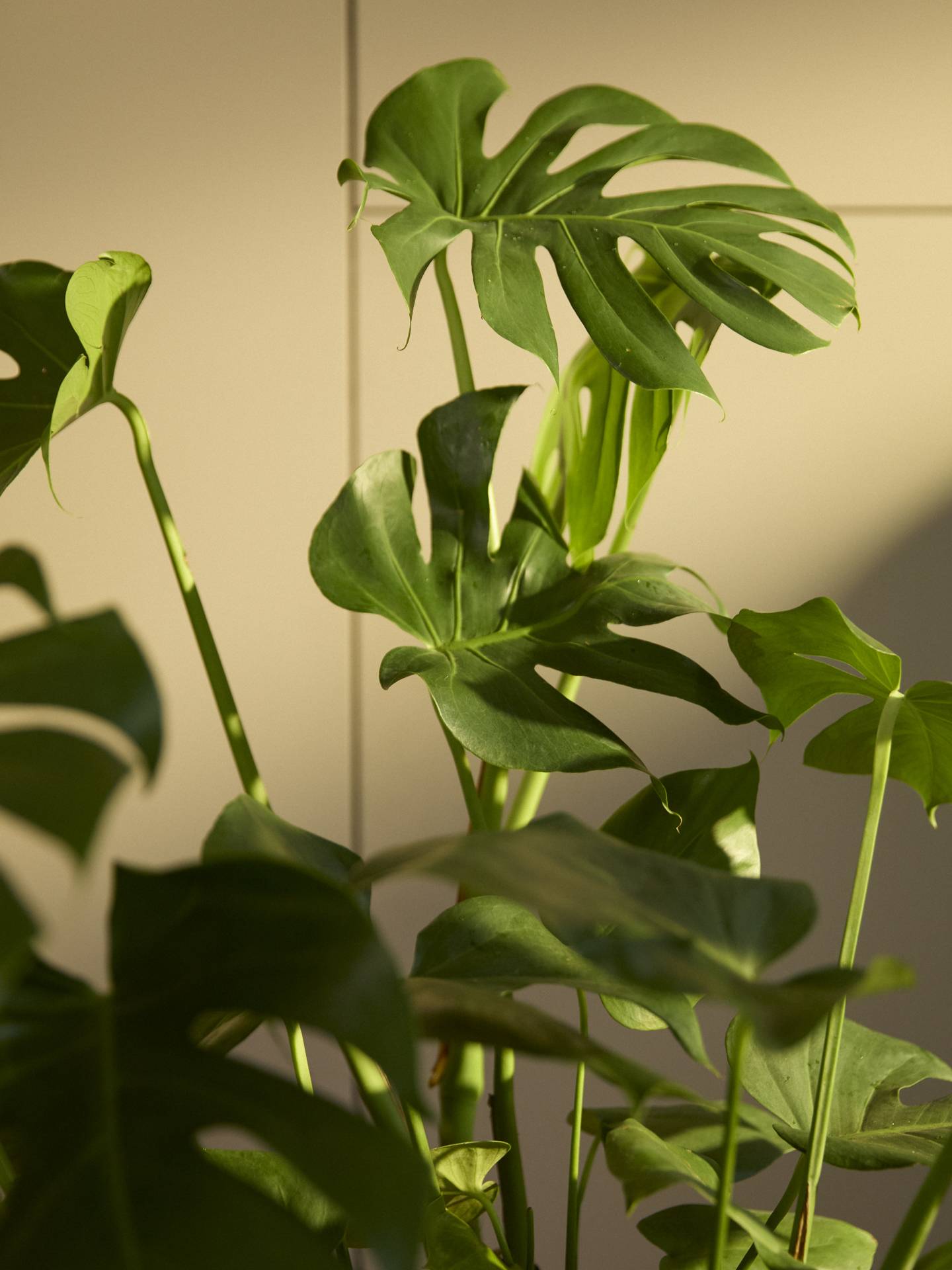
Large, glossy leaves, striking splits and a tropical look: Monstera is a popular houseplant for good reason! This green showstopper, also known as the Swiss Cheese plant, gives any space a fresh green boost. But how do you keep your Monstera looking its best? With the tips and tricks below for caring for Monstera, you’ll keep your plant in top condition.

With the right care, Monstera grows into an impressive green eye-catcher.
How much light does Monstera need?
Monstera originally comes from the tropical rainforests of Central and South America. There, the plant climbs up tree trunks beneath a canopy of leaves that filters the sunlight. So it’s no surprise that the plant loves indirect light. The ideal spot for Monstera is somewhere with plenty of indirect daylight, for example a few metres from a south-facing window, behind a sheer curtain that filters direct sunlight, or close to an east- or west-facing window. Avoid placing it in bright, direct sun, as this can scorch the leaves.
Does Monstera need a lot of water?
Monstera likes lightly moist soil, but the plant should never be left standing in water. Make sure the plant is not too wet, as the roots will not tolerate it. Use the following guidelines for watering Monstera:
- Water Monstera as soon as the top 2-4 cm of potting soil feels dry.
- Make sure the potting soil dries out slightly between waterings, but never let it dry out completely.
- Watering once a week is usually enough. In winter, Monstera, like most other plants, needs less water than during the growing season (spring and summer).
- It’s better to give it a generous watering now and then than small amounts more often.
- Make sure any excess water can drain away.
Monstera likes lightly moist potting soil, but not wet feet. The trick is finding the right balance.

More care tips for Monstera
- Monstera loves high humidity. So mist the Swiss Cheese plant regularly with a spray bottle of water. This is especially recommended in winter, when heating often makes the air drier.
- Support your Monstera as it grows by letting the plant climb up a moss pole. After a while, a taller moss pole may be needed to give the plant enough support.
- It is rare for Monstera to flower indoors. If it happens, cut the flowers off. They take a lot of energy from the plant and have a strong scent.
- Repot Monstera every 2-3 years into a pot that is 20% larger, preferably in spring.
Swiss Cheese plant with brown leaves or brown edges?
Is your Monstera getting brown leaves or brown leaf edges, or are the leaves curling? This is usually linked to humidity that is too low, but it can also be caused by too little water.
- Humidity too low: increase the humidity in the room by placing a bowl of water next to the plant and misting the Monstera regularly with a spray bottle. It can also help to group several plants together, creating a more humid microclimate.
- Too little water: when the potting soil becomes too dry, the Swiss Cheese plant can show signs of dehydration. You often see this in brown, dry leaf edges or curling leaves. Check with your finger whether the top layer of potting soil feels dry and water if needed.
Older lower leaves can turn brown and die off. Feel free to cut them off, so your plant can put its energy into new growth.
Yellow leaves on Monstera: what now?
If your Swiss Cheese plant develops yellow leaves, there can be several causes. The most common cause is too much water. So always check the moisture level of the potting soil first.
- Too much water: replace the potting soil if it has become too wet. Check the watering tips above. Monstera likes lightly moist soil, but not overly wet feet.
- Too much or too little light: if Monstera gets too much or too little light, the plant can develop yellow leaves. Check the tips above on how much light Monstera needs and where best to place the plant in your home.
- Nutrient deficiency: especially during the growing season (spring and summer), your Monstera may need extra nutrients. Give Monstera plant food once every 2 weeks.

Want to know more about Monstera?
Now that you know all about caring for Monstera, you’re probably curious about other aspects of the Swiss Cheese plant, such as aerial roots, symbolism, propagation and different types of Monstera. You can read all about it in this plant guide. And curious about other popular houseplants? Take a look at these green favourites for your wish list.