

Written by
Bente
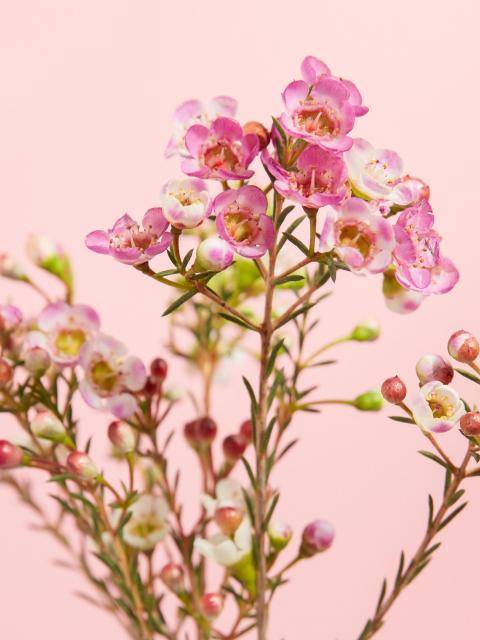
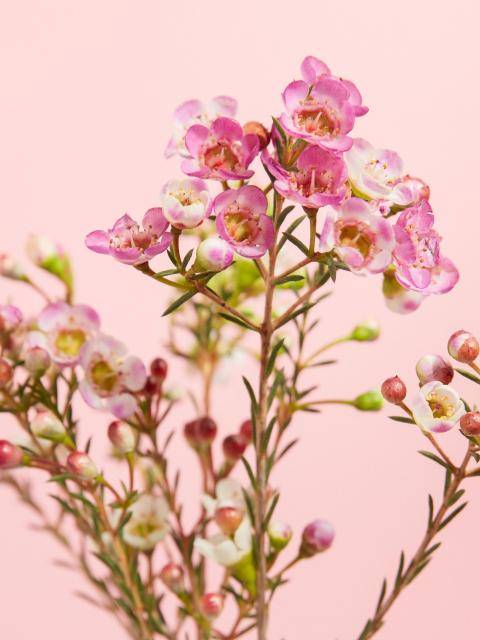
The striking Waxflower, also known as Geraldton Wax or Chamelaucium, brings an instant feel-good factor with its clusters of flowers. Cheerful, airy and, as the name suggests, wonderfully waxy. This waxy quality makes the plant rich in oils and also makes it a surprisingly hardy cut flower that stays beautiful for a long time.
Characteristics and flowering of Waxflower
At the top of each Waxflower stem, cheerful little flowers suddenly burst into bloom in umbrella-shaped clusters. Each flower consists of five radiant petals, ranging from pure white and soft pink to deep purple. The centre varies from dark red to brown, giving the colours extra depth. The flowers have a subtle, almost citrus-like fragrance that is particularly noticeable in warm weather.
The dark brown, woody stems grow to around thirty centimetres long and are covered with dark green, needle-like leaves. These leaves have a fine, waxy coating that not only gives them a beautiful sheen but also protects the plant from drying out. Thanks to this natural waxy layer, Waxflower stays remarkably fresh in a vase.
Waxflower belongs to the myrtle family (Myrtaceae), which also includes plants such as Eucalyptus and Tea Tree (Melaleuca). Like its relatives, Waxflower blooms abundantly. In its natural habitat, it flowers from late winter into early summer, but thanks to modern cultivation methods, it is now available as a cut flower almost all year round.
Waxflower care & maintenance
Want to enjoy Waxflowers in a vase for as long as possible? Follow this simple routine. Their sturdy, oil-rich stems naturally give them a long vase life. With the right care, they can easily last twelve days or more.
- Place the Waxflowers in a clean vase filled with fresh, lukewarm to cool water.
- Add cut flower food to the water to extend their vase life.
- Cut or trim 3-5 cm from the stems at an angle using a sharp, clean knife.
- Change the water in the vase every 2 to 3 days. Rinse the vase and make sure no soap residue remains.
- Finally, keep your Waxflowers away from draughts, direct sunlight, radiators and the fruit bowl.
Is Waxflower poisonous?
Waxflower is not known to be poisonous to cats or dogs, but always make sure your pets do not consume large amounts of plant material.
Symbolism of Waxflower
Thanks to its long vase life and abundance of beautiful little flowers, Waxflower symbolises a happy and joyful marriage in Australia. It is no surprise that Waxflower quite literally brings many weddings into bloom. From a magnificent bouquet to an eye-catching table arrangement, this flower works beautifully anywhere. Waxflower is also associated with good luck and steadfastness. Qualities that perfectly reflect the promise of marriage.
Waxflower symbolises a happy and joyful marriage.
Waxflower is also appreciated beyond weddings. Its soft appearance and playful blooms symbolise small moments of happiness, connection and resilience in everyday life. This makes Waxflower more than a flower for special occasions. It is also a subtle reminder to make the everyday feel extraordinary.
Origins of Waxflower
Chamelaucium (Waxflower/Geraldton Wax) originates from South Asia and particularly Western Australia, where the Mediterranean climate, with dry summers and mild winters, perfectly suits its preference for sunshine and well-drained soil. The French botanist René Louiche Desfontaines named the genus Chamelaucium in 1819. The name is thought to derive from the Greek words ‘chamai’ (on the ground) and ‘laos’ (small stone), a reference to the low-growing habit of certain species in wild, steppe-like landscapes.
There are now fourteen recognised species within the genus, ranging in colour from classic white to deep purple. Breeding programmes introduce new colours every year, which can mainly be seen at flower auctions during the spring and autumn months.
Can you dry Waxflower?
Yes, its woody stems and waxy flowers make Waxflower particularly suitable for drying. Hang small bunches upside down in a dark, well-ventilated place.