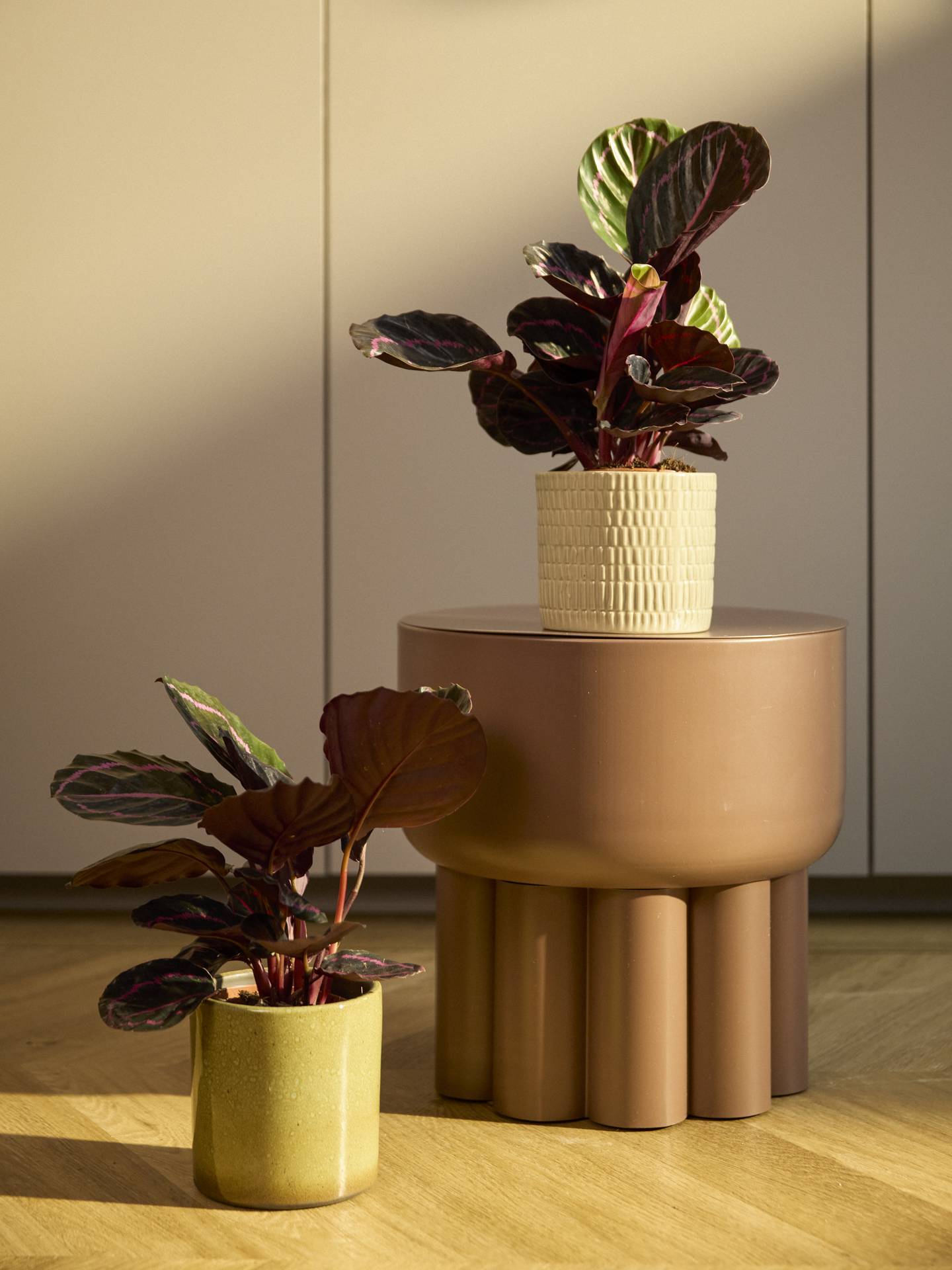

The spectacular leaves make Calathea a true work of art. But let’s be honest, this eye catching beauty isn’t the easiest plant to care for. In this article, you’ll discover practical tips for looking after your Calathea so you can keep it thriving for years to come!
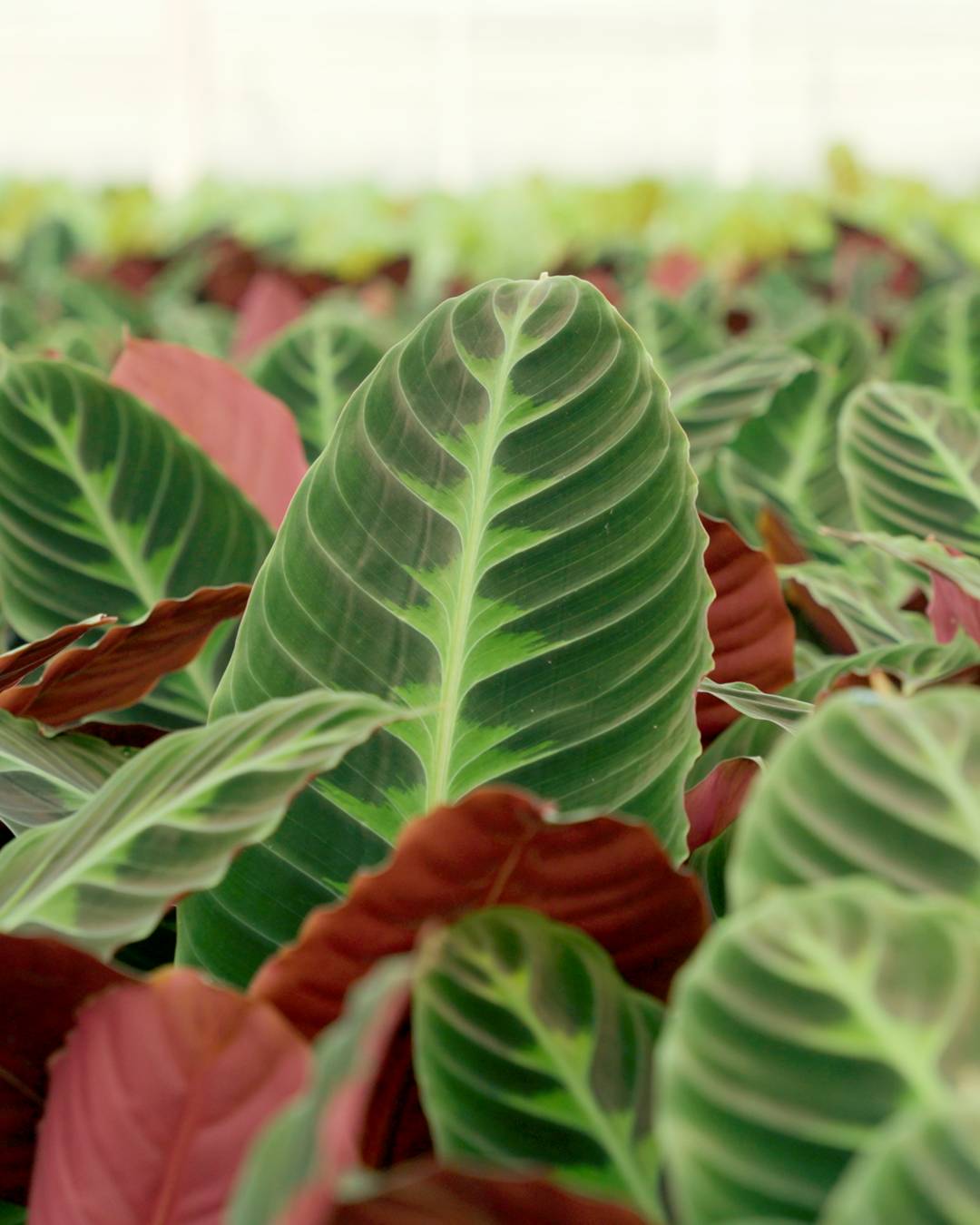
Calathea asks for a little extra love, but rewards you with stunning foliage.
Looking after a Calathea? Here’s how to do it
With Calathea, it’s all about balance. This plant loves the right temperature, along with the perfect amount of water, light and humidity. That can make caring for it a bit of a challenge. These are the most important tips for caring for a Calathea:
- Calathea prefers a spot with indirect sunlight. Ideally, place the plant in partial shade or shade. For example, by a north facing window, or a few metres away from an east or west facing window.
- Calatheas don’t cope well with draughts. Make sure the plant isn’t placed too close to a door or window.
- Calathea doesn’t like the cold. Ideally, keep the plant at a temperature between 18 and 25°C. The ideal temperature stays consistent and sits at around 20°C.
- In summer, give your Calathea a small amount of water twice a week. During winter, it needs less water. Try to keep the potting soil lightly moist at all times. It’s better to water little and often than give it a lot in one go.
- Don’t give your Calathea cold water. Room temperature water is best.
- Calathea loves high humidity. That makes it a great plant for the bathroom. Keeping it in another room? Give your Calathea a regular mist with a plant spray bottle.
- Feed your Calathea with plant food during the growing season (spring and summer) for healthy, optimal growth.
- Has your Calathea grown and become ready for a bigger pot? Repot it in spring.
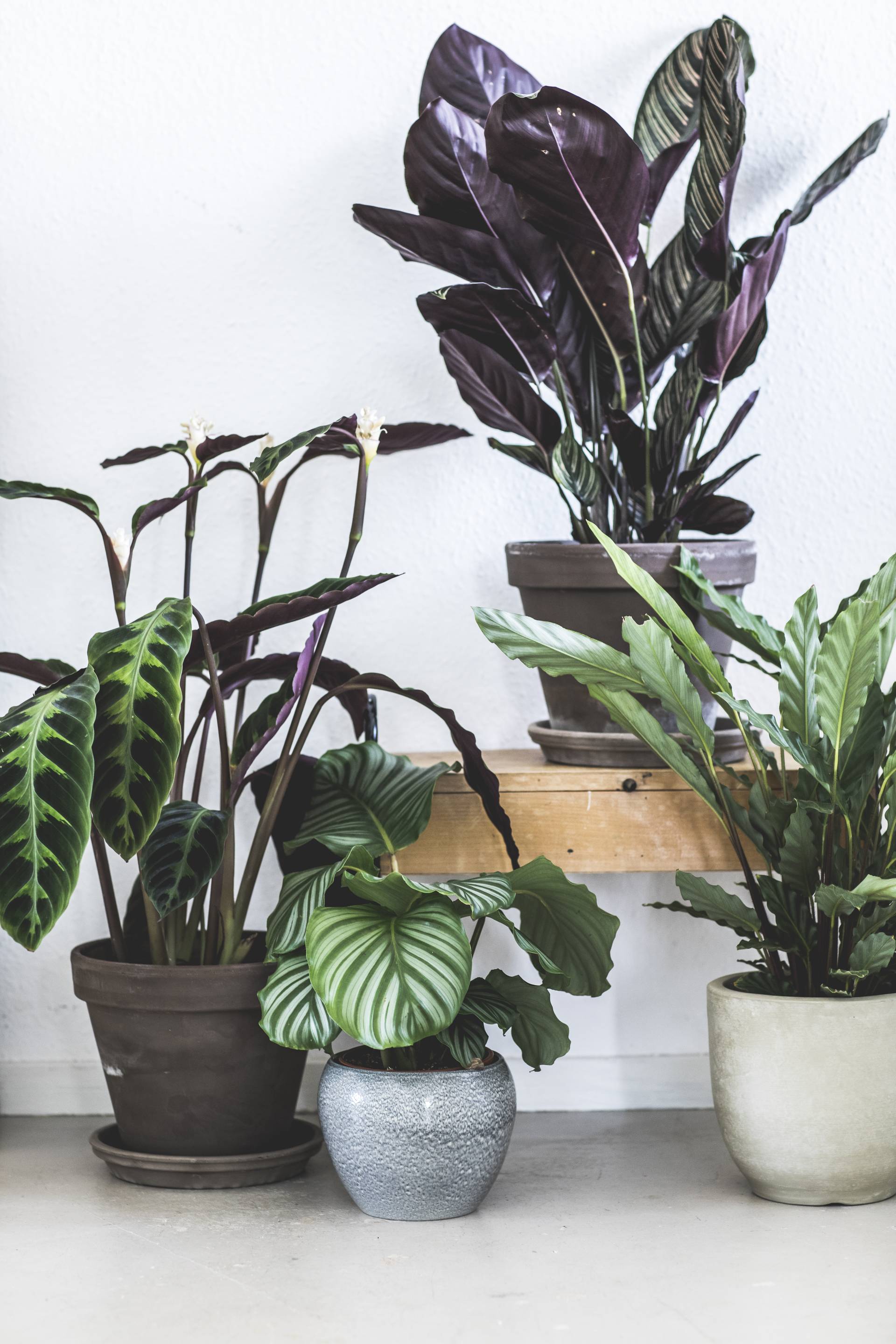
Calathea drooping: what now?
If your Calathea’s leaves are drooping, it’s most likely caused by too much or too little water, cold temperatures or draughts. Check whether your plant needs more or less water and whether it might be happier in a different spot.
Calathea leaves curling: what now?
Curling leaves usually mean your plant isn’t getting enough water. Check whether the potting soil has dried out too much and give your Calathea small amounts of room temperature water regularly. How much water the plant needs depends on the season (it will need more during spring and summer). Make sure the potting soil stays consistently lightly moist.
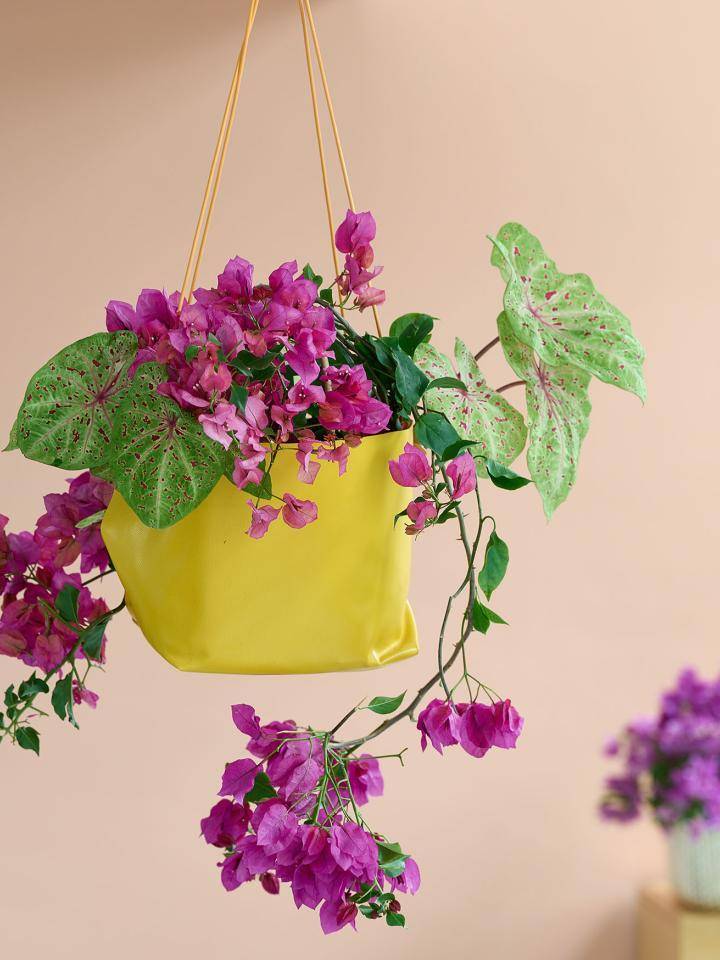
With Calathea’s unique leaf patterns, you’re bringing living art into your home.
Calathea with brown edges: what now?
Brown edges on a Calathea are often caused by low humidity or water that contains too much limescale. Increase the humidity and/or use rainwater (or filtered water) when watering your Calathea.
Want to increase humidity? Here’s how
Calatheas love a humid environment. Here are a few ways to boost humidity:
- Mist the leaves regularly with a plant spray bottle
- Place a bowl of water next to the plant or hang water containers on the radiator
- Use a humidifier
- Place other plants around your Calathea for a mini jungle effect
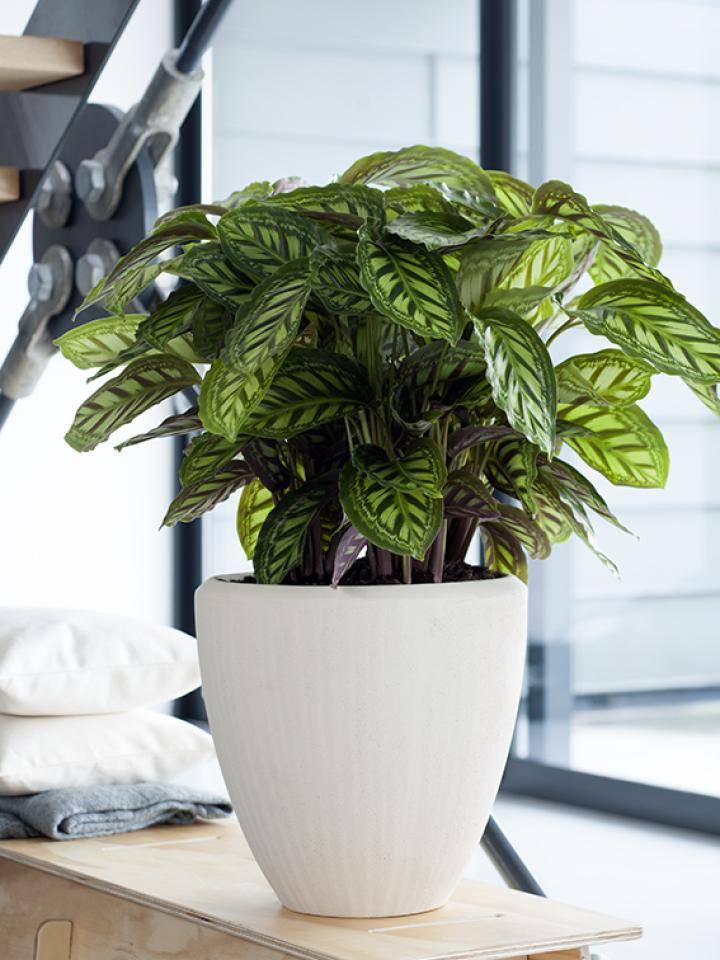
Extra care tips for Calathea
- Gently wipe dust from your Calathea’s leaves now and then with a damp cloth
- Turn your Calathea occasionally for even growth
- Repot your Calathea every 2 to 3 years into a pot that’s 20% larger
- Has your Calathea started flowering? Carefully remove the flowers. Calathea doesn’t flower often and any blooms are far less spectacular than its leaves. By removing the flowers, your Calathea saves energy, stays stronger and keeps its focus on leaf growth.
Want to know more about Calathea?
Now that you know everything about caring for Calathea, you’re probably curious about other topics too, such as the symbolism and origins of Calathea, propagating Calathea, and whether Calathea is toxic to dogs and cats. In this plant guide, you’ll discover everything there is to know about Calathea!